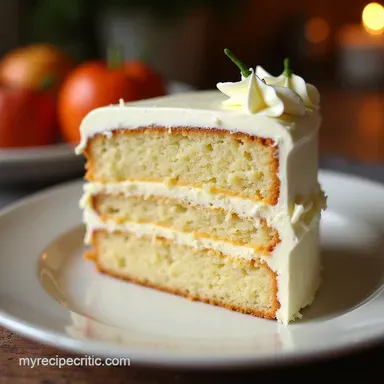
The Purest White Velvet Cake with Classic Vanilla Bean Buttercream

- Unveiling the Secrets to a Truly Ethereal Celebration Cake
- Why This Recipe Redefines the Classic White Cake Standard
- Curating the Essential Components for a Pristine Bake
- Mastering the Two-Stage Mixing Technique
- Baking and Cooling Protocols for Pristine Layers
- Troubleshooting Common Pitfalls in White Cake Baking
- Recipe FAQs
- 📝 Recipe Card
Unveiling the Secrets to a Truly Ethereal Celebration Cake
There is a certain magic inherent in a flawless White Cake . It stands as the quintessential centerpiece for milestones, a pure, unadulterated stage ready for decoration, whether it’s adorning a towering wedding creation or simply brightening a weekend afternoon.
Unlike its yellow counterparts, the true White Cake From Scratch demands attention to detail, relying on specific techniques to ensure its texture is light as air and its colour remains pristinely snow-white.
This endeavor is about more than just mixing ingredients; it’s about respecting the chemistry that transforms humble flour and egg whites into something truly ethereal. We are aiming for a cake that dissolves delicately on the tongue, embodying elegance in every tender slice.
Why This Recipe Redefines the Classic White Cake Standard
When embarking on the journey toward the Best White Cake Recipe , one must understand that perfection lies in the nuances. Our approach focuses on maximizing lift while maintaining a fine, even texture, resulting in a Moist White Cake Recipe that defies the dryness often associated with lighter sponges.
This isn't just another recipe; it’s a meticulously engineered template for success, designed to deliver that classic, tender crumb we all crave in Homemade White Cakes .
The Quest for Perfect Crumb Integrity
The secret weapon in achieving superior crumb integrity rests heavily on the foundation of our dry ingredients. By precisely using finely milled cake flour and employing a creaming method that coats the flour particles before liquid is introduced, we are effectively inhibiting aggressive gluten development.
This mechanical barrier ensures that the final structure remains tender, delicate, and incredibly uniform, avoiding any hint of toughness.
A Blank Canvas Awaiting Your Creative Flair
The beauty of this recipe is its versatility. Its clean flavour profile means it works seamlessly with virtually any filling or frosting you can imagine. While we focus here on the classic, pairing it with a White Cake with Strawberry Filling transforms it into a springtime dream, yet it remains perfectly suited as the base for chocolate ganache or lemon curd.
This adaptability is why it remains a favourite choice for White Birthday Cakes across the globe.
Elevating the Vanilla Experience Beyond the Basics
To achieve true depth in a predominantly white bake, the flavour must sing clearly. We rely on high-quality vanilla, specifically favouring vanilla bean paste for its visual appeal and rich aroma, coupled with clear vanilla extract in the batter.
This small substitution, using clear over standard brown extract, is mandatory, as it prevents even the slightest tinge of colour contamination, keeping the cake brilliantly white while delivering that warm, familiar essence of a true Vanilla Cake From Scratch .
Curating the Essential Components for a Pristine Bake

Success in any baking project begins long before the oven is switched on; it starts with ingredient selection and preparation. For this delicate structure, the quality and readiness of your core components directly dictate the outcome.
The Role of Egg Whites: Achieving Maximum Volume and Structure
The lift in this cake comes almost exclusively from properly whipped egg whites. It is essential that these whites are at cool room temperature —not warm, but certainly not fridge-cold. This allows them to incorporate more air during whipping, maximizing their volume potential.
Crucially, the bowl and whisk must be impeccably clean and grease-free; even a trace of fat will sabotage your ability to achieve those necessary stiff peaks that provide the backbone for the entire structure.
Why Cake Flour is Non-Negotiable for This Delicate Recipe
When seeking that airy, velvety texture, the choice of flour is critical. Standard all-purpose flour possesses too high a protein content, which leads to more gluten formation when mixed.
Cake flour , however, has a lower protein count and is often finer, resulting in a softer, more delicate crumb structure. For the best results in these White Cake Recipes , it is highly recommended to sift the cake flour three times after measuring by volume, or ideally, weigh it using a digital scale for absolute precision.
Mandatory Equipment for Flawless Layer Construction
To manage the delicate nature of folding and ensure even baking, specific tools are required. You must have three matching 8-inch cake pans to guarantee uniform bake times. A stand mixer equipped with a paddle attachment is ideal for the initial creaming, while a high-quality, fine-mesh sieve is essential for ensuring your powdered sugar and dry ingredients are lump-free, leading directly to a smoother batter and a finer final texture.
Related Recipes Worth Trying
- The Best Moist White Velvet Cake Recipe with Silky Buttercream — Forget dry sponges This Simple Moist White Velvet Cake Recipe creates an incredibly tender crumb using buttermilk Perfect for a stunning White Buttercream...
- CloudLike Mini German Pancakes Foolproof Muffin Tin Recipe — Tired of floppy pancakes This easy Mini German Pancakes recipe bakes up perfectly puffed custardy clouds in a muffin tin A dazzling breakfast ready in 35 mins
- Foolproof Dutch Baby Pancake Recipe for Epic Puffs — Achieve the best German Pancake recipe with this simple ovenbaked Dutch Baby Get that towering buttery crisp edge every time Read the tips
Mastering the Two-Stage Mixing Technique
The method by which we combine fats, sugars, and liquids is what separates an average cake from a truly exceptional one. We employ a modified creaming method tailored for white cakes, focusing first on texture protection.
Baking and Cooling Protocols for Pristine Layers
Executing the bake and managing the transition from oven heat to cooling rack require patience, as rushed cooling can lead to collapsed centers or overly dense bottoms.
The Creaming Method: Incorporating Air Without Yellowing
Begin by beating the softened butter with the dry mixture (flour, sugar, leavener, salt). This step isn't about creaming until pale and fluffy as you might for a yellow cake. Instead, we beat it on medium-low speed just until the mixture resembles coarse, wet sand.
This process coats the flour particles in fat, acting as a shield against excess water later on, which is vital for retaining that pure white colour and achieving a tender bite.
Gently Folding in the Dry Mix: Preventing Gluten Development
After incorporating the liquid ingredients (milk and clear vanilla), the most delicate step arrives: incorporating the whipped egg whites. This air is the cake’s lifeblood. Use a large, flexible rubber spatula to gently fold the whites into the heavier batter, working in thirds.
Use deliberate, wide strokes, cutting down the center and sweeping up the side of the bowl, turning the bowl as you go. Stop immediately once no streaks of white remain; this minimizes the risk of deflating the structure you worked so hard to build.
Perfecting the Swiss Meringue Base for Your Buttercream
While our core recipe utilizes a classic American buttercream for ease of execution, achieving a truly superior texture often involves using a meringue base. For the accompanying frosting, beating the butter until it is extremely pale and light before introducing the sugar is key.
Once the sugar is added, the mixture must be beaten on medium-high speed for a full five minutes. This aeration ensures the final frosting is silky, light, and holds its shape beautifully when piped or spread.
Achieving a Razor-Sharp Crumb Coat Finish
Once the layers are completely cool, the assembly process demands discipline. Apply a very thin, almost translucent layer of buttercream over the entire assembled cake, this is the crumb coat. Its sole purpose is to trap any loose crumbs, stabilizing the surface.
Immediately place the cake into the refrigerator for at least 20 minutes until this layer is firm to the touch. Only then should you proceed with the final, thick layer of frosting, which will now glide on effortlessly, resulting in that coveted, sharp edge many home bakers seek for their Homemade White Cakes .
Troubleshooting Common Pitfalls in White Cake Baking
Even with precise measurements, issues can arise. Understanding why these hiccups occur allows for quick corrections in the future.
Troubleshooting: Why Your Cake Didn't Reach Snow-White Perfection
If your cake layers emerged with a slightly beige or creamy tint, the culprit is almost always the vanilla extract. Standard extracts contain caramel colouring. Switching exclusively to a clear vanilla extract in the batter is the most effective preventative measure.
On top of that,, ensuring your oven temperature is accurate and your baking time is not excessive prevents the exterior from browning too deeply.
Shelf Life and Optimal Storage Conditions for Freshness
Because this White Cake relies on delicate air pockets, improper storage can quickly lead to staling. Once fully frosted, the cake should be stored at cool room temperature, loosely covered, for up to two days.
If storing longer, refrigeration is necessary, but ensure it is tightly sealed to prevent drying out. Always allow refrigerated cake layers to sit at room temperature for at least an hour before serving to ensure the butter in the cake softens back to its intended tender texture.
Flavor Variations: Infusing Extracts Beyond Traditional Vanilla
To expand beyond the classic, experimentation with extracts is encouraged, but proceed with caution as they are potent. A half-teaspoon of high-quality almond extract, combined with the required clear vanilla, adds a sophisticated, nutty background note without altering the colour.
Even a subtle infusion of rosewater (use sparingly, no more than ¼ teaspoon) in the milk mixture can lend an unexpected floral complexity perfect for elegant tiered cakes.
Decorating Ideas: From Minimalist Chic to Grand Wedding Toppers
The beauty of this White Cake foundation is its ability to support dramatic decor. For a minimalist approach, a light dusting of powdered sugar or a scattering of fresh white berries offers sophistication.
For more elaborate occasions, consider piping intricate shell borders or using texture mats on the final coat of buttercream. Its sturdy yet light nature makes it an excellent candidate for supporting small, decorative elements or even lighter fondant coverings, cementing its status as a premier choice for White Birthday Cakes and beyond.
Recipe FAQs
Why is my White Cake turning slightly yellow, even though I used only egg whites?
That’s a common sticking point, right? The culprit is usually standard brown vanilla extract; it dyes the batter! For that truly pristine, snow-white finish, you must use clear vanilla extract, as specified in the recipe.
Also, make sure your butter isn't too warm, as melted fat can encourage a yellower tint.
How important is it to use cake flour for this specific White Cake recipe?
It’s essential if you want that classic "Cloud Nine" texture we're aiming for! Cake flour has a lower protein content than all-purpose flour, which means less gluten development. This results in the exceptionally tender, fine, and delicate crumb that makes this cake so famous.
Can I use whole eggs instead of just the whites, and what happens if I do?
Technically, you can, but the cake will no longer be a true "White Cake." The egg yolks contain fat and pigment, which will naturally shift the colour to a pale yellow or ivory. You'll also lose some of the airy structure created by whipping the whites separately.
My cake layers sank slightly in the middle, what did I do wrong?
Sinking usually means the structure wasn't quite set when it left the oven, often due to underbaking or opening the oven door too early. Give it the full baking time, and ensure you don't peek before the 25-minute mark, it’s like letting the air out of a soufflé!
How should I store leftover slices of this White Cake to keep it fresh?
If it's frosted with that lovely buttercream, wrap individual slices tightly in plastic wrap before placing them in an airtight container. It will keep beautifully at cool room temperature for two to three days, provided your kitchen isn’t too warm.
I'm not a baker, is there a way to simplify the folding step when adding the egg whites?
Don’t fret, everyone starts somewhere! Think of folding like gently turning over a feather bed. Start by mixing about one-third of the whites vigorously to "loosen" the main batter.
Then, gently fold in the remaining two-thirds using an upward sweeping motion with your spatula, don't stir, or you'll knock the air out!
The Purest White Velvet Cake Recipe From Scratch