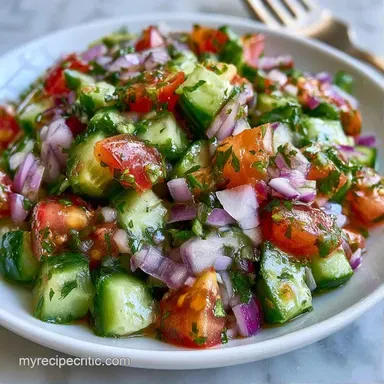
Middle Eastern Cucumber Salad: Zesty and Crisp
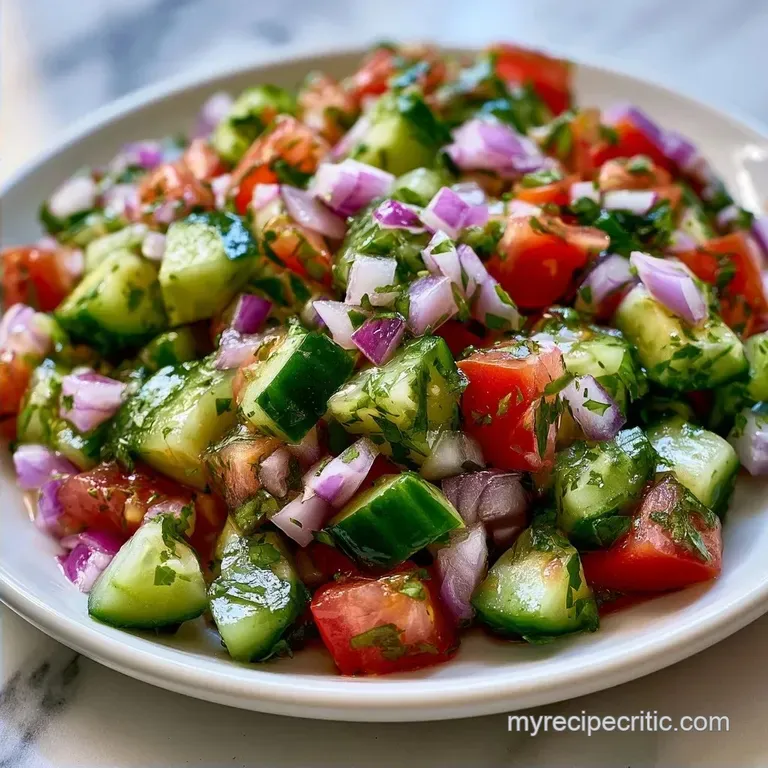
- Time: 10 min active + 0 min cook = Total 13 mins
- Flavor/Texture Hook: Crisp, tangy, and refreshing with a zesty sumac finish
- Perfect for: Quick weeknight sides, meal prep, or a fresh contrast to grilled meats
- Fresh Middle Eastern Cucumber Salad Recipe
- Reasons You'll Love This Salad
- Recipe Specifications
- Component Analysis
- Complete Shopping List Breakdown
- Basic Equipment You Need
- Step-by-Step Prep Instructions
- Avoiding Common Kitchen Disasters
- Creative Flavor Variations
- Storage and Freshness Guidelines
- Best Ways to Serve
- Recipe FAQs
- 📝 Recipe Card
Fresh Middle Eastern Cucumber Salad Recipe
The snap of a cold English cucumber is basically the sound of summer. I remember the first time I tried a version of this at a small family run spot, and it completely changed how I looked at "side salads". Most of the time, we're used to those soggy, watered down bowls of greens, but this is different.
It's punchy, bright, and has this distinct tang that makes you want to keep eating it even after the main course is gone.
For a long time, I struggled with the "water problem". You know the one, where you make a beautiful bowl of veggies, but thirty minutes later, you're staring at a soup of cucumber juice and olive oil.
I spent a few weekends playing around with the salt timing and the dice size until I realized that the secret isn't in avoiding the water, but in managing how it interacts with the dressing.
This Middle Eastern Cucumber Salad is all about that balance. It's a quick win for anyone who wants a healthy hit of freshness without spending an hour in the kitchen. We're keeping the tools minimal and the flavors bold. Trust me, once you add sumac to the mix, you'll never go back to plain lemon and salt.
Reasons You'll Love This Salad
I love this recipe because it doesn't ask much from you, but it gives a lot back. When your kitchen is already hot from the stove or the grill, the last thing you want is more heat. This is a cold assembly dish that takes about ten minutes.
It's the kind of thing you can throw together while the meat is resting, and it instantly makes the whole table feel more curated.
Another thing is the versatility. While we're sticking to a traditional base, it's incredibly forgiving. If you're out of mint, you can double down on the parsley. If your lemons are a bit dry, a splash of apple cider vinegar can bridge the gap.
It's a reliable, go to dish that never feels boring because the sumac adds a depth that's hard to find in standard Western salads.
Honestly, don't even bother with the low-fat olive oil here. You want the good, peppery stuff. The fat in the oil carries the flavor of the sumac and mint, coating each tiny cube of cucumber so the taste doesn't just slide off. It's a simple equation: fresh veg, sharp acid, and quality fat.
Recipe Specifications
The beauty of this dish is in its simplicity, but there are a few numeric checkpoints to keep in mind to ensure the texture stays right. First, aim for a uniform 1/4 inch dice. If the pieces are too big, the dressing won't penetrate; if they're too small, they'll release water too quickly and turn into mush.
Second, the resting window is key. You want to let the salad sit for exactly 2-3 minutes before serving. This is just enough time for the sumac to hydrate and the salt to start drawing out the flavors without turning the vegetables limp.
Any longer than 15-20 minutes and you'll start seeing that pool of liquid at the bottom.
Finally,, the ratio of lemon to oil is roughly 2:3. This ensures the dressing is zesty but not so acidic that it overpowers the delicate mint. It's a light, breezy profile that cleanses the palate between heavy bites of protein.
Component Analysis
Before we get into the shopping, it's helpful to understand why these specific ingredients are doing the heavy lifting.
The Secret Mechanism: The sumac acts as a dry acid, which helps stabilize the dressing and provides a slow release tang that doesn't break down the vegetable cell walls as fast as liquid vinegar would.
| Ingredient | Science Role | Pro Secret |
|---|---|---|
| English Cucumber | Hydration Base | Use English or Persian to avoid seeds and bitter skin |
| Sumac | Astringent Acid | Adds a deep, plum like tartness that lemon lacks |
| Extra Virgin Olive Oil | Flavor Carrier | Binds the fat soluble aromatic compounds of the mint |
| Lemon Juice | Brightening Agent | Cuts through the fat and wakes up the red onion |
Complete Shopping List Breakdown
When you're at the store, look for the firmest cucumbers you can find. If they feel soft, they'll be watery. For the tomatoes, Roma is the way to go because they have more "meat" and fewer seeds, which keeps the salad from getting swampy.
- 3 cups (450g) English cucumber, finely diced Why this? Low seed count and thinner skin
- 2 cups (300g) Roma tomatoes, seeded and finely diced Why this? Firmer texture, less excess juice
- 1/2 cup (75g) red onion, finely minced Why this? Sharp bite and vibrant color
- 1/2 cup (15g) fresh parsley, chopped Why this? Adds a clean, peppery baseline
- 1/4 cup (5g) fresh mint leaves, chiffonade Why this? Provides the cooling aromatic finish
- 3 tbsp (45ml) extra virgin olive oil Why this? high-quality fats for a velvety mouthfeel
- 2 tbsp (30ml) fresh lemon juice Why this? Fresh citrus is always sharper than bottled
- 1 tsp (5g) sumac Why this? Essential Middle Eastern tangy flavor
- 1/2 tsp (3g) kosher salt Why this? Large grains dissolve more evenly
- 1/4 tsp (1g) cracked black pepper Why this? Adds a subtle woody heat
| Original Ingredient | Substitute | Why It Works |
|---|---|---|
| Roma Tomatoes | Cherry Tomatoes | Similar acidity. Note: Quarter them for a different texture |
| Fresh Mint | Dried Mint | Concentrated flavor. Note: Use 1/3 the amount and rub between palms |
| Lemon Juice | Lime Juice | Similar acidity. Note: Adds a more tropical, sharp note |
| Sumac | Lemon Zest | Similar tartness. Note: Lacks the deep red color and berry like flavor |
Right then, once you've got your ingredients, make sure your herbs are patted dry. If they're still wet from the sink, they'll clump together and won't distribute evenly in the dressing.
Basic Equipment You Need
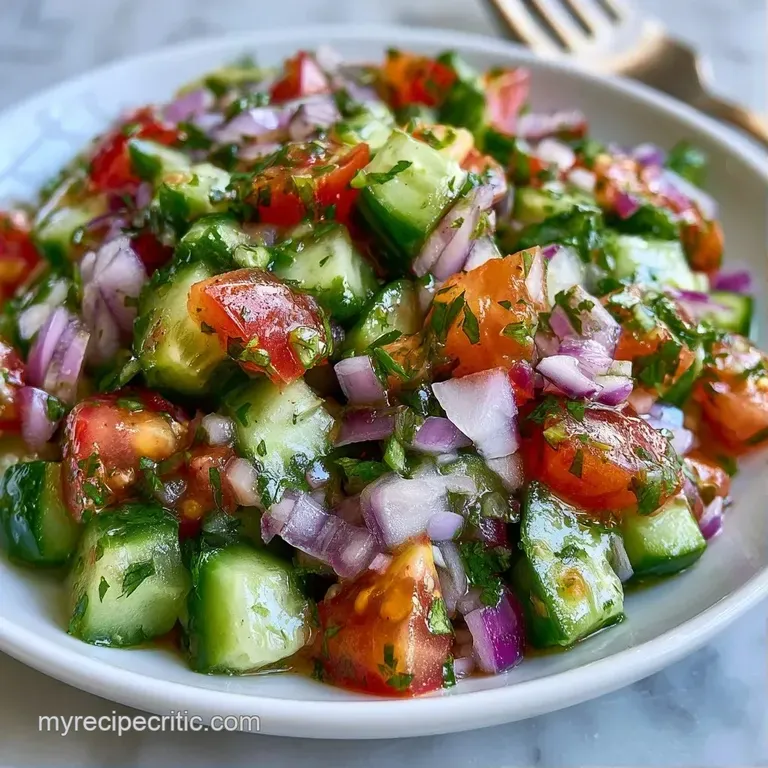
Since we're going for a minimal tools approach, you don't need any fancy gadgets. A food processor might seem like a shortcut for the dicing, but trust me, it'll just turn your cucumbers into a mash. This recipe requires a bit of manual work for a reason.
- Chef's Knife: A sharp blade is non negotiable for the precision dice.
- Cutting Board: Large enough to keep your diced veg separate before they hit the bowl.
- Small Jar with Lid: Perfect for shaking the dressing until it's opaque.
- Large Mixing Bowl: Gives you plenty of room to toss without spilling.
Step-by-step Prep Instructions
Let's crack on. The goal here is uniformity. When every piece of vegetable is the same size, you get a bit of everything in every single spoonful.
Phase 1: The Precision Dice
- Dice the cucumbers and tomatoes into uniform 1/4 inch pieces. Note: This size ensures the crunch stays intact.
- Finely mince the red onion. Until the pieces are almost translucent, as this prevents the onion from overpowering the mint.
- Chop the parsley and chiffonade the mint. Note: Stack the mint leaves, roll them tight, and slice thin strips.
Phase 2: Emulsifying the Dressing
- Combine the olive oil, lemon juice, sumac, salt, and pepper in a small jar.
- Shake the jar vigorously for 30 seconds until the mixture is opaque and creamy. Note: This emulsion helps the dressing cling to the vegetables.
Phase 3: The Final Toss
- Place the diced cucumbers, tomatoes, and red onion into the large mixing bowl.
- Fold in the chopped parsley and mint leaves.
- Pour the shaken dressing over the vegetables.
- Toss gently with a spoon until every piece is glistening.
- Let the salad sit for 2-3 minutes until the sumac has fully hydrated and the colors look vibrant.
Avoiding Common Kitchen Disasters
The most common issue with any cucumber based dish is the dreaded "soggy bottom". This happens because salt is a humectant, meaning it draws water out of the vegetable cells through osmosis. If you salt the cucumbers too early or let the salad sit for hours, you'll end up with a puddle.
Why Your Salad Is Too Watery
If you find your bowl is filling up with liquid, it's usually because the vegetables weren't seeded properly or the salt was added too far in advance. To fix this, always scoop out the watery core of the Roma tomatoes before dicing.
| Problem | Root Cause | Solution |
|---|---|---|
| Watery Bottom | Salt added too early | Toss with dressing only 5-10 mins before serving |
| Bitter Aftertaste | Onion was too pungent | Soak minced onion in cold water for 5 mins, then drain |
| Bland Flavor | Not enough acid | Add an extra squeeze of fresh lemon just before serving |
- ✓ Checklist for Success:
- ✓ Seed the tomatoes to remove excess moisture.
- ✓ Shake the dressing in a jar to ensure it's fully emulsified.
- ✓ Use a sharp knife to avoid bruising the cucumber skins.
- ✓ Keep the salad chilled until the very last second.
Creative Flavor Variations
Once you've nailed the base, you can start playing with the profile. If you're serving this as a side for meat, it's a killer match for my Homemade Gyro Recipe, where the acidity of the salad cuts right through the richness of the meat.
For a Creamy Texture (Khyar Bi Laban Style)
If you want something more velvety, you can turn this into a yogurt based salad. Simply swap the olive oil for 1/2 cup of thick Greek yogurt. Keep the cucumber and mint, but reduce the lemon juice slightly. This version is incredibly cooling and works great with spicy dishes.
For a Hearty Twist (Israeli Salad Recipe)
To make this a more substantial meal, you can add finely diced bell peppers (green or red) and a handful of crumbled feta cheese. The salty punch of the feta complements the sumac beautifully. If you're looking for a more filling option, try mixing in some cooked quinoa or bulgur wheat to turn it into a grain bowl.
For an Earthy Depth
Try adding a pinch of ground cumin or a teaspoon of pomegranate molasses to the dressing. The molasses adds a dark, syrupy sweetness that transforms the salad into something a bit more complex and rich.
Storage and Freshness Guidelines
This is a "best enjoyed fresh" kind of dish. Because of the high water content in the cucumbers and tomatoes, the texture degrades quickly.
Fridge Storage: You can store the salad in an airtight container for up to 3 days. However, expect it to release a significant amount of liquid. I recommend draining the excess juice before serving and adding a fresh squeeze of lemon to wake up the flavors.
Freezing: Do not freeze this salad. The water in the vegetables will expand and rupture the cell walls, leaving you with a mushy, unappealing mess once thawed.
Zero Waste Tips: Don't throw away the cucumber ends or the tomato tops! You can toss them into a freezer bag and use them as a base for a vegetable stock. Alternatively, simmer the cucumber peels with a bit of vinegar and sugar to make a quick, tangy pickle for snacks.
Best Ways to Serve
Presentation is simple here, but a few tweaks make it feel special. I like to serve this in a wide, shallow bowl rather than a deep one; this keeps the vegetables from crushing each other and allows the dressing to distribute more evenly.
This salad is an absolute powerhouse when paired with grilled proteins. It cuts through the richness of a Traditional Lamb Curry or a smoky piece of grilled halloumi. If you're doing a mezze platter, place the salad in the center and surround it with warm pita bread and a dollop of hummus.
For those who like a bit of extra crunch, sprinkle some toasted pine nuts or sesame seeds on top just before serving. It adds a nutty layer that contrasts the brightness of the lemon and sumac. And remember, a final crack of black pepper right at the end adds a fresh, aromatic heat that ties everything together.
Recipe FAQs
What is a Middle Eastern cucumber salad called?
It is often referred to as Shirazi salad or Israeli salad. While names vary by region, these versions typically focus on finely diced vegetables and a lemon-olive oil dressing.
What is the secret ingredient that gives this salad its signature tangy flavor?
Sumac is the key. This deep red spice provides a tart, citrusy punch that complements the fresh lemon juice and olive oil.
How do you make this cucumber salad quickly?
Dice cucumbers and tomatoes into 1/4-inch pieces and mince the red onion. Whisk olive oil, lemon juice, sumac, salt, and pepper, then toss everything together and let it sit for 2-3 minutes.
How can I make a delicious salad in under 10 minutes?
Focus on uniform dicing for maximum flavor. Keeping the vegetables small ensures every bite contains all the ingredients and allows the dressing to coat the pieces efficiently.
Can I store this salad in the fridge for a few days?
Yes, for up to 3 days. Store it in an airtight container, but be sure to drain any excess liquid and add a fresh squeeze of lemon before serving to wake up the flavors.
Is it true that I should freeze this salad for long-term storage?
No, this is a common misconception. Freezing ruptures the vegetable cell walls, turning the crisp cucumbers and tomatoes into a mushy, unappealing mess.
What should I serve with this Middle Eastern cucumber salad?
Pair it with roasted meats or savory breads. The acidity of the salad balances beautifully with crispy roasted potatoes for a complete meal.
Middle Eastern Cucumber Salad with Sumac