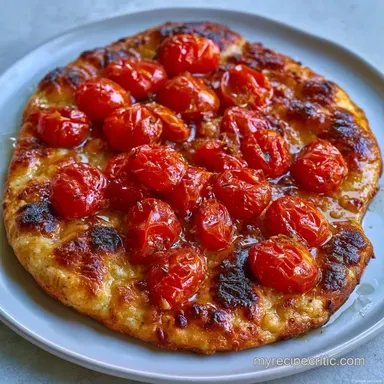
Vegan Cherry Tomato Flatbread in 45 Minutes
- Time: 15 min active + 10 min resting
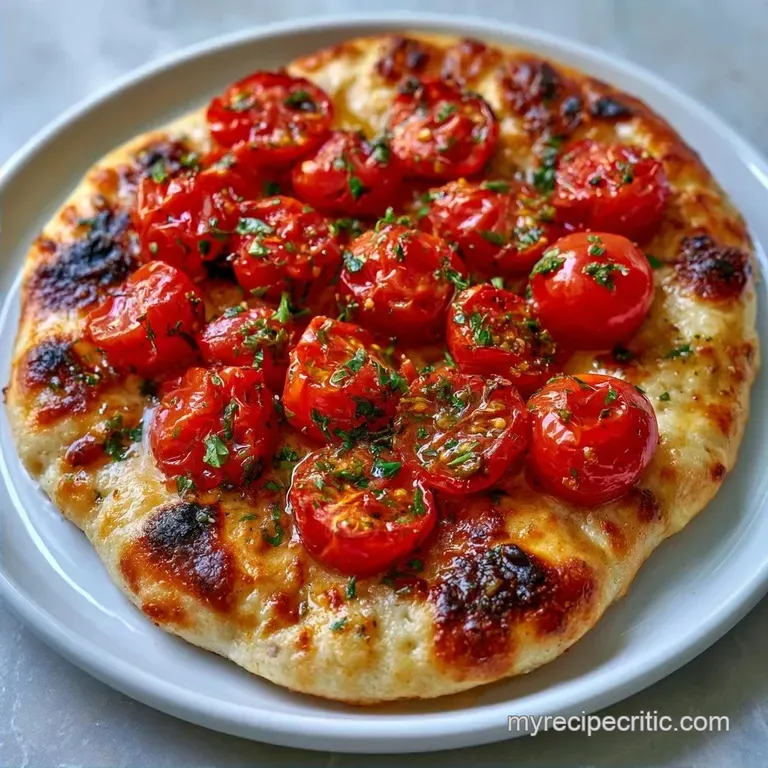
- Flavor/Texture Hook: Blistered, bursting tomatoes on a charred, chewy base
- Perfect for: A quick weeknight dinner or a plant based appetizer
- Common Vegan Cherry Tomato Flatbread Flaws
- What Each Ingredient Does
- Your Essential Ingredient List
- The Right Tools for Cooking
- Bringing the Flatbread Together
- Fixing Common Cooking Problems
- Troubleshooting Common Issues
- Different Toppings and Swaps
- Scaling the Recipe
- Truths About Flatbreads
- Storage and Leftover Tips
- Plating for the Table
- Recipe FAQs
- 📝 Recipe Card
The smell of garlic hitting hot olive oil is usually where my favorite nights start. There is something about that specific sizzle, followed by the pop of cherry tomatoes as they blister in a pan, that makes the whole house feel cozy.
I remember trying a version of this at a fancy spot downtown a few years back, but it was basically a soggy cracker topped with raw veg. I wanted something with a real bite and a bit of char.
That is where this Vegan Cherry Tomato Flatbread comes in. I stopped worrying about the "correct" way to make dough and leaned into a simpler, no yeast method. It gives you a crust that is sturdy enough to hold all those juicy toppings without turning into a sponge.
You can expect a meal that feels high effort but actually uses a few basic pans. It is all about the contrast: hot, salty bread, cold peppery arugula, and the sweet hit of a balsamic drizzle. Let's crack on.
Common Vegan Cherry Tomato Flatbread Flaws
Most recipes you find online either tell you to wait three hours for a dough to rise or they use a store-bought wrap that tastes like cardboard. The real issue is usually moisture. When you put raw tomatoes on dough and slide it into the heat, they release water.
That water seeps into the crust, and suddenly you have a soggy mess in the middle.
I solved this by sautéing the tomatoes first. By blistering them in a skillet, you concentrate the sugars and get rid of the excess liquid before they ever touch the bread. It creates a massive difference in the final chew. If you're looking for something even faster for a different occasion, my simple tomato sauce flatbread is a lifesaver.
Another common slip up is overworking the dough. When you knead flour and water too much, the gluten gets tight. This results in a flatbread that snaps back like a rubber band when you try to roll it out. A quick 10 minute rest is the only way to fix this.
- Why the dough stays light
- The baking powder creates small air bubbles as soon as the heat hits, giving the bread a lift without needing yeast.
- The tomato trick
- Sautéing them first ensures they burst with flavor instead of leaking water into your crust.
- The gluten pause
- Letting the dough sit for 10 minutes relaxes the proteins so it rolls out flat and stays tender.
| Method | Time | Texture | Best For |
|---|---|---|---|
| Stovetop | Fast | Charred & Chewy | Quick meals, cast iron fans |
| Oven | Medium | Evenly Crisp | Large batches, hands off cooking |
What Each Ingredient Does
I don't believe in using "fancy" flours for this. Standard all purpose is the way to go because it has the right protein balance for a chewy yet-crisp base. According to King Arthur Baking, the protein content in AP flour provides just enough structure to hold the air bubbles from the baking powder without becoming too tough.
| Ingredient | What It Does | Best Swap |
|---|---|---|
| AP Flour | Provides the structure | Spelt flour (adds nuttiness) |
| Baking Powder | Gives the bread lift | Self rising flour (omit salt/powder) |
| Balsamic Glaze | Adds acidity and sweetness | Reduced apple cider vinegar |
| Olive Oil | Keeps the dough supple | Avocado oil (neutral taste) |
Your Essential Ingredient List
Right then, gather these up. I recommend using a high-quality extra virgin olive oil for the toppings, as that is where most of your flavor comes from.
For the Base:
- 2 cups (250g) all purpose flourWhy this? Balanced protein for a chewy crust
- 3/4 cup (180ml) warm waterWhy this? Helps the flour hydrate faster
- 1 tsp (5g) salt
- 1 tbsp (15ml) olive oil
- 1 tsp (5g) baking powderWhy this? Immediate lift without yeast
For the Toppings:
- 2 cups (300g) cherry tomatoes, halved
- 3 cloves (15g) garlic, thinly sliced
- 2 tbsp (30ml) extra virgin olive oil
- 1/2 tsp (2g) dried oregano
- 1/4 tsp (1g) red pepper flakes
- 1 cup (30g) fresh arugula
- 2 tbsp (30ml) balsamic glaze
- fresh basil leaves
- salt
- black pepper
The Right Tools for Cooking
You don't need a professional kitchen for this. I usually use a large mixing bowl and a heavy cast iron skillet. The cast iron is great because it holds heat and gives you those dark, toasted spots on the bottom of the bread.
If you don't have one, a regular non stick pan or a baking sheet at 400°F (200°C) works just fine.
A rolling pin helps, but honestly, you can just use a wine bottle or your hands to press the dough flat. Just make sure you have a clean, floured surface to work on.
Bringing the Flatbread Together
Let's get into it. I like to prep the toppings first so they can sit for a minute while the dough rests.
Phase 1: Constructing the Dough
- Whisk together the flour, salt, and baking powder in a mixing bowl.
- Make a hole in the center and pour in the warm water and olive oil. Stir with a spoon until a shaggy dough forms. Note: Don't overmix here, just get it combined.
- Dump the dough onto a floured surface. Knead for 2-3 minutes until the texture is smooth and elastic.
- Cover the dough with a clean towel and let it sit for 10 minutes. Note: This stops the dough from shrinking when you roll it.
Phase 2: Blistering the Tomatoes
- Heat 1 tbsp (15ml) of olive oil in a skillet over medium high heat.
- Toss in the cherry tomatoes and sauté for 5-7 minutes until the skins blister and pop. You can find a great guide on tomato searing at Serious Eats to get the timing exactly right.
- Stir in the sliced garlic, oregano, and red pepper flakes. Cook for another 1-2 minutes until the garlic is fragrant but not brown. Remove from heat.
Phase 3: The Final Crisp
- Divide your dough into 4 equal balls. Roll each one into a circle about 1/4 inch thick.
- Heat a lightly oiled skillet over medium high heat. Cook each flatbread for 3-4 minutes per side until golden and spotted with brown.
- While the bread is hot, top with the blistered tomato mixture and a handful of fresh arugula.
- Drizzle with balsamic glaze and scatter fresh basil leaves on top. Finish with a pinch of salt and pepper.
Fixing Common Cooking Problems
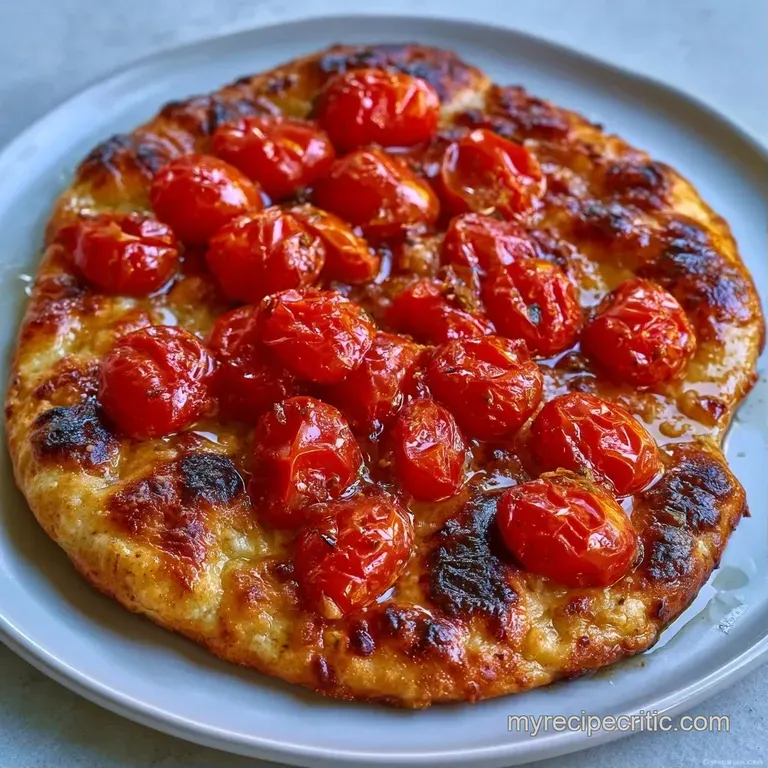
Even the best home cooks hit a snag. Most issues with this Vegan Cherry Tomato Flatbread come down to temperature or moisture.
Troubleshooting Common Issues
| Issue | Solution |
|---|---|
| Why Your Dough Sticks | If the dough is clinging to your fingers or the counter, you've likely had too much humidity in the air or the water was a bit too heavy. Just dust your surface with a bit more flour. |
| Why Tomatoes Get Soggy | This happens if you don't cook the tomatoes long enough in the pan. You want to see the skins wrinkle and the juice thicken into a syrup. |
| Why the Flatbread Puffs | If your bread looks like a pita and puffs up, your pan was probably too hot. Lower the heat slightly and press down on the dough with a spatula as it cooks to keep it flat. |
Different Toppings and Swaps
Once you have the base down, you can change the vibe of this dish easily. For a different base, you can try a no yeast flatbread dough if you have yogurt on hand.
For a "Cheesy" Flavor: If you miss the saltiness of cheese, sprinkle some nutritional yeast or a dusting of vegan parmesan over the tomatoes before the final crisp. It adds a nutty depth without the need for processed substitutes.
For More Hearty Options: Add sliced kalamata olives or marinated artichokes to the skillet along with the tomatoes. If you want more protein, a few dollops of hummus spread on the base before the toppings go on works wonders.
Using Other Tomatoes: If you don't have cherry tomatoes, you can use grape tomatoes or even diced Roma tomatoes. Just be careful with Romas; they have more water, so you'll need to sauté them for an extra 3-4 minutes to get the liquid to evaporate.
Scaling the Recipe
If you're feeding a crowd, you can easily double this. Just keep a few things in mind to avoid a mess.
Scaling Up (2x-4x): Don't try to cook all the dough in one pan. Work in batches. I recommend doubling the flour and water but only increasing the salt and red pepper flakes by 1.5x. Over salting is an easy mistake when doubling recipes.
For the tomatoes, sauté them in your largest pan so they don't steam if the pan is too crowded, they won't blister.
Scaling Down (1/2 batch): Use a smaller skillet (around 8 inches) to keep the heat concentrated. Reduce the cook time by about 20% because smaller dough circles heat through faster.
Decision Shortcut:
- If you want more crunch: Use a cast iron skillet and cook 1 minute longer per side.
- If you want a softer bite: Use a baking sheet and 400°F (200°C) for 12 minutes.
- If you're in a rush: Sauté the tomatoes while the dough is resting.
Truths About Flatbreads
There is a lot of noise about what makes "real" bread. Let's clear a few things up.
First, some people think you absolutely need yeast to get a chewy texture. That's not true. Baking powder provides a chemical reaction that creates plenty of lift for a flatbread. You lose the fermented flavor of a sourdough, but you gain a lot of time.
Second, many think vegan cheese is mandatory for a "pizza style" flatbread. Honestly, the combination of olive oil, blistered tomatoes, and balsamic glaze provides enough richness and acid. You don't need a fake cheese to make this feel satisfying.
Storage and Leftover Tips
This Vegan Cherry Tomato Flatbread is best eaten hot, but we've all had leftovers.
Fridge and Freezer: Store leftovers in an airtight container in the fridge for up to 3 days. To reheat, avoid the microwave it will turn the crust into a rubber band. Use a toaster oven or a dry skillet over medium heat for 2-3 minutes per side.
You can freeze the unbaked dough balls for up to 2 months. Wrap them tightly in plastic wrap and then foil. Thaw them in the fridge overnight before rolling them out.
Zero Waste Tips: Don't toss the oil left in the pan after sautéing the tomatoes. It is infused with garlic and oregano. Use it as a base for a salad dressing or drizzle it over some steamed broccoli.
If you have leftover arugula, toss it with lemon juice and salt to keep it fresh for another day.
Plating for the Table
To make this look like something from a bistro, don't just slide it onto a plate. Use a wooden cutting board and slice the flatbread into irregular rectangles or wedges.
Pile the arugula high in the center so it creates a bit of volume. The contrast of the bright green leaves against the red, blistered tomatoes looks stunning. Finally, do the balsamic drizzle in a zig zag pattern across the whole board.
A few hand torn basil leaves scattered randomly on top give it that fresh, organic look. It's simple, but it makes the meal feel like an event.
Recipe FAQs
How to make flatbread pizza dough without yeast?
Whisk together flour, salt, and baking powder before stirring in warm water and olive oil. Knead the resulting shaggy dough for 2-3 minutes until smooth and elastic.
Can you use pita bread as a pizza base?
Yes, pita bread is a great shortcut base. If you enjoyed working with the simple dough here, you can apply similar techniques to make homemade naan.
How do flatbread and pizza differ?
Flatbreads generally bypass the long fermentation process. While traditional pizza relies on yeast to rise over hours, this flatbread uses baking powder for an immediate, thinner crust.
Is it true that flatbread recipes never include salt?
No, this is a common misconception. Salt is vital for both flavor and gluten structure, which is why this recipe specifically calls for 1 tsp of salt.
What healthy ingredients can replace cheese on a pizza?
Fresh arugula and a drizzle of balsamic glaze are excellent alternatives. These add a peppery bite and tangy richness that mimics the satisfaction of cheese.
What are some good toppings for a pizza without cheese?
Blistered cherry tomatoes, sliced garlic, and fresh basil create a robust flavor profile. These juicy, aromatic ingredients ensure the flatbread stays moist and savory.
Why is my dough sticking to the counter?
High humidity or a slight excess of water usually causes sticking. Simply dust your surface with more all-purpose flour to make the dough manageable.
Vegan Cherry Tomato Flatbread