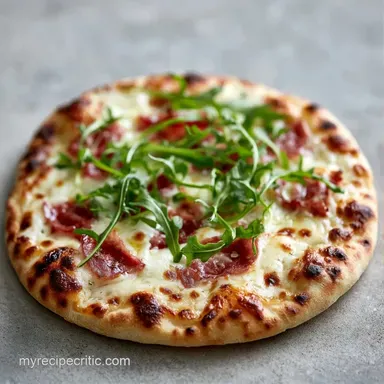
Yeast-Free Italian Deli Flatbread

- Prep15 Mins
- Cook4 Mins
- Servings5 flatbreads
- Time: 15 min active + 4 min cooking + 30 min resting
- Skill level: Easy, just needs basic kneading
- Great for: Fast weekday lunches or deli-style wraps
Italian Deli Flatbread
Hear that sizzle when the dough hits the hot skillet? That is the sound of these flatbreads getting those characteristic rich brown bubbles. They come out soft, pliable, and smelling like toasted grain.
It is a simple, no-yeast bread that works as a canvas for whatever you have in the deli drawer. You get a tender bite without needing a professional pizza oven or hours of waiting for dough to rise.
The goal is a thin, foldable wrap that doesn't crack when you fold it. Since we are using shortening, the texture stays soft even after it cools down.
What Makes It Soft
- No-Yeast Mix: Skipping yeast removes the need for rising time and keeps the flavor clean.
- Shortening: This fat coats the flour proteins, which stops too much gluten from forming and keeps the bread tender.
| Method | Time | Texture | Best For |
|---|---|---|---|
| Dry Skillet | 2 min/side | Spotty char | Authentic wraps |
| Oiled Pan | 1 min/side | Fried edge | Richer flavor |
This choice depends on how much char you want. A dry pan gives you those classic deli spots, while a bit of oil makes it feel more like a fried tortilla.
Tools You Need
You only need a few basics. A large mixing bowl, a fork, and a heavy skillet are the main players.
Why These Ingredients Work
| Ingredient | Role | If You Don't Have It |
|---|---|---|
| All-purpose flour | Structure | Whole wheat (makes it denser) |
| Vegetable shortening | Tenderness | Butter (adds flavor, melts faster) |
| Warm water | Hydration | Room temp water (takes longer to mix) |
What You'll Need
- 2 cups (250g) all-purpose flour
- 1/2 tsp (3g) fine sea salt
- 3 tbsp (42g) vegetable shortening, room temperature Why this? Keeps the bread foldable and soft
- 140 ml warm water
Making the Bread
The Mix
Whisk together 2 cups (250g) all-purpose flour and 1/2 tsp (3g) fine sea salt in a large bowl. Use your fingertips to rub 3 tbsp (42g) vegetable shortening into the flour until it looks like coarse sand. Gradually pour in 140 ml warm water, stirring with a fork until a shaggy dough forms.

The Knead
Gently knead the dough by hand for 2 minutes until it is smooth. Wrap the dough in plastic and let it rest for 30 minutes. Note: This lets the gluten relax so the dough doesn't shrink when you roll it.

Rolling Out
Divide the rested dough into 5 equal portions. On a lightly floured surface, roll each portion into a round about 8 inches (20cm) wide and 1/8 inch (3mm) thick.

The Sear
Preheat a skillet over medium-high heat. Place one round in the dry pan. Cook for 1 to 2 minutes per side until spotty golden-brown bubbles form.

The Finish
Immediately transfer the cooked flatbread to a plate. Cover it with a clean kitchen towel to trap the steam. This keeps the bread soft instead of letting it turn into a cracker.
Avoiding Kitchen Disasters
If your dough feels like a rubber band and keeps shrinking back, you've probably worked it too much or didn't let it rest. Give it another 15 minutes of quiet time on the counter.
If the bread comes out stiff, the pan might be too low. You want a high heat that cooks the bread quickly so the inside stays moist while the outside chars.
Dough Springs Back
This happens when gluten is too tight. Let the dough rest longer before rolling.
Bread Too Hard
Usually caused by overcooking or low heat. Keep the cook time to under 2 minutes per side.
Large Bubbles
These happen if the dough is too thick. Roll it to a consistent 1/8 inch thickness.
| Problem | Root Cause | Solution |
|---|---|---|
| Rubbery texture | Over-kneading | Knead only until smooth |
| Dry, stiff bread | Too much flour | Use just enough flour to stop sticking |
| No brown spots | Pan not hot enough | Preheat skillet on medium-high |
Using a light touch with the flour on your counter prevents the dough from drying out during the rolling process.
Keeping It Fresh

Keep these in an airtight plastic bag at room temperature for up to 2 days. For extended storage, place them in an airtight container and refrigerate them for 4 days maximum.
They are also freezer-friendly. Separate the rounds with parchment paper and keep them in a freezer-safe bag for a maximum of 3 months. To warm them, use a dry pan set to medium, warming each side for 30 seconds.
Other Flavor Ideas
You can add 1 teaspoon of dried oregano or garlic powder to the flour for a savory kick. For a different vibe, try this as a base for a simple tomato sauce flatbread.
I also like adding a pinch of toasted sesame seeds to the dough before rolling for a bit of crunch.
Best Fillings
I prefer adding a smear of pesto and some sliced tomatoes to ensure it stays juicy. To make it a complete meal, serve the wrap with classic Italian tomato pasta.
Frequently Asked Questions
Is flatbread similar to pizza?
It shares a similar base but differs in leavening and thickness. This version is thinner and more foldable, making it a great side for a creamy tomato sauce.
What is the traditional Italian flatbread called?
Piadina is the common name for this unleavened style. It originates from the Emilia-Romagna region and is typically used for wraps.
Why does the dough spring back?
The gluten is too tight and resisting the pressure of the rolling pin. Let the dough rest for another 15 minutes to relax the proteins before trying again.
How much flour should be used on the counter?
Use a light dusting just to keep the dough from sticking. Adding too much extra flour can make the final bread taste dry or feel tough.
When should I flip the bread to avoid burning?
Flip the round after 1 to 2 minutes once dark golden bubbles form. This indicates the bottom is browned enough to turn.
Can large bubbles be prevented while cooking?
Press the dough gently with a spatula as it heats. This releases trapped air and ensures more even browning across the surface.
Does this bread need to be refrigerated?
No, keep it in a sealed container on the counter. Since it contains no dairy or egg fillings, it stays fresh at room temperature.
Could oil replace the shortening in the dough?
Yes, but the texture will change. Shortening provides a more tender and foldable bite than oil does.
Tender Italian Deli Flatbread