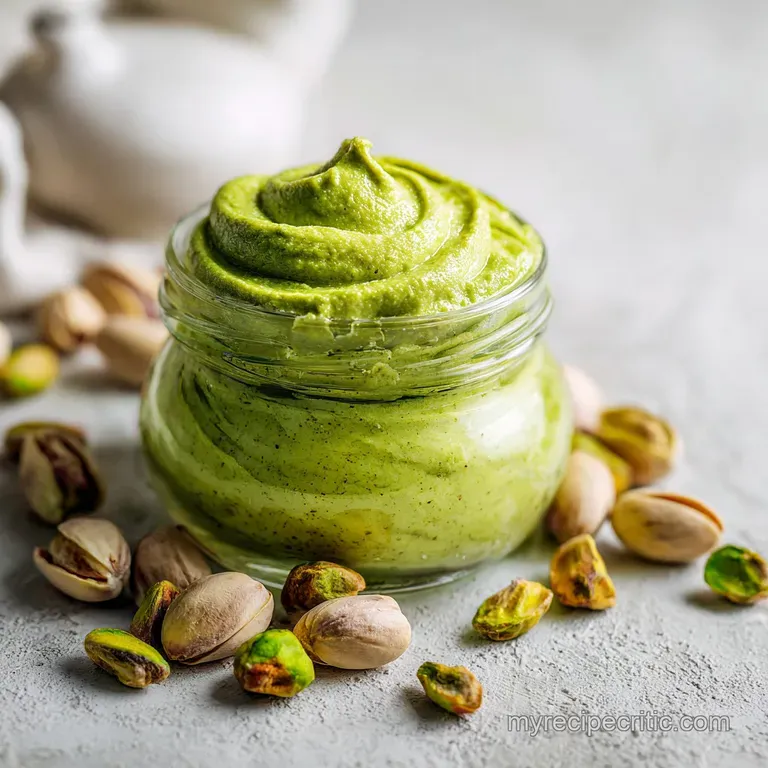
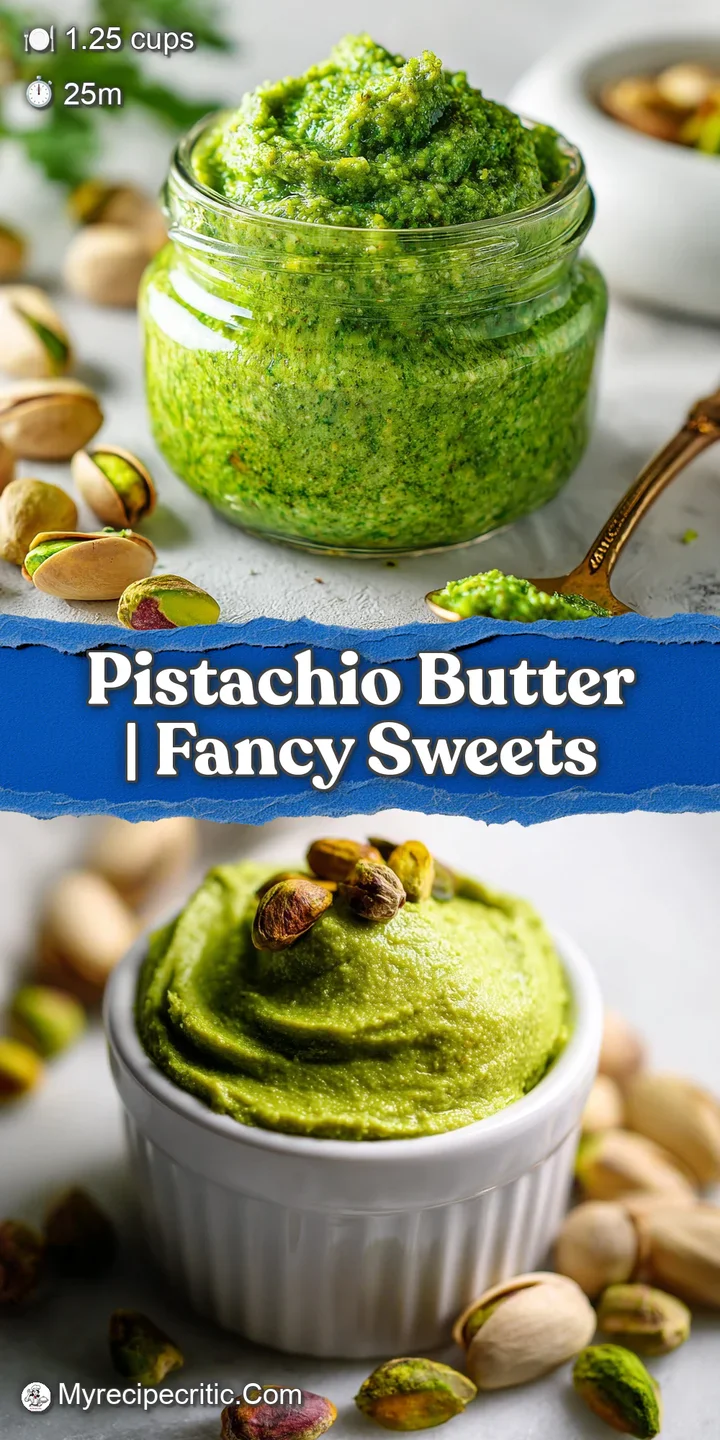
Pistachio Butter: Silky Emerald Spread
- Time: Active 15 minutes, Passive 10 minutes, Total 25 minutes
- Flavor/Texture Hook: Silky, earthy, and vibrantly nutty
- Perfect for: Weekend brunch, gourmet gifting, or leveling up your morning toast
- Making Silky Smooth Homemade Pistachio Butter
- Understanding the Science of Nut Emulsification
- Important Measurements for a Perfect Batch
- Selecting the Best Shells and Flavors
- Tools Required for a Silky Consistency
- Easy Methods for Creating Nut Spread
- Solving Common Texture and Taste Problems
- Creative Flavors and Diet Friendly Swaps
- Keeping Your Spread Fresh and Vibrant
- Perfect Ways to Serve Your Spread
- Myths Regarding Nut Processing
- Pistachio Butter FAQs
- 📝 Recipe Card
Making Silky Smooth Homemade Pistachio Butter
You know that moment when you open a jar of high end nut butter and see that gorgeous, vibrant green peeking out, only to realize it costs more than your lunch? I’ve been there. For the longest time, I thought that kind of velvety, professional texture was only possible with industrial grinders.
I tried making it at home once and ended up with a gritty, sad paste that tasted more like dust than dessert. It was frustrating, but it taught me exactly what not to do.
The secret isn't just about having a fancy blender, it’s about how the nuts behave when they hit the blades. If they're too cold, they won't release their oils. If they're too dry, they'll never turn into that "liquid gold" we’re looking for.
This recipe is the result of many trials (and a few overheated food processors), and I’m so excited to share it with you because once you taste the difference of a fresh batch, there is absolutely no going back.
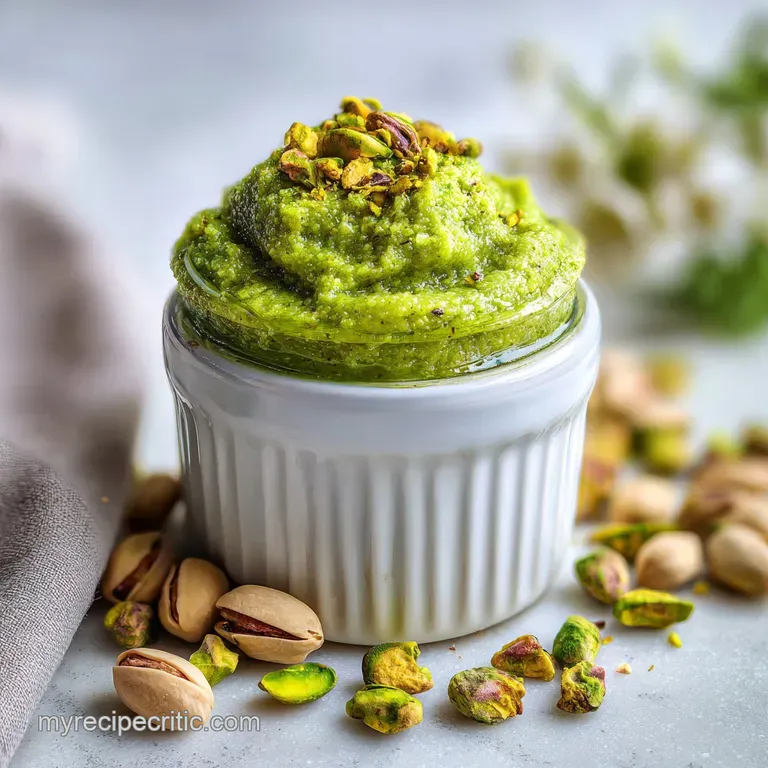
We are going for a texture that is so smooth it ripples when you stir it. We’ll use a gentle roast to wake up the fats and a few optional aromatics like cardamom and vanilla bean paste to add layers of depth. It’s simple, but the technique matters.
Let's get into why this process actually works so you can nail it on your first try.
Understanding the Science of Nut Emulsification
Thermal Lipid Release: Applying gentle heat to the pistachios weakens the cellular structure of the nut, allowing the internal fats (lipids) to escape more easily during grinding.
Mechanical Friction: As the blades spin, they create heat through friction, which keeps the released oils in a liquid state, ensuring the mixture transitions from a crumbly dough texture to a smooth fluid.
1. Thermal Lipid Release
When we roast the nuts at 325°F, we aren't just looking for color; we are literally melting the fats inside the nut. If you try to process cold nuts, the fats stay solid, and you'll end up with "pistachio flour" instead of butter.
You'll hear the nuts crackle slightly in the oven that’s the sound of the moisture escaping and the oils moving to the surface.
2. The Friction vs. Heat Balance
Processing nuts generates a lot of heat. You’ll notice the blender jar feels warm to the touch. This is good because it keeps the oils flowing, but you have to be careful not to overheat the motor. If the mixture starts to look oily but still feels thick, give it a rest.
3. Chlorophyll Preservation via Blanching
If you want that neon green color you see in Italian cafes, you have to deal with the skins. Pistachio skins are papery and purple brown; they add fiber but dull the color. By roasting and then rubbing them off, or even quickly blanching them, you protect the chlorophyll rich meat of the nut, ensuring the final spread looks as good as it tastes.
| Cook Method | Time | Texture | Best For |
|---|---|---|---|
| Raw & Blanched | 15 minutes | Ultra vibrant green, mild flavor | Pastry fillings and aesthetics |
| Lightly Roasted | 10 minutes | Golden green, deeply nutty | Toast, oatmeal, and snacking |
| Deep Roasted | 15 minutes | Earthy brown green, savory | Sauces and savory glazes |
If you love the nutty depth of this spread, you might also enjoy using it as a filling in a Peanut Butter Cookies recipe for a sophisticated twist.
Important Measurements for a Perfect Batch
The key to a consistent result is starting with the right ratio. I always recommend using a scale for the nuts because "2 cups" can vary wildly depending on the size of the pistachios. We are aiming for 300 grams to ensure there’s enough volume for the blades to actually grab the ingredients.
If you use too little, the nuts just bounce around the bottom of the jar.
| Component | Science Role | Pro Secret |
|---|---|---|
| Pistachios | Primary fat and protein source | Use "extra green" varieties for better color. |
| Flaky Sea Salt | Flavor contrast agent | Add at the very end to keep some "crunch" crystals. |
| Vanilla Bean Paste | Aromatic depth | Paste contains seeds that look beautiful in the green butter. |
This batch makes about 1.25 cups of finished butter. It’s the perfect amount to fit in a standard mason jar without leaving too much headspace, which helps prevent oxidation and keeps the color from turning dull over time.
Selecting the Best Shells and Flavors
When you're at the store, look for "raw, shelled, unsalted" pistachios. Avoid the pre roasted, salted ones in the snack aisle. They are often roasted too hard and salted too heavily for a balanced butter.
- 2 cups (300g) raw, shelled, unsalted pistachios: Why this? Raw nuts allow you to control the roast level and final oil release.
- Substitute: Raw cashews (adds creaminess but changes color to pale ivory).
- 0.5 tsp flaky sea salt: Why this? Cuts through the richness and brightens the earthy notes.
- Substitute: Fine pink Himalayan salt (use slightly less as it’s saltier by volume).
- 1 tbsp honey or maple syrup (optional): Why this? Adds a hint of sweetness to create a "sweet pistachio butter" style.
- Substitute: Agave nectar or omit for a purely savory spread.
- 0.5 tsp pure vanilla bean paste (optional): Why this? Provides a floral aroma that bridges the gap between nut and dessert.
- Substitute: 1 tsp pure vanilla extract.
- 0.25 tsp ground cardamom (optional): Why this? Traditional pairing that emphasizes the pistachio's Middle Eastern roots.
- Substitute: A pinch of cinnamon or nutmeg.
Tools Required for a Silky Consistency
Don't let anyone tell you that you can do this with a mortar and pestle unless you want a serious arm workout and a very chunky result. For that pourable, velvety texture, you need power.
A high speed blender (like a Vitamix or Blendtec) is the gold standard here. The narrow base and high RPMs are perfect for pulverizing the nuts into a liquid. If you’re using a food processor, it will work, but it will take longer usually about 10 to 12 minutes and you may need to add a teaspoon of neutral oil (like grapeseed) to help it along.
You’ll also want a sturdy silicone spatula. You’re going to be scraping the sides down a lot in the beginning when the nuts are still in the "sand" stage. A small offset spatula is also handy for getting every last bit out of the bottom of the blender.
Trust me, you won’t want to waste a single drop of this stuff.
Easy Methods for Creating Nut Spread
- Preheat your oven to 325°F (165°C). Note: A lower temperature prevents the delicate oils from scorching.
- Spread the 2 cups (300g) of pistachios on a rimmed baking sheet in a single layer.
- Roast for 8 to 10 minutes until fragrant and just starting to turn golden.
- Transfer the warm nuts to a clean kitchen towel. Rub them vigorously for 2 minutes until the loose skins flake off.
- Place the warm, de skinned pistachios into your high speed blender or food processor.
- Pulse 5 to 10 times to break the nuts into a coarse meal.
- Process on medium high speed for 2 minutes. Note: It will look like a dry dough at this stage; don't panic!
- Scrape the sides down and continue processing for another 3 to 5 minutes until the mixture turns glossy and fluid.
- Add the 0.5 tsp flaky salt, 1 tbsp honey, vanilla paste, and cardamom.
- Blend for 30 seconds on low until fully incorporated and perfectly smooth.
Chef's Tip: If your blender is struggling, let it rest for 5 minutes. The residual heat from the blades will continue to soften the nut fats, making the next round of blending much easier.
Solving Common Texture and Taste Problems
The most common issue I see is people giving up too early. Making nut butter is a test of patience. It goes through stages: whole nuts, coarse crumbs, dry sand, thick dough, and finally, silky butter. If you stop at the dough stage, you'll be disappointed.
1. The "Gritty" Texture Trap
If your butter feels like fine sand on your tongue, it usually means the nuts weren't processed long enough or they weren't warm enough when you started. The particles need to be smaller than the taste buds on your tongue to feel "smooth."
2. Seizing and Clumping
If you add liquid sweeteners like honey too early, or if a drop of water gets into the blender, the butter might "seize" and become a hard ball. This happens because the sugar or water bonds with the tiny amount of moisture in the nuts, separating from the oil.
| Problem | Root Cause | Solution |
|---|---|---|
| Butter is too thick | Nuts were too dry or old | Add 1 tsp of neutral oil (grapeseed or avocado). |
| Separation after storage | Natural settling of oils | Stir vigorously with a knife before using. |
| Bitter aftertaste | Skins were left on or nuts over roasted | Ensure skins are rubbed off; add a touch more honey. |
Common Mistakes Checklist
- ✓ Never use cold nuts; always roast or warm them slightly to help the oil flow.
- ✓ Don't add water based flavorings (like watery extracts) as they can cause the butter to seize.
- ✓ Be patient it often takes a full 5-8 minutes of blending to reach the "pourable" stage.
- ✓ Scrape the bottom corners of the blender where dry pockets of nut flour like to hide.
Creative Flavors and Diet Friendly Swaps
If you want to scale this recipe down for a small test batch, you can halve the ingredients, but you must use a very small blender jar or a "mini" food processor. In a large container, half a cup of nuts won't even reach the blades. To scale up (2x), just ensure your blender can handle the volume without overheating.
3 Creative Flavor Twists
- White Chocolate Pistachio: Stir in 1/4 cup of melted white chocolate at the very end. It makes the butter incredibly fudgy and decadent.
- Lemon & Thyme: Add 1/2 tsp of fresh lemon zest and a pinch of dried thyme for a savory sweet version that is incredible on goat cheese crostini.
- Dark Cocoa: Add 1 tbsp of Dutch processed cocoa powder. This creates a "Pistachio tella" that is much better than the hazelnut version.
2 Dietary Substitutions
- sugar-free: Use a few drops of liquid monk fruit or stevia instead of honey. Avoid granulated erythritol as it can stay crunchy in the smooth butter.
- Salt Free: Omit the sea salt and add a pinch of nutritional yeast for a different kind of savory depth that mimics the "pop" of salt.
Keeping Your Spread Fresh and Vibrant
Because this is a natural product without preservatives, it needs a little more care than the stuff from the grocery store. Store your finished butter in a glass jar with a tight fitting lid. It will stay fresh in the pantry for about a week, but for long term storage, the fridge is your best friend.
Fridge: Up to 3 weeks. The butter will firm up significantly when cold, so let it sit at room temperature for 15 minutes before you try to spread it. Freezer: Up to 3 months. Thaw in the fridge overnight.
You might need to give it a quick pulse in the blender or a vigorous stir to re emulsify the oils after freezing.
Zero Waste Tip: Don't wash that blender jar immediately! Pour in a cup of warm milk (dairy or nut), a spoonful of cocoa powder, and a dash of sweetener. Blend it on high for a minute to make a "Pistachio Hot Chocolate" that cleans the jar and tastes like a dream.
Perfect Ways to Serve Your Spread
One of my favorite pistachio butter uses is as a swirl in cakes or brownies. It doesn't behave like a liquid; it stays somewhat intact, creating these beautiful, nutty ribbons. Imagine drizzling this over a Homemade Chocolate Cream recipe; the green and brown contrast is stunning.
1. The Ultimate Pistachio Buttercream Recipe
For a quick frosting, beat 1/2 cup of this butter with 1 cup of softened unsalted butter and 2 cups of powdered sugar. It creates a naturally green, intensely flavored frosting that beats any artificial extract.
2. Gourmet Pistachio Butter Cookies
Substitute half of the butter in your favorite shortbread recipe with this pistachio spread. The dough texture will be slightly softer, but the flavor will be out of this world. You can also use it as a filling for sandwich cookies, which is always a hit at parties.
For something truly special, try spreading a thick layer on a slice of toasted Classic French Bread recipe and topping it with sliced strawberries and a drizzle of balsamic glaze. It’s a breakfast that feels like a trip to a Parisian bakery.
Myths Regarding Nut Processing
Myth: You must add oil to make it smooth. Truth: While a teaspoon of oil can speed things up, it isn't strictly necessary if you are patient. Pistachios are about 45% fat by weight; that is more than enough to create a liquid state if processed long enough.
Adding oil can actually dilute the intense pistachio flavor.
Myth: Soaking nuts (activating them) makes better butter. Truth: Soaking adds moisture. If you don't dehydrate the nuts perfectly back to 0% moisture before blending, the water will cause the oils to separate and the butter will spoil in days instead of weeks.
Stick to roasting for the best shelf life and flavor.
Myth: A food processor is just as good as a high speed blender. Truth: A food processor will get you close, but the RPMs aren't high enough to achieve that professional "mirror smooth" finish.
It will always have a very slight, pleasant "polenta like" grain unless you process it for an excessively long time.
Pistachio Butter FAQs
Is pistachio butter good for you?
Yes. Pistachio butter is packed with healthy fats, protein, and fiber, making it a nutrient dense spread. It also contains essential vitamins and minerals like vitamin B6 and copper.
What would you use pistachio butter for?
You can use pistachio butter in many ways, including spreading it on toast, swirling it into oatmeal or yogurt, using it in baked goods like cookies and cakes, or as a base for sauces and dips. For a decadent twist, try drizzling it over a Homemade Chocolate Cream recipe.
Is pistachio butter healthier than peanut butter?
It's comparable, with nuances. While both are nutritious, pistachio butter often contains more vitamin K, potassium, and antioxidants. However, peanut butter may have slightly more protein and fiber. If you enjoyed mastering the flavor profile of nut butters here, consider how a similar approach applies to creating a Classic Peanut Butter Blossoms Recipe Easy Hershey Kiss Cookies.
Why is pistachio butter so expensive?
Pistachios themselves are costly to grow and harvest. They require specific climates, are susceptible to disease, and are time consuming to process from shell to nut, driving up the cost of pistachio butter compared to other nut butters.
How do I make pistachio butter smooth?
Process for a sufficient amount of time. After roasting and de-skinning, blend the pistachios in a high speed blender or food processor until they go through stages of crumbs, dough, and finally, a glossy, fluid butter. This can take 5-15 minutes depending on your equipment. If you enjoyed controlling the texture here, the same principle of patience applies when learning how to make fluffy buttermilk shortcakes.
Can I substitute another nut for pistachios in pistachio butter?
Yes, but it will change the flavor and color. Cashews are a good substitute for a creamy texture, though they'll result in a pale butter. Almonds or macadamia nuts can also be used, each offering a distinct flavor profile. If you are aiming for a spread with similar richness but a different nut base, explore the technique in our Classic Chewy Peanut Butter Cookies recipe.
How long does homemade pistachio butter last?
Stored properly, it lasts for weeks. Keep homemade pistachio butter in an airtight container in the refrigerator for up to 3 weeks. For longer storage, up to 3 months, freeze it, but be aware it may require re-emulsification.
Pistachio Butter
Ingredients:
Instructions:
Nutrition Facts:
| Calories | 141 kcal |
|---|---|
| Protein | 5.0 g |
| Fat | 11.3 g |
| Carbs | 6.8 g |
| Fiber | 2.5 g |
| Sugar | 1.9 g |
| Sodium | 96 mg |
