Moist Peanut Butter Cake with Peanut Butter Frosting
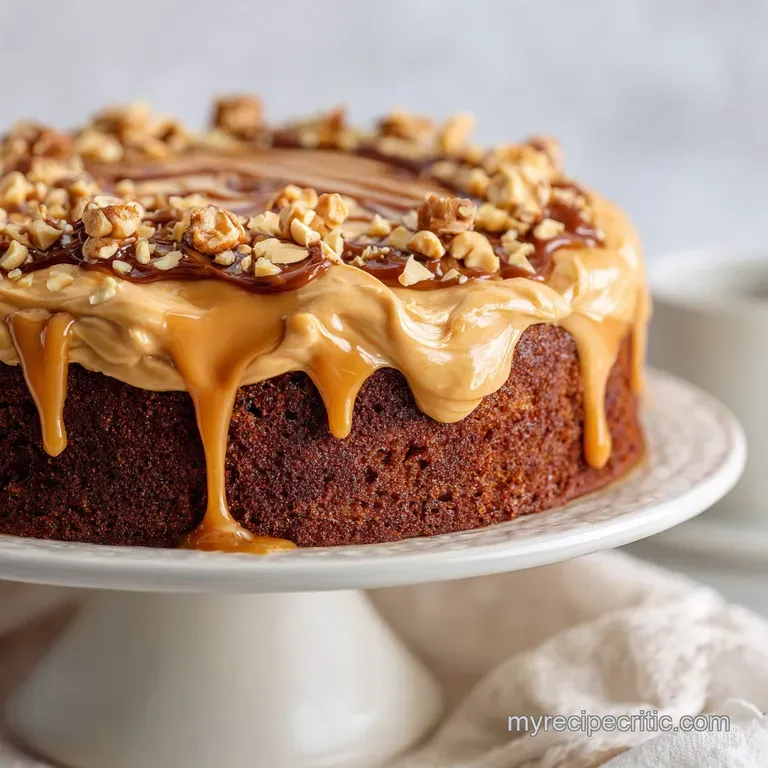
- Time: Active 20 minutes, Passive 35 minutes, Total 55 minutes
- Flavor/Texture Hook: Velvety, melt in-your mouth crumb with a deeply roasted aroma
- Perfect for: Weekend celebrations, potlucks, or an old school comfort dessert
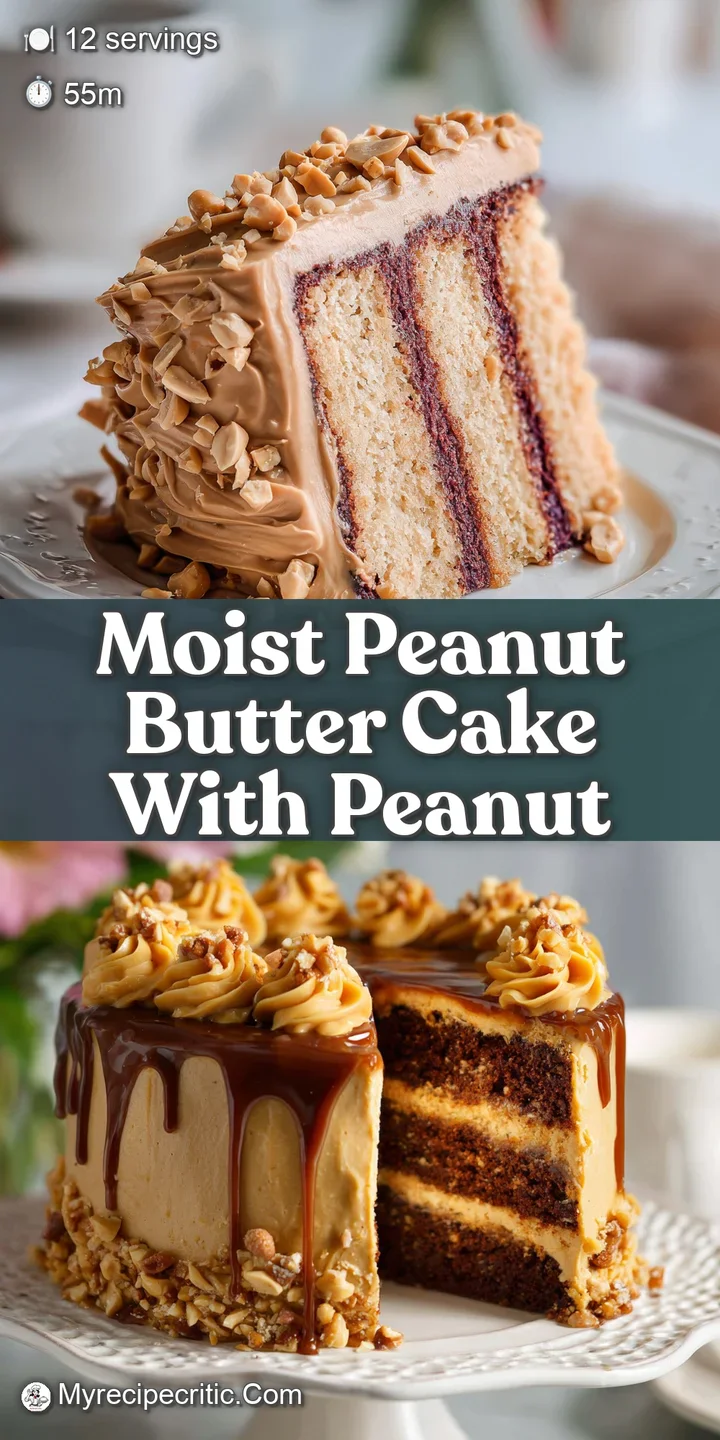
- Indulge in this Unforgettable Moist Peanut Butter Cake with Peanut
- The Reason This Velvety Cake Becomes an Instant Family Favorite
- Understanding the Exact Time and Temperature for Baking Success
- Gathering the Essential Ingredients for a Rich Peanut Butter Flavor
- Selecting the Right Tools for This Moist Peanut Butter Cake
- Mastering the Steps to Bake This Moist Peanut Butter Cake
- How to Fix Texture Issues with This Peanut Butter Cake
- Creative Flavor Variations for Your Moist Peanut Butter Cake
- Keeping Your Leftover Peanut Butter Cake Fresh and Delicious
- Best Beverages to Pair with Your Moist Peanut Butter Cake
- Recipe FAQs
- 📝 Recipe Card
Indulge in this Unforgettable Moist Peanut Butter Cake with Peanut
The first time I pulled this cake out of the oven, the aroma hit me like a warm hug. It wasn't just sweet; it was that deep, toasted scent of roasted nuts that makes you want to skip dinner and go straight for the fork.
I remember standing in my kitchen, watching the steam rise, and thinking about all the times I’d suffered through dry, crumbly peanut butter cakes that felt like eating a sweetened sponge. Indulge in this unforgettable recipe for Moist Peanut Butter Cake with Peanut Butter Frosting.
Honestly, I almost gave up on finding the right balance until I realized that peanut butter is a fickle beast in the oven. It wants to soak up all the moisture in your batter and leave you with something resembling a brick.
But after a few messy trials and a lot of "happy accidents," I discovered that the secret isn't just adding more butter; it’s about the acidity of the buttermilk and the way the oil behaves alongside the fats.
This version has that sought after velvety texture that actually holds its own against a thick layer of frosting.
The Reason This Velvety Cake Becomes an Instant Family Favorite
Most people think a cake is just a cake, but there is a specific reason why this one feels different on your tongue. When you combine the heavy proteins in peanut butter with the delicate structure of all purpose flour, you’re basically starting a war in your mixing bowl.
We need to make sure the crumb stays soft without collapsing under its own weight.
The Secret to a Velvety Crumb: The combination of neutral oil and buttermilk creates a double moisture barrier. While the oil keeps the crumb feeling "wet" even after it cools, the buttermilk acidity breaks down the gluten strands, ensuring the texture is soft rather than chewy.
- Fat Suspension: The oil remains liquid at room temperature, which prevents the cake from feeling "tight" or hard when you take that first bite.
- Acidity and Lift: The 240ml of buttermilk reacts instantly with the baking soda, creating tiny carbon dioxide bubbles that expand to give us a fine, tight crumb.
- Protein Shielding: By mixing the peanut butter with the oil first, we coat the flour particles in fat, which limits how much gluten can form during the final stir.
- Sugar Saturation: Using 300g of granulated sugar does more than sweeten; it actually hygroscopically holds onto water molecules, preventing the oven heat from drying out the center.
| Method | Bake Time | Texture Profile | Best For |
|---|---|---|---|
| Standard 9x13 Pan | 35 minutes | Uniform, soft, moist | Family potlucks and easy slicing |
| Two 8 inch Rounds | 28 minutes | Denser edges, more frosting | Impressive layer cakes for birthdays |
| Cupcake Tins | 18 minutes | Airy, light, handheld | School events or portion control |
The 9x13 method is my absolute go to because it allows the heat to distribute evenly across a wider surface area. This prevents the edges from becoming "shatter" crisp before the middle is fully set, which is a common tragedy in deeper pans. If you love a good crunch, you might find that my Peanut Butter Cookies recipe satisfies that craving, but for this cake, we are strictly chasing that velvety softness.
Understanding the Exact Time and Temperature for Baking Success
Precision is the difference between a masterpiece and a mediocre snack. I’ve learned the hard way that "room temperature" isn't just a suggestion it’s a requirement for the chemistry to work.
If your eggs are cold, they’ll seize the fats in the peanut butter, and you'll end up with a lumpy batter that doesn't rise correctly. We are aiming for a specific internal temperature of 200°F (93°C) to ensure the crumb is set but not over baked.
For a Velvety, Never Dry Crumb
To get that professional finish, you need to watch the visual cues. When the timer hits 30 minutes, start looking for the "pull away." This is when the edges of the cake begin to shrink slightly from the sides of the pan. It’s a signal that the structure is stabilized.
If you wait until the top is dark brown, you’ve gone too far; we want a light, golden honey hue.
To Achieve Perfect Chemical Leavening
The 1 teaspoon of baking soda is your only lift here, so don't let the batter sit around. Once the buttermilk (acid) touches the soda (base), the clock is ticking. You want that pan in the oven within 5 minutes of your final fold.
If you linger too long while checking your phone, those bubbles will pop, and your cake will be as flat as a pancake.
| Component | Science Role | Pro Secret |
|---|---|---|
| Buttermilk | Acidic tenderizer | Use full fat for the richest mouthfeel. |
| Neutral Oil | Moisture retention | Avoid olive oil; it competes with the nut flavor. |
| Creamy Peanut Butter | Structural fat | Don't use "Natural" oils separated versions here. |
| Boiling Water (Optional) | Starch gelatinization | A splash at the end can create a silkiest batter. |
One thing I’ve noticed is that the brand of peanut butter actually matters. You want a commercial, emulsified brand for the cake batter. The "fancy" stuff where the oil sits on top can behave unpredictably in the oven, often causing the cake to become greasy or separated.
Stick to the classics for the bake, and save the artisanal jars for your morning toast.
Gathering the Essential Ingredients for a Rich Peanut Butter Flavor
Every ingredient in this 12 serving recipe serves a purpose. We aren't just throwing things in a bowl; we are building layers of flavor. The salt is particularly important because it sharpens the dull sweetness of the sugar and makes the roasted notes of the peanut butter pop.
- 250g all purpose flour: The skeleton of our cake. Why this? Provides enough structure to hold the heavy peanut butter without being tough.
- 300g granulated sugar: For sweetness and browning. Why this? It creates that beautiful golden crust through the Maillard reaction.
- 130g creamy peanut butter (for cake): The star of the show. Why this? Provides flavor, fat, and a unique, dense richness.
- 240ml buttermilk, room temperature: The magic tenderizer. Why this? Its acidity ensures the baking soda works perfectly for a soft rise.
- 1 tbsp vanilla extract: A flavor enhancer. Why this? Vanilla actually rounds out the nuttiness, making it taste "fuller."
| Original Ingredient | Substitute | Why It Works |
|---|---|---|
| Buttermilk (240ml) | Whole milk + 1 tbsp Lemon Juice | Mimics the acidity needed to activate the soda. |
| All Purpose Flour (250g) | Cake Flour (250g) | Results in a much lighter, more delicate crumb. |
| Neutral Oil (120ml) | Melted Unsalted Butter | Adds a richer flavor but the cake dries out faster. |
If you’re out of buttermilk, don't panic. Just whisk that tablespoon of lemon juice into your milk and let it sit for 10 minutes until it looks slightly curdled. It’s a trick I’ve used more times than I care to admit, and it works perfectly in this cake. For another classic treat that relies on simple pantry staples, you might enjoy trying a Classic Strawberry Shortcake recipe during the summer months.
Selecting the Right Tools for This Moist Peanut Butter Cake
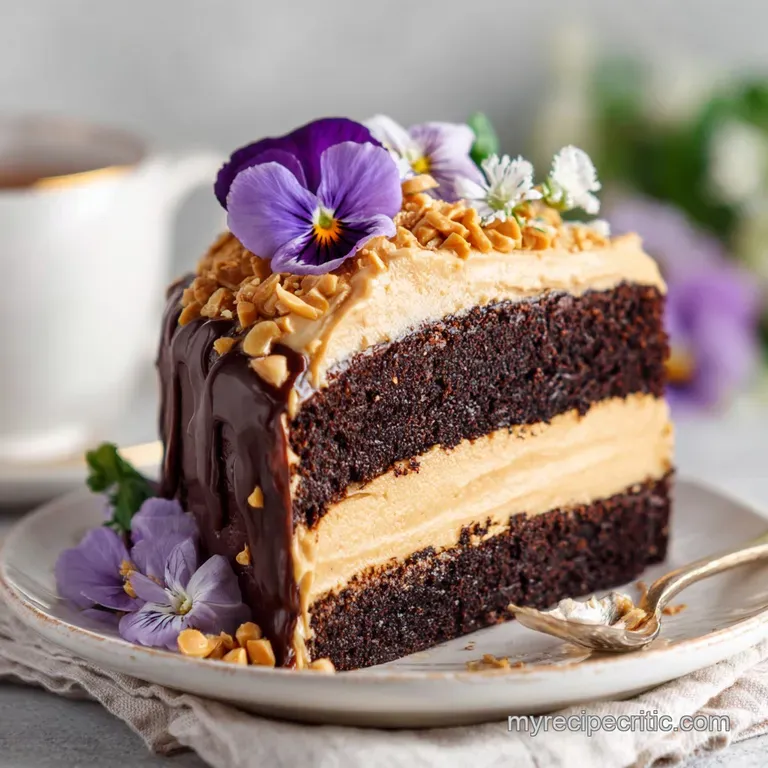
You don't need a professional kitchen, but having the right gear makes the process so much smoother. I personally swear by a digital scale. While I’ve provided gram measurements, measuring by volume (cups) can vary by up to 20% depending on how tightly you pack your flour.
If you want that consistent, velvety result, weigh your ingredients.
For the Moist Peanut Butter Cake
A 9x13 inch light colored metal baking pan is your best friend here. Dark pans absorb heat too quickly and can scorch the bottom of your cake before the middle is set. Also, grab a sturdy whisk. We want to incorporate air without over mixing the flour.
If you use a stand mixer, keep it on a low speed once the dry ingredients go in to avoid a "tough" cake.
For the Velvet Peanut Butter Frosting
A hand mixer or a stand mixer with the paddle attachment is essential for the frosting. We need to beat the 115g of softened butter and 130g of peanut butter until they look like a pale, unified cloud. If you try to do this by hand, your arm will fall off before you reach the right level of aeration.
Chef's Tip: Freeze your mixing bowl for 10 minutes before making the frosting. A cold bowl helps the heavy cream (50ml) emulsify faster, leading to a much more stable, pipeable texture.
Mastering the Steps to Bake This Moist Peanut Butter Cake
Let’s get into the nitty gritty. This isn't a "dump and stir" cake; the order of operations determines the final texture. Follow these steps, and you’ll have a cake that people will talk about for weeks.
1. The Aeration Phase
Preheat your oven to 350°F (175°C) and grease your 9x13 pan. In a large bowl, whisk together the 120ml oil and 130g peanut butter until completely smooth. Note: This ensures the fat is evenly distributed before it meets the flour.
2. The Liquid Integration
Add the 240ml room temperature buttermilk, 2 large eggs, and 1 tbsp vanilla extract to the peanut butter mixture. Whisk vigorously until the color is uniform and no streaks of egg remain.
3. The Dry Fold
Sift the 250g flour, 300g sugar, 1 tsp baking soda, and 0.5 tsp salt directly into the wet ingredients. Use a spatula to fold the mixture together. Note: Stop the moment you see no more white flour streaks to keep the crumb tender.
4. The Golden Bake
Pour the batter into the prepared pan and smooth the top. Bake for 35 minutes until a toothpick inserted into the center comes out with just a few moist crumbs. If the toothpick is wet, give it 3 more minutes.
5. Whipping the "Cloud" Frosting
While the cake cools completely (do not frost a warm cake!), beat the 115g softened butter and 130g peanut butter for 3 full minutes. Slowly add the 360g sifted powdered sugar and 50ml heavy cream. Whip on high until the frosting looks pale, fluffy, and voluminous.
How to Fix Texture Issues with This Peanut Butter Cake
Even the best of us have bad kitchen days. If your cake doesn't look like the picture, it's usually down to one of three things: temperature, timing, or technique. But don't toss it in the bin! Most issues have a root cause that we can identify and fix for the next batch.
For a Sunken Center
If your cake rises beautifully in the oven only to collapse into a crater as it cools, you likely opened the oven door too early. That rush of cold air shocks the delicate structure before it has fully "set." Another culprit is expired baking soda. If your soda is older than six months, it might have lost its punch.
If the Batter Separates
Sometimes the oil and peanut butter just don't want to play nice with the eggs. This usually happens if the eggs are straight from the fridge. The cold temperature makes the fats seize up. If this happens, keep whisking!
You can also place the bowl over a pot of warm water for 30 seconds to help the fats melt back into a cohesive emulsion.
| Problem | Root Cause | Solution |
|---|---|---|
| Dry, Crumbly Texture | Over baking or too much flour | Use a digital scale and pull the cake at 35 mins. |
| Greasy Bottom | Peanut butter wasn't emulsified | Whisk the oil and peanut butter thoroughly first. |
| Gritty Frosting | Powdered sugar wasn't sifted | Always sift your sugar to remove stubborn lumps. |
Common Mistakes Checklist
- ✓ Ensure eggs and buttermilk are at room temperature to prevent the batter from curdling.
- ✓ Sift the powdered sugar for the frosting; even small lumps will ruin the velvety mouthfeel.
- ✓ Don't over mix the flour! Mix only until the streaks disappear to keep the gluten relaxed.
- ✓ Let the cake cool for at least 2 hours before frosting, or the butter will melt into a puddle.
- ✓ Check your baking soda by dropping a pinch in vinegar; if it doesn't fizz instantly, buy a new box.
Creative Flavor Variations for Your Moist Peanut Butter Cake
Once you've mastered the base recipe, the world is your oyster. Peanut butter is an incredible canvas for other flavors. Whether you want to lean into the saltiness or go full blown dessert decadent, these variations are easy to swap in without ruining the chemistry of the bake.
For the Chocolate Peanut Butter Duo
If you're a fan of that classic "cup" candy, simply fold in 100g of semi sweet chocolate chips into the batter at the very end. You can also swap out 50g of the flour for high-quality cocoa powder. If you go this route, add an extra splash of buttermilk to account for the drying effect of the cocoa.
For a Crunchy Texture Twist
I know we’re going for "moist" and "velvety," but sometimes you want a little bit of "shatter" in your bite. Instead of creamy peanut butter in the frosting, use crunchy. Or better yet, top the finished cake with a handful of crushed, honey roasted peanuts. The salt on-salt action is absolutely addictive.
If You Want a Lighter Feel
If the peanut butter frosting feels too heavy, you can lighten it up by folding in 100g of whipped topping (like Cool Whip) or stiffly whipped heavy cream into the finished frosting. This creates a "mousse like" texture that is much airier and less sweet.
- The Salty Dog: Sprinkle flaky sea salt (like Maldon) over the top of the frosting to cut through the sugar.
- The Elvis: Add a layer of sliced bananas between the cake and the frosting for a truly indulgent treat.
- The PB & J: Swirl 100g of strawberry or grape jam into the batter before baking for a nostalgic flavor profile.
Keeping Your Leftover Peanut Butter Cake Fresh and Delicious
Storing this cake correctly is the difference between a Monday morning treat and a Monday morning disappointment. Because of the high fat content from the peanut butter and oil, this cake actually stays moist longer than a standard sponge, but it still needs a little protection from the air.
Storage Guidelines You can keep the frosted cake at room temperature in an airtight container for up to 3 days. If your kitchen is particularly warm, I'd suggest the fridge, where it will stay fresh for up to 5 days.
Just make sure to bring it back to room temperature before serving cold peanut butter frosting can feel a bit waxy.
Freezing and Reheating This cake freezes like a dream! You can freeze individual slices by wrapping them tightly in plastic wrap and then a layer of foil. They’ll stay perfect for up to 3 months. To eat, let a slice thaw on the counter for about an hour.
If you’re in a rush, a quick 15 second zap in the microwave will make the cake feel "just baked" again, though the frosting might get a little soft.
Zero Waste Tip If you end up with edges that got a bit too "crispy" or dry, don't throw them away. Crumble the leftovers into a bowl, mix with a spoonful of extra frosting, and roll them into cake pops!
You can dip them in melted chocolate for a second life dessert that is arguably just as good as the original cake.
Best Beverages to Pair with Your Moist Peanut Butter Cake
Finding the right drink to wash down a rich cake is an art form. You want something that cleanses the palate without overwhelming the delicate nuttiness of the peanut butter.
I personally think a cold glass of whole milk is the gold standard here. There is something about the way the dairy fat interacts with the roasted peanuts that is just... right. But if you’re looking for something a bit more sophisticated, a dark roast coffee is a brilliant choice.
The bitterness of the coffee beans cuts right through the 55.8g of sugar per serving, balancing out the sweetness.
If you’re serving this as part of a larger dessert spread, maybe alongside something fruity like my Classic Strawberry Shortcake recipe, try a glass of cold sparkling cider. The bubbles help lift the heavy fats from your tongue, making every bite feel as fresh as the first one. Whatever you choose, just make sure it's not too sweet on its own, or you'll lose the nuanced flavor of the cake itself. Happy baking!
Recipe FAQs
What is the secret ingredient to a moist cake?
The combination of neutral oil and buttermilk. Oil remains liquid at room temperature, guaranteeing a "wet" mouthfeel, while the buttermilk's acidity tenderizes the gluten structure.
Does a cake with peanut butter frosting need to be refrigerated?
Yes, if the ambient temperature is warm. For up to 3 days at room temperature in an airtight container is fine, but 5 days is the limit; refrigeration extends freshness up to 5 days.
What are common peanut butter icing mistakes?
Failing to fully cream the butter and peanut butter before adding sugar. You must beat the fats until they are pale and airy first, incorporating air for that essential light texture.
Why is my peanut butter frosting not fluffy?
The powdered sugar wasn't sifted or you whipped at too low a speed. Sifting removes undissolved lumps, and whipping on high speed incorporates the necessary air volume to make the frosting voluminous.
Is it true I must use a specific type of peanut butter for the batter?
Yes, use commercial, emulsified peanut butter for the cake batter. Natural peanut butter separates easily and can cause the cake structure to become greasy or uneven when baked.
How to ensure the cake doesn't stick to the pan during baking?
Grease the pan thoroughly with butter and dust lightly with flour. This physical barrier prevents adherence, which is critical since you need the edges intact for proper cooling and slicing.
How do I make a lighter, mousse like frosting?
Fold in stabilized whipped cream or whipped topping gently after the main frosting is complete. This technique introduces air without over beating the peanut butter, similar to how air is incorporated in our The Homemade Chocolate recipe.
Moist Peanut Butter Cake
Ingredients:
Instructions:
Nutrition Facts:
| Calories | 600 kcal |
|---|---|
| Protein | 9.5 g |
| Fat | 30.4 g |
| Carbs | 76.3 g |
| Fiber | 1.9 g |
| Sugar | 55.8 g |
| Sodium | 295 mg |
