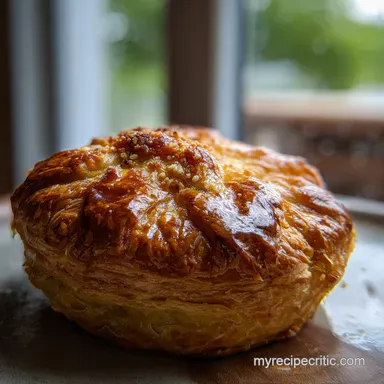
Classic Chicken Leek and Tarragon Pithivier

- Ditching the Dreaded Soggy Bottom: Why This Pie is Completely Different
- The Managed Meal: Ingredients and Equipment Control
- Getting the Engine Room Ready
- Stage 1: The Magic of a Thick Filling
- Stage 2: Guided Advanced Savory Pastry Assembly
- Pro Tips to Prevent a Meltdown
- Plating and Post-Pie Management
- Frequently Asked Questions
- 📝 Recipe Card
Ditching the Dreaded Soggy Bottom: Why This Pie is Completely Different
Oh my gosh, who else is terrified of the dreaded soggy bottom? It is the Achilles heel of all home bakers! Today, we are tackling a dish where every single step is carefully managed to ensure flaky perfection.
Honestly, you need this recipe in your life. We are making the ultimate comfort food upgrade: the truly elegant Chicken leek and tarragon pithivier recipe .
It’s creamy, herbaceous, and stunning to look at.
Why We Need Managed Precision
I first attempted one of these beautiful pies after watching The Great British Bake Off , and let me tell you, my initial attempt looked like a collapsed football.
This is a traditional French dome pie, famous for its elegant, scored top, a true show-stopping controlled dome pie . While it looks incredibly advanced, it really only sits at medium difficulty.
The secret to success lies in timing and control.
The major non-negotiable step is the importance of cooling pie filling . Seriously, if you skip this or rush it, all your effort goes out the window.
If the filling is even slightly warm, it melts the butter in the raw pastry, leading directly to that watery disaster we all fear.
This recipe relies heavily on chilling time management in pastry making . Expect the active cooking time to be about 80 minutes, but you need at least 60 minutes of chill time to achieve that crisp structure.
Mastering the Moisture Barrier
We actively combat sogginess by utilizing a rigorous roux and deglazing technique savory method. This allows us to achieve thickening savory pie filling for stability long before it ever touches the pastry.
This crucial step means you can wave goodbye to how to prevent a soggy bottom pie worries forever! By following these carefully managed processes, we ensure a sturdy base.
The benefits here are huge. You get 4 generous servings of a genuinely show-stopping meal that’s perfect for a sophisticated Sunday lunch.
This careful guided advanced savory pastry assembly yields not just great flavour, but incredible texture. Plus, the final temperature-controlled baking precision ensures the pastry rises tall and golden brown.
We also dedicate time to Mastering puff pastry sealing techniques , making sure that gorgeous dome holds its shape while baking.
Ready to get started? Let’s look at what we need...
The Managed Meal: Ingredients and Equipment Control
Honestly, a fantastic savory pie, especially a Chicken leek and tarragon pithivier recipe , is all about control. We aren't just chucking things into a pot; we're implementing excellent kitchen management.
Getting that perfect show-stopping controlled dome pie relies on treating the ingredients right.
The Essential Inventory for Flavour
Right, let's talk shopping. You don't need fancy stuff, but quality, managed ingredients make a difference. For the filling, we start with 1.
5 lbs (680 g) of boneless chicken thighs. Thighs stay juicy and forgive a little overheating, unlike breast meat. We need two large leeks, too.
Scrub those things until they are non-human vertebrae clean! If the leeks are sandy, your whole meal is ruined. Seriously.
Now, for the creaminess that holds it all together: 2 cups (480 ml) of decent chicken stock and 1/2 cup (120 ml) of double cream.
This ratio is vital for Thickening savory pie filling for stability . The goal is a sauce so thick it nearly sets up cold.
We achieve this texture using 3 Tbsp (45 g) of plain flour in our initial Roux and deglazing technique savory .
Don't skimp on this step.
Seasoning Secrets and Chilling Time
The real star here is fresh tarragon. You need 2 Tbsp chopped finely. It has that lovely, slightly anise flavour that just elevates the richness of the chicken.
If you can't get it, fresh dill is an okay swap, but it does change the character of the pie quite a bit.
We must talk about The importance of cooling pie filling . I once rushed this stage because I was starving, and the resulting pastry was the definition of How to prevent a soggy bottom pie failure.
That’s why Chilling time management in pastry making is non-negotiable. You must chill that filling for at least 60 minutes.
Cold filling means the raw puff pastry doesn't start melting before it hits the oven.
Tools for Guided advanced savory pastry assembly
You won’t need a Michelin-star kitchen, thank goodness. A large, heavy-bottomed skillet is essential for sautéing and building the sauce base.
The only other specialized tools are a good rolling pin and a sharp paring knife for scoring the decorative pattern.
For the structural success of our Pithivier, the pastry brush is key. When assembling, you use it for the egg wash to achieve Mastering puff pastry sealing techniques .
Make sure you cut a visible steam vent in the center! This stops internal pressure from bursting the dome. We bake this beauty first at 400° F ( 200° C) .
This initial high heat combined with Temperature-controlled baking precision is how you get that incredible puff and golden crust. Don't worry about complexity; this is simple Guided advanced savory pastry assembly that anyone can ace!
G’day, mate! Today we are ditching the basic dinner plan. We are making something that looks posh, but honestly, it’s all about great organisation.
We’re tackling the stunning and comforting Chicken leek and tarragon pithivier recipe .
Getting the Engine Room Ready
Before we dive in, let’s talk stress. I used to panic about fancy pastry. But trust me, once you have your ingredients chopped and measured, your essential mise en place, the whole thing feels completely managed .
I learned the hard way: trying to slice a leek while the onions burn is zero fun.
The biggest secret in advanced savory pastry is patience. This is where chilling time management in pastry making comes into play. You simply cannot rush the filling.
Stage 1: The Magic of a Thick Filling

We start by building flavour. Sear your cubed chicken thighs until lovely and golden. Don't cook them through yet! Set them aside.
- Sauté the Greens: Cook the diced onion and sliced leeks slowly until they are soft. This takes about 8 minutes .
- The Roux and Deglazing: Sprinkle over the flour. Stir it for a minute. Then, use that dry white wine for the classic roux and deglazing technique savory . Scrape up all those tasty brown bits from the pan bottom.
- Thicken Up: Slowly whisk in your chicken stock. Simmer until it's thick enough to properly coat the back of a spoon. We need this level of thickening savory pie filling for stability .
- Cooling Down: Return the chicken, cream, and tarragon to the sauce. Taste and season. This is the most crucial part: The importance of cooling pie filling . Transfer it to a wide, shallow dish and refrigerate for at least 60 minutes . If it’s warm, you will get a disaster later. Trust me on this.
Stage 2: Guided Advanced Savory Pastry Assembly
Once the filling is stone-cold, we move to the gorgeous show-stopping controlled dome pie assembly.
- Cut your puff pastry into two discs: one 10-inch base and one 11-inch lid.
- Brush the edge of the smaller base with egg wash. Mound the cold filling right in the middle.
- Place the larger disc over the top. Press down firmly to seal the edges, gently pushing air out.
- Now, for mastering puff pastry sealing techniques . Use a fork back to crimp the border. Make sure the seal is tight!
- Cut a 1/2 inch steam vent right in the middle, then brush the whole thing with egg wash.
Pro Tips to Prevent a Meltdown
I’ve had my fair share of pie meltdowns, that moment when the crust splits, or worse, the dreaded how to prevent a soggy bottom pie dilemma.
The cold filling is your ultimate defense. It ensures the pastry has time to cook and crisp up before the filling heats up and releases steam into the bottom layer.
For the perfect colour and rise, we rely on temperature-controlled baking precision . Start the oven hot at 400° F ( 200° C) for 20 minutes for that fantastic initial puff.
Then, drop the heat to 375° F ( 190° C) for the final 20–25 minutes . This slow finish prevents burning while making sure the centre is bubbling hot.
That feeling when you pull out the perfect golden dome? Pure bliss. Honestly, it’s the ultimate payoff for a well- managed process.
We did it! Your Chicken leek and tarragon pithivier recipe is finished. Seeing that shiny, show-stopping controlled dome pie emerge from the oven? Pure bliss.
Honestly, knowing we successfully managed all those steps, especially the crucial chilling time management in pastry making, makes the victory taste even sweeter.
You should be so proud of this Guided advanced savory pastry assembly .
Plating and Post-Pie Management
Serving Your Masterpiece
Now, let's talk about the big reveal. Plating this beauty is easy because the beautiful puff pastry does all the hard work for you! For me, a deep golden crust deserves to be the star.
I always serve it on a simple white plate. Make sure you let it rest for a crucial 10 minutes before slicing.
That resting time is key. It prevents the hot, creamy filling from running everywhere. Oh my gosh, I learned that lesson the hard way early in my cooking days!
What about sides? This pie is rich, isn't it? You need something sharp to cut through that butteriness. A simple green salad with a sharp lemon vinaigrette is my favourite.
If you want something heartier, buttery new potatoes or some fine green beans tossed with sea salt are classic. They make the perfect contrast to the creamy Chicken leek and tarragon pithivier recipe .
Storage and Reheating Tips
If (and that's a big if ) you have any leftovers, they keep really well! Store slices in an airtight container in the fridge for up to 3 days .
Because this filling relies on cream and chicken, good temperature-controlled baking precision and swift, proper refrigeration are essential for safety.
Want to reheat it? Skip the microwave! That’s a direct ticket to a "How to prevent a soggy bottom pie" situation.
Warm it slowly in an oven set to 350° F ( 175° C) for about 15 minutes. This keeps the pastry beautifully flaky.
Twists and Adapting the Filling
You know I love a good swap! If you need a vegetarian version, ditch the chicken. Use roasted butternut squash, wild mushrooms, and maybe some spinach instead.
You might need a little extra help with Thickening savory pie filling for stability since vegetables can release more water.
Just rely on the flour in your roux. That great Roux and deglazing technique savory we used works for veggies too!
For a lighter option, you can swap half the double cream for milk. Just remember The importance of cooling pie filling applies to all versions.
If you try the variation, making sure the sauce is super thick prevents leaking and helps with Mastering puff pastry sealing techniques .
Nutrition Snapshot
Look, this is comfort food. It's meant to be satisfying! Chicken is packed with protein, and the leeks bring fiber and vitamins.
We successfully managed a delicious, satisfying meal that truly hits the spot. You nailed it!
Frequently Asked Questions
Why is cooling the filling such a critical part of making this "managed" pie?
This is the secret to avoiding the dreaded soggy bottom, a truly un-British disaster! Cold filling prevents the raw puff pastry from absorbing moisture, allowing the fat in the pastry to stay cold until it hits the hot oven.
This temperature management is vital; it ensures the pastry steams, puffs up beautifully (lamination), and delivers that satisfying crunch rather than a damp base.
I'm hosting a dinner party. Can I prep the Managed Masterpiece ahead of time, or is it best baked fresh?
Absolutely, you can manage the timing to perfection! You can assemble the entire Pithivier, complete with scoring and sealing, up to 12 hours ahead of time. Just make sure to cover it loosely and chill thoroughly, then brush with the egg wash right before it goes into the oven.
Alternatively, the filling alone can be made three days in advance, making Friday night's dinner prep easy peasy.
My pastry is browning too fast! How do I stop it turning completely burnt before the filling is cooked through?
That’s a classic oven wobble! The initial high temperature is necessary for maximum puff, but sometimes ovens run hot. If you notice the Pithivier getting too dark after the first 20 minutes (before the temperature reduction step), loosely cover the dome with a piece of aluminium foil, like a little shiny hat.
This reflects the heat and ensures the filling cooks thoroughly without burning the beautiful golden crown.
I only have chicken breast, not thighs. Will that work, or will the filling be too dry?
While chicken breast is leaner, it lacks the natural fat and flavour depth of the thigh, making it prone to dryness in a long bake. If you must use breast, try to poach it gently rather than searing it hard, and ensure you dice it slightly larger than the recipe suggests.
This careful handling helps keep your managed filling succulent and ensures the texture holds up nicely inside the creamy sauce.
Can I make this creamy filling without using double cream for a less indulgent version?
You certainly can, provided you maintain thickness. For a slightly lighter option, substitute the double cream with full-fat crème fraîche mixed with a splash of milk, which adds a lovely, sharp tang that cuts through the richness.
If you need a dairy-free option, plant-based alternatives like full-fat oat cream work well, though you might need a touch more flour in the roux for guaranteed structural integrity.
The Managed Masterpiece Pithivier No Soggy Bottom Pie Guaranteed