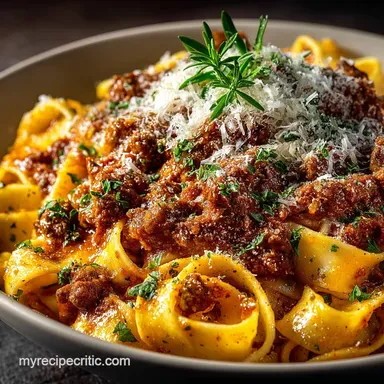
The Ultimate Slowsimmered Creamy Bolognese Ragù

- The Magic of Low and Slow: Why Patience is Key
- Beyond Tradition: Elevating Classic Bolognese to Creamy Perfection
- Gathering Your Arsenal: Essential Ingredients for Deep Flavor
- Tools of the Trade: Equipment for Slow-Simmering Success
- From Raw to Ragù: Step-by-Step Cooking Method
- Mastering the Simmer: Achieving Luxurious Depth
- Serving Suggestions and Perfect Pasta Pairings
- FAQs and Troubleshooting Your Creamy Bolognese Sauce
- Recipe FAQs
- 📝 Recipe Card
The Magic of Low and Slow: Why Patience is Key
A truly exceptional Bolognese Sauce is not a quick-fix weeknight meal; it is an act of culinary dedication. The term ragù itself implies a lengthy simmer, a process where cheap, tough cuts of meat are rendered meltingly tender, and disparate ingredients are coaxed into a unified, rich profile.
The magic truly lies in the low and slow heat application, a minimum of three hours is mandatory for this depth. During this extended period, the moisture evaporates slowly, concentrating the essential savoury flavors, while the collagen in the meat breaks down, lending a natural, unctuous viscosity to the resulting Italian Sauce.
If you rush this step, you end up with thin, sharp, tomato-heavy meat sauce. If you respect the time, you achieve a complex, profound flavour that defines true Homemade Bolognese.
Beyond Tradition: Elevating Classic Bolognese to Creamy Perfection
While purists may argue that the traditional ragù from Bologna does not include cream, we believe adding a final touch of richness is what transforms a great meat sauce into the ultimate comfort dish.
Our creamy bolognese recipe uses two key dairy steps: incorporating whole milk early on to tenderize the meat, and finishing with heavy cream to achieve that luscious, velvety mouthfeel we’re aiming for in the perfect Creamy Bolognese Sauce.
The Sacred Soffritto: Building the Aromatic Foundation
Every great Bolognese begins with the soffritto , the aromatic backbone of onion, carrot, and celery. This isn't merely frying vegetables; it is a critical, foundational step requiring patience.
We combine two tablespoons of olive oil and one tablespoon of unsalted butter and cook the finely diced vegetables over low heat for a full 15 minutes. This slow "sweating" ensures the vegetables fully release their sugars and moisture, becoming beautifully soft and translucent, a texture so fine that they ultimately melt into the finished sauce, rather than remaining chunky.
Why Hours Matter: Flavor Integration vs. Quick Cooking
The time dedicated to simmering is what separates a genuine ragù from simple pasta sauce. When you commit to the three-hour minimum cook time, you allow the acids from the tomato and the wine to mellow out, while the bay leaves, nutmeg, and meat juices completely integrate.
Quick cooking leaves the flavors disjointed and sharp; slow cooking ensures every bite is balanced, savoury, and profoundly satisfying. This integration is essential for creating a robust base for our ultimate creamy meat sauce.
Defining the Perfect Consistency for Creamy Bolognese Sauce
The ideal consistency for our Creamy Bolognese Sauce should be thick, substantial, and incredibly clingy. When lifted with a spoon, it should drape heavily and fall slowly, never running quickly like soup.
Achieving this means resisting the urge to add too much stock or tomatoes initially and trusting the process of evaporation. By the end of the required simmering period, the crushed tomatoes and meat must be fully suspended in a dense, deeply coloured gravy.
The Secret Weapon: Achieving Velvety Texture
The secret weapon for delivering a truly creamy meat sauce lies in the strategic use of dairy. We incorporate one cup of whole milk immediately after deglazing with wine. The lactic acid in the milk tenderizes the meat fibres, creating a softer texture.
Once the milk has reduced and been completely absorbed (about 10–15 minutes), we introduce the tomatoes and stock. The final step is stirring in half a cup of rich heavy cream and Parmesan cheese right before serving.
This emulsifies the inherent fat in the sauce, resulting in a gloriously velvety and rich final product.
Gathering Your Arsenal: Essential Ingredients for Deep Flavor
Creating a spectacular Bolognese Sauce Recipe demands attention to ingredient quality. We begin with a robust combination of one pound each of ground beef (80/20 lean) and ground pork, the fattier the blend, the richer the flavour.
Our soffritto requires one medium onion, two carrots, and two celery stalks, all finely diced.
For the depth, we rely on a generous dose of two tablespoons of tomato paste, cooked until slightly dark to caramelise the sugars, and one cup of dry red wine, such as Merlot or Sangiovese, to provide crucial acidity.
The liquid base is built on one (28 oz) can of high-quality crushed tomatoes (passata) and two cups of low-sodium beef or chicken stock, ensuring adequate moisture for the long simmer.
Finally, the finishing ingredients are the aforementioned one cup of whole milk and half a cup of heavy cream, along with freshly grated nutmeg and Parmesan.
Tools of the Trade: Equipment for Slow-Simmering Success
While the ingredients are paramount, the correct equipment ensures heat stability and flavour development over the crucial three hours.
The Perfect Meat Blend: Beef, Pork, and Veal Ratios
Our recipe utilizes a 50/50 ratio of ground beef and ground pork. The beef provides the deep, savoury meatiness, while the pork lends essential richness and higher fat content, which is necessary to keep the sauce moist during the extended cooking time.
For an even more complex, traditional flavour, some cooks may substitute half the beef with ground veal, though the pork/beef combination offers the most reliable richness for this creamy bolognese recipe.
Dairy Decisions: Selecting the Best Cream and Milk
Always opt for whole, full-fat dairy. Skim milk will simply evaporate and won’t provide the necessary fat to tenderize the meat. For the finish, heavy cream (sometimes called double cream) is required.
Its high fat content prevents it from curdling and offers the maximum richness and body for the final luxurious coating of our creamy meat sauce.
Choosing the Right Dutch Oven or Heavy Pot
A thick-bottomed pot, ideally a 5 to 6-quart cast iron Dutch Oven, is non-negotiable. Its weight ensures heat is distributed evenly across the bottom, preventing scorching during the long simmer. A thin pot will likely burn the sauce where it touches the bottom, ruining hours of effort.
Prep Work: Mastering the Fine Dice
The success of the soffritto hinges on the prep work. The onion, carrot, and celery must be diced as finely as possible, ensuring they are roughly the same size. They should be significantly smaller than the ground meat.
This fine dice allows them to dissolve into the sauce structure, adding subtle sweetness and depth without adding unwanted texture.
Related Recipes Worth Trying
- Sunshine in a Bowl Creamy Charred Mexican Street Corn Soup Recipe — This Mexican Street Corn Soup recipe captures the smoky elote flavour in a velvety chowder Naturally thickened and easily adapted for the slow cooker or...
- Weeknight Pressed Ground Lamb Gyros Recipe with Creamy Dill Tzatziki — Master authentic ground lamb gyros meat at home Use our clever pressing technique for beautifully thin slices paired with cool cucumber yogurt sauce A...
- Proper Comfort Cheesy Creamy Crockpot Potato Soup Easy HandsOff — This easy Crockpot Potato Soup is pure culinary magic We use cream cheese and a crucial bacon sear to build a thick smoky Loaded Baked Potato Soup flavour...
From Raw to Ragù: step-by-step Cooking Method
The method starts by sweating the finely diced soffritto in the butter and olive oil until translucent ( 15 minutes). Next, the tomato paste is stirred in and cooked for two minutes to deepen its flavour.
The ground beef and pork (one pound each) are then added and seasoned with salt, pepper, and a dash of nutmeg. Once the meat is properly browned, the one cup of red wine is added for deglazing. After the wine reduces completely, the critical step of introducing the one cup of whole milk occurs.
Only once the milk is absorbed are the crushed tomatoes, stock, and bay leaves stirred in, setting the stage for the extended simmer.
Mastering the Simmer: Achieving Luxurious Depth
This section highlights the technical execution needed to transform the ingredients into a truly complex creamy meat sauce pasta coating.
The Art of Browning the Meat Correctly
When adding the ground beef and pork, resist the urge to immediately break the meat up completely. Instead, increase the heat to medium-high and allow the meat to sear against the bottom of the pot for a few minutes before breaking it up.
This creates desirable browning and flavour concentration (known as the fond ). Crucially, do not drain the rendered fat; this fat is essential for carrying the flavour throughout the sauce and contributing to the final richness.
Deglazing the Pan for Maximum Flavor Extraction
The deglazing step, using the dry red wine, is paramount for extracting maximum flavour. When the wine hits the hot pan, scrape the bottom thoroughly with a wooden spoon, lifting all the browned bits ( fond ) created by the meat.
This dark, sticky residue contains concentrated flavour compounds that melt back into the liquid, contributing profoundly to the depth of the finished Bolognese Sauce. The wine must be fully reduced and evaporated before proceeding to the milk step.
The Critical Two-Hour Window
While the minimum suggested simmer time is three hours, the first two hours are where the majority of the flavour integration occurs. The sauce must maintain a bare, gentle bubble, almost imperceptible, under a partially covered lid.
This gentle heat ensures the sauce thickens without reducing too quickly or developing a scorched flavour. Stir the ragù every 30 to 45 minutes to ensure uniform thickness and prevent sticking to the bottom of the Dutch oven.
Final Seasoning Adjustments and Resting
After the three-hour simmer, remove the bay leaves. Because the sauce has reduced and concentrated, a final seasoning adjustment is vital. Taste and add salt and pepper until the flavour profile brightens dramatically.
This is also when the half-cup of heavy cream and the grated Parmesan are stirred in, creating that signature rich texture. For the absolute best flavour, turn off the heat and allow the Creamy Bolognese Sauce to rest for 30 minutes before serving; the cooling process further melds the fats and liquids.
Serving Suggestions and Perfect Pasta Pairings
A magnificent ragù deserves a sturdy and appropriate vehicle. Forget thin noodles when making a creamy meat sauce spaghetti; the sauce is simply too heavy.
Beyond Spaghetti: Pairing Ragù with Fresh Tagliatelle
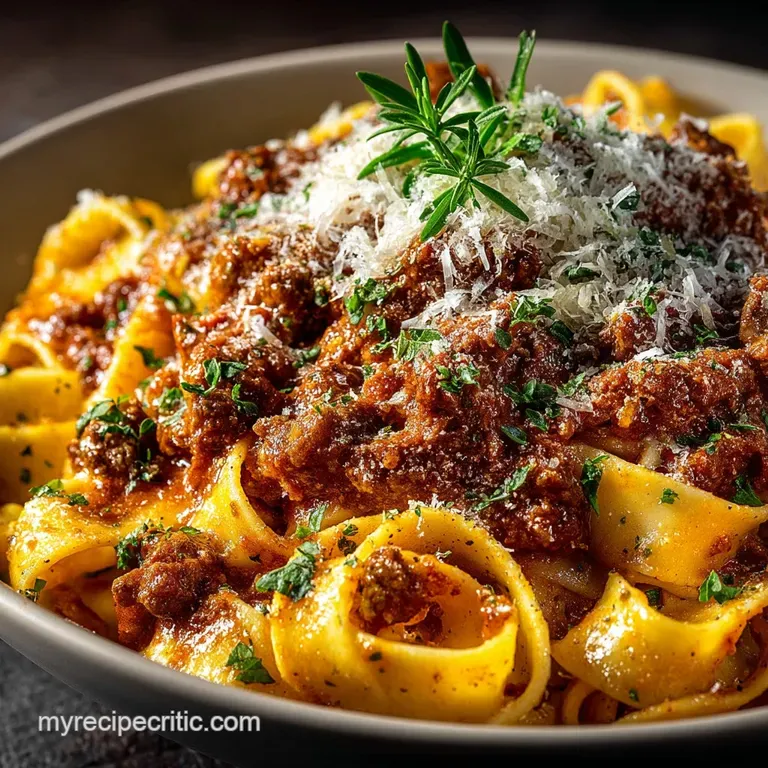
In Bologna, the official rule is that ragù should always be served with fresh, wide, and flat pasta, specifically tagliatelle. The generous surface area and slightly rough texture of fresh tagliatelle or pappardelle are designed to hold onto the thick, creamy meat sauce and deliver the full flavour experience in every bite.
Serving this particular style of creamy meat sauce pasta over thick, soft polenta is also a luxurious and satisfying alternative.
Garnishes That Make the Dish Pop
While the sauce is rich enough to stand alone, a few simple garnishes elevate the presentation and flavour. Always serve with a generous grating of fresh Parmesan cheese. A tiny pinch of fresh nutmeg grated directly over the plated dish enhances the warmth of the meat and spices.
Finally, a light dusting of finely chopped parsley or basil adds a necessary, bright green note to cut through the richness.
FAQs and Troubleshooting Your Creamy Bolognese Sauce
Beyond Spaghetti: Pairing Ragù with Fresh Tagliatelle
While some modern interpretations include creamy meat sauce spaghetti, traditionally, the density of a slow-cooked ragù demands a thicker pasta. The goal is surface area, the sauce should cling, not slide off.
If fresh tagliatelle is unavailable, look for dried rigatoni or paccheri, which allow the thick sauce to nestle into their tubes.
What If My Sauce Breaks or Curdles?
Curdling is usually caused by adding cold dairy to a high-heat, acidic base. Since we add the whole milk much earlier and allow it to fully absorb, this risk is minimized. However, when adding the heavy cream at the very end, ensure the heat is turned off or reduced to the lowest setting possible.
If you notice separation, vigorously whisking a small spoonful of cold butter into the sauce can sometimes help emulsify the mixture back together.
Adapting the Recipe for a Crockpot or Instant Pot
This Homemade Bolognese can easily be adapted. For a Crockpot (Slow Cooker) , complete the soffritto, meat searing, and deglazing steps on the stove first (this is crucial for flavor development).
Transfer the mixture to the slow cooker, add all liquids, and cook on low for 6 to 8 hours. For an Instant Pot (Pressure Cooker) , complete the initial searing and deglazing steps using the Sauté function.
Seal the pot, cook on High Pressure for 45 minutes, then allow a Natural Pressure Release for 15 minutes before adding the heavy cream and Parmesan during the final Sauté mode.
Recipe FAQs
This needs ages to cook! Is the long simmer truly worth the wait?
Yes, absolutely, patience is the secret ingredient here, old chap! The long, low simmer (minimum 3 hours) is essential for breaking down the tough connective tissues in the meat and allowing the fat and water to properly emulsify.
This maturation concentrates the flavour dramatically, ensuring the final result is rich, velvety, and tastes like proper, deep comfort, not just meat and tomato.
My biggest question about this Creamy Bolognese Sauce is: why do we add whole milk?
That's a cracking question! Adding whole milk early on is a traditional technique that tenderizes the meat through its lactic acid content. When the milk evaporates during cooking, it leaves behind proteins and fat, making the resulting ragù incredibly soft and preventing the meat from feeling tough or dry after hours on the hob.
This step is the key to achieving that beautifully luxurious texture.
I haven't got any red wine in the cupboard. Can I just skip that deglazing step?
Heavens, no, please don’t skip the deglazing! The wine adds crucial acidity and depth that balances the richness of the meat and cream. If you’re steering clear of alcohol, swap the red wine for an equal measure of beef stock mixed with a good dash of balsamic vinegar (about 1 teaspoon), but make sure you still scrape up all those lovely browned bits (the fond) from the bottom of the pot.
What is the best pasta to use? I usually just use boring old spaghetti.
While spaghetti is fine for a quick dash, a true Bolognese demands a broader, sturdier pasta to cling to! For this thick, chunky, and gloriously creamy ragù, opt for fresh tagliatelle or pappardelle.
The wide, rough surface area of these ribbons is perfect for catching every bit of the sauce, providing a much more satisfying and traditional Italian experience.
I’ve made a colossal batch! Does this Creamy Bolognese freeze well for meal prepping?
Absolutely! Bolognese is a legendary freezer staple and often tastes even better the next day after the flavours have properly settled. Allow the sauce to cool completely before portioning into airtight containers, and it will keep happily in the freezer for up to three months.
When reheating, ensure you do it slowly on the hob, and a splash of stock or water might be needed to restore the perfect consistency.
SlowSimmered Creamy Bolognese Sauce Ultimate Comfort Ragù