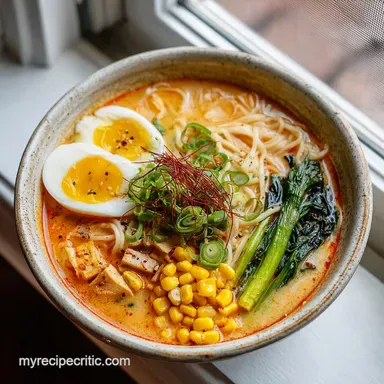
Creamy Homemade Spicy Miso Ramen

- Prep15 Mins
- Cook25 Mins
- Servings4 bowls
- Time: 15 min active + 25 min cooking + 10 min egg chilling
- Skill level: Intermediate, requires timing the eggs and tempering the miso
- Great for: Cold nights or when you want a restaurant-style bowl on a budget
The scent of toasted sesame oil hitting a hot pan is instantly mouthwatering. This recipe pairs the bold, pungent kick of fermented bean paste with a rich, velvety broth that clings perfectly to the noodles. It is a deeply comforting dish.
You can look forward to a robust, savory profile with a spicy edge from the doubanjiang. This homemade spicy miso ramen avoids expensive proteins, using ground chicken to keep the cost down while adding a savory, glazed element to the top.
The result is a nuanced, layered soup that harmonizes salt, heat, and creaminess. It is a streamlined way to achieve deep Japanese flavors at home without a professional kitchen.
Why This Works
- The Miso Temper: Whisking the paste with warm broth before adding it to the pot creates a velvety texture. This stops the miso from clumping and ensures the flavor is even throughout the bowl.
- Aromatic Layering: Sautéing garlic and ginger in sesame oil first awakens the fat-soluble flavors. This builds a stronger foundation than simply boiling the aromatics in the stock.
- The Soy Milk Shortcut: Unsweetened soy milk adds a rich body to the broth.
Key Numbers
For the best results, pay close attention to these three key indicators:
- Egg Timer: Simmer for exactly 6 minutes and 30 seconds to achieve a jammy center.
- Chicken Temp: Ensure the ground chicken reaches 165°F/74°C (USDA FSIS) before applying the glaze.
- Broth Heat: Maintain low heat after stirring in the soy milk and miso. Do not let the broth boil again, or you will lose the subtle fermented notes of the miso.
Ingredient Deep Dive
- 4 large eggs
- 1 tbsp white vinegar
- 1 tsp salt
- 1 lb ground chicken
- 1 tbsp neutral oil
- 1 tbsp miso paste
- 1 tsp honey
- 1 tsp grated ginger
- 2 tbsp toasted sesame oil
- 3 cloves garlic, minced
- 1 tbsp fresh ginger, grated
- 3 scallions, white parts thinly sliced
- 2 tbsp doubanjiang
- 4 cups low-sodium chicken broth
- 1/3 cup unsweetened soy milk
- 4 tbsp red or white miso paste
- 1 tsp sugar
- 4 packs fresh or dried ramen noodles
- 4 cups baby spinach
- 4 sheets nori, cut into rectangles
- 2 scallions, green parts sliced
- 1 tsp toasted sesame seeds
Each part of this bowl serves a specific purpose to balance the heavy salt of the miso.
| Ingredient | Role | If You Don't Have It |
|---|---|---|
| Miso Paste | Primary salty, umami base | Soy sauce and a pinch of brown sugar (approximation) |
| Doubanjiang | Spicy, fermented kick | Sriracha mixed with a bit of miso |
| Soy Milk | Creaminess and body | Unsweetened cashew milk or heavy cream |
| Ground Chicken | Hearty, savory protein | Ground turkey or crumbled firm tofu |
Gear for This Soup
You will need a few basics to keep the process moving. A 12-inch skillet is best for browning the chicken so it doesn't steam in its own juices. Use a large stockpot for the broth and a separate medium pot for the noodles. A small whisk and a bowl are necessary for the miso slurry.
Key Steps
Phase 1: The Perfect Jammy Eggs
Start by boiling a pot of water with 1 tbsp white vinegar and 1 tsp salt. Carefully slide in 4 large eggs and let them simmer for 6 minutes and 30 seconds. To halt the cooking, transfer the eggs immediately to an ice bath for 10 minutes, then peel gently and set aside.

Phase 2: Searing the Protein
Set a frying pan to medium-high and warm 1 tbsp neutral oil. Add 1 lb ground chicken, breaking the meat apart with a spoon, and sauté until browned and cooked to an internal temperature of 165°F/74°C (USDA FSIS). Stir in 1 tbsp miso paste, 1 tsp honey, and 1 tsp grated ginger.
Cook for 1 minute until the chicken is glazed and amber, then remove from the heat.

Phase 3: Building the Broth
Place a large pot over medium heat and warm 2 tbsp toasted sesame oil. Toss in 3 minced garlic cloves, 1 tbsp grated ginger, and 3 sliced scallion whites, sautéing for 1-2 minutes until aromatic. Stir in 2 tbsp doubanjiang for 30 seconds.
Add 4 cups low-sodium chicken broth and 1 tsp sugar, bringing it to a light simmer for 5 minutes.
Lower the heat to low. In a small bowl, whisk 4 tbsp miso paste with 1/2 cup of the warm broth until completely smooth. Stir this miso slurry and 1/3 cup unsweetened soy milk into the pot. Mix until combined, ensuring the liquid does not boil.

Phase 4: Final Assembly
Prepare 4 packs of ramen noodles in a different pot of boiling water following package directions, then drain well. Divide the noodles into four bowls and pour the hot broth over them. Top each bowl with a serving of spicy ground chicken, a handful of baby spinach, a halved jammy egg, and a rectangle of nori.
Finish with sliced green scallions and 1 tsp toasted sesame seeds.

Problems and Solutions
The most common issue is a broth that feels "split" or grainy. This happens if the miso is dropped in as a cold clump or if the broth is boiled after the soy milk is added. Keeping the heat low preserves the emulsion.
Another struggle is the noodles becoming mushy. Always cook them in a separate pot and drain them immediately. If they sit in the water for even an extra minute, they will absorb too much liquid and lose their bite.
| Problem | Fix |
|---|---|
| Grainy Broth | Use the slurry method and keep heat below a boil |
| Mushy Noodles | Boil in a separate pot and drain immediately |
| Overly Salty Soup | Stir in a splash of water or a squeeze of lime |
Presentation Tips

To get that restaurant look, place the noodles in the bowl first and lift them slightly with tongs to create a nest. Pour the broth around the noodles, not directly on top, to keep the structure. Arrange the chicken in a neat pile on one side and nestle the jammy eggs next to it.
Place the nori sheet so it stands up against the side of the bowl.
Since you are already making a big meal, you could serve this with a Simple Tomato Sauce Flatbread on the side for extra crunch.
Storing Leftovers
Store the spicy miso ramen Broth in a sealed container in the fridge. According to USDA food safety basics, perishable leftovers are safe for 3 to 4 days.
Do not store the noodles in the broth. They will soak up all the liquid and turn into a paste. Keep the noodles, chicken, and jammy eggs in separate containers. To reheat, warm the broth and the ground chicken on the stove over medium-low heat until both reach 165°F/74°C (USDA FSIS), keeping the pot below a boil.
Do not boil it. Place pre-cooked noodles in a bowl and pour the hot liquid over them.
Easy Swaps
Depending on what you have in the pantry, you can tweak this Quick spicy miso ramen to fit your needs.
| Original Ingredient | Substitute | Why It Works |
|---|---|---|
| Ramen Noodles | Rice Noodles | gluten-free option, though they are less chewy |
| Ground Chicken | Firm Tofu | Crumble tofu for a plant-based protein |
| Soy Milk | Coconut Milk | Adds a tropical creaminess, best with extra ginger |
For those who want more heat, add a teaspoon of Sichuan peppercorns to the sesame oil at the start. This adds a numbing quality that pairs well with the fermented bean paste. If you prefer more greens, swap the baby spinach for bok choy or steamed sprouts.
When choosing your noodles, consider the texture you want.
| Noodle Type | Texture | Best Use |
|---|---|---|
| Fresh Ramen | Chewy and springy | For the most authentic feel |
| Dried Ramen | Firmer, holds broth well | For convenience and pantry storage |
| Soba (Buckwheat) | Earthy and dense | For a heartier, nuttier bowl |
Critical Sodium Level
5575 mg of sodium per serving (242% of daily value)
American Heart Association recommendation: no more than 2,300 mg of sodium per day
Ways to Lower the Sodium
-
Reduce Miso Paste
The miso paste is a primary sodium source; try reducing the amount used or searching for a lower-sodium miso alternative.
-
Swap Doubanjiang
Reduce the doubanjiang and supplement the flavor with red chili flakes or gochugaru to maintain the heat without the salt.
-
Omit Added Salt
Remove the 1 teaspoon of salt entirely, as the fermented pastes already provide plenty of seasoning.
-
Upgrade Your Broth
Replace the low-sodium chicken broth with homemade unsalted broth or water to lower the sodium base.
-
Choose Better Noodles
Use fresh, additive-free noodles or rice noodles instead of dried ramen packs, which often contain hidden sodium.
-
Boost Fresh Aromatics
Increase the fresh ginger and garlic, or add a squeeze of fresh lime juice to brighten the flavor without adding salt.
Before You Start Cooking
Which miso paste works best for this ramen?
Either red or white miso paste works well for this recipe. Red miso provides a saltier, deeper taste, while white miso is slightly sweeter and more mellow.
Is it possible to freeze the broth with the noodles?
No, you should freeze the broth and noodles in separate containers. Storing them together causes the noodles to soak up the liquid and turn into a paste.
Why is unsweetened soy milk added to the broth?
Soy milk creates a creamy consistency and balances the heat from the doubanjiang. This adds a rich mouthfeel without needing heavy cream.
Are extra proteins or greens like prawns allowed?
Yes, you can easily customize the bowl with prawns or power greens. Just be sure to store any additional cooked seafood in the refrigerator.
Spicy Miso Ramen