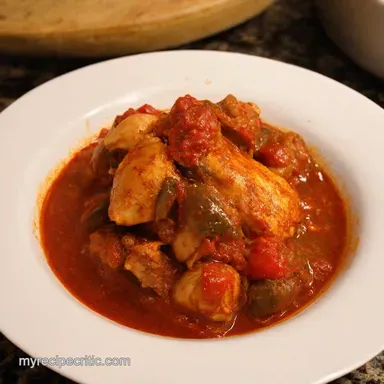
Chicken Cacciatore with Bone-In Thighs

- Prep15 Mins
- Cook1 Hr 30 Mins
- Servings6 chicken thighs
- Time: 15 min active + 90 min cooking
- Skill level: Moderate, requires careful searing and oven timing
- Great for: Cozy weeknight dinners or a slow Sunday meal
Rustic Chicken Cacciatore
The aroma of garlic and searing chicken filling the air is the first hint that this dish will be a success. Bone-in, skin-on thighs are the best choice here; they remain juicy throughout the simmering process, and their salty, crisp skin balances the tang of the tomato sauce.
This traditional chicken cacciatore is a robust, rustic meal. It blends the brightness of lemon and crushed tomatoes with the earthy richness of cremini mushrooms for a deeply comforting experience.
The result is a thick, savory sauce and chicken that effortlessly falls off the bone. It is a dependable one-pot dinner that tastes even better as the flavors settle.
Why the Steps Matter
- Dark Meat Choice: Bone-in thighs have more collagen than breasts. This prevents the meat from toughening during the 90 minute cook time.
- The Uncovered Finish: Baking without a lid at the end lets excess water evaporate. This thickens the sauce naturally without needing cornstarch.
Choosing between the stove and the oven changes the final result. Here is how they compare for this specific dish.
| Method | Time | Texture | Best For |
|---|---|---|---|
| Stovetop | Faster | Softer skin | Quick meals |
| Oven | Slower | Evenly tender | Deep flavor |
Essential Ingredients
These components harmonize to create a multi-dimensional taste. The mushrooms bring a grounding earthiness, and the lemon juice balances the savory weight of the chicken fat.
| Ingredient | Role | If You Don't Have It |
|---|---|---|
| Bone-in Thighs | Primary protein and taste | Boneless thighs (shorten oven time) |
| Tomato Paste | Intense depth | More crushed tomatoes (less concentrated) |
| Flour | Thickening and browning agent | Cornstarch or omit (lighter sauce) |
| Cremini Mushrooms | Earthy foundation | White button mushrooms |
- 3 lbs bone-in, skin-on chicken thighs
- 2 tbsp olive oil
- 1 tsp salt
- ½ tsp black pepper
- ¼ cup all-purpose flour
- 1 medium yellow onion, diced
- 2 medium bell peppers (red and green), sliced
- 8 oz cremini mushrooms, sliced
- 4 cloves garlic, minced
- 2 tbsp tomato paste Why this? Creates a rich, savory foundation
- 28 oz crushed tomatoes
- 1 cup low-sodium chicken stock Why this? Offers a flavorful braising liquid
- 2 tbsp fresh lemon juice Why this? Brightens the acidity of the tomatoes
- 1 tsp dried oregano
- ½ tsp red pepper flakes
- ¼ cup fresh parsley, chopped
Gear for This Recipe
A 5-quart Dutch oven is the best tool for this job. You need a pot that can move from the stove to the oven without a problem. If you don't have one, a deep oven-safe skillet or a heavy pot with a tight lid works too.
From Prep to Plate
The secret to a great chicken cacciatore is patience during the searing stage. Failing to brown the skin means losing the essential depth of the sauce.
For the Searing
Use paper towels to pat the chicken thighs dry. Season them with 1 tsp salt and ½ tsp black pepper, then give them a light dusting of ¼ cup all-purpose flour. Set a Dutch oven over medium-high heat and add 2 tbsp olive oil.
Place the chicken skin-side down. Sear for 6–8 minutes without moving them until the skin is deep brown and crisp. Flip and cook for another 3 minutes. Move the chicken to a plate. Keep roughly 2 tablespoons of fat in the pan, pouring out any extra if it exceeds 3 tablespoons.

Building the Savory Base
Stir the diced yellow onion and sliced bell peppers into the pot. Sauté for 5 minutes until soft. Add the sliced cremini mushrooms and cook for 4 more minutes until they release their moisture and brown.
Mix in the minced garlic and 2 tbsp tomato paste. Stir constantly for 2 minutes until the paste turns a rusty brick color, which gets rid of the raw, metallic taste.

The Braise and Finish
Deglaze the pan with 1 cup low-sodium chicken stock and 2 tbsp fresh lemon juice, using a wooden spoon to scrape up the flavorful browned bits. Stir in 28 oz crushed tomatoes, 1 tsp dried oregano, and ½ tsp red pepper flakes.
Place the chicken thighs back into the sauce, skin-side up. Position the skin above the liquid so it doesn't get soggy. Cover the pot and transfer it to a preheated 350°F (180°C) oven for 45 minutes.
Remove the lid and bake for another 15–20 minutes until the sauce has reduced by about 20% and the chicken hits 165°F (74°C) internally. Garnish with ¼ cup chopped fresh parsley before serving.

What Can Go Wrong
A watery sauce is the most common issue. This usually happens if the vegetables were added to a pan with too much oil or if the lid stayed on too long.
If the garlic browns too quickly, it turns bitter. Always add it after the mushrooms have already released their water to keep the temperature stable.
Fixing Watery Sauce
If the sauce is still too thin after the uncovered bake, remove the chicken. Simmer the sauce on the stovetop over medium-high heat for 5–10 minutes. This concentrates the flavor.
Preventing Burnt Garlic
Garlic burns in seconds. Stir it constantly and ensure the heat isn't screaming high when you drop it in.
| Problem | Fix |
|---|---|
| Sauce is too thin | Simmer sauce on stovetop without chicken for 10 mins |
| Bitter taste | Ensure tomato paste is cooked to a brick color before adding liquid |
| Soggy skin | Keep chicken skin above the sauce line during the braise |
Storing Your Leftovers
Keep this chicken cacciatore in a sealed jar in the refrigerator for 3 to 4 days. The flavors actually deepen overnight, making it even better the next day. You can find more on USDA guidelines on leftovers for safety.
This dish freezes well. Place it in a freezer-safe container for up to 3 months. To reheat, gently simmer on the stovetop over low heat with a splash of water to loosen the sauce. Ensure reheated leftovers reach 165°F (74°C).
Searing meat does not "seal in juices." It loses moisture either way, but the crust adds essential flavor to the entire pot.
Best Serving Ideas

This meal is heavy, so it needs something to soak up the sauce. Creamy polenta is the traditional choice. A wide noodle pasta or a side of crusty sourdough bread also works great.
I like a side of steamed spinach or a simple arugula salad with lemon to cut through the richness.
Customizing Your Dish
Feel free to use zucchini or carrots instead of peppers to change the vegetable profile. For a garden-style twist, add frozen peas during the final 10 minutes of baking.
If you prefer a creamier version, stir in a tablespoon of heavy cream or a dollop of mascarpone just before serving to make the sauce rich and smooth. For a quicker sauce for your pasta, try this Cherry Tomato Sauce recipe.
To make this gluten-free, substitute the all-purpose flour with a 1:1 gluten-free flour blend. The browning should be similar, although the sauce may be slightly thinner. To compensate, let your chicken cacciatore simmer for a few additional minutes on the stove.
For this gluten-free version, also use products labelled gluten-free for the broth or stock.
Common Questions
What are the main ingredients of chicken cacciatore?
Chicken thighs, crushed tomatoes, bell peppers, and mushrooms. It also includes garlic, onion, tomato paste, and fresh lemon juice for a balanced, bright flavor.
Which technique ensures a rich flavor?
Searing the meat and deglazing the pan. Browning the chicken creates a savory fond that deepens the sauce. If you loved balancing the tomato acidity here, see how we use a similar profile in our tomato sauce.
Does this dish pair with specific sides?
Pasta, polenta, or crusty bread. These options are ideal for soaking up the hearty vegetable and tomato sauce.
How to make the perfect chicken cacciatore?
Begin by searing the bone-in thighs skin-side down. Sauté the vegetables, deglaze with stock and lemon, and braise in the oven at 350°F until the meat hits 165°F internally.
When should the crushed tomatoes be added?
After deglazing the pan with stock and lemon juice. Stir them in with the oregano and red pepper flakes before nestling the chicken back into the pot.
Why does the sauce sometimes stay watery?
Insufficient reduction during the final bake. Ensure you remove the lid for the last 15–20 minutes to allow the sauce to thicken by about 20%.
Can the chicken skin remain crisp in the sauce?
Yes, by nestling the chicken skin-side up. Keep the skin above the liquid level during the oven braise to prevent it from softening.
Where should leftovers be kept?
Keep this chicken cacciatore in a sealed jar in the refrigerator for 3 to 4 days. You can also place it in a freezer-safe container for up to 3 months.
Chicken Cacciatore with Bone-In Thighs