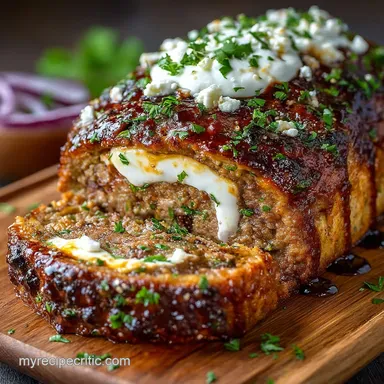
The Hellenic Hybrid Greek Gyro Meatloaf with Tangy Feta Swirl

- From Spit to Pan: Reimagining the Iconic Greek Gyro
- Why This Greek Gyro Meatloaf is Your New Comfort Food Obsession
- Pantry Prep: Essential Ingredients for the Perfect Gyro Loaf
- Assembling Your Arsenal: Tools and Equipment for Seamless Prep
- Mastering the Mix: Step-by-Step Assembly for Maximum Flavor
- Bake Time Brilliance: Achieving the Ultimate Internal Texture
- Optimizing Your Meal: Storage, Serving, and Flavor Enhancements
- Beyond the Meatloaf: Creative Ways to Use Leftover Greek Gyro Meatloaf
- Recipe FAQs
- 📝 Recipe Card
From Spit to Pan: Reimagining the Iconic Greek Gyro
The aroma of a classic gyro, sliced thin from the vertical rotisserie, is the quintessential scent of Greek street food. But bringing that intense, heavily seasoned flavor into your home kitchen often feels daunting, requiring specialized equipment few of us possess.
This is where the concept of the Hellenic Hybrid Recipe is born: we take the rich, aromatic profile of authentic Greek gyro meat and adapt it into the familiar, comforting structure of a baked meatloaf.
By marrying the traditional blend of Lamb Meatloaf with savory beef, and packing it with quintessential Greek Gyro Meat Seasoning , we create a centerpiece dish that sacrifices none of the deliciousness while simplifying the preparation significantly.
This is a masterclass in flavor engineering, transforming a street-food legend into a perfect Mediterranean Dinner Recipe for family and friends.
Why This Greek Gyro Meatloaf is Your New Comfort Food Obsession
Forget everything you think you know about dry, ordinary meatloaf. This Greek Gyro Meatloaf is profoundly moist, tender, and saturated with the zesty, herbaceous tang that defines the best Mediterranean cooking.
It’s an Easy Greek Meatloaf that manages to feel simultaneously sophisticated and deeply satisfying. The key to its status as a comfort food obsession lies not just in the carefully balanced spice blend, but in an innovative internal preparation that guarantees a succulent result every single time.
It provides all the punch of a robust Gyro Meatloaf Recipe but in a hearty, sliceable format that makes entertaining simple.
The Magic of Marjoram and Oregano: Mastering the Seasoning Blend
The distinct, unmistakable flavour of the original Authentic Greek Gyro Meat Recipe relies on a powerful punch of dried herbs, and we replicate that perfectly here.
The foundation is built upon Greek oregano, known for its deep, almost peppery bitterness, beautifully complemented by the subtle sweetness of marjoram. These two herbs, used liberally, create the aromatic signature.
We also introduce a hint of ground cumin, which adds essential depth and warmth, and a tablespoon of red wine vinegar to provide the necessary acid lift, mirroring the traditional preparation methods that tenderize and brighten the flavor profile.
This precise Greek Gyro Meat Seasoning mix is what elevates the dish far beyond standard fare.
Unpacking the Feta Swirl: Our Secret Weapon Against Dry Meatloaf
While classic meatloaf often relies on a high-fat content and liquid glaze to maintain moisture, our method incorporates a rich, tangy internal layer. This Feta Swirl is a game-changer. It combines tangy, salty crumbled feta cheese, creamy full-fat Greek yogurt, vibrant lemon zest, and fresh dill.
Baked right into the center of the loaf, this mixture melts and emulsifies, infusing the meat from the inside out. It acts as an internal moisturizing agent, ensuring the final product is both extraordinarily tender and boasts a sharp, zesty counterpoint to the savoury meat.
The Street Food Legacy Meets Oven-Baked Perfection
Traditionally, gyro meat is stacked tightly and cooked slowly as it spins. This recipe maintains that tight structure and slow-bake process to achieve a similar flavour development, but within the confines of a simple loaf pan.
This approach makes the powerful flavour of Authentic Greek Gyro Meat Recipe accessible in any home kitchen. The resulting loaf holds its shape beautifully and slices cleanly, offering a rich, oven-baked masterpiece that honors its street food legacy.
Pantry Prep: Essential Ingredients for the Perfect Gyro Loaf
To execute this remarkable Gyro Meatloaf Recipe , careful selection of the base ingredients is paramount. We demand a blend of 1 pound of 80/20 ground lamb, crucial for that classic gamey depth, paired with 1 pound of 90/10 lean ground beef for structure and balance.
The binding agents include half a cup of Panko breadcrumbs (or rolled oats for gluten-free preparation) soaked in a quarter cup of whole milk or buttermilk, which ensures the loaf remains light and moist.
The aromatics, finely diced yellow onion and fresh minced garlic, must be sautéed before mixing, a simple step that prevents raw crunch and allows their flavour compounds to bloom beautifully.
Assembling Your Arsenal: Tools and Equipment for Seamless Prep

While the recipe is streamlined, having the right tools makes the process entirely seamless. Before starting, ensure you have a standard 9x5 inch loaf pan, a large mixing bowl, a small skillet for sautéing, and, most critically, an instant-read meat thermometer.
The thermometer is non-negotiable for safety and achieving the perfect internal texture. We highly recommend lining your loaf pan with parchment paper, leaving an overhang on the sides, which simplifies the crucial resting and removal process.
Sourcing the Best Meats for Authentic Greek Gyro Meatloaf
The choice of meat directly dictates the flavour profile of your Greek Gyro Meatloaf . We use a 50/50 blend of lamb and beef because lamb provides the true, deep Gyro Meat Recipe taste, while the leaner beef prevents the loaf from becoming overly greasy or heavy.
Look for high-quality ground lamb, ideally with an 80/20 fat ratio, and complement it with 90/10 ground beef to keep the final fat content balanced. This ratio creates a rich flavour base without leading to excess grease pooling in the pan.
Beyond Tzatziki: Crafting the Creamy Feta Glaze
While we save the tzatziki for serving, the internal Feta Swirl acts as a rich, creamy counterpart to the savoury meat. For this component, use four ounces of barrel-aged feta for the best salinity and texture, combined with a quarter cup of thick, full-fat Greek yogurt.
The addition of fresh lemon zest and dill (a tablespoon of finely chopped dill) provides that bright, herbal freshness that slices through the richness, acting as a built-in sauce when the loaf is sliced.
The Aromatics: Which Onions and Herbs Work Best?
We use finely diced yellow onion as it cooks down beautifully and provides a subtle sweetness that complements the robust Greek Gyro Meat Seasoning . Crucially, the half-cup of diced onion and two tablespoons of minced garlic must be sautéed lightly until softened, and then cooled completely before being introduced to the raw meat mixture.
Mixing hot ingredients into the raw protein can begin to cook the meat prematurely, affecting the binding process and final texture.
Non-Negotiable Equipment: The Loaf Pan and Baking Rack Setup
While a basic 9x5 inch loaf pan is sufficient, achieving crisp edges and uniform cooking benefits greatly from elevating the loaf. If possible, place the loaf pan on a wire rack inside a baking sheet. This allows heat to circulate fully around the pan.
However, the absolute most important piece of equipment is the instant-read meat thermometer; without it, gauging doneness accurately is impossible, risking a dry loaf or an undercooked center.
Related Recipes Worth Trying
- Weeknight Pressed Ground Lamb Gyros Recipe with Creamy Dill Tzatziki — Master authentic ground lamb gyros meat at home Use our clever pressing technique for beautifully thin slices paired with cool cucumber yogurt sauce A...
- The Authentic Greek Steak Gyros Easy Sirloin Recipe — Ditch the takeaway This Greek Steak Gyros Recipe uses a zesty marinade for tender beef topped with homemade Tzatziki So fresh Get the best beef gyros recipe...
- The Best Homemade Gyros Recipe No Spit Required Tzatziki — Learn how to make authenticstyle Homemade Gyros at home This easy recipe features perfectly spiced ovenbaked gyro meat and fresh tzatziki A smashing dinner idea
Mastering the Mix: step-by-step Assembly for Maximum Flavor
Successful meatloaf begins with the gentle preparation of the binder. First, lightly whisk the two eggs, milk, vinegar, salt, pepper, and Panko breadcrumbs together in a large bowl and allow the mixture to stand for five minutes so the breadcrumbs can fully hydrate.
Next, stir in the cooled aromatics, oregano, marjoram, and cumin. Finally, introduce the ground lamb and ground beef. Use your hands or a rubber spatula to mix the ingredients together with the lightest touch possible.
The mixture should be handled just until everything is incorporated , with no visible streaks of raw meat remaining. Once mixed, the whole assembly must be covered and refrigerated for a mandatory 30 minutes; this chill time is essential for the fats to firm up and the flavours to meld, ensuring the loaf maintains its structure during baking.
Bake Time Brilliance: Achieving the Ultimate Internal Texture
Baking this Easy Greek Meatloaf is a methodical process designed to lock in moisture and develop a beautiful crust. The oven should be preheated to 375°F (190°C). After assembling the loaf in the pan (detailed below), it bakes for approximately 50 to 60 minutes.
The Gentle Mix: Preventing Overworking the Meat Blend
As mentioned, overworking the meat is the single biggest threat to this recipe. Handling the meat blend too vigorously develops myosin, a protein structure that tightens up when cooked, resulting in a dense, rubbery texture instead of the tender slices required for a perfect Greek Gyro Meatloaf .
Stop mixing the moment the ingredients are just combined.
Integrating the Feta Swirl Without Compromising Structure
To assemble the loaf after chilling, first press slightly more than half of the seasoned meat mixture evenly into the bottom of the parchment-lined loaf pan. Spread the creamy Feta Swirl mixture over this layer, taking care to keep the cheese about a centimeter away from the edges to prevent excessive leakage.
Gently place the remaining meat mixture on top, sealing the edges carefully and smoothing the surface into a slight dome shape.
Forming the Loaf: Tips for Even Cooking and Crisp Edges
Forming a slight dome on the top of the loaf ensures that as the meat shrinks during baking, the center remains level, promoting even cooking. The parchment paper lining is vital not only for easy removal but also for providing a protective layer that helps the edges caramelize beautifully without sticking.
Checking Doneness: Temperature Guidelines for Safe Serving
The most important step in the cooking process is checking the internal temperature. The Lamb Meatloaf is perfectly done when an instant-read thermometer inserted into the thickest part of the center registers 165°F (74°C).
Relying on visual cues alone can be misleading due to the herb content and internal swirl.
Resting Ritual: Why Patience Makes the Meatloaf Moister
Once the loaf reaches temperature, remove it from the oven and allow it to rest in the pan for 10 full minutes. This resting ritual is critical. It allows the internal juices, which are pushed to the center during cooking, to redistribute throughout the entire loaf.
Skipping this step results in a dry loaf and a puddle of juices on your cutting board. After resting, use the parchment overhang to gently lift the loaf out onto a cutting board for slicing.
Optimizing Your Meal: Storage, Serving, and Flavor Enhancements
This Mediterranean Dinner Recipe offers fantastic versatility, whether you’re serving it fresh or planning for leftovers. Once cooked, the meatloaf keeps beautifully in an airtight container in the refrigerator for up to four days.
For an immediate flavour boost upon serving, consider brushing the hot, rested loaf with a little quality extra virgin olive oil before slicing to enhance the crust and shine.
Beyond the Meatloaf: Creative Ways to Use Leftover Greek Gyro Meatloaf
The flavor of chilled Greek Gyro Meatloaf is arguably even better the next day. Thick slices make incredible sandwiches layered with hummus and Kalamata olives.
You can crumble leftover portions over a hearty Greek salad in place of grilled chicken, or cube it and toss it into pasta with a light lemon cream sauce. The intense Gyro Meat Recipe flavour lends itself perfectly to wraps and pita fillings, providing a quick, delicious lunch.
Solving Common Meatloaf Mistakes: Troubleshooting Dryness or Crumbling
If your loaf is dry, the likely culprit was overbaking (not checking the temperature) or skipping the resting step. If it is crumbling, the mixture was either over-mixed (making it tough, causing it to fall apart when sliced) or the binding agents (eggs and Panko) were insufficient.
Ensure your Panko is fully hydrated with the milk before mixing, and always utilize the mandatory 30-minute chill time to improve structural integrity.
Serving Suggestions: Sides That Complement the Hellenic Flavor Profile
No Mediterranean Dinner Recipe is complete without its traditional companions. A generous dollop of homemade Tzatziki, creamy Greek yogurt mixed with grated cucumber, garlic, and dill, is non-negotiable for serving this gyro-style meatloaf.
Pair this with the classic accompaniment of Greek lemon potatoes, roasted until golden and infused with oregano. Finally, a simple Horiatiki salad (tomato, cucumber, red onion, and Kalamata olives) dressed with quality olive oil provides the essential fresh contrast.
Freezing and Reheating: Maximizing Longevity and Texture
To maximize longevity, slice the cooled Hellenic Hybrid Recipe into individual portions, wrap them tightly in plastic wrap, and then place them in a freezer bag. Frozen meatloaf keeps well for up to three months.
To reheat, thaw overnight in the refrigerator and then warm gently in the oven at 300°F (150°C), covered with foil, until heated through. Avoid microwave reheating, which tends to toughen the edges.
Dietary Tweaks: Making This Recipe gluten-free or dairy-free
The recipe is easily adaptable. To make this Greek Gyro Meatloaf gluten-free, simply substitute the Panko breadcrumbs with an equal amount of finely ground rolled oats or almond flour.
For a dairy-free version, replace the whole milk in the binder with unsweetened oat milk, and substitute the feta and Greek yogurt in the swirl with a high-quality vegan feta alternative and plain unsweetened coconut yogurt or a thick, plain cashew-based cream cheese.
The flavor integrity, driven by the strong Greek Gyro Meat Seasoning , remains robust even with these substitutions.
Recipe FAQs
My meatloaf always ends up dry. How do I guarantee this Greek Gyro Meatloaf stays nice and juicy?
Right, the secret here is twofold: technique and ingredients. First off, handle the mince mixture lightly, overmixing is the enemy of a moist loaf, making it tough and dry. Secondly, the combination of the 80/20 lamb and the Greek yogurt/Feta Swirl acts as an internal moisture bomb that keeps things absolutely lush while baking.
Crucially, always let it rest for ten minutes after taking it out of the oven so the juices settle.
What gives this meatloaf that authentic gyro flavour, and can I skip the lamb if I prefer?
The authentic flavour comes from the heavy hand with Greek oregano, marjoram, and a dash of cumin, it mimics the seasoning found on a proper street-side vertical spit. While lamb gives the most traditional flavour profile, you can swap it for extra ground beef or even ground turkey if you need a leaner dish.
If you go lean, make sure to add an extra tablespoon of olive oil or milk to keep the mixture from becoming too crumbly.
I’m planning a Sunday dinner; can I prep the Greek Gyro Meatloaf the day before?
Absolutely, prepping ahead is a cracker of an idea! You can assemble the entire meatloaf, complete with the Tangy Feta Swirl, and keep it wrapped tightly in the loaf pan in the fridge for up to 24 hours.
The mandatory chilling time already listed in the recipe (30 minutes) is simply extended, which actually allows the spices to permeate the meat mixture even better. Just add about 5-10 minutes to the total baking time if cooking from chilled.
Is the Tangy Feta Swirl necessary, or can I just use a standard tomato glaze instead?
While you could technically use a traditional glaze, the feta swirl is the star of this Hellenic Hybrid! It’s not just flavour; it's a critical textural element, providing a creamy, salty internal layer that prevents dryness, far superior to a glaze sitting purely on top.
If you must skip it due to dietary requirements, try folding 1/2 cup of finely grated Halloumi directly into the meat mixture instead for a similar salty kick.
How should I store the leftovers, and are they suitable for freezing?
This meatloaf holds up brilliantly! Once cooled, wrap any leftovers tightly and store them in the refrigerator, where they will keep safely for 3 to 4 days, they make fantastic cold cuts for sandwiches the next day.
If you want to freeze it, wrap cooled, individual slices in foil, place them in a freezer bag, and they’ll last up to three months. Thaw overnight in the fridge before reheating gently in the oven or microwave.
Greek Gyro Meatloaf The Hellenic Hybrid with a Tangy Feta Swirl