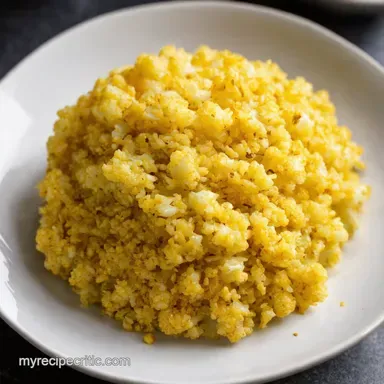
Garlicky Ginger Cauliflower Rice in 30 Minutes

- Time: 15 min active + 15 min cooking
- Flavor & Texture: Savory and nutty with a tender crisp bite
- Perfect for: Low-carb weeknight sides or meal prep
Garlicky Ginger Cauliflower Rice
Ever wonder why most homemade cauliflower rice feels like a sad, wet sponge? It usually happens because the cauliflower releases water the second it hits a lukewarm pan, turning your dinner into a porridge.
The trick is using a wide pan and high heat. When you let the cauliflower sit undisturbed, it browns and develops a nutty flavor that mimics fried rice. This makes Garlicky Ginger Cauliflower Rice a great alternative to grains without losing the satisfaction of a sear.
You can make this as a quick side or a base for a stir-fry. It's fast, uses minimal tools, and delivers a punch of aromatics that makes a simple vegetable feel intentional.
Recipe Specs
This dish relies on a high heat sear to avoid the common "mush" problem. You'll want a pan that allows the cauliflower to spread out in a single layer. If the pan is too small, the steam stays trapped and the rice boils instead of frying.
I prefer using a 12 inch non-stick skillet or a wok. This gives the ingredients room to breathe and ensures the heat hits every grain evenly.
What Makes the Texture Work
- Dry-Heat Searing: Cooking over high heat evaporates moisture instantly, which prevents the cauliflower from steaming.
- The No-Stir Rule: Letting the rice sit for 3 minutes creates a mahogany crust that adds depth and structure.
- Aromatic Base: Sautéing the ginger and garlic first infuses the oil, so every grain gets coated in flavor.
| Method | Prep Time | Texture | Best For |
|---|---|---|---|
| Fresh Head | 15 minutes | Firm and crisp | Maximum flavor |
| Pre-riced | 2 minutes | Softer, wetter | Quick weeknights |
The Ingredients You'll Need
The cauliflower serves as the base, while the aromatics provide the primary flavor. Fresh ginger is essential, as powdered ginger lacks the brightness required to balance the sesame oil.
In the sauce, maple syrup offsets the sharp rice vinegar. It doesn't turn the dish sweet; instead, it helps the soy sauce coat the florets in a glaze during the final stir.
- 2 lbs cauliflower, cut into floretsWhy this? Forms the "rice" texture
- 2 tbsp sesame oilWhy this? Delivers a rich, toasted nuttiness
- 1 tbsp olive oilWhy this? Keeps the pan from smoking
- 4 cloves garlic, mincedWhy this? Contributes a pungent, savory bite
- 1 tbsp fresh ginger, finely gratedWhy this? Offers a zesty, aromatic spark
- 3 stalks green onions, thinly slicedWhy this? Brings a pop of color and mild onion taste
- 1/2 tsp red pepper flakesWhy this? Creates a gentle, warming heat
- 2 tbsp soy sauceWhy this? Provides salt and umami depth
- 1 tbsp rice vinegarWhy this? Supplies a clean, sharp acidity
- 1 tsp maple syrupWhy this? Tempers the salt and vinegar
- 1 tbsp fresh lime juiceWhy this? Cuts through the heavier oils
- 1/2 tsp saltWhy this? Boosts all the other flavors
- 1/4 tsp black pepperWhy this? Lends a subtle earthy spice
- 1 tbsp toasted sesame seedsWhy this? Gives a final nutty crunch
- 1/4 cup fresh cilantro, choppedWhy this? Finishes the dish with herbal brightness
| Original Ingredient | Substitute | Why It Works |
|---|---|---|
| Soy Sauce (2 tbsp) | Coconut Aminos (2 tbsp) | Soy-free. Note: A bit sweeter than soy sauce |
| Maple Syrup (1 tsp) | Honey (1 tsp) | Similar sweetness. Note: Has a slightly thicker texture |
| Sesame Oil (2 tbsp) | Grapeseed Oil (2 tbsp) | Neutral oil. Note: Use more sesame seeds to compensate for flavor |
Necessary Kitchen Tools

While professional equipment isn't required, the choice of pan can significantly impact the outcome.
- Food Processor or Box Grater: Used to break down the florets into rice-sized pieces.
- 12 inch Non-stick Skillet or Wok: Critical for efficient tossing and high-heat searing.
- Microplane or Fine Grater: Perfect for creating a ginger paste that mixes in seamlessly.
Making the Dish
Phase 1: Prepping the "Rice"
Pulse the cauliflower florets in a food processor until they reach the size of grains of rice. Watch it closely so you don't over-process into a puree. If you don't have a processor, a box grater works well to get uniform pieces.
Phase 2: Searing the Aromatics
Heat 2 tbsp sesame oil and 1 tbsp olive oil in a large non-stick skillet or wok over medium-high heat. Once the oil is shimmering, add the minced garlic, grated ginger, and the white parts of the sliced green onions.
Sauté for 60–90 seconds until the garlic is fragrant and just starting to turn golden.
Phase 3: The High heat Fry
Increase the heat to high and add the riced cauliflower. If you have a small pan, cook in batches. Crowding the pan causes the vegetables to steam, which leads to mush.
Spread the cauliflower in an even layer and let it sear undisturbed for 2–3 minutes until it develops a mahogany color. Stir the cauliflower and cook for another 3–5 minutes.
Stir in 2 tbsp soy sauce, 1 tbsp rice vinegar, 1 tsp maple syrup, 1/2 tsp salt, and 1/4 tsp black pepper. Toss frequently until the liquid is absorbed and the cauliflower is tender crisp.
Phase 4: The Final Garnish
Remove the pan from the heat. Drizzle with 1 tbsp fresh lime juice and stir in the chopped cilantro and the remaining green onion tops. Sprinkle with 1 tbsp toasted sesame seeds just before serving.
Chef Note: Don't add the lime juice while the pan is on high heat. The heat can dull the fresh citrus flavor. Adding it at the end keeps it bright.
Fixing Common Problems
Preventing Mushy Texture
This happens when too much moisture stays in the pan. If your rice looks wet, your heat was likely too low or the pan was too crowded. To fix this, increase the heat and let the cauliflower sit without stirring for 2 minutes to let the water evaporate.
Stopping Burnt Garlic
Garlic burns quickly at high temperatures and becomes bitter. To prevent this, keep the garlic and ginger in the pan for only 60–90 seconds before adding the cauliflower. The cauliflower lowers the overall temperature of the pan and stops the garlic from scorching.
Handling Raw Taste
If the cauliflower still tastes raw, it needs another 2–3 minutes of cooking. If it's already browned but still tastes raw in the center, lower the heat slightly and stir for another few minutes until the bite is tender.
Swaps and Add-Ins
This recipe is adaptable for various dietary preferences. To make a Vegan Garlic Ginger Cauliflower Rice, verify that your maple syrup is pure and your soy sauce is certified vegan. For a Keto Garlic Ginger Cauliflower Rice version, simply omit the maple syrup or replace it with a small amount of liquid monk fruit.
If you enjoy punchy tastes, you might also enjoy this Cajun Garlic Butter Sauce for another aromatic option.
To make the dish more filling, consider these additions:
- Protein: Mix in shrimp or tofu cubes during Phase 3.
- Veggie Boost: Toss in shredded carrots or a handful of frozen peas along with the cauliflower.
- Extra Heat: Finish with a sriracha drizzle or double the red pepper flakes.
Storage and Leftovers
Storing Garlicky Ginger Cauliflower Rice is straightforward, but the texture changes over time.
Place the leftovers in a sealed glass jar in the refrigerator. It stays fresh for up to 4 days.
While you can freeze it, the texture softens during thawing. If you must freeze, spread the riced cauliflower on a baking sheet to flash freeze it before moving it into a freezer bag.
To reheat, avoid the microwave. Microwaves create steam, which turns the rice mushy. Instead, heat a teaspoon of oil in a skillet over medium-high heat and toss the rice until the edges get crispy again.
When reheating cooked leftovers, check with a food thermometer that the centre reaches 165°F (74°C); the appliance temperature and time alone do not confirm this.
For zero waste, don't toss the cauliflower leaves if they are bright green. Chop them finely and sauté them with the garlic. They taste similar to kale and add great color.
Best Side Pairings
When serving Garlicky Ginger Cauliflower Rice, pair it with proteins that have a strong glaze. Teriyaki salmon or honey glazed tofu work well because the nutty rice absorbs the extra sauce.
It also makes a great base for a poke bowl. Top it with sliced avocado, shredded carrots, and edamame for a filling meal. If you want something lighter, serve it alongside steamed bok choy or a crisp cucumber salad.
Recipe FAQs
Is this garlic ginger cauliflower rice vegan?
Yes, all ingredients used in this recipe are plant-based.
Tip: check that your soy sauce is certified vegan to be certain.
How to prepare garlic ginger cauliflower rice?
Pulse cauliflower into grains, sauté aromatics, and sear the cauliflower on high heat before tossing with soy sauce and lime.
Tip: cook in batches to avoid steaming the vegetables.
What should I do with frozen cauliflower rice?
Sauté the frozen grains in a hot skillet to evaporate moisture before adding other ingredients.
Tip: avoid thawing the cauliflower first to prevent a mushy texture.
Does cauliflower rice fit an anti-inflammatory diet?
Yes, both cauliflower and ginger support this dietary approach.
Tip: pair this side with a fresh salad using our zesty vinaigrette for more flavor.
How much cauliflower rice replaces one cup of rice?
Roughly two cups of cauliflower rice provide a similar volume to one cup of traditional rice.
Tip: increase the portion size since cauliflower is less calorie-dense than grains.
Garlicky Ginger Cauliflower Rice for 4