Eclairs Recipe: Silky Vanilla
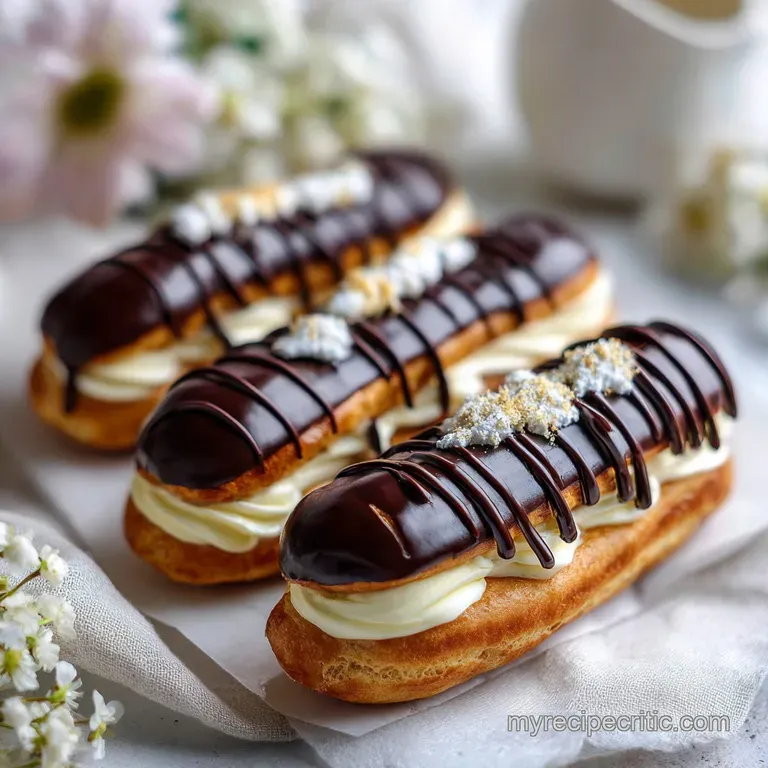
- Time: Active 45 minutes, Passive 35 minutes, Total 1 hours 20 mins
- Flavor/Texture Hook: Shatter crisp pastry shell filled with velvety vanilla bean cream
- Perfect for: Impressive dinner parties, weekend baking projects, or a French style afternoon tea
- Master This Golden and Crisp Homemade French Eclairs Recipe
- The Science of Why it Works
- The Technical Specs for Your Afternoon Baking Session
- Quality Ingredients Needed for This Decadent French Pastry
- Essential Tools to Achieve Professional Patisserie Results at Home
- Step by Step Guide to Crafting the Ultimate Eclair
- Fixing Common Mistakes for a Stable and Crispy Result
- Simple Variations to Personalize Your Homemade Eclair Filling
- Scaling This Recipe for Larger Crowds
- Debunking 3 Myths about Choux Pastry
- Best Methods to Store and Preserve Your Pastry Batch
- Creative Ideas for Pairing Your Eclairs With Refreshing Beverages
- Eclairs Recipe FAQs
- 📝 Recipe Card
Master This Golden and Crisp Homemade French Eclairs Recipe
There is absolutely nothing like the aroma of butter and toasted flour wafting through your kitchen as these beauties bake. I remember the first time I tried making them, I ended up with flat, soggy pancakes that were more sad than sweet.
It was a total mess, but it taught me that this pastry isn't about luck, it's about the dance between moisture and heat. When you pull a tray of perfectly puffed, golden brown shells out of the oven, the sense of pride is honestly addictive.
The magic happens when that simple dough hits the hot air and expands into a hollow vessel, just waiting for a rich filling. We aren't looking for a soft bun here, we want a shell that has a distinct crackle when you bite into it. If you've ever been intimidated by French patisserie, let's put those fears aside.
This isn't about being a professional chef, it's about understanding how a few basic ingredients behave when you treat them right.
We're going to walk through every stage, from the stovetop panade to the glossy chocolate dip. You'll learn exactly what the dough texture should look like before you stop adding eggs and how to ensure your pastry cream is as smooth as silk.
Trust me on this, once you nail the technique, you'll never look at a grocery store eclair the same way again. Right then, let's get into the details.
The Science of Why it Works
Starch Gelatinization: When we cook the flour in the milk and water mixture, the starch granules swell and burst, creating a stable structure that can trap steam. This process, known as creating a "panade," is what allows the dough to hold its shape while it expands in the oven.
Steam Induced Leavening: Unlike bread which uses yeast, this pastry relies entirely on the rapid evaporation of water to puff up. The high heat turns the moisture in the dough into steam, which is trapped by the protein in the eggs, forcing the shell to inflate and create that iconic hollow center.
| Stage | Focus | Texture Goal | Heat Level |
|---|---|---|---|
| Stovetop (Panade) | Moisture Removal | Thick, smooth ball | Medium High |
| Oven (Initial) | Steam Expansion | Maximum puff/volume | 400°F |
| Oven (Final) | Structural Set | Shatter crisp exterior | 350°F |
The transition from the stovetop to the oven is where the real transformation happens. On the stove, we are essentially building the "bones" of the pastry, while the oven provides the energy for the "growth" spurts. It's a fascinating bit of chemistry that results in something incredibly light.
The Technical Specs for Your Afternoon Baking Session
Before we start measuring, let's look at the specific role each component plays. This isn't just a list, it's the architecture of your dessert. Understanding the "why" behind the milk or the eggs will help you adjust if the weather is humid or if your eggs are a bit smaller than usual.
| Ingredient | Science Role | Pro Secret |
|---|---|---|
| Whole Milk | Tenderizer & Browning | The sugars in milk (lactose) create a deeper golden color than water alone. |
| All purpose Flour | Structural Frame | Sift it twice to ensure no lumps interfere with the smooth expansion of the steam. |
| Large Eggs | Emulsifier & Lift | Add them one-by-one to monitor the dough's "V drop" consistency perfectly. |
You might notice we use a mix of milk and water for the shell. While water provides the most "explosive" steam for height, the milk adds the fat and sugars needed for a rich flavor and that beautiful mahogany hue. It's a balance that helps the eclairs behave during the bake.
Quality Ingredients Needed for This Decadent French Pastry
For the Choux Pastry (The Shell): 1/2 cup (120ml) Whole milk Why this? Adds fat for a tender, flavorful crumb. 1/2 cup (120ml) Water Why this? Provides the steam needed for maximum lift. 8 tbsp (115g) Unsalted butter, cubed Why this? Cubing ensures even melting before the water boils. 1 tsp Granulated sugar 1/2 tsp Salt 1 cup (125g) All purpose flour, sifted 4 Large eggs, room temperature (approx.
200g)
For the Pastry Cream (The Filling): 2 cups (480ml) Whole milk 1/2 cup (100g) Granulated sugar 1/4 cup (30g) Cornstarch Why this? Provides a clean, stable thicken without flouriness. 4 Large egg yolks 2 tsp Pure vanilla bean paste 2 tbsp (30g) Cold unsalted butter
For the Chocolate Glaze: 4 oz (115g) Semi sweet chocolate (60% cacao), finely chopped 1/2 cup (120ml) Heavy cream 1 tbsp Light corn syrup Why this? Creates a professional, mirror like gloss.
| Original Ingredient | Substitute | Why It Works |
|---|---|---|
| Whole Milk (Shell) | Water (equal parts) | More height, but less flavor and a paler shell. |
| Vanilla Bean Paste | Vanilla Extract | Same flavor profile, but you'll lose the beautiful black speckles. |
| Semi sweet Chocolate | Milk Chocolate | Sweeter result. Note: Reduce sugar in filling to balance the sweetness. |
Using high-quality chocolate for the glaze is non negotiable for me. Since there are so few ingredients in the topping, you really taste the quality of the cocoa. It's the final layer that brings everything together, much like the smooth finish on a Foolproof Chicken Alfredo recipe.
Essential Tools to Achieve Professional Patisserie Results at Home
You don't need a kitchen full of gadgets, but a few specific items make this eclairs recipe much easier to manage. First, a heavy bottomed saucepan is vital for the panade so you don't scorch the flour. A wooden spoon is your best friend here because it’s sturdy enough to beat the dough vigorously.
For piping, I highly recommend using a large open star tip (like a Wilton 1M or 4B) rather than a plain round tip. The ridges created by the star tip allow the dough to expand more evenly without cracking. You'll also need a solid baking sheet and some parchment paper.
If you have a stand mixer, it makes incorporating the eggs a breeze, but a hand mixer or even a strong arm will get the job done.
step-by-step Guide to Crafting the Ultimate Eclair
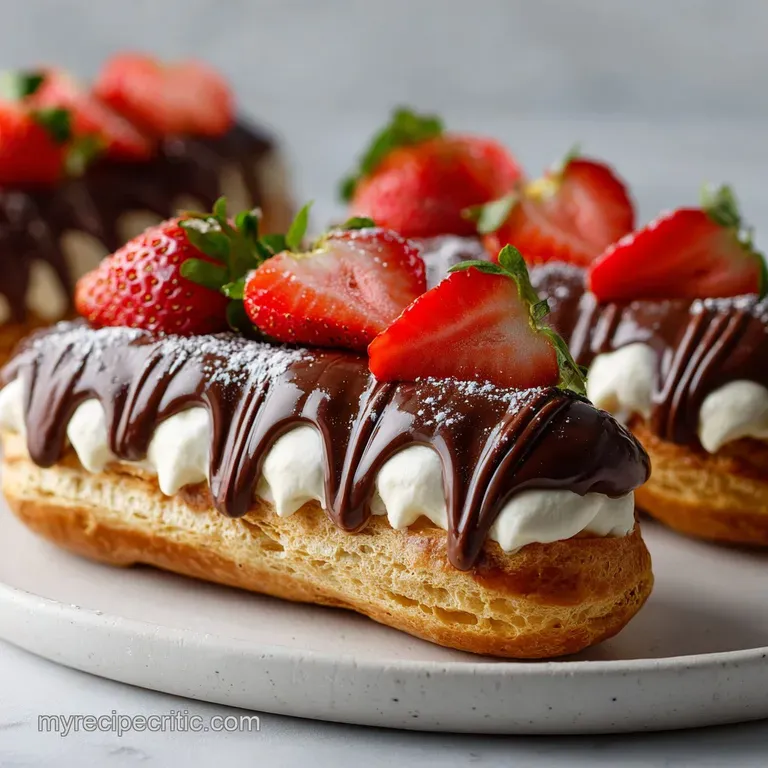
1. The Panade Stage
Combine 1/2 cup milk, 1/2 cup water, 8 tbsp cubed butter, 1 tsp sugar, and 1/2 tsp salt in a saucepan. Bring to a rolling boil over medium high heat. Note: Ensure butter is fully melted before the liquid boils to prevent excess evaporation.
2. Flour Integration
Dump the 1 cup sifted flour into the boiling liquid all at once. Stir vigorously with a wooden spoon until a thick dough ball forms and a thin film appears on the bottom of the pan. This takes about 2 minutes of constant stirring.
3. Cooling the Dough
Transfer the dough to a bowl and let it cool for about 5 minutes. Note: If the dough is too hot, it will cook the eggs instantly, ruining the emulsion.
4. The Egg Emulsion
Add the 4 eggs one at a time, beating thoroughly after each addition. Stop adding eggs when the dough is glossy and falls off the spoon in a slow "V" shape. You might not need all of the fourth egg, or you might need a splash more.
5. Piping the Shells
Transfer the dough to a piping bag with a star tip. Pipe 4 inch logs onto a parchment lined tray, leaving 2 inches between each. Look for a steady, even thickness throughout the log.
6. The First Bake
Bake at 400°F for 15 minutes. Do not open the oven door, or the shells will collapse from the sudden temperature drop.
7. Finishing the Shells
Reduce the heat to 350°F and bake for another 20 minutes until the shells are deep golden and feel light and firm. Poke a tiny hole in the end of each eclair with a toothpick to let steam escape while they cool.
8. The Silky Filling
Whisk yolks, 1/2 cup sugar, and 1/4 cup cornstarch. Heat 2 cups milk until simmering, then slowly temper into the yolks. Return to heat and whisk until thick and bubbling. Stir in 2 tsp vanilla paste and 2 tbsp cold butter. Chill completely.
9. Assembly and Glaze
Poke three small holes in the bottom of each cooled shell. Pipe the chilled pastry cream into the holes until the eclair feels heavy and full.
10. The Final Touch
Melt 4 oz chopped chocolate, 1/2 cup heavy cream, and 1 tbsp corn syrup together. Dip the tops of the filled eclairs into the warm glaze and let the excess drip off for a clean edge.
Chef's Tip: Freeze your butter for 10 minutes before cubing it. This keeps it cold longer so the water can reach a full boil before the butter completely breaks down, giving you a more stable emulsion.
Fixing Common Mistakes for a Stable and Crispy Result
Why Your Eclair Shells Are Flat
This usually happens because the oven door was opened too early. When you open the door, the temperature drops, the steam loses its pressure, and the unset protein structure simply caves in. It can also happen if the "panade" wasn't cooked long enough on the stove, leaving too much raw moisture in the flour.
Why Your Dough is Too Runny
If you add all the eggs at once, you might over hydrate the dough. Every batch of flour absorbs moisture differently. Always add the last egg in increments. If your dough is already too runny, you cannot just add more raw flour; you have to make a small half batch of the cooked panade and mix it in to save it.
| Problem | Root Cause | Solution |
|---|---|---|
| Soggy Shells | Underbaked or not vented | Bake until dark golden; poke a hole to release internal steam immediately. |
| Cracked Surfaces | Too much surface tension | Use a star tip for piping to allow for even expansion during the rise. |
| Lumpy Pastry Cream | Eggs curdled or cornstarch clumped | Sift cornstarch before whisking; temper hot milk into yolks very slowly. |
Common Mistakes Checklist
- ✓ Always sift your flour to prevent tiny flour "bombs" in the dough.
- ✓ Ensure eggs are at room temperature so they emulsify smoothly with the warm dough.
- ✓ Never grease your parchment paper; the dough needs to "grip" the surface to rise.
- ✓ Use a serrated knife if you prefer to cut them open rather than piping through the bottom.
- ✓ Allow the pastry cream to chill for at least 4 hours for the best texture.
Simple Variations to Personalize Your Homemade Eclair Filling
1. The Salted Caramel Twist
Instead of vanilla pastry cream, you can fold 1/4 cup of homemade salted caramel sauce into the finished cream. Dip the tops in a caramel glaze instead of chocolate for a completely different profile. This works beautifully if you're serving a rich dinner like a Lasagne Proper Classic recipe.
2. The "Healthier" Patisserie Angle
While an eclair is never truly a health food, you can swap the heavy cream glaze for a simple dusting of powdered sugar and fill them with a lightened Greek yogurt and honey mousse. It's a brighter, tangier version that feels less heavy for a summer brunch.
3. The Eclairs Recipe Eggless (Dietary Swap)
For an eggless version, the shell is the trickiest part. You'll need to use a combination of mashed potatoes (for starch) and a commercial egg replacer like Just Egg. The result is denser and won't puff as high, but it satisfies the craving.
For the filling, use a vegan custard powder or cornstarch based pudding made with coconut milk.
Scaling This Recipe for Larger Crowds
If you are hosting a big event, you can easily double this recipe. However, do not double the salt or sugar in the shell; keep them at 1.5x the original amount to avoid over seasoning.
When baking two trays at once, make sure to rotate them halfway through the second (350°F) baking phase to ensure even browning.
To scale down for just two people, I recommend making the full batch of shells and freezing the extras unfilled. Halving the eggs can be messy and lead to "runny dough" issues. It's much safer to have a few extra shells in the freezer for a rainy day than to ruin a half batch with poor measurements.
| Desired Yield | Shell Ingredients | Filling Adjustment | Baking Strategy |
|---|---|---|---|
| 7 Eclairs (Halve) | Use 2 large eggs | 1 cup milk / 2 yolks | Same time, smaller tray |
| 14 Eclairs (Standard) | Follow recipe exactly | 2 cups milk / 4 yolks | 1 large baking sheet |
| 28 Eclairs (Double) | 2x ingredients (Salt 1.5x) | 4 cups milk / 8 yolks | Rotate trays at 20 mins |
Debunking 3 Myths about Choux Pastry
Myth 1: You must use bread flour for height. Actually, all purpose flour works perfectly for an eclairs recipe because it provides enough structure without making the shell too chewy. Bread flour can sometimes make the eclairs too tough and difficult to bite through cleanly.
Myth 2: Searing the dough on the pan is bad. Quite the opposite! You want to see that thin film of flour on the bottom of your saucepan. That is your visual cue that enough moisture has evaporated from the panade, which is essential for a hollow shell.
Myth 3: Eclairs must be eaten within an hour. While they are best fresh, a properly baked and vented shell can stay crisp for several hours. The key is the venting hole if the steam stays inside, it will soften the crust from the inside out within minutes.
Best Methods to Store and Preserve Your Pastry Batch
Storage: Filled eclairs should be kept in the fridge and are best eaten within 24 hours. After that, the moisture from the cream will start to soften the shell. Unfilled shells can be stored in an airtight container at room temperature for up to 2 days.
Freezing: You can freeze unfilled shells for up to 2 months. To revive them, pop them in a 350°F oven for 5 minutes until they regain their "crackle." I don't recommend freezing filled eclairs as the pastry cream can weep and become grainy upon thawing.
Zero Waste Tip: If you have leftover pastry cream, it's a fantastic dip for fresh strawberries. If you have extra dough (choux), pipe little rounds and bake them into "chouquettes" by topping them with pearl sugar. No scrap should ever go to waste in a French kitchen!
Creative Ideas for Pairing Your Eclairs With Refreshing Beverages
When serving these, I love to lean into the classic cafe vibe. A strong, bitter espresso is the traditional partner because it cuts through the sweetness of the chocolate and the richness of the cream.
If you're serving these in the evening, a glass of cold Champagne or a sweet Sauternes is a sophisticated choice that mirrors the elegance of the pastry.
For a non alcoholic option, a floral Earl Grey tea with a splash of milk complements the vanilla bean paste beautifully. The bergamot notes in the tea act as a bridge between the buttery shell and the dark chocolate glaze.
No matter how you serve them, the contrast between the cold filling and the room temperature shell is the real star of the show. Enjoy the process it's just as sweet as the result!
Eclairs Recipe FAQs
What is the traditional filling for eclairs?
Vanilla pastry cream is the classic filling. This rich, smooth custard is made from milk, egg yolks, sugar, and cornstarch, often flavored with vanilla bean. It provides a perfect contrast to the crisp shell and chocolate glaze.
What is the secret to crispy eclairs?
Cook the panade sufficiently on the stovetop and vent the shells after baking. Ensure the flour mixture is well cooked until a film forms on the pan to remove excess moisture. Then, poke a small hole in the end of each eclair after baking to let steam escape, preventing sogginess.
What is the difference between American eclairs and French eclairs?
American eclairs are often larger, flatter, and may have a different glaze. While the fundamental choux pastry and cream filling are similar, American versions sometimes use a sweeter chocolate frosting and may be less refined in shape.
French eclairs tend to be more uniform and feature a specific glossy chocolate fondant or glaze.
What are the ingredients in eclairs?
Eclairs consist of choux pastry for the shells and a pastry cream for the filling. The choux pastry is made from water, milk, butter, sugar, salt, flour, and eggs. The pastry cream typically includes milk, egg yolks, sugar, cornstarch, and vanilla.
How do I prevent my eclair shells from collapsing?
Do not open the oven door during the initial high heat baking phase. The sudden temperature drop can cause the steam filled shells to deflate rapidly. Ensure the shells are baked until deep golden brown and feel firm to set the structure.
Can I make the choux pastry dough ahead of time?
Yes, you can make and store the unbaked choux pastry dough in the refrigerator for up to 24 hours. If it becomes too firm to pipe, let it sit at room temperature for a bit. However, for the best rise and texture, it's ideal to pipe and bake the shells soon after making the dough.
What kind of chocolate should I use for the glaze?
Use a good quality semi sweet chocolate with at least 60% cacao for the glaze. This provides a rich, not-too-sweet flavor that balances the pastry cream. If you enjoyed mastering the smooth texture of the pastry cream here, you'll appreciate how a quality chocolate contributes to the final sensory experience.
Eclairs Recipe
Ingredients:
Instructions:
Nutrition Facts:
| Calories | 264 kcal |
|---|---|
| Protein | 5.6 g |
| Fat | 18.1 g |
| Carbs | 25.2 g |
| Fiber | 0.9 g |
| Sugar | 14.9 g |
| Sodium | 104 mg |
