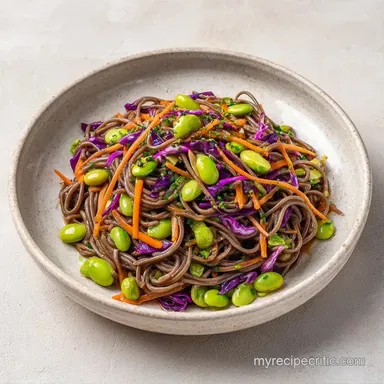
Cold Soba Noodle Salad: Fresh and Crunchy

- Time: 15 min active + 5 min cook
- Flavor/Texture Hook: Nutty, zingy, and seriously crunchy
- Perfect for: Hot summer lunches or a fast weeknight dinner
The first thing you notice when making this is the smell of toasted sesame oil hitting a hot pan or mixing into a bowl. It's that deep, roasted aroma that immediately tells your brain you're eating something with a lot of soul.
I remember the first time I tried making this for a group of friends during a heatwave in August. I didn't rinse the noodles properly, and the whole thing turned into a gummy, starchy clump. It was a disaster, but it taught me the most important rule of soba.
The key is the shock. You take those hot noodles and plunge them into ice cold water, scrubbing them with your hands. It feels a bit weird at first, but it's the only way to get that clean, distinct noodle texture.
Once you nail that, this Cold Soba Noodle Salad becomes your go to because it's basically a giant bowl of vegetables held together by a dressing that tastes like it took hours to develop, even though it takes two minutes.
You can expect a dish that's colorful and bright. We're talking deep purple cabbage, bright orange carrots, and vivid green edamame. It's a meal that feels healthy but doesn't taste like "health food" because the tamari and ginger bring a heavy hit of umami that satisfies those salty cravings.
Easy Cold Soba Noodle Salad
The secret to a great bowl of noodles isn't actually the noodles themselves, it's how you treat the starch. Soba noodles are made from buckwheat, which behaves differently than wheat pasta. If you just drain them and let them sit, they release a starch that acts like glue.
This is why so many home cooks end up with a block of noodles instead of a loose, flowing salad.
Starch Removal: Vigorous rinsing under cold water washes away the surface starch, which prevents the noodles from sticking together.
Temperature Shock: Cooling the noodles quickly stops the cooking process instantly, so they keep a bit of "bite" and don't go mushy.
Oil Barrier: Tossing the noodles in sesame oil immediately after rinsing creates a thin fat layer that keeps the strands separate.
Acid Balance: The rice vinegar cuts through the richness of the sesame oil, keeping the dish tasting light and fresh.
Between using fresh noodles and dried ones, there's a big difference in how the dish feels. Most of us use dried noodles for convenience, but fresh ones offer a softer, more authentic feel.
| Feature | Dried Soba | Fresh Soba | Impact |
|---|---|---|---|
| Cook Time | 4-6 minutes | 2-3 minutes | Dried takes slightly longer |
| Texture | Firmer, snappier | Softer, silkier | Fresh feels more "handmade" |
| Shelf Life | Months in pantry | Days in fridge | Dried is better for staples |
| Starch Level | Higher surface starch | Lower surface starch | Dried requires more rinsing |
Since buckwheat has a very specific nutritional profile, it's worth noting that according to USDA FoodData, buckwheat provides a good source of manganese and magnesium, making this salad more than just a light snack.
Component Analysis
Not every ingredient in this recipe is just for flavor. Some are there to handle the structural integrity of the salad.
| Ingredient | Science Role | Pro Secret |
|---|---|---|
| Soba Noodles | Base Structure | Rinse until the water is crystal clear |
| Tamari | Umami/Salt | Use tamari over soy sauce for a richer, gluten-free taste |
| Rice Vinegar | Acid Balance | Use unseasoned vinegar to control the sugar level |
| Sesame Oil | Fat/Emulsifier | Toasted oil adds the flavor, raw oil is for frying |
The combination of ginger and garlic in the dressing creates a chemical aromatic bridge. The pungent garlic grounds the dish, while the fresh ginger adds a high note zing that wakes up your palate.
Essential Ingredients
For the base of the salad, you'll need a few fresh things and some pantry staples. I've listed these exactly as you'll need them.
For the Noodles and Crunch
- 8 oz soba noodles Why this? Buckwheat flavor is the heart of the dish (Sub: Whole wheat spaghetti)
- 1 cup frozen edamame, shelled and thawed Why this? Adds protein and a buttery texture (Sub: Chickpeas)
- 2 tbsp toasted sesame oil Why this? Prevents sticking and adds nuttiness (Sub: Grapeseed oil)
- 1 cup cucumber, julienned Why this? Adds water content and freshness (Sub: Jicama)
- 1 cup carrots, shredded Why this? Natural sweetness and snap (Sub: Daikon radish)
- 1 cup red cabbage, thinly sliced Why this? Earthy flavor and bold color (Sub: Napa cabbage)
- 3 scallions, thinly sliced Why this? Mild onion bite (Sub: Chives)
- 1/4 cup fresh cilantro, chopped Why this? Bright, citrusy finish (Sub: Flat leaf parsley)
For the Dressing
- 3 tbsp tamari Why this? Deep, salty umami (Sub: Soy sauce)
- 2 tbsp rice vinegar Why this? Mild, sweet acidity (Sub: Apple cider vinegar)
- 1 tbsp fresh ginger, grated Why this? Pungent, spicy warmth (Sub: 1/2 tsp ginger powder)
- 1 tbsp maple syrup Why this? Balances the salt and acid (Sub: Honey)
- 1 tbsp toasted sesame oil Why this? Ties the dressing together (Sub: Neutral oil)
- 1 clove garlic, minced Why this? Sharp, savory depth (Sub: Garlic powder)
The Minimalist Tool Kit
You don't need a professional kitchen to make this. I usually do this with whatever is clean on the counter. All you really need is one large pot for the noodles, a colander for the rinse, a small bowl or jar for the dressing, and a big mixing bowl to toss everything together.
If you have a pair of tongs, it makes the mixing process much faster, but two big spoons work just as well.
I prefer using a glass jar for the dressing. You can just throw all the liquids and aromatics in, shake it like crazy for 30 seconds, and you're done. No whisking required, and fewer dishes to wash.
The step by step Process
Now let's get into the actual work. Keep an eye on the clock, but trust your senses more.
- Boil a large pot of water without salt. Note: Salt isn't needed for soba as the noodles already have a strong flavor.
- Add the soba noodles and cook until they are tender but still have a slight snap (usually 4-6 minutes).
- Immediately drain the noodles into a colander and rinse under cold running water. Massage the noodles vigorously with your hands until they feel cool and the water runs clear.
- Toss the chilled noodles with 2 tablespoons of toasted sesame oil. Note: This creates a barrier so they don't clump as they sit.
- In a small bowl or jar, whisk together tamari, rice vinegar, grated ginger, maple syrup, 1 tablespoon of toasted sesame oil, and minced garlic until the mixture looks glossy and cohesive.
- In a large mixing bowl, combine the chilled noodles, edamame, cucumber, carrots, and red cabbage.
- Pour the dressing over the mixture and toss gently with tongs until every noodle is evenly coated in the sauce.
- Fold in the sliced scallions and chopped cilantro just before serving. Note: Adding these last keeps the herbs from bruising or wilting.
If you're looking for other ways to use fresh veggies, my Hidden Veggie Pasta Sauce is another great way to pack a lot of nutrients into a simple meal.
Common Fixes and Troubleshooting
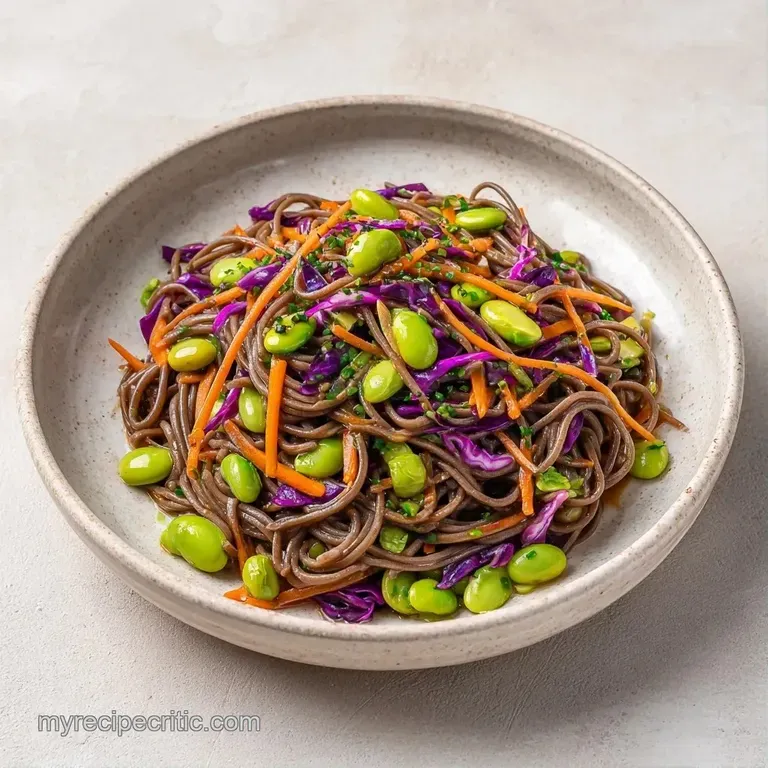
The most common issue people have with this Cold Soba Noodle Salad is texture. Either the noodles are too soft, or the vegetables release too much water, making the dressing watery.
| Issue | Solution |
|---|---|
| Why Your Noodles Are Mushy | This usually happens because of overcooking or skipping the cold rinse. If you cook them even 60 seconds too long, the structure collapses. |
| Why The Dressing Is Bland | If it tastes flat, you're likely missing acid. A tiny splash more of rice vinegar or a squeeze of lime can wake up the tamari and ginger. |
| Why The Vegetables Are Soggy | If you dress the salad too early, the salt in the tamari draws water out of the cucumbers and cabbage. This is why we add the herbs at the very end. |
Quick Success Checklist:
- ✓ Noodles were rinsed until the water was clear
- ✓ Dressing was whisked until glossy
- ✓ Vegetables were sliced uniformly for even coating
- ✓ Herbs were added at the final second
- ✓ Noodles were oiled before the dressing went in
Fresh Twists and Swaps
One of the best things about this recipe is how easy it is to change based on what's in your fridge. You don't have to stick to the script.
Adding Protein
If you want to make this a heavier meal, you can easily turn this into a cold soba noodle salad with chicken or tofu. For chicken, use grilled breast strips or rotisserie chicken. For tofu, I recommend extra firm tofu that's been pressed and pan seared until golden. If you're in the mood for something similar but with a different wrap, these Chicken Lettuce Wraps are a great alternative.
Changing the Sauce
If you want a different vibe, you can create a cold soba noodle salad peanut sauce. Just whisk 2 tablespoons of creamy peanut butter into the existing dressing recipe. It makes the salad creamier and much more filling.
For a lighter, more fermented taste, try a cold soba noodle salad with miso dressing by swapping the tamari for white miso paste (though you'll need to whisk it more to get the lumps out).
Veggie Variations
If you don't like red cabbage, try shredded kale or baby spinach. For the crunch, swap carrots for snap peas or thinly sliced bell peppers. As long as you keep the ratio of "crunchy" to "noodle" about 1:1, the dish will hold together.
Decision Shortcut:
- Want more protein? Add 1 cup of seared tofu or grilled chicken.
- Want more heat? Add 1 teaspoon of sriracha or red pepper flakes to the dressing.
- Want it creamier? Stir in a tablespoon of tahini or peanut butter.
Scaling Your Batch
Scaling this is pretty straightforward, but you can't just multiply everything linearly if you're making a massive amount.
Scaling Down (1-2 Servings): If you're just making it for yourself, cut the noodles to 4 oz. You can halve the dressing, but I usually make the full amount anyway because the extra dressing is great as a marinade for fish or tofu the next day.
Scaling Up (6-10 Servings): When doubling or tripling the recipe, don't triple the garlic or ginger. Aromatics can become overwhelming in large batches. Use about 1.5x the amount of garlic and ginger, but go full 3x on the noodles and vegetables.
Also, work in batches when rinsing the noodles; if you put too many in one colander, the ones in the middle stay hot and get mushy.
Truth About Soba
There are a few things people get wrong about these noodles that lead to frustration in the kitchen.
The "100% Buckwheat" Myth Many people think all soba is gluten-free. In reality, most store-bought soba noodles are a mix of buckwheat and wheat flour. If you need it to be strictly gluten-free, check the label for "100% buckwheat." Note that 100% buckwheat noodles are much more fragile and break easily, so be gentler when tossing the salad.
The "Salt the Water" Myth Unlike Italian pasta, you don't need to salt the water for soba. Buckwheat has a very distinct, earthy flavor that can be easily overwhelmed by too much salt, and the tamari in the dressing provides all the seasoning the dish needs.
Storing Your Leftovers
This salad is surprisingly hardy, but it does change over time.
Fridge Storage Store the salad in an airtight container for up to 3 days. I recommend keeping the dressing in a separate jar and tossing it just before you eat. If the noodles are already dressed, they will absorb the sauce and become softer, which some people actually prefer.
Freezing Do not freeze this. The cucumbers and cabbage will turn into a watery mess the moment they thaw. The noodles also lose their structure. This is a strictly fresh and chilled dish.
Zero Waste Tips Don't throw away the cabbage core or the carrot tops. You can finely chop the cabbage core and sauté it with some garlic for a side dish. Carrot tops can be blended into a pesto with some olive oil and lemon juice.
If you have leftover dressing, use it as a glaze for salmon or tofu in a pan.
Plating for Visual Impact
Since this is such a colorful dish, the way you serve it matters.
The Bowl Choice Use a wide, shallow bowl rather than a deep one. This prevents the noodles from compressing and allows the bright colors of the vegetables to sit on top.
The Finishing Touch Just before serving, sprinkle some toasted sesame seeds and a few extra rings of scallion on top. The contrast of the white sesame seeds against the dark purple cabbage looks professional.
The Garnish If you have a few extra cilantro leaves, place them right in the center. A final drizzle of toasted sesame oil over the top right before it hits the table adds a fresh scent that makes the whole dish feel more intentional.
Use a pair of tongs to lift the noodles high into the bowl, creating a mound rather than a flat layer. This adds height and makes the salad look more appetizing.
High in Sodium
850 mg 850 mg of sodium per serving (37% 37% of daily value)
The American Heart Association recommends a daily limit of 2,300mg of sodium to lower blood pressure and reduce the risk of heart disease.
Tips to Reduce Sodium
-
Swap for Low-Sodium Tamari-30%
Replace regular tamari with low-sodium tamari or coconut aminos to drastically reduce the primary salt source.
-
Add Citrus Brightness-20%
Reduce the amount of tamari by a third and add fresh lime or lemon juice to maintain a punchy flavor profile.
-
Check Noodle Labels-10%
Select salt-free or low-sodium soba noodles to eliminate hidden sodium found in processed pasta brands.
-
Maximize Fresh Aromatics
Increase the amount of fresh ginger, garlic, and cilantro to add depth and complexity without needing extra salt.
Recipe FAQs
What to put in soba noodle salad?
Combine soba noodles with edamame, julienned cucumber, shredded carrots, and sliced red cabbage. Finish the dish with a dressing made of tamari, rice vinegar, ginger, maple syrup, sesame oil, and garlic.
Is soba noodle salad healthy?
Yes, it is very nutritious. It blends complex carbohydrates and plant-based protein with a variety of fresh, raw vegetables.
Can soba noodles be served cold?
Yes, they are traditionally served chilled. Rinsing the noodles under cold running water removes excess starch and ensures a clean, refreshing texture.
Are soba noodles ok for diabetics?
Yes, buckwheat generally has a lower glycemic index than wheat. This makes it a better option for blood sugar management, though you should always check the package for added sugars.
What are easy lunch ideas for high school?
Pack this chilled soba salad for a filling and healthy school meal. If you need more weekly variety, a classic Italian sandwich is another quick, crowd-pleasing option.
What are some easy kids lunch ideas?
Soba noodle salad is a great kid-friendly option because it is colorful and mild. Store the dressing separately so the vegetables stay crunchy until the lunch bell rings.
How to stop soba noodles from sticking?
Toss the chilled noodles with 2 tablespoons of toasted sesame oil. This creates a protective coating that prevents clumping before you mix in your vegetables and dressing.
Cold Soba Noodle Salad in 20 Minutes