Bolognese Sauce: a Traditional Northern Italian Masterclass
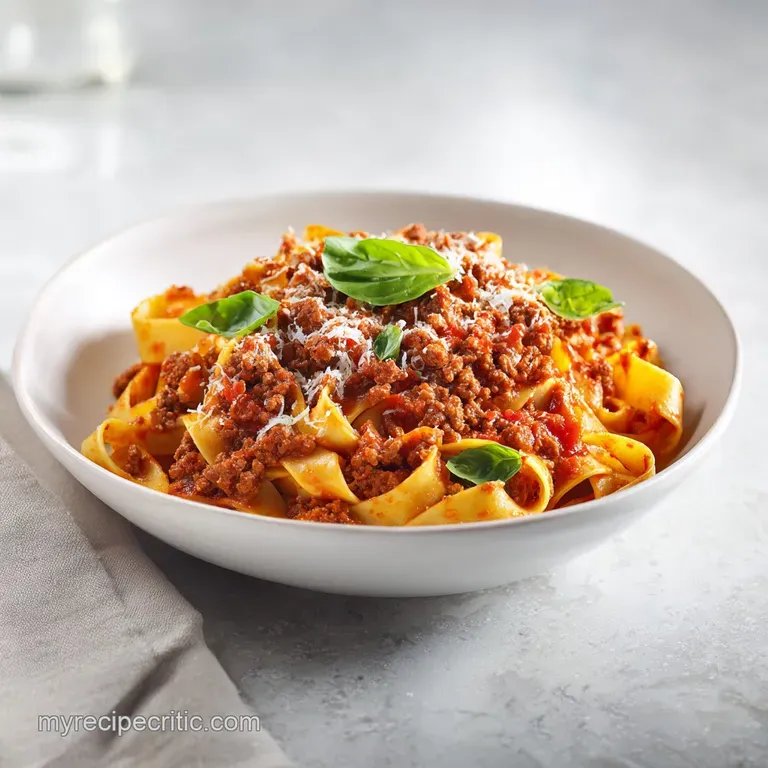
- Time: Active 30 minutes, Passive 240 minutes, Total 270 minutes
- Flavor/Texture Hook: Deeply savory, melt in-your mouth meat with a rich, silky finish
- Perfect for: Traditional Sunday family dinners and impressive weekend meal prep
- The Real Secret Behind Bolognese Sauce
- Essential Specs for This Slow Simmered Classic
- Deep Diving into Essential Ingredient Components
- Choosing Tools for Heavy Bottomed Braising
- Step-by-Step Guide to This Exquisite Sauce
- Troubleshooting Common Problems and Pitfalls
- Creative Flavor Variations for Your Ragù
- Guidelines for Storage and Reducing Waste
- Perfect Ways to Serve This Classic
- Recipe FAQs
- 📝 Recipe Card
The Real Secret Behind Bolognese Sauce
In the narrow, terracotta hued streets of Bologna, "Ragù alla Bolognese" isn't just a recipe; it is a cultural cornerstone. It is the slow burning heartbeat of a city known as La Grassa (The Fat One) for its rich culinary heritage.
I remember the first time I smelled this simmering in a small, wood paneled trattoria near the Piazza Maggiore. It wasn't the sharp, acidic scent of a quick red sauce, but something deeper, woodier, and infinitely more comforting.
This is a dish that demands you slow down and trade your speed for a depth of flavor that feels like a warm hug from a nonna you never had.
The traditional Northern Italian approach is worlds apart from the "spaghetti bolognese" often served elsewhere. There is no heavy handed garlic or heaps of dried oregano here. Instead, we focus on the alchemy of the soffritto, the gentle tenderizing power of dairy, and a simmer so low the Italians call it a "smile." It is a testament to the idea that the best things in life and in the kitchen take time to develop their full character.
We are going to build this sauce in layers, starting with a base of butter and pork fat, moving through the sweetness of caramelized vegetables, and finishing with a long, low braise that coaxes every ounce of umami out of the beef and pork.
By the time we are done, you won't just have a meal; you will have a piece of Italian history sitting on your stovetop. It is a process that turns the act of cooking into a meditative ritual, and the result is the most exquisite bolognese sauce you have ever tasted.
Why the Milk Goes In First
- Dairy Buffer
- Adding milk to the meat before the wine creates a protective coating on the proteins, preventing them from toughening when they hit the acidic tomatoes.
- Fat Emulsification
- As the milk evaporates, it leaves behind milk solids that help bind the rendered fats and tomato purée into a silky, cohesive emulsion.
- Natural Sweetness
- The lactose in the milk balances the natural acidity of the wine and tomatoes, eliminating the need for added sugar.
| Method | Cook Time | Texture Outcome | Flavor Profile |
|---|---|---|---|
| Traditional Braise | 4 hours | Meat melts into the sauce; velvety and thick | Deep, earthy, and highly concentrated |
| Quick Simmer | 45 minutes | Distinct meat crumbles; thinner consistency | Bright, acidic, and tomato forward |
| Slow Cooker | 8 hours | Very soft meat; often lacks fat integration | Mellow, but can lose aromatic complexity |
Building these layers requires patience, especially during the initial stages where the vegetables need to soften without taking on color. If you are looking for a different kind of intensity that's ready much faster, my Cajun Garlic Butter Sauce offers a punchy, spice forward alternative for weeknight cravings. But for today, we are leaning into the calm, rhythmic steps of the classic ragù.
Component Analysis
| Ingredient | Science Role | Pro Secret |
|---|---|---|
| Pancetta | Provides foundational fat and cured salinity | Mince it until it’s almost a paste so it disappears into the sauce. |
| Whole Milk | Tenderizes muscle fibers via lactic acid | Use full fat milk only; the fat is essential for the velvety mouthfeel. |
| Tomato Passata | Adds body and mild acidity without seeds | Choose a high-quality Italian brand like Mutti for consistent thickness. |
| White Wine | Dissolves flavor compounds that water can't | Use a dry, crisp wine like Pinot Grigio to cut through the heavy fats. |
Essential Specs for This Slow Simmered Classic
When we talk about "exquisite bolognese sauce," we are looking at a specific set of numbers that ensure success. This isn't a "wing it" kind of dish. The ratios of beef to pork, the volume of liquids, and the exact temperature of the simmer are what separate a good sauce from a legendary one.
We are aiming for 8 servings here, which might seem like a lot, but trust me, you will want the leftovers. The prep time is a solid 30 minutes of focused chopping and sautéing, followed by a 240 minutes (4 hours) cook time where the stove does all the heavy lifting.
One of the most important checkpoints is the evaporation of the liquids. You aren't just boiling off water; you are concentrating flavors. When the milk evaporates, you should see clear fat shimmering around the meat.
When the wine evaporates, the sharp scent of alcohol should be entirely replaced by a fruity, mellow aroma. These transitions are the "specs" that matter more than the clock.
| Thickness | Target Temp | Rest Time | Visual Cue |
|---|---|---|---|
| Braise Stage | 190°F (Sub boil) | N/A | Single bubbles breaking the surface |
| Finished Sauce | 200°F | 10 minutes | Orange tinted oil pooling at the edges |
| Serving Temp | 160°F | N/A | Sauce clings to the pasta, no watery ring |
Deep Diving into Essential Ingredient Components
The soul of this sauce lies in the quality of your meat and the precision of your soffritto. We use 1 lb ground beef chuck (20% fat) and 0.5 lb ground pork shoulder. That fat content in the beef is non negotiable; it is what carries the flavor of the aromatics.
The ground pork adds a subtle sweetness and a softer texture that beef alone can't provide. And let's not forget the 0.25 lb pancetta finely minced, it acts as a smoky, salty background note that builds the "smoke kissed" profile we are after.
For the aromatics, you need 1 medium yellow onion, 2 stalks celery, and 1 large carrot. This is your soffritto. Use 2 tbsp unsalted butter and 1 tbsp extra virgin olive oil to sauté them.
The butter provides a creamy base, while the oil allows for a slightly higher cooking temperature without burning the milk solids. For the braising liquids, 1 cup dry white wine and 1 cup whole milk are the standard.
While many people reach for red wine, the white wine is more traditional in Bologna as it allows the flavor of the meat to remain the star.
- Ground Beef Chuck (1 lb): High fat content for flavor. Why this? Chuck has the perfect lean to fat ratio for long braising.
- Substitute: Ground veal for an even more delicate, silky texture.
- Ground Pork Shoulder (0.5 lb): Adds sweetness and soft texture. Why this? Pork fat melts at a lower temp, enriching the sauce.
- Substitute: Ground dark meat turkey (but add an extra tbsp of butter).
- Pancetta (0.25 lb): The salty, cured backbone. Why this? It provides depth and a hint of cured funkiness.
- Substitute: high-quality thick cut bacon, though it adds a smokier profile.
- Italian Tomato Purée/Passata (1.5 cups): Smooth tomato base. Why this? Passata is seedless and less acidic than canned crushed tomatoes.
- Substitute: Canned whole peeled tomatoes, crushed by hand and strained.
- Tomato Paste (1 tbsp): For concentrated color and umami. Why this? It bridges the gap between the fresh veg and the meat.
- Substitute: Sun dried tomato pesto for a modern, punchy twist.
- Dry White Wine (1 cup): Cuts through the richness. Why this? Keeps the flavor bright rather than heavy like red wine.
- Substitute: Dry vermouth or a splash of white grape juice with a tsp of vinegar.
- Whole Milk (1 cup): The secret tenderizer. Why this? Milk proteins break down tough meat fibers during the long simmer.
- Substitute: Heavy cream (use only 1/2 cup) for an ultra decadent finish.
Choosing Tools for Heavy Bottomed Braising
You cannot make a proper ragù in a thin, stainless steel pan. You need something with thermal mass a vessel that can hold a steady, low heat for hours without creating hot spots that might scorch your sauce. A large, heavy bottomed Dutch oven (like a Le Creuset or Lodge) is the gold standard here.
The thick walls ensure that the heat surrounds the sauce evenly, allowing that 4 hour simmer to do its job without constant supervision.
Beyond the pot, you will want a sturdy wooden spoon. Silicon spatulas are fine, but a wooden spoon allows you to really scrape the bottom of the pot to incorporate those flavorful brown bits (the fond).
A sharp chef's knife is also essential for the soffritto; the onion, carrot, and celery need to be diced into uniform, tiny cubes so they melt into the meat base.
- Large Dutch Oven: A 5 to-7 quart capacity is perfect for this volume.
- Chef's Knife: For achieving that fine, consistent mince on the vegetables.
- Wooden Spoon: Essential for breaking up the meat crumbles effectively.
- Box Grater: For the fresh nutmeg (pre ground just isn't the same).
- Fine Mesh Strainer: Only if you are substituting passata with crushed canned tomatoes.
step-by-step Guide to This Exquisite Sauce
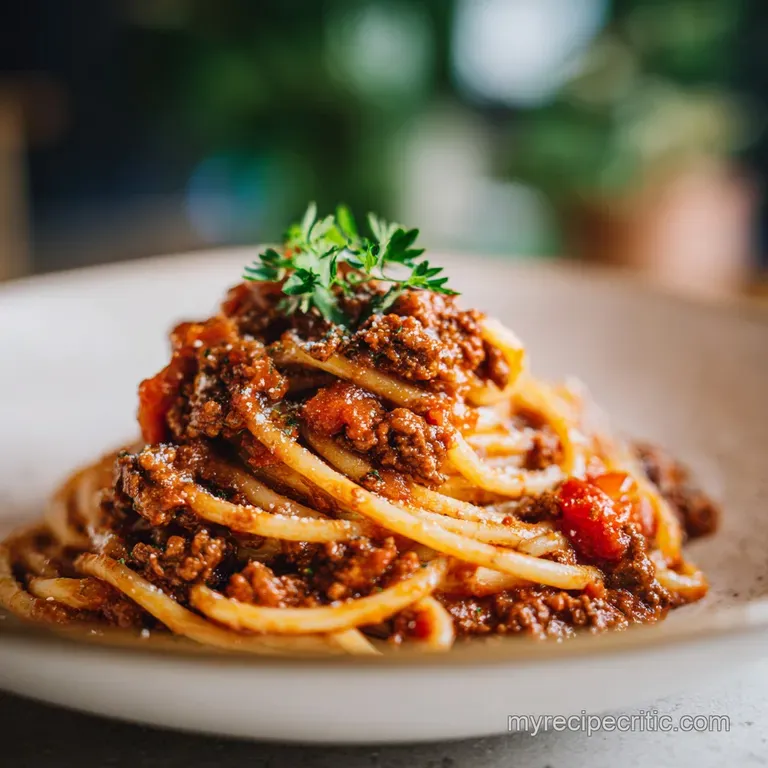
- In a large, heavy bottomed Dutch oven, heat the butter and olive oil over medium heat until the butter stops foaming.
- Add the finely diced onion, celery, and carrot. Sauté slowly until the vegetables are translucent and soft, approximately 10-15 minutes. Note: Keep the heat low; we want sweetness, not browned edges.
- Add the minced pancetta and cook for 2-3 minutes until the fat begins to render and the edges look translucent.
- Increase the heat slightly and add the ground beef and ground pork. Break the meat into very small crumbles with a wooden spoon and cook until the meat has lost its raw red color.
- Add the smashed garlic cloves and stir for 1 minute until the aroma is fragrant but the garlic is not browned.
- Pour in the whole milk and add a pinch of freshly grated nutmeg. Simmer gently, stirring frequently, until the milk has evaporated completely and only clear fat remains.
- Pour in the white wine. Simmer until the wine has evaporated and the sharp scent of alcohol is gone.
- Stir in the tomato paste followed by the tomato purée (passata). Stir well to ensure all the meat is coated and the paste is dissolved.
- Reduce the heat to the absolute lowest setting. Cover the pot partially and simmer for 240 minutes (4 hours). Note: The sauce should only show a few bubbles at a time the "smile."
- Taste and adjust seasoning with salt and freshly cracked black pepper until the flavors are balanced and deep.
Troubleshooting Common Problems and Pitfalls
| Issue | Solution |
|---|---|
| Why the Meat Feels Gritty | If the meat feels tough or like little pebbles in your mouth, you likely browned it too hard at the beginning. In a traditional bolognese, we only want the meat to lose its red color. Hard searing cre |
| Why Your Sauce Is Greasy | A layer of orange oil is actually a sign of a well made ragù, but too much can feel heavy. This usually happens if the heat was too high, causing the emulsion to break, or if the beef was exceptionall |
| Why Your Sauce Tastes Acidic | If the finish is sharp and bites the back of your tongue, the tomatoes or wine had too much acid. This is often solved by the long simmer, but if it's still there at hour four, a tiny splash of heavy |
Common Mistakes Checklist
- ✓ Don't skip the milk step - it's the primary difference between a meat sauce and a true ragù.
- ✓ Resist the urge to add oregano or basil; they overwhelm the delicate meat flavors.
- ✓ Make sure the wine is completely evaporated before adding tomatoes to avoid a "boozy" aftertaste.
- ✓ Check the pot every 45 minutes to ensure it isn't sticking to the bottom.
- ✓ Use a heavy pot; a thin pot will scorch the sugars in the vegetables over 4 hours.
Creative Flavor Variations for Your Ragù
While the classic version is hard to beat, you can certainly tweak this exquisite bolognese sauce to suit your pantry or your palate. If you want something even more luxurious, you might look into my Slow Simmered Creamy Bolognese, which leans more heavily into the dairy for a silkier finish. The beauty of a 4 hour sauce is that it is a very stable canvas for minor adjustments.
- Wild Mushroom Boost: Add 1/2 cup of finely minced porcini mushrooms with the soffritto for an earthy, forest floor depth.
- The Red Wine Swap: For a darker, more robust sauce, use a dry red like Sangiovese. It will result in a deeper purple hued ragù with more tannins.
- Poultry Variation: Use ground turkey and chicken thighs, but increase the butter to 4 tbsp to make up for the lack of natural fat.
If you want X, do Y
- If you want a richer mouthfeel, stir in 1/4 cup of heavy cream 10 minutes before serving.
- If you want more umami, add a Parmesan rind to the pot during the 4 hour simmer.
- If you want a thicker cling, toss the cooked pasta with the sauce and a splash of starchy pasta water for 2 minutes before plating.
Guidelines for Storage and Reducing Waste
This sauce is the king of meal prep. Because of the high fat content and the low acidity, it freezes beautifully. I actually recommend making a double batch because the active work is the same whether you make 1 lb or 5 lbs of meat.
Just remember that when you reheat it, you may need a splash of water to loosen the emulsion back up, as it will thicken significantly in the fridge.
Storage: Store in an airtight container in the refrigerator for up to 3 days. For freezing, use heavy duty freezer bags and press them flat; this allows the sauce to thaw quickly and evenly. It will stay fresh in the freezer for up to 3 months.
Zero Waste Tips: Don't toss those celery leaves or the ends of your carrots. Throw them into a bag in the freezer to make your own beef stock later. If you have a Parmesan rind that is too hard to grate, toss it into the simmering bolognese.
It will soften and release incredible salty, nutty notes into the sauce. Just fish it out before serving or keep it for yourself as a "chef's snack."
Perfect Ways to Serve This Classic
You've spent four hours on this, so don't ruin it by serving it with thin, slippery spaghetti. In Bologna, this ragù is almost exclusively served with fresh egg tagliatelle. The wide, porous surface of the egg pasta is designed to "grip" the meat crumbles and the silky sauce.
If you can't find tagliatelle, pappardelle or even a short, tubular pasta like rigatoni will work well. The goal is to have a pasta that can hold its own against the weight of the sauce.
When serving, don't just ladle the sauce on top of a pile of plain pasta. Instead, bring your sauce to a simmer in a large skillet, add your undercooked pasta (about 2 minutes before it's al dente), and toss it with a splash of pasta water.
This allows the pasta to finish cooking inside the sauce, absorbing all that exquisite bolognese sauce flavor into the noodles themselves. Finish with a generous grating of Parmigiano Reggiano and perhaps a tiny crack of fresh pepper.
Myth: Bolognese is a "Red" Sauce
Traditional ragù is actually quite brown or orange. The focus is on the meat, with the tomatoes acting only as a binder and a source of mild acidity. If your sauce is bright red, you have likely used too much tomato or not enough meat.
Myth: You Must Sear the Meat Until Crispy
In many dishes, a hard sear (the Maillard reaction) is the goal. In Bolognese, we want the meat to remain tender and supple. Browning it to a crisp creates hard granules that won't integrate into the velvety texture of the sauce. We "sweat" the meat rather than fry it.
Myth: Garlic is the Main Flavor
While we use two smashed cloves, they are there for a background hum, not a sharp bite. In fact, many traditionalists in Bologna omit the garlic entirely to let the sweetness of the onion and carrot shine through. We include it here for a modern balance, but it should never be the dominant scent.
Recipe FAQs
Who makes the best Bolognese sauce?
The best version is one made slowly at home. By controlling the rendering of the pancetta and the long, four hour simmer time, you achieve a depth of flavor that mass produced store brands cannot replicate.
Is Bolognese ok for diabetics?
Yes, it can be a suitable choice. This sauce is primarily protein and fat-based with very low sugar content, though you should serve it with a low-glycemic pasta alternative or vegetable noodles to manage carbohydrate intake.
How to make Bolognese sauce extra tasty?
Simmer the milk and nutmeg into the meat before adding any acidic ingredients. This specific technique protects the delicate proteins, creating a rich, creamy mouthfeel that is essential for a professional grade ragù.
What do Italians put in Bolognese sauce?
Traditional recipes rely on the holy trinity of onion, celery, and carrot. These aromatics are sautéed until translucent not browned to provide a sweet base, followed by a blend of beef, pork, and pancetta for savory complexity.
How to fix a sauce that tastes gritty?
Avoid hard searing your meat in the initial steps. If you enjoyed learning how to prevent texture issues here, see how we focus on maintaining a smooth consistency in our other creamy sauces.
How to prevent the sauce from becoming too greasy?
Keep the heat low and steady throughout the four hour simmer. High heat causes the fat to separate and the emulsion to break, so ensure the sauce only barely 'smiles' with tiny bubbles.
How to store leftover sauce?
Cool the sauce completely before transferring it to an airtight container. It will keep in the refrigerator for up to three days or can be frozen for several months without losing flavor.
Authentic Northern Italian Bolognese
Ingredients:
Instructions:
Nutrition Facts:
| Calories | 378 kcal |
|---|---|
| Protein | 18.5 g |
| Fat | 22.1 g |
| Carbs | 8.7 g |
| Fiber | 1.2 g |
| Sugar | 5.1 g |
| Sodium | 485 mg |
