Easy Soft Sourdough Sandwich Loaf Recipe
- Time: Active 40 mins, Passive 12 hours 20 mins, Total 13 hours
- Flavor/Texture Hook: Pillowy, honey kissed, and buttery
- Perfect for: School lunches, breakfast toast, or beginner sourdough bakers
- Easy Soft Sourdough Sandwich Bread Loaf Recipe Maestro
- Science Behind the Pillowy Crumb
- Recipe Specs and Precision Timings
- Component Analysis and Pro Secrets
- Essential Ingredients and Clever Substitutions
- Necessary Tools for Bread Success
- Mastering the Steps for Success
- Solving Common Sourdough Bread Issues
- Adapting Your Batch Size
- Sourdough Rumors and Reality
- Storage and Reducing Bread Waste
- Perfect Pairings and Serving Ideas
- Recipe FAQs
- 📝 Recipe Card
Easy Soft Sourdough Sandwich Bread Loaf Recipe Maestro
There is something so special about the smell of milk and honey warming up on the stove. It reminds me of early mornings in my grandma's kitchen when the sun was just hitting the flour dust in the air. This Easy Soft Sourdough Sandwich Bread Loaf Recipe Maestro guides you to baking a perfect, tender loaf.
I used to struggle with sourdough because I thought it always had to be crusty and hard enough to hurt the roof of your mouth, but this recipe changed everything for me.
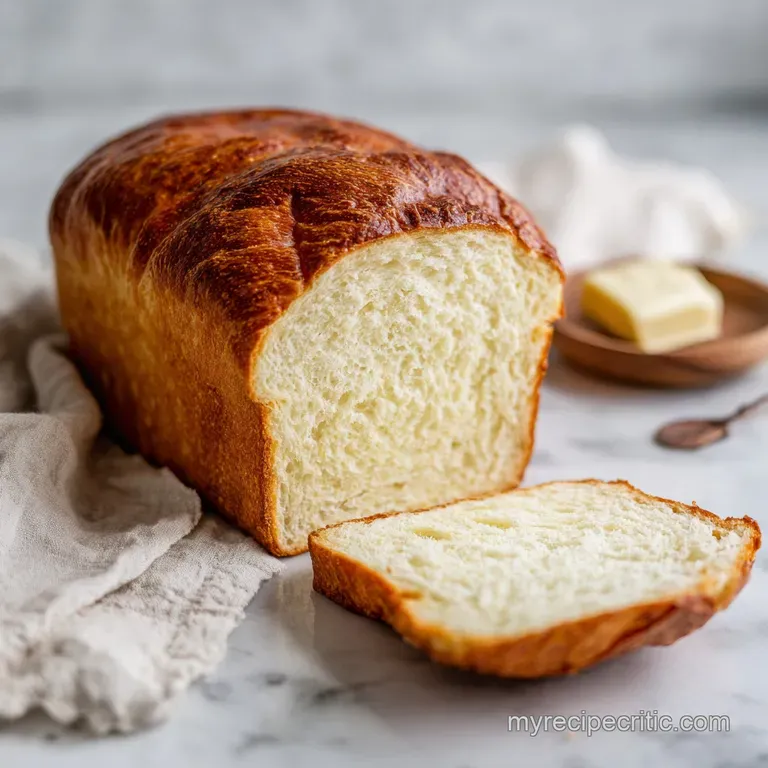
When you pull this loaf out of the oven, the crust has this beautiful, golden sheen that feels like soft leather. As it cools, the aroma of fermented grain and sweet butter fills every corner of the house.
You'll notice the dough behave differently than a standard lean sourdough; it is supple, silky, and carries a weight that promises a moist bite. It's the kind of bread that makes you want to skip the store-bought stuff forever.
We've all been there, staring at a starter that feels like a science project gone wrong. Trust me, I’ve made my share of sourdough "bricks" that were only good for croutons. But this method is forgiving.
We are going to lean into the richness of whole milk and the natural sweetness of honey to ensure your crumb is velvety and your sandwiches are top tier. Let’s get into the details of how this magic happens.
Science Behind the Pillowy Crumb
Enrichment Inhibition: The fats in whole milk and butter coat the flour's proteins, which slows down gluten development and results in a much softer, less chewy texture.
Honey's Hygroscopy: Honey is a natural humectant, meaning it attracts and holds onto moisture, keeping your loaf from drying out even days after baking.
Lactic Acid Production: Using milk instead of just water encourages different types of bacteria in your starter to thrive, producing a mellow, creamy tang instead of a sharp vinegary bite.
| Method | Time | Texture | Best For |
|---|---|---|---|
| Standard Loaf Pan | 40 mins | Even, soft crust | Everyday sandwiches |
| Lidded Pullman Pan | 45 mins | Perfectly square, dense | Uniform toast slices |
| Dutch Oven Bake | 35 mins | Slightly crispier exterior | Artisan style sandwiches |
Choosing the right pan is the first step in deciding how your bread will feel. A standard loaf pan is my go to because it allows the top to bloom and create that classic rounded "mushroom" top that looks so nostalgic on the counter.
If you want that ultra tidy look for grilled cheese, the Pullman pan is your best friend.
Recipe Specs and Precision Timings
| Component | Target Measure | Visual/Sensory Cue |
|---|---|---|
| Active Starter | 50g | Bubbly, smells like fruity yeast |
| Bulk Ferment Temp | 75°F (24°C) | Dough feels like a soft marshmallow |
| Final Internal Temp | 190°F (88°C) | Hollow sound when tapped on bottom |
Component Analysis and Pro Secrets
| Ingredient | Science Role | Pro Secret |
|---|---|---|
| Bread Flour | Structural Integrity | High protein (12.7%) ensures the loaf rises high despite the heavy fats. |
| Whole Milk | Tenderness Provider | Use full fat milk to get that signature velvety crumb that shatters expectations. |
| Active Starter | Natural Leavening | Ensure it is at its peak; it should be airy and float in water. |
| Unsalted Butter | Crumb Softener | Incorporate it at room temperature to ensure it blends seamlessly without clumping. |
The interaction between the high protein bread flour and the fats is what makes this loaf a winner. While the flour wants to build a strong house, the milk and butter move in to decorate with soft cushions. If you find yourself wanting to experiment with other grains later, this base is very similar to the technique used in my Wheat Bread recipe.
Essential Ingredients and Clever Substitutions
- 50g active sourdough starter: The engine of the bread. (Sub: 1/4 tsp commercial yeast if your starter is weak but you'll lose the tang). Why this? Provides the lift and complex flavor profile.
- 500g bread flour: Provides the strength needed for a high rise. (Sub: All purpose flour note: the loaf will be shorter and less bouncy). Why this? High protein content supports the enriched ingredients.
- 250g warm whole milk: Adds fat and sugars for a soft crust. (Sub: Oat milk for a dairy-free version it's surprisingly creamy). Why this? Creates a richer, more tender crumb than water.
- 40g honey: For sweetness and moisture retention. (Sub: Maple syrup or cane sugar). Why this? Keeps the bread fresh and soft for longer.
- 10g fine sea salt: Enhances all the other flavors. (Sub: Table salt use slightly less by volume). Why this? Controls the fermentation speed of the starter.
- 50g softened unsalted butter: The secret to that melt in-your mouth feel. (Sub: Coconut oil adds a slight tropical hint). Why this? Lubricates gluten for a tight, soft grain.
Chef's Tip: Freeze your butter for 10 minutes, then grate it into the dough if you're mixing by hand. This ensures the fat is evenly distributed without melting prematurely from the heat of your palms.
Necessary Tools for Bread Success

You don't need a professional bakery to pull this off, but a few things make life easier. A stand mixer, like a KitchenAid, is a lifesaver for this enriched dough because the butter can make things pretty sticky at first.
You'll also want a digital scale; sourdough is all about the ratios, and measuring by volume is the fastest way to a failed loaf.
I also highly recommend a bench scraper. It helps you manage the dough during the shaping phase without adding too much extra flour. Keeping the hydration correct is vital for that soft texture. If you're feeling adventurous after mastering this, you might want to try the techniques found in my Classic French Bread recipe which uses a very different hydration style.
Mastering the Steps for Success
- Build the levain. Mix 50g starter, 50g flour, and 50g water until a thick paste forms. Note: Let this sit for 4 to 6 hours until doubled.
- Warm the liquids. Combine 250g milk and 40g honey in a small pot until the honey dissolves. Note: Don't let it boil; just get it lukewarm.
- Mix the dough. Add the levain, milk mixture, and 500g bread flour to your mixer until no dry spots remain.
- Rest and salt. Let the dough sit for 30 minutes, then add 10g salt until the dough feels smooth.
- Add the butter. Incorporate 50g softened butter one tablespoon at a time until the dough is shiny and elastic.
- Bulk ferment. Cover and let sit for 4 to 6 hours until the dough has grown by 50%. Note: Perform 3 sets of "stretch and folds" every 30 minutes during the first 1.5 hours.
- Shape the loaf. Gently degas the dough and roll it into a tight cylinder until the surface feels taut.
- Final proof. Place in a greased loaf pan and let rise until the dough is 1 inch above the rim.
- Bake the bread. Bake at 375°F (190°C) for 40 minutes until the crust is deep golden brown.
- Cool completely. Remove from the pan and wait at least 2 hours until the crumb has set.
Solving Common Sourdough Bread Issues
Why Your Bread Is Too Dense
If your loaf feels heavy like a stone, the most likely culprit is an underactive starter or a rushed final proof. Sourdough takes time to breathe. If the dough hasn't grown significantly in the pan before it hits the oven, it won't have the strength to expand, resulting in a tight, gummy middle.
| Problem | Root Cause | Solution |
|---|---|---|
| Large holes in crumb | Poor shaping | Roll the dough tighter to expel large air pockets. |
| Sourness is too strong | Fermented too long | Shorten the bulk ferment or use a younger levain. |
| Crust is too hard | Oven was too dry | Place a small pan of water on the bottom rack for steam. |
Another common hurdle is temperature. Sourdough is like a toddler; it needs a warm, stable environment to behave. If your kitchen is cold, your fermentation might take twice as long. I like to keep my dough inside the oven with just the light on to create a cozy proofing box.
Common Mistakes Checklist
- ✓ Always weigh your flour and water (volume is too inconsistent).
- ✓ Don't skip the "windowpane test" to ensure gluten is strong enough.
- ✓ Avoid adding extra flour during shaping; use a light touch instead.
- ✓ Let the loaf cool completely before slicing (steam is still cooking the inside!).
- ✓ Use a sharp serrated knife to avoid squishing your hard work.
Adapting Your Batch Size
Scaling Down: If you're baking for one, you can easily halve this recipe. Use a smaller 4x8 inch loaf pan and reduce the baking time by about 8 to 10 minutes. When halving the egg (if using for a wash), whisk it first and then measure out half by weight.
Scaling Up: Doubling this is great for meal prep. However, keep the salt and honey at 1.5x the original amount rather than a full 2x to prevent over seasoning or slowing the yeast too much. You will need to bake in two separate pans, and if your oven has hot spots, rotate them halfway through.
| Servings | Bread Flour | Milk | Pan Size |
|---|---|---|---|
| 6 (Half Loaf) | 250g | 125g | 4x8 inch pan |
| 12 (1 Loaf) | 500g | 250g | 9x5 inch pan |
| 24 (2 Loaves) | 1000g | 500g | Two 9x5 pans |
Sourdough Rumors and Reality
"You must use a 100 year old starter for good bread." This is simply not true. A starter that is only 2 weeks old can produce a magnificent loaf as long as it is vigorous and fed regularly. The age of the starter affects the complexity of the flavor, but not necessarily the ability to rise.
"Enriched sourdough doesn't have health benefits." While the butter and milk add calories, the long fermentation still breaks down the gluten and phytic acid in the wheat. This makes the bread much easier on the stomach than standard grocery store loaves. It's a win win for flavor and digestion.
Storage and Reducing Bread Waste
Store your loaf in a paper bag or a linen bread bag for the first 24 hours to maintain the crust texture. After that, move it to an airtight container or a reusable beeswax wrap. It will stay soft at room temperature for about 4 to 5 days.
If you find it's starting to get firm, it makes the most incredible French toast you've ever had because the crumb is so sturdy.
Don't ever throw away the ends! I save the "heels" of the bread in a bag in the freezer. Once I have enough, I pulse them in a food processor for fresh breadcrumbs or cut them into cubes for a savory bread pudding. If you have extra cheese in the fridge, those ends are perfect for the base of The Cheesy Garlic recipe.
Perfect Pairings and Serving Ideas
This bread is a blank canvas. Because of the honey and milk, it leans slightly sweet, making it a dream for almond butter and smashed raspberries. However, it’s sturdy enough to hold up to a heavy turkey club sandwich with thick cut bacon and avocado.
The crumb won't disintegrate under the weight of sauces or juicy tomatoes.
If you really want to impress people, slice it thick, toast it in a pan with a little bit of butter, and serve it alongside a hearty soup. The way the bread soaks up broth without becoming a soggy mess is pure magic. It’s also the perfect vessel for an egg in-a hole breakfast.
The soft texture means the edges get crispy while the center stays tender. Happy baking, my friend you've got this!

Recipe FAQs
Why is my soft sourdough loaf dense instead of pillowy?
The starter was underactive or the final proof was rushed. Enriched doughs like this require a very vigorous starter to overcome the tenderizing effect of the milk and butter.
How to ensure the butter blends smoothly into the dough?
Incorporate the butter one tablespoon at a time after the initial gluten structure is formed. This allows the fat to slowly emulsify into the dough mass rather than clumping, which keeps the final crumb silky.
Can I substitute the whole milk for a lower fat alternative?
No, you should stick with whole milk or a high fat substitute like oat milk. The fat content is crucial because it inhibits extreme gluten development, which is the main secret behind this loaf's softness.
How to keep the soft crust from hardening overnight?
Store the loaf in a paper bag or linen bread bag for the first 24 hours, then switch to an airtight container. The honey acts as a humectant, but limiting air exposure after the first day prevents moisture loss from the crumb.
Is it true that the honey must be removed if I want a truly sour flavor?
No, this is a common misconception; the honey only mellows the sourness. The lactic acid is produced by the starter reacting with the milk, so you will still get a pleasant tang even with the sweetness present.
How to bake this bread if I don't have a loaf pan?
Shape the dough tightly and place it on a parchment lined baking sheet or inside a Dutch oven. If you are new to high hydration dough handling, practicing the shaping technique used for the Pretzel Crust Pizza recipe can help you achieve a tighter surface tension.
What is the best internal temperature to pull this bread out of the oven?
Pull the loaf when the internal temperature registers 190°F (88°C). This signals that the structure has set without drying out the enriched crumb too much.
Soft Sourdough Sandwich Loaf

Ingredients:
Instructions:
Nutrition Facts:
| Calories | 227 calories |
|---|---|
| Protein | 6.3g |
| Fat | 4.8g |
| Carbs | 39.3g |
| Fiber | 1.2g |
| Sugar | 3.7g |
| Sodium | 333mg |
