Pork Chops and Cheddar Grits
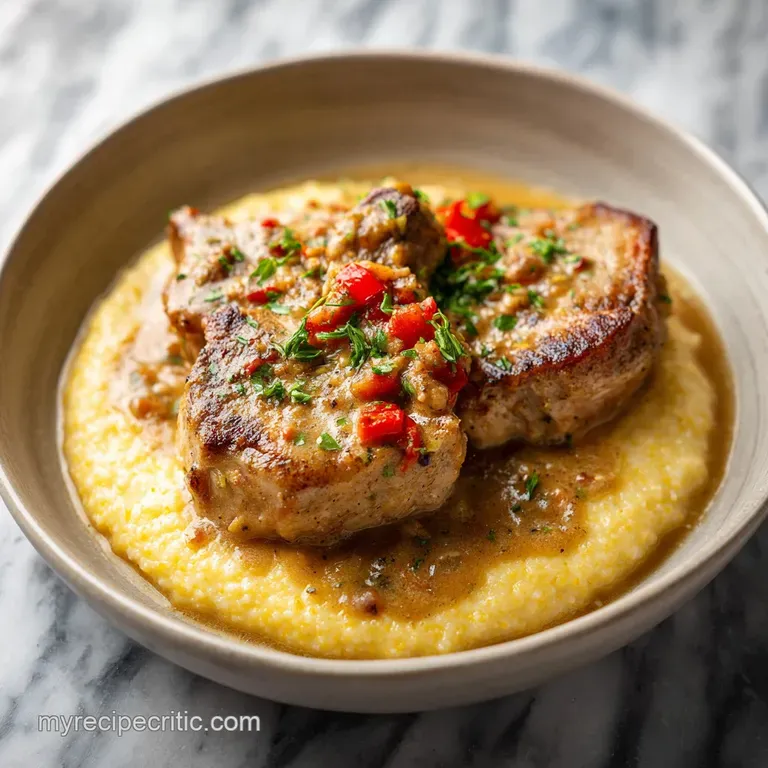
- Time: Active 10 minutes, Passive 30 minutes, Total 40 minutes
- Flavor/Texture Hook: Smoke kissed, velvety, and sharp
- Perfect for: Sunday brunch or rainy weeknight dinner
- Mastering Classic Southern Comfort on a Plate
- Layering Flavor for Depth
- Precision Timing and Core Measurements
- Selecting High-Quality Raw Ingredients
- Tools for Smoke Kissed Results
- The Method to Smothered Perfection
- Avoiding Common Kitchen Blunders
- Adapting the Dish to Taste
- Storage and Reheating Guidelines
- Complementary Pairings and Plating
- Very High in Sodium
- Recipe FAQs
- 📝 Recipe Card
Mastering Classic Southern Comfort on a Plate
Have you ever stood over a cast iron skillet just watching the way onions surrender their structure? There's a specific moment where they turn from sharp and crunchy to translucent ribbons of gold, releasing a scent that makes the whole house feel settled.
I remember the first time I actually got this right not the hurried version, but the one where I let the heat do the talking. The air was thick with the aroma of smoked paprika and the low sizzle of bone in pork hitting 30ml of shimmering oil.
We aren't just making dinner here; we're building layers. You start with the sear to get that crust to shatter between your teeth, then move to a simmer that softens everything into a cohesive story. It's about patience and trusting the weight of the pan.
If you've ever felt like your home cooking was missing that soul deep resonance, this is how you find it.
This recipe is the answer to that craving for something that feels both heavy and light. By the time the sharp cheddar melts into the 180g of grits, you'll understand why this specific combination is the ultimate Southern comfort on a plate. Let's get the stove heated and the onions sliced.
Layering Flavor for Depth
- Maillard Reaction
- Searing the pork at high heat creates new flavor compounds through the interaction of amino acids and reducing sugars.
- Starch Gelatinization
- Whisking the grits into 750ml of water allows the starch granules to swell and burst, creating a velvety mouthfeel.
- Enzymatic Browning
- Slow sautéing the large yellow onion breaks down sulfur compounds into sweet, complex molecules.
- Protein Denaturation
- The gentle 15 minute simmer in beef stock ensures the pork muscle fibers relax rather than tightening into a rubbery texture.
| Thickness | Internal Temp | Rest Time | Visual Cue |
|---|---|---|---|
| 1.5 cm | 63°C | 5 mins | Juices run clear |
| 2 cm | 63°C | 7 mins | Opaque center |
| 2.5 cm | 63°C | 8 mins | Firm but yielding |
Getting the timing right on the protein is the difference between a dry chop and a succulent one. I always use a digital probe because guessing with bone in meat is a recipe for heartbreak. While the meat rests, the fibers reabsorb those smoke kissed juices, ensuring every bite is as tender as the last.
Precision Timing and Core Measurements
| Ingredient | Science Role | Pro Secret |
|---|---|---|
| Bone in Pork | Heat Conductor | The bone keeps the meat near it moist and adds a deeper marrow like depth to the gravy. |
| Stone ground Grits | Textural Base | These contain more of the germ, offering a toothsome bite that quick cook varieties lack. |
| Smoked Paprika | Aromatic Depth | It provides the "smoke kissed" backbone without needing a literal smoker or wood chips. |
The Science of the Sear
The physics of the crust depends entirely on the dryness of the meat. If your 900g of pork is damp when it hits the 30ml of oil, it will steam instead of searing. I always pat the chops with paper towels until they're bone dry before dredging them in the 60g of flour.
Selecting high-quality Raw Ingredients
- Bone in Pork Chops (900g): Look for 1.5 cm thickness for the best juice retention.
- Sub: Boneless pork loin (will cook 20% faster). Why this? The bone adds flavor and prevents the meat from drying out during the simmer.
- Quick Stone ground Grits (180g): These offer a middle ground between instant and long cook.
- Sub: Polenta (coarser texture). Why this? Provides a velvety foundation that holds the weight of the onion gravy.
- Sharp Cheddar (120g): Always grate your own from a block.
- Sub: Smoked Gouda for more intensity. Why this? Pre shredded cheese is coated in starch which ruins the velvety texture of the grits.
- Large Yellow Onion: One big one, thinly sliced.
- Sub: Shallots for a milder, sweeter finish.
- Beef Stock (500ml): Use a low sodium version to control the salt.
- Sub: Chicken stock (lighter flavor).
- Unsalted Butter (60g): This adds the final gloss to the grits.
- Smoked Paprika (5g): The source of our smoke kissed profile.
- Garlic Powder (5g) & Black Pepper (3g): The dry rub essentials.
- Worcestershire Sauce (15ml): Adds the necessary fermented funk.
Tools for Smoke Kissed Results
You really need a heavy bottomed skillet for this, preferably cast iron. It holds heat better than stainless steel, which is vital when you're searing four chops at once. You'll also need a sturdy whisk for the grits; clumps are the enemy of a smooth plate.
Chef Tip: Throw your whisk in the freezer for 10 minutes before the grits hit the water. It sounds strange, but the cold metal helps break up starch clumps more efficiently when they first hit the heat.
If you are looking for another soul warming meal, this technique reminds me of how we build the base for an Albondigas Soup Recipe — it's all about that initial sear.
The Method to Smothered Perfection
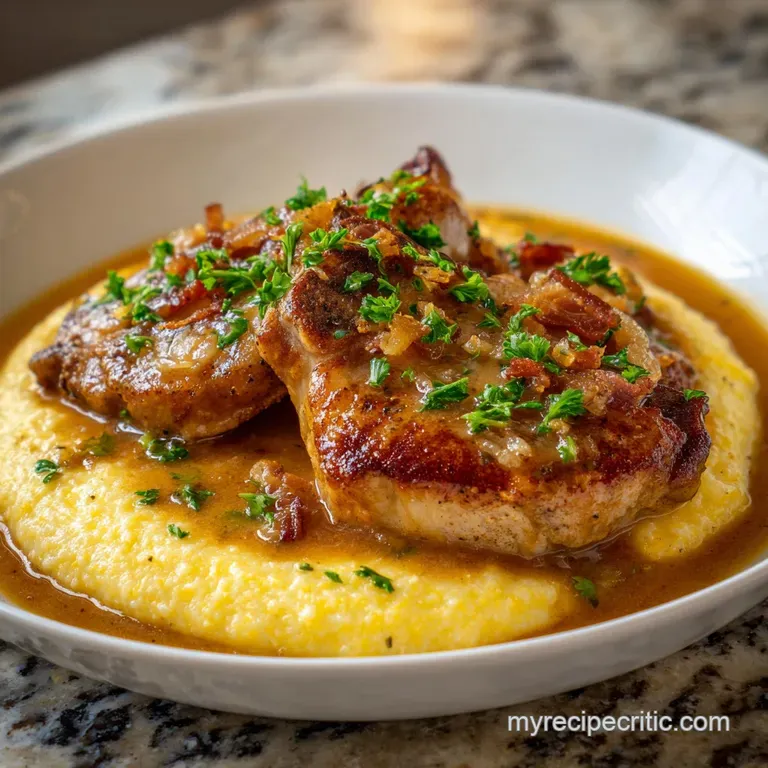
- Dry the protein. Pat the 900g of pork chops with paper towels until no moisture remains. Note: This ensures the 60g of flour adheres properly and browns instead of gumming up.
- Dredge the chops. Mix the flour, 5g smoked paprika, 5g garlic powder, and 3g black pepper in a shallow bowl.
- Sear the meat. Heat 30ml oil in a large skillet over medium high until it shimmers and wisps of smoke appear.
- Brown the exterior. Cook chops for 3 minutes per side until a dark, crusty golden brown bark forms. Remove and set aside.
- Sauté the onions. Add the sliced large yellow onion to the pan drippings until they are soft and mahogany colored (about 8 minutes).
- Build the gravy. Stir in any leftover flour mixture, then slowly whisk in 500ml beef stock and 15ml Worcestershire sauce.
- Simmer the pork. Place chops back into the gravy, cover, and cook on low for 15 minutes until the sauce coats the back of a spoon.
- Boil the water. In a separate pot, bring 750ml water and 5g salt to a boil.
- Hydrate the starch. Slowly whisk in 180g grits, reduce heat, and simmer for 5-7 minutes until the texture is thick and creamy.
- Finish the base. Fold in 60g butter and 120g shredded cheddar until the cheese is fully melted and glossy.
Avoiding Common Kitchen Blunders
Why Your Chops Are Tough
If the meat feels like chewing on a rubber band, you likely skipped the resting phase or simmered them at too high a temperature. High heat causes protein fibers to contract violently, squeezing out all the moisture. Keep the gravy at a gentle bubble, never a rolling boil.
| Problem | Root Cause | Solution |
|---|---|---|
| Lumpy Grits | Adding grits too fast | Whisk in a slow, steady stream. |
| Bland Gravy | Lack of fond | Scrape the brown bits (fond) off the pan after searing. |
| Greasy Sauce | Too much oil | Drain all but 15ml of fat before adding onions. |
Common Mistakes Checklist
- ✓ Never use "instant" grits; the texture will be watery and lack character.
- ✓ Ensure the skillet is hot before the pork hits the oil to prevent sticking.
- ✓ Don't skip dredging the pork; the flour on the meat is what thickens your gravy later.
- ✓ Let the pork rest for 5 minutes before serving to keep the juices inside the meat.
- ✓ Use room temperature stock to prevent the roux from breaking or clumping.
Adapting the Dish to Taste
If you want to scale this down for two people, use a smaller pan to ensure the gravy doesn't evaporate too quickly. For a crowd, you can double the grits and pork, but I recommend searing the meat in batches so you don't drop the pan temperature too much.
| Method | Time | Texture | Best For |
|---|---|---|---|
| Stovetop | 40 mins | Silky, tender | Immediate serving |
| Oven Finish | 50 mins | Deeper bark | make-ahead prep |
| Slow Cooker | 6 hours | Fall apart soft | Busy workdays |
Decision Shortcut If you want a thicker gravy, whisk in an extra tablespoon of butter at the very end. If you want more spice, add 2g of cayenne pepper to the flour dredge. If you want lighter grits, swap 250ml of the water for whole milk.
This meal pairs exceptionally well with a side of greens, or if you're serving this for a big family gathering, it fits right alongside a Kickin Chili Cornbread recipe.
Storage and Reheating Guidelines
Storage: Keep the pork and gravy in an airtight container for up to 3 days in the fridge. The grits will firm up significantly as they cool; store them separately with a piece of plastic wrap pressed directly onto the surface to prevent a skin from forming.
Freezing: You can freeze the pork in its gravy for up to 2 months. I don't recommend freezing the grits, as the texture becomes grainy upon thawing.
Zero Waste: If you have leftover gravy but no pork, it makes a Proper Southern Comfort recipe base for biscuits the next morning. Leftover grits can be spread in a pan, chilled, sliced, and pan-fried into "grit cakes" for a crispy breakfast side.
Complementary Pairings and Plating
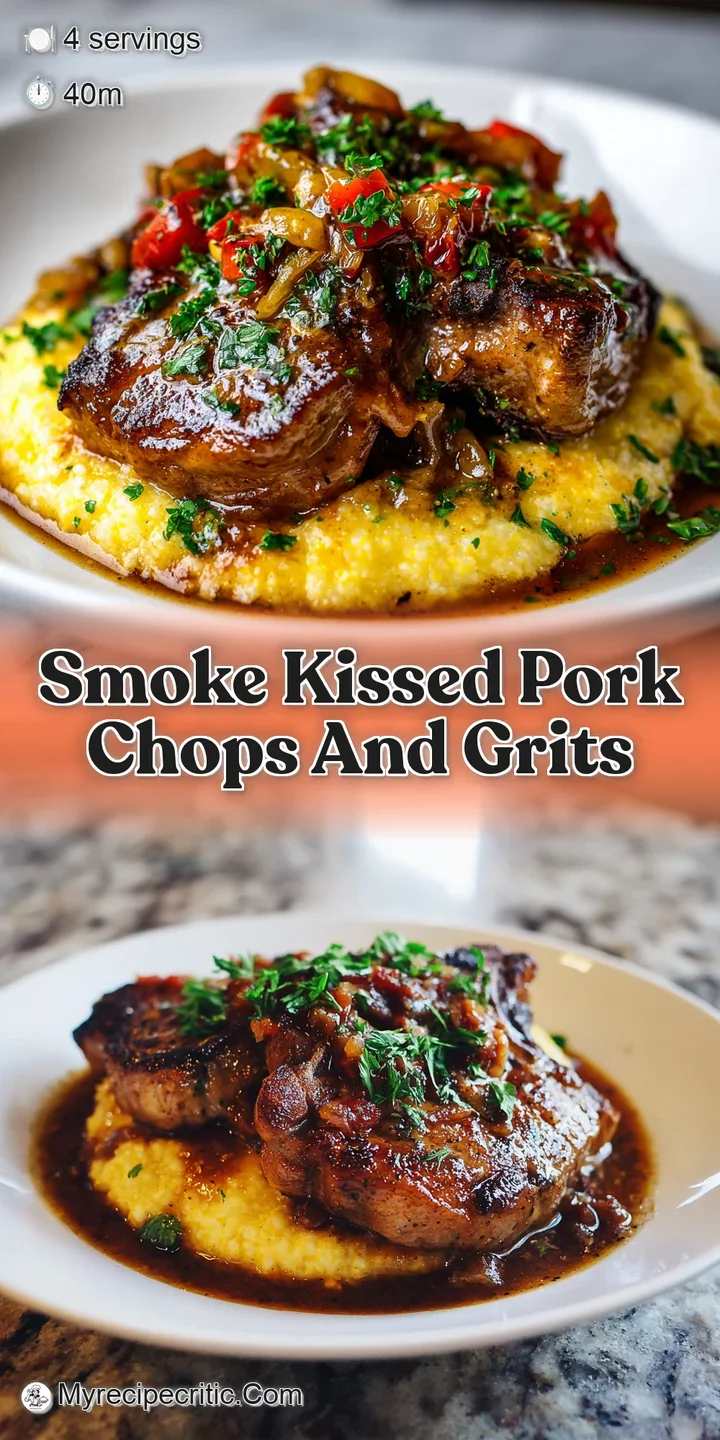
When plating Southern comfort on a plate, I like to create a wide well in the center of the grits. Nestle the pork chop right in that crater and spoon the onion gravy generously over the top. The contrast between the orange cheddar grits and the deep brown gravy is visually striking.
To cut through the richness, serve this with something bright. A quick vinegar based slaw or even just a few pickled jalapeños on top provides the acidity needed to balance the fat from the butter and cheese.
If you have guests over, a glass of iced tea with plenty of lemon is the traditional way to round out the experience. It's a meal that demands you slow down, enjoy the smoke kissed flavors, and maybe even go back for seconds.
Very High in Sodium
1180 mg mg of sodium per serving (51% of daily value)
The American Heart Association recommends limiting sodium intake to no more than 2,300mg per day for most adults.
Tips to Reduce Sodium in This Recipe
-
Low-Sodium Broth-30%
Replace regular beef stock with low-sodium or no-sodium added beef broth. This simple swap can significantly cut down on the sodium content without sacrificing flavor.
-
Reduce Added Salt-25%
Eliminate the 5g of added kosher salt entirely. Taste the dish before adding any salt, and adjust seasoning if needed with pepper or other herbs. Consider a salt substitute.
-
Lower Sodium Cheese-15%
Substitute the sharp cheddar cheese with a lower sodium cheese option like Swiss cheese or Monterey Jack cheese, or use a smaller amount of cheddar. Cheese is a significant contributor to sodium.
-
Low-Sodium Worcestershire-10%
Use a low-sodium Worcestershire sauce or reduce the amount by half. Worcestershire sauce is often high in sodium, so using less or a lower sodium version is a good choice.
-
Spice It Up
Enhance the flavor with fresh or dried herbs and spices like thyme, rosemary, or oregano instead of relying on salt. These additions can add depth of flavor without increasing sodium.
Recipe FAQs
What does "southern comfort food" mean?
It means rich, hearty dishes rooted in regional tradition. Southern comfort food emphasizes slow cooking, depth of flavor through aromatics, and using dairy or starch to create velvety textures, like the creamy grits in this dish.
Is it true that the bone in the pork chop should be removed before searing?
No, never remove the bone before searing. The bone acts as a natural insulator, preventing the meat directly touching it from overcooking too quickly and adding marrow flavor to the drippings for the gravy.
How do I ensure my grits are velvety and not grainy or lumpy?
Whisk the grits slowly into vigorously boiling water or stock. For the best results, I suggest mastering the technique of slow incorporation, similar to how you build texture in a classic roux base found in our Fluffy Biscuits and recipe.
What is best to mix with Southern Comfort?
For this specific dish, balance the richness with acidity. A bright, vinegar based coleslaw or a side of lightly dressed greens cuts perfectly through the richness of the cheese and gravy.
Is it true that pre-shredded cheddar cheese melts smoother than block cheddar?
False. Pre-shredded cheese contains anti caking agents like cellulose, which prevent it from melting into a smooth emulsion, resulting in a slightly gritty final texture.
How do I get the onions sweet enough without burning them?
Sauté the onions slowly over medium low heat until deeply caramelized. You must let the heat gently break down the sulfur compounds into sweet molecules; this patience is key to building flavor, much like the long simmer required for our SlowSimmered Creamy Bolognese recipe.
What are the top 20 comfort foods?
While the official list varies, Southern favorites like rich stews, pot pies, and anything involving slow cooked starches are always included. Dishes featuring tender meat combined with simple, buttery baked goods, such as biscuits, usually rank highly.
Pork Grits Southern Comfort
Ingredients:
Instructions:
Nutrition Facts:
| Calories | 872 kcal |
|---|---|
| Protein | 56g |
| Fat | 48g |
| Carbs | 54g |
| Fiber | 3g |
| Sugar | 4g |
| Sodium | 1180mg |
