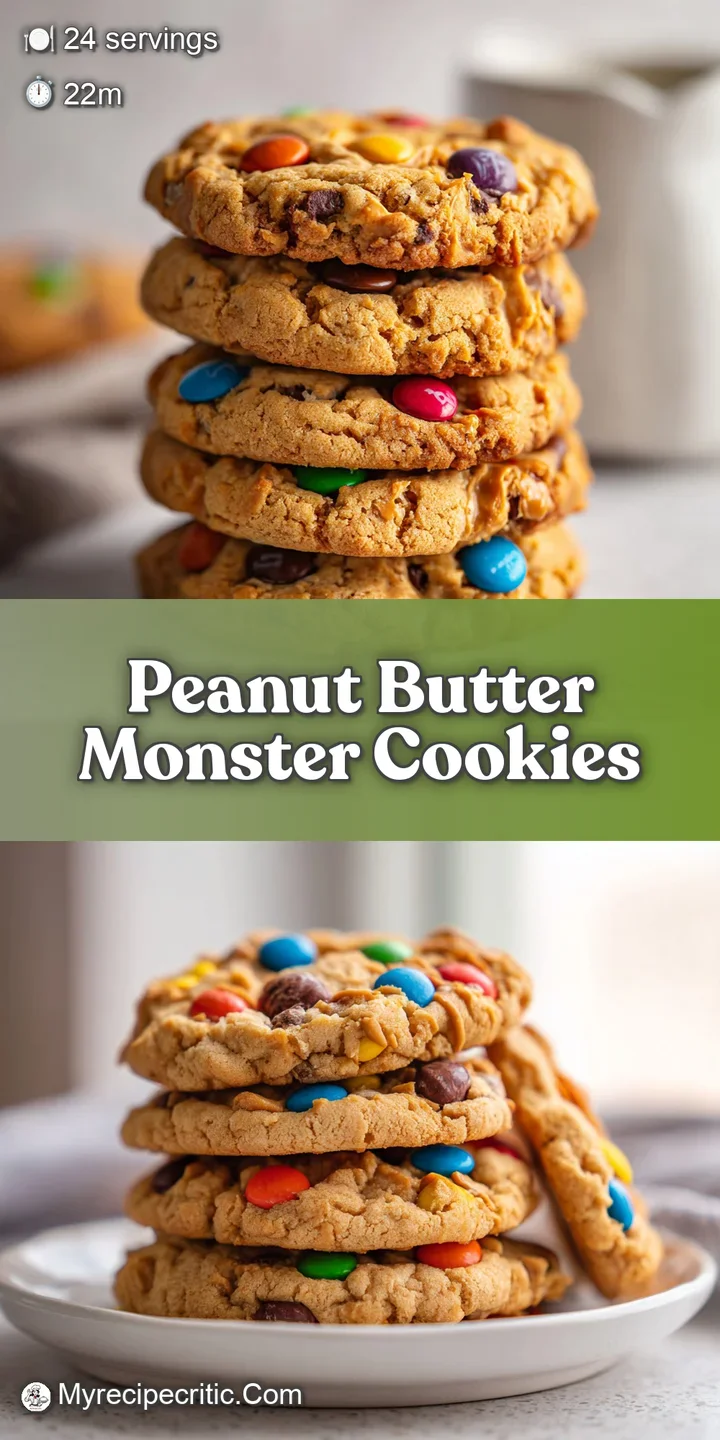
Peanut Butter Monster Cookies: Fudgy & Hearty
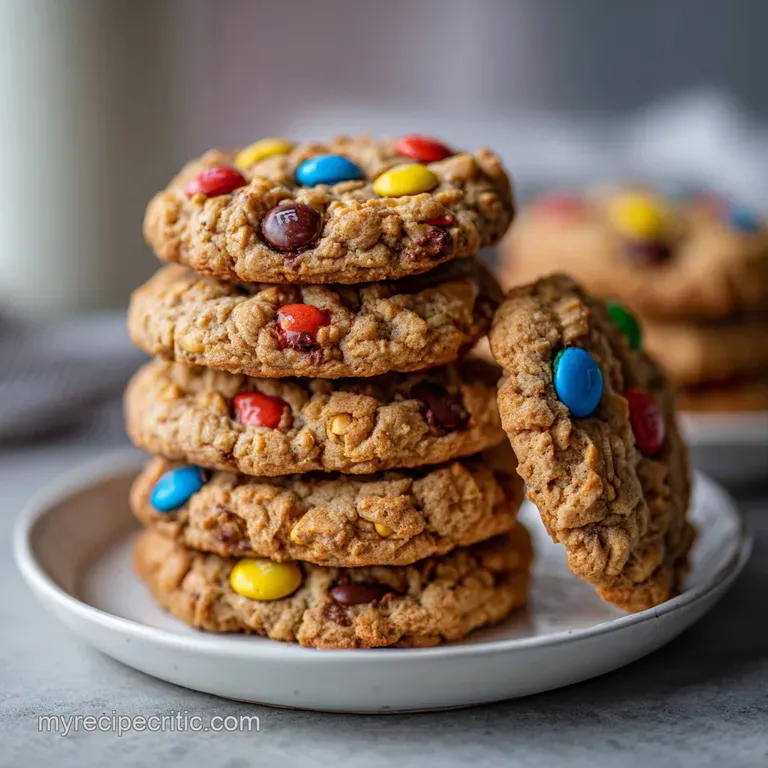
- Time: Active 10 minutes, Passive 12 minutes, Total 22 minutes
- Flavor/Texture Hook: Fudgy, salty sweet, and hearty
- Perfect for: School bake sales, freezer friendly snacking, or a weekend treat
- Mastering The Chewy Peanut Butter Monster Cookies
- The Physics of the Fiber Fat Balance
- Understanding The Science Behind The Bake
- Selecting Your Elements For Peak Flavor
- Essential Tools For A Consistent Dough
- Step By Step Guide To Cookie Success
- Fixing Common Texture and Spread Issues
- Creative Ways To Customize Your Mix
- Debunking The Flourless Myth
- Keeping Your Cookies Fresh and Fudgy
- Pairing These Treats With Your Favorite Drinks
- Recipe FAQs
- 📝 Recipe Card
Mastering The Chewy Peanut Butter Monster Cookies
The air in my kitchen currently smells like a mix of toasted oats and warm, salty nuts, and honestly, it is the best scent in the world. I remember the first time I tried to make these years ago; I thought I could just throw everything into a bowl and hope for the best.
I ended up with cookies that were so greasy they literally slid off the parchment paper. It was a mess, but it taught me that the dough texture is everything when you are packing this much "stuff" into a single bite.
You want a cookie that can hold its own against a handful of M&Ms and chocolate chips without becoming a crumbly disaster. We are looking for that specific middle ground where the edges get a slight crackle but the center stays soft and velvety.
Since then, I have refined the process, focusing on the weight of the ingredients rather than just using cups, because a "cup" of peanut butter can vary wildly depending on how much air is in the jar.
Trust me on this, once you see how these behave in the oven, you will never go back to the store-bought versions. We are building layers of flavor here, starting with the creamed sugars and ending with that iconic colorful crunch.
Let's get into the specifics so you can nail these on your first try without the greasy puddles I dealt with back in the day.
The Physics of the Fiber Fat Balance
Moisture Management: The old-fashioned oats act as a structural sponge, absorbing the oils from the peanut butter to prevent the cookies from spreading into flat discs. This creates a dense, high protein matrix that keeps the center fudgy while the sugars caramelize the edges.
| Method | Time | Texture | Best For |
|---|---|---|---|
| Standard Oven | 10-12 mins | Soft center, golden edges | The classic bakery style finish |
| Toaster Oven | 8-10 mins | Slightly firmer bottom | Small batches or quick cravings |
| Air Fryer | 7-9 mins | Deeply browned, extra crackle | Those who love a toasted oat flavor |
If you are looking for a different vibe, you might enjoy my Peanut Butter Cookies recipe which focuses more on the traditional crisscross pattern and a lighter crumb. But for today, we are going big with the full monster experience.
Understanding The Science Behind The Bake
Getting the dough texture right is a matter of chemistry, not luck. When we combine the fats from 115g unsalted butter and 250g creamy peanut butter, we are creating a very rich environment.
The sugars then come in to do two different jobs: the 200g light brown sugar provides moisture and a molasses like depth, while the 100g granulated white sugar helps the edges develop that beautiful golden brown color.
| Ingredient | Science Role | Pro Secret |
|---|---|---|
| Creamy Peanut Butter | Primary Fat & Protein | Use processed brands (like Jif) for a more stable, emulsified dough |
| Old Fashioned Oats | Starch Reinforcement | These provide a "slow release" chew that holds up better than quick oats |
| Baking Soda | Chemical Leavening | Reacts with the acidic brown sugar to create lift and browning |
The way we handle the oats here is very similar to the technique used in my How to Make recipe for chewy oatmeal bakes, where hydration is key to preventing a dry, sandy mouthfeel.
Chef Tip: Always use room temperature butter for these. If it is too cold, it won't emulsify with the peanut butter, and if it is melted, your cookies will spread like a pancake. It should be soft enough to leave an indent when pressed, but not shiny.
Selecting Your Elements For Peak Flavor
- 115g unsalted butter, softened: Why this? Allows you to control the salt levels precisely for a balanced dough. (Substitute: Salted butter, but reduce the added salt by half.)
- 250g creamy peanut butter: Why this? Provides the foundational flavor and structural fat for the fudge like center. (Substitute: Almond butter for a different nutty profile.)
- 200g light brown sugar, packed: Why this? Adds moisture and a hint of caramel through the molasses content. (Substitute: Dark brown sugar for a deeper, more intense flavor.)
- 100g granulated white sugar: Why this? Encourages the edges to crisp up and brown during the bake. (Substitute: Coconut sugar, though it may result in a drier cookie.)
- 2 large eggs, room temperature: Why this? Binds the heavy ingredients together and provides the necessary lift. (Substitute: 1/2 cup unsweetened applesauce, but the texture will be more cake like.)
- 5ml vanilla extract: Why this? Acts as a flavor enhancer for both the chocolate and the peanut butter. (Substitute: Almond extract for a more "bakery" scent.)
- 125g all purpose flour: Why this? Provides just enough gluten to keep the oats from falling apart. (Substitute: 1:1 gluten-free flour blend for a gluten-free version.)
- 270g old fashioned rolled oats: Why this? Gives the "monster" its signature hearty chew and thick profile. (Substitute: Quick oats, but the cookies will be significantly softer and less textured.)
- 6g baking soda: Why this? The primary leavening agent that creates a tender, non dense crumb. (Substitute: 18g baking powder, but the browning will be less pronounced.)
- 3g kosher salt: Why this? Cuts through the sugar to make the peanut butter flavor pop. (Substitute: 2g fine table salt.)
- 175g M&M candies: Why this? Provides the iconic colorful crunch and bursts of milk chocolate. (Substitute: Reeses Pieces for an extra peanut butter punch.)
- 170g semi sweet chocolate chips: Why this? Adds a darker, richer chocolate layer to balance the sweet candies. (Substitute: Dark chocolate chunks for a more sophisticated taste.)
Essential Tools For A Consistent Dough
You don't need a professional kitchen, but a few specific items make this recipe much easier to handle. A stand mixer such as a KitchenAid is my preferred choice because this dough gets very thick and heavy once the 270g of oats are added.
If you are using a hand mixer, you might need to finish mixing by hand with a sturdy wooden spoon once the dry ingredients go in.
A digital kitchen scale is also non negotiable for me. When you are dealing with 250g of peanut butter, it is so much cleaner to just weigh it directly into the mixing bowl rather than trying to scrape it out of a measuring cup. You will also need two large baking sheets lined with parchment paper or silicone mats.
This prevents the sugars from sticking and ensures the bottoms don't get too dark before the centers are set.
step-by-step Guide To Cookie Success
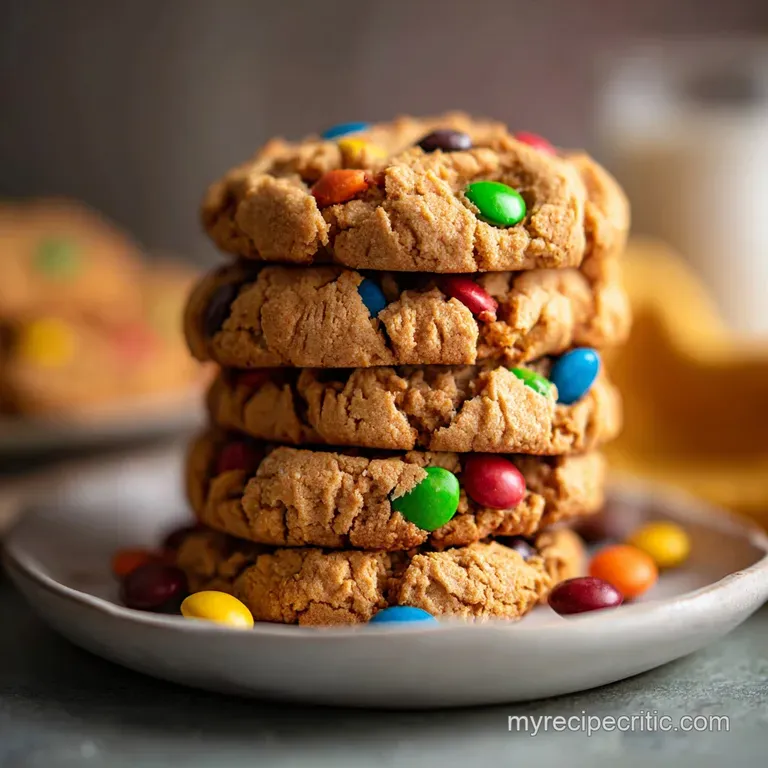
- Prep the oven. Preheat your oven to 175°C (350°F) and line your baking sheets. Note: This ensures the leavening agents start working the moment the dough hits the heat.
- Cream the fats. Beat 115g unsalted butter, softened, and 250g creamy peanut butter until smooth. Note: This creates a stable emulsion for the sugars to cling to.
- Add the sugars. Mix in 200g light brown sugar and 100g granulated white sugar until the mixture looks pale and fluffy.
- Incorporate the liquids. Add 2 large eggs, room temperature, one at a time, followed by 5ml vanilla extract. Note: Room temperature eggs prevent the butter from seizing up.
- Whisk the dry. In a separate bowl, whisk 125g all purpose flour, 6g baking soda, and 3g kosher salt.
- Merge the mixtures. Gradually add the flour mixture to the wet ingredients on low speed. Stop as soon as the white streaks disappear.
- Fold in the texture. Stir in 270g old fashioned rolled oats, 175g M&M candies, and 170g semi sweet chocolate chips by hand.
- Portion the dough. Scoop about 3 tablespoons of dough per cookie and place them on the sheets 5cm apart. Do not flatten them.
- Bake to perfection. Bake for 10-12 minutes until the edges are golden brown and the centers look slightly underdone.
- Cool and set. Let the cookies rest on the baking sheet for 5 minutes before moving them. Note: They finish setting through carry over heat.
Fixing Common Texture and Spread Issues
Preventing Dry, Crumbly Cookies
If your Peanut Butter Monster Cookies are falling apart as soon as you touch them, you likely over measured the oats or the flour. Oats are incredibly thirsty; they soak up moisture over time. If the dough sits for too long before baking, it can become stiff.
Always try to bake the dough within 30 minutes of mixing, or add a teaspoon of milk if it feels like it has become too dry to scoop.
Solving The Greasy Cookie Issue
A greasy cookie usually happens when the peanut butter separates or the butter was too warm. Using a "natural" peanut butter where the oil sits on top can cause the dough to lose its structure. Stick to the classic emulsified brands for this specific bake.
If you find the dough is already looking shiny and oily before it goes in the oven, chill the scooped balls for 15 minutes to firm up the fats.
Fixing Uneven Spreading
When some cookies are flat and others are tall, it is usually down to uneven temperature on the baking sheet. If you reuse a hot baking sheet for the second batch, the dough starts melting before it even gets into the oven.
Always let your pans cool completely or run them under cold water (and dry them!) between batches.
| Problem | Root Cause | Solution |
|---|---|---|
| Cookies are flat | Butter was too warm | Chill dough for 20 minutes before baking |
| Center is raw | Oven temp too high | Use a thermometer; bake lower and longer |
| Burnt bottoms | Dark baking sheet | Move rack to the middle; use parchment paper |
Common Mistakes Checklist
- ✓ Always weigh your 125g of flour to avoid dense, heavy pucks.
- ✓ Use old-fashioned oats, not quick oats, to maintain the structural integrity.
- ✓ Ensure eggs are at room temperature so they incorporate without curdling the fat.
- ✓ Don't overbake; if the center looks fully "set," they will be hard once cooled.
- ✓ Space the cookies at least 5cm apart to allow for proper airflow and even edges.
Creative Ways To Customize Your Mix
Portions for Every Crowd
If you are baking for a smaller group, you can easily halve this recipe. Since it calls for 2 eggs, simply beat one egg in a small bowl and use half of it (about 25g) along with one full egg. When scaling up for a party, be careful with the leavening.
If you double the recipe, only use 1.5x the baking soda (about 9g) to prevent a metallic aftertaste, as the volume of the dough helps with the rise.
The "Kitchen Sink" Variation
You can really go wild with the mix ins here. I have replaced the chocolate chips with white chocolate and added dried cranberries for a "tart and sweet" version. If you want a bit more salt, try adding crushed pretzels or even a handful of salted peanuts.
The key is to keep the total weight of the add ins around 345g so you don't overwhelm the dough base.
Crafting Peanut Butter Monster Cookie Bars
If you don't feel like scooping two dozen cookies, turn this into bars! Press the entire batch of dough into a lined 9x13 inch baking pan. You will need to increase the bake time to about 20-25 minutes. Look for the edges to pull away slightly from the sides of the pan.
Let them cool completely in the pan before slicing, or they will crumble into delicious but messy piles.
Debunking The Flourless Myth
There is a common misconception that all Monster Cookies are flourless. While some versions exist that use only oats, they often lack the "snap" and structure that a small amount of all purpose flour provides. The 125g of flour in this recipe acts as the glue that holds the oats and the heavy peanut butter together.
Without it, the cookies tend to be much more fragile and can't handle being stacked in a cookie jar.
Another myth is that you must chill the dough overnight. While chilling dough can improve flavor in some recipes, these are designed for immediate baking. The oats need some moisture to soften, but the peanut butter provides enough immediate fat to keep them tender.
If you chill this specific dough for too long, the oats will hydrate so much that the cookies won't spread at all, resulting in a very thick, almost dry texture.
Keeping Your Cookies Fresh and Fudgy
Storage: These cookies stay fresh at room temperature in an airtight container for up to 5 days. Because of the high fat and sugar content, they actually stay soft longer than most other cookie varieties.
If they do start to firm up, a quick 10 second zap in the microwave will bring back that velvety, just baked feel.
Freezing: This dough freezes beautifully. Scoop the balls onto a tray, freeze until solid, then transfer to a zip top bag. You can bake them straight from frozen; just add 2 minutes to the total bake time. You can also freeze the baked cookies for up to 3 months.
Zero Waste: If you have broken cookie pieces or crumbs at the bottom of the container, don't toss them! They make an incredible topping for vanilla bean ice cream. You can also pulse them in a food processor and use them as a "crust" for a peanut butter pie.
If you have leftover oats or M&Ms, mix them into your morning yogurt or oatmeal for a little treat.
Pairing These Treats With Your Favorite Drinks
To really round out the experience, think about contrast. These cookies are very rich and sweet, so a cold glass of whole milk is the classic choice for a reason. The fat in the milk helps cleanse the palate of the sticky peanut butter, making every bite feel like the first one.
If you are serving these as an afternoon snack, a strong black coffee or a bitter espresso is a fantastic partner. The roasted notes of the coffee bean complement the toasted oats and the semi sweet chocolate chips perfectly.
For a real indulgence, try crumbling one over a warm bowl of chocolate pudding the textures of the crunchy M&Ms against the smooth pudding are a revelation. Whatever you choose, just make sure you have a napkin handy; these are called "Monster" cookies for a reason!
Recipe FAQs
Can I use quick oats instead of old-fashioned oats?
No, stick with old-fashioned oats. Quick oats will result in a softer, less structured cookie that may spread more than desired.
Why are my cookies spreading too much?
This usually means your butter or peanut butter was too warm. Ensure your butter is softened, not melted, and use creamy peanut butter for best results. If you suspect your dough is too warm, chill the scooped balls for 15-20 minutes before baking.
How do I prevent my cookies from being too dry?
Avoid over measuring the flour and oats. Weighing your dry ingredients is crucial. If the dough feels too stiff after mixing, you can add a teaspoon of milk to loosen it before scooping.
Can I make these cookies gluten-free?
Yes, use a good quality 1:1 gluten-free flour blend. The oats will also need to be certified gluten-free if you have a severe sensitivity.
How long should I bake the cookies?
Bake for 10-12 minutes. Look for golden brown edges with centers that still appear slightly underdone; they will continue to set as they cool on the baking sheet.
How do I store leftover Peanut Butter Monster Cookies?
Store them in an airtight container at room temperature for up to 5 days. Their high fat and sugar content helps them stay soft longer than many other cookies. If they firm up, a quick 10-second microwave zap will revive them.
Is it true that I can't substitute the peanut butter?
No, this is a common misconception. While creamy peanut butter is recommended for structure, you can use almond butter for a different flavor profile. However, avoid natural peanut butter where the oil separates, as this can affect dough stability.
Peanut Butter Monster Cookies
Ingredients:
Instructions:
Nutrition Facts:
| Calories | 281 kcal |
|---|---|
| Protein | 5.5 g |
| Fat | 13.9 g |
| Carbs | 35.7 g |
| Fiber | 2.4 g |
| Sugar | 20.8 g |
| Sodium | 158 mg |
