Peach Caprese Salad with Creamy Burrata and Honey-Balsamic Glaze

- Capturing the Essence of Summer: Why Peach Caprese Salad is the Ultimate Upgrade
- Deconstructing the Perfect Bite: Flavor Science of This Summer Salad
- Essential Ingredients for the Best Peach Caprese Salad & Smart Swaps
- How to Assemble the Sunny Peach & Burrata Caprese: Step-by-Step Method
- Expert Tips and Troubleshooting for the Peach Caprese Salad
- Handling Leftovers: Storage and Shelf Life of Caprese Salad Components
- Perfect Pairings: What to Serve Alongside Your Elevated Caprese
- Recipe FAQs
- 📝 Recipe Card
Capturing the Essence of Summer: Why Peach Caprese Salad is the Ultimate Upgrade
Seriously, nothing screams pure summer louder than biting into a sweet, juice dripping peach, right off the tree. When you mix that sun-warmed fruit with creamy, cloud like Burrata, and the spicy peppery scent of fresh basil, the resulting combination is pure magic.
It’s a stunning platter that looks sophisticated but requires zero fuss.
This isn't a complex, multi step kitchen endeavor, thank goodness. You can assemble this Peach Caprese Salad in about 15 minutes flat, making it the ultimate lifesaver for those scorching weeknights when you refuse to turn on the stove.
It’s incredibly fast, totally elegant, and proof that the best food is often the simplest food.
I know, ditching the classic tomato in a Caprese seems scandalous, maybe even sacrilegious, but trust me, this fruity variation completely changes the game. Ready to ditch the old ways and embrace the sweet side of Caprese perfection?
Let's crack on with the details so you can nail the sweet, salty, and acidic balance every single time.
Deconstructing the Perfect Bite: Flavor Science of This Summer Salad
This Peach Caprese Salad recipe isn't just about throwing ingredients onto a plate; it’s about balancing textures and temperatures. Every component plays a critical role in achieving that perfect sweet and savory bite. We're maximizing flavor intensity through smart sourcing and simple preparation.
The Burrata Advantage: Why Creaminess Wins Over Standard Mozzarella
If you use standard fresh mozzarella, you get a good Caprese, but Burrata makes it great. Burrata is essentially mozzarella wrapped around a creamy interior filling made of stracciatella (shreds of mozzarella mixed with cream).
Always bring your Burrata to room temperature before serving; the cold stiffens the interior and prevents that glorious, buttery spill.
Peaches Replacing Tomatoes: The Sweet Savory Balancing Act
Ripe peaches bring natural sweetness and a subtle acidity that tomatoes can't match. Tomatoes usually need heavy salting to balance the dairy, but the sweetness of the peach does half the work for us. This allows the fresh basil flavor to really shine through without being masked by too much salt or heavy dressing.
Prep Time and Difficulty Snapshot
The beauty of this dish is that the prep time is the total time. We are talking maybe 15 minutes from fridge to table. It's truly an "easy" recipe, meaning anyone, even a novice, can make this look like a five star restaurant appetizer.
Achieving the Ideal Texture Contrast (Soft Burrata vs. Firm Peach)
You need peaches that are ripe enough to be juicy, but still firm enough to hold their shape when sliced. If they are too soft, they turn to mush when you try to arrange them. That slight resistance in the fruit is key against the soft, yielding texture of the creamy Burrata.
The Role of the Glaze in Acidic Counterbalance
We use a simple honey balsamic glaze, which is just vinegar, EVOO, and a touch of honey. This glaze is vital because the sharp, acidic balsamic cuts through the richness of the Burrata, preventing the dish from tasting too heavy.
The honey rounds out the aggressive tang of the vinegar, ensuring everything stays balanced.
Maximizing Basil Fragrance: Tearing vs. Chopping
Never, ever chop your fresh basil with a knife for Caprese. Chopping bruises the leaves, turning the edges dark quickly and releasing bitter compounds. Tearing the basil by hand preserves the essential oils and keeps the aroma bright and clean.
Essential Ingredients for the Best Peach Caprese Salad & Smart Swaps
This recipe lives and dies by the quality of its components. Think simple, high impact ingredients. I once tried to use cheap, thin balsamic vinegar and it ruined the entire platter; it was like putting watered down soy sauce on fruit. Learn from my mistake!
| Ingredient | Why We Use It | Viable Substitution |
|---|---|---|
| Peaches | Sweetness, Juiciness, Firm texture. | Nectarines (firm and ripe, no peeling needed) or Firm Figs (for a deeper, earthier note). |
| Burrata | Unmatched creaminess and rich texture. | high-quality Mozzarella di Bufala or, for a different profile, crumbled, drained Feta cheese (like in my The Authentic Horiatiki Greek Cucumber Tomato Feta Salad Recipe ). |
| Fresh Basil | Peppery aroma and vibrant colour. | Fresh Mint (adds a cooling effect) or Arugula (if you want more peppery bitterness). |
| Balsamic Vinegar | Deep acidity and necessary dark colour. | Pomegranate Molasses (for sweetness and color) or Red Wine Vinegar mixed with a pinch of brown sugar. |
| Honey | Glaze thickening and acidity balance. | Maple Syrup or a teaspoon of Agave Nectar . |
Selecting the Ripest Peaches: A Guide to Texture and Sweetness
When you lightly press a peach, it should yield slightly, but not squish. If it's rock hard, it won't be sweet enough. If it's too soft, it will weep everywhere. The skin should be vibrant, and you should smell that wonderful, sweet peach fragrance right near the stem.
Burrata Quality Check: Identifying the Freshest Core
A good Burrata ball should feel slightly heavy for its size, indicating a rich interior. Check the expiry date and buy locally if you can. The best tip? Buy two small balls instead of one huge one. That way, if one goes slightly awry, you have a backup.
Crafting the Honey Balsamic Glaze Ratio
The ideal ratio is usually 3 parts EVOO to 2 parts balsamic, with just a tiny teaspoon of honey. This creates an emulsion that is substantial enough to cling to the peaches but not so thick it coats your mouth. If your balsamic is already very thick (meaning it’s well aged), you might not need the honey at all.
Oil Quality Matters: Choosing Your Best Extra Virgin Olive Oil
Since we aren't cooking the oil, the flavour profile is entirely preserved. Do not use your cooking oil here. Grab the fruity, complex bottle you usually save for dipping bread. Trust me, the difference is massive.
How to Assemble the Sunny Peach & Burrata Caprese: step-by-step Method
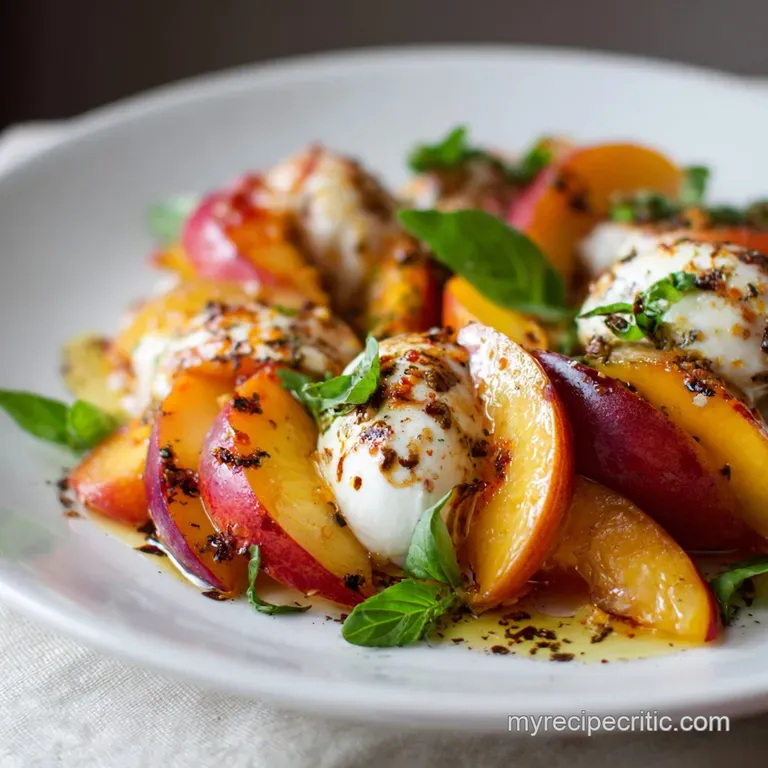
This is assembly art, not rocket science. The key is arranging it beautifully because people eat with their eyes first.
Preparing the Peaches (Slicing Techniques for Presentation)
Wash and dry your peaches thoroughly. Using a sharp knife, slice the peaches into neat 1/2 inch thick wedges, keeping the size consistent for elegant presentation. If they are freestone peaches, the pit should pop right out. If they are clingstone, slice around the pit as neatly as possible.
Whipping Up the Honey Balsamic Reduction
In a small bowl, whisk together the EVOO, balsamic vinegar, and honey until it looks slightly thickened and creamy this is called an emulsion. Give it a tiny taste. Is it too sweet? Add a drop more vinegar. Too sharp?
Add a tiny pinch of fine salt, which actually balances the flavor surprisingly well.
The Layering Strategy: Building the Perfect Plate
Start by fanning the peach slices across a large, flat platter, overlapping them slightly to make it look intentional. Tuck the hand torn basil leaves in between the fruit. Place the whole ball of Burrata right in the center, reserving the dressing and seasoning for the very last second.
Chef's Note: Just before you take the platter to the table, use a spoon to gently puncture or tear the Burrata right open. That beautiful, creamy interior spilling onto the peaches is the "reveal" and guarantees maximum richness in every first bite.
Final Seasoning: When to Add Salt and Pepper
This is non-negotiable: salt the dish after the dressing, right before serving. Sprinkle flaky sea salt (like Maldon) generously over the entire platter especially the Burrata and then follow with fresh ground black pepper.
The textural crunch of the flaky salt is crucial for cutting through the fat of the cheese and the sweetness of the fruit.
Expert Tips and Troubleshooting for the Peach Caprese Salad
Preventing a Watery Salad Base (The Burrata Drain)
When you take the Burrata out of its brine, set it on a paper towel lined plate while you prep the peaches. This allows excess water to drain off. Nobody wants a milky, soupy Caprese base.
Ideal Serving Temperature and Chill Time
This salad is best served at room temperature, which maximizes the flavor of both the fruit and the cheese. If you must prep it ahead of time, chill the peaches, but keep the Burrata separate and allow it to come to room temperature (about 15- 20 minutes) before assembly.
Reviving Wilted Basil: Quick Fixes
If your basil looks sad or wilted, plunge the leaves into a bowl of ice water for five minutes. Dry them completely with a salad spinner or a clean towel immediately after. They will crisp right up.
Best Practices for Storing Sliced Peaches
If you slice the peaches ahead of time (up to 4 hours), toss them gently with just a squeeze of lemon juice. This prevents browning. Store them tightly covered in the fridge, but remember to let them warm up slightly before serving.
Handling Leftovers: Storage and Shelf Life of Caprese Salad Components
Why This Salad Doesn't Freeze Well (And What To Do Instead)
Do not, under any circumstances, try to freeze this Caprese salad. The high water content in the peaches and the chemical structure of the soft cheese will turn everything into a watery, granular mess upon thawing. Freezing is a no-go.
Reassembly Tips for Next Day Freshness
If you have leftovers, store the components separately. Keep the dressed peaches in one container and the leftover Burrata (if any) tightly wrapped in the fridge. The basil is usually a lost cause once it’s dressed.
The next day, you can enjoy the peaches straight from the fridge or quickly grab fresh basil and re-assemble a smaller portion. Dressed Caprese is only good for about 24 hours.
Perfect Pairings: What to Serve Alongside Your Elevated Caprese
This vibrant salad is light enough to work as a beautiful starter, but substantial enough to hold its own as a side dish for grilled mains.
If you are hosting a large summer gathering, this pairs perfectly with something hearty and savory, like a simple grilled chicken or pork tenderloin. It’s also fantastic served alongside a salty element, like a small side of sliced prosciutto.
For a completely fruit focused spread, serve this right next to my recipe for The Secret to Perfect Italian Fruit Salad Macedonia di Frutta . The contrasting flavors creamy/savory versus purely sweet/citrus work beautifully together. If you're looking for another hearty salad option, skip the red meat here and try something like Spaghetti Salad The Ultimate Crunchy Summer Potluck Recipe on the side.
Recipe FAQs
Can I use fresh mozzarella instead of the recommended Burrata cheese?
Absolutely, fresh mozzarella (especially small balls like Bocconcini) works perfectly well in a classic Caprese structure. However, Burrata is highly recommended for this recipe because its creamy, luxurious interior oozes wonderfully when sliced, providing a richer and more decadent mouthfeel than standard mozzarella.
My peaches aren't fully ripe yet. What is a good substitute for the fruit?
If peaches are unavailable or too firm, ripe nectarines are the best direct swap, offering similar sweetness and structure without the fuzzy skin. Alternatively, for a more savory element, ripe heirloom tomatoes can be used alongside the peaches to provide contrasting acidity and color, though they change the flavor profile.
Why is my Peach Caprese salad becoming watery or soggy shortly after serving?
Wateriness occurs when the ingredients, especially the peaches and the Burrata (which releases whey), sit too long after being sliced and dressed. To prevent this, prepare the honey balsamic glaze in advance, but only slice the peaches and assemble the salad right before guests arrive.
Ensure you only drizzle the glaze just before plating.
Can this salad be prepared ahead of time for a party?
While you can slice the peaches and arrange the Burrata up to an hour ahead of time, the salad must not be dressed until serving. The acid in the balsamic glaze will rapidly cause the basil to wilt and the peaches to soften, compromising the crucial fresh texture.
Store the arranged components covered in the refrigerator until ready to serve.
How can I adjust the recipe if my peaches taste tart instead of sweet?
If your peaches lack natural sweetness, you should increase the amount of honey used in the balsamic glaze slightly to help balance the overall flavor. Additionally, sprinkling a very small pinch of fine granulated sugar directly over the sliced fruit before dressing can enhance the perceived sweetness without drastically altering the moisture level.
How can I adapt this recipe for a vegan or dairy-free diet?
To make this dish vegan and dairy-free, substitute the Burrata with a high-quality, meltable vegan mozzarella alternative, preferably one made from nuts or cashews. You must also replace the honey in the balsamic glaze with maple syrup or agave nectar to maintain the necessary sweetness and viscosity.
I don't like balsamic vinegar. Is there an alternative dressing I can use?
Yes, for a completely different but equally delicious profile, opt for a light, summery dressing instead of the glaze. Simply drizzle the arranged salad with high-quality extra virgin olive oil, a squeeze of fresh lemon juice, and plenty of flaky sea salt and cracked black pepper.
Peach Burrata Caprese Salad
Ingredients:
Instructions:
Nutrition Facts:
| Calories | 239 kcal |
|---|---|
| Protein | 10.0 g |
| Fat | 20.9 g |
| Carbs | 6.7 g |
