Show-Stopping New Years Eve Appetizers: Champagne Glaze
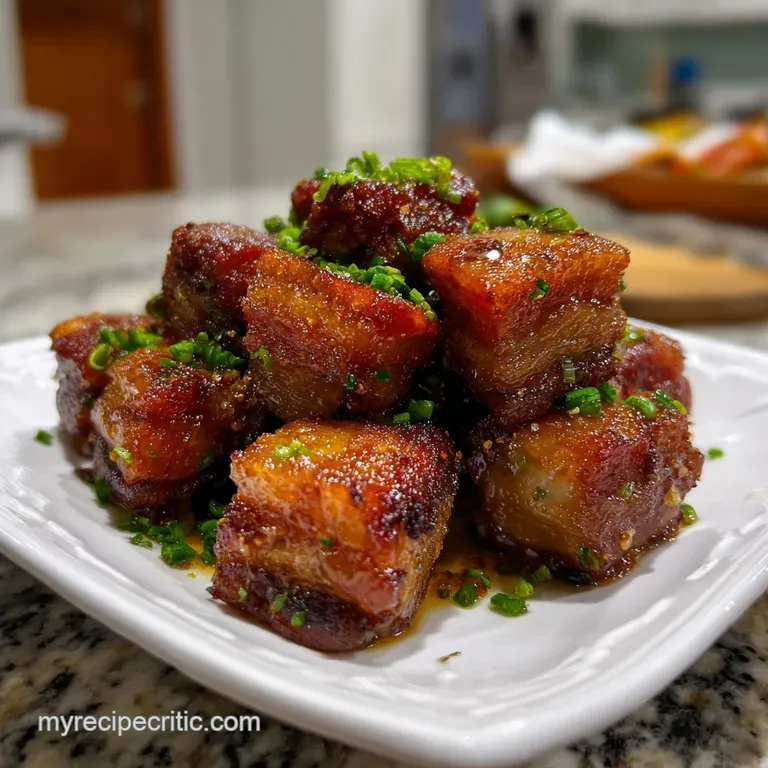
- Effort/Time: 3 hours 20 mins of patience for professional-grade results.
- Flavor Hook: Rich, umami-dense pork belly meet a bright, effervescent citrus-tinged glaze.
- Perfect for: High-end cocktail parties and impressive year-end celebrations.
- The Science of Crisp: Why These New Years Eve Appetizers Work
- Thermodynamics and Logistics for Perfect Results
- The Alchemy of Umami: Selecting Your Elements
- Precision Instruments for Culinary Success
- The Step-by-Step Architecture of Flavor
- Phase Shifts: Fixing Common Texture and Glaze Failures
- ⚗️ The Scaling Lab: The Physics of Quantity
- Debunking Celebration Myths
- Preserving Structural Integrity and Texture
- The Final Presentation: Sensory Cues and Pairings
- Recipe FAQs
- 📝 Recipe Card
Nothing kills a party mood faster than serving a tray of new years eve appetizers that look like gold but chew like a rubber bicycle tire. I once spent sixty dollars on a heritage breed pork belly, only to serve guests what amounted to expensive, savory gum because I didn't understand the relationship between moisture and skin dehydration.
It was a humiliating lesson in thermodynamics that taught me you can’t rush the physics of fat; if the skin isn't bone dry before it hits the heat, you’ll never achieve that elusive, shattering crunch that defines world class new years eve appetizers.
We’ve all been there rushing the prep because the countdown is looming, only to end up with a greasy mess that lacks any structural integrity. I’ve ruined more batches than I care to admit by overcrowding the pan or using a cheap, sugary glaze that scorched into a bitter charcoal before the meat was even warm.
These failures weren't about a lack of talent; they were a lack of respect for the Maillard reaction and the slow process of collagen hydrolysis. You have to let the heat work through the connective tissue while shielding the delicate proteins, or you're just making expensive leather.
The scientific revelation that changed everything for my new years eve appetizers was the "Dry-Brine Phase Shift." By using Diamond Crystal Kosher Salt to draw out surface moisture through osmotic pressure, we create a parchment like surface on the skin that responds to heat by puffing into a mahogany colored, airy crust.
This isn't just cooking; it's engineering a sensory experience where the auditory "crack" of the first bite precedes a velvety, fat-rich interior. When that hit of dry Champagne acidity strikes the tongue, it cleanses the palate, preparing you for the next savory wave.
The Science of Crisp: Why These New Years Eve Appetizers Work
- Collagen Hydrolysis: Long term exposure to 325°F heat converts tough collagen into gelatin, creating a melt-in-the-mouth texture.
- Surface Dehydration: Salt draws water to the surface where it evaporates, leaving behind a concentrated protein and fat matrix that crisps instead of steams.
- Maillard Reaction Optimization: The light brown sugar in the glaze provides the necessary carbonyl groups to react with amino acids, creating hundreds of complex flavor compounds.
- Acidic Lipid Cutting: The acetic acid in apple cider vinegar and the tartaric acid in Champagne break through the heavy fat molecules, preventing flavor fatigue.
- Thermal Buffer: The scoring of the skin acts as an expansion joint, allowing steam to escape and preventing the skin from curling or warping.
Thermodynamics and Logistics for Perfect Results
| Metric | Value | Technical Context |
|---|---|---|
| Prep Time | 20 minutes | Active time for scoring and seasoning |
| Cook Time | 3 hours | Required for full collagen-to-gelatin conversion |
| Total Time | 3 hours 20 mins | Includes glazing and resting phases |
| Yield | 12 servings | Optimized for a standard social gathering |
| Target Temp | 205°F Internal | The sweet spot for pork belly tenderness |
The Alchemy of Umami: Selecting Your Elements
Selecting the right components for your new years eve appetizers is a study in chemistry.
- 3 lbs pork belly, skin-on: Look for a balanced fat-to-meat ratio with a thick skin layer. Why this? Provides the essential collagen for texture conversion.
- 2 tbsp Diamond Crystal Kosher Salt: This salt has a larger grain size that won't over season. Why this? High surface area for maximum moisture extraction.
- 1.5 cups dry Champagne: The bubbles aren't for show; the acidity is the key. Why this? Provides tartaric acid to balance heavy pork lipids.
- 1/2 cup light brown sugar, packed: Essential for the glaze's viscosity. Why this? Contains molasses for deeper caramelization notes.
- 2 tbsp Dijon Mustard: Adds a sharp, piquant back note.
- 1 tbsp apple cider vinegar: Increases the "bright" profile of the sauce.
- 1 tsp smoked paprika: Adds a subtle "wood fired" depth.
- 1/2 cup pomegranate arils: Provides a burst of astringent juice.
Precision Instruments for Culinary Success
To execute these new years eve appetizers with masterclass precision, you need tools that offer consistent heat distribution.
- Lodge Cast Iron Skillet or Heavy Roasting Pan: You need thermal mass to maintain a steady temperature when the cold meat is introduced.
- Victorinox Paring Knife or Sharp Box Cutter: Essential for scoring the skin without piercing the flesh beneath.
- All-Clad 1 Quart Saucepan: For reducing the Champagne glaze without hot spots.
- Instant Read Thermometer (Thermoworks Thermapen): Precision is non-negotiable for protein denaturation.
- Wire Cooling Rack: Elevates the pork to allow 360 degree hot air circulation, preventing a soggy bottom.
The step-by-step Architecture of Flavor
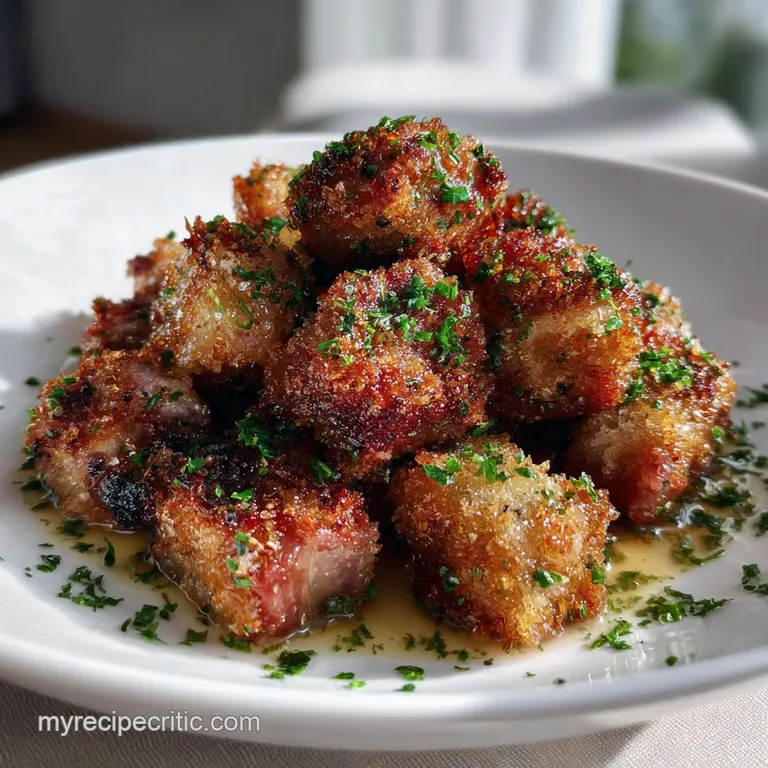
Making high end new years eve appetizers requires a disciplined approach to moisture management and temperature control. Much like the technique found in our New Years Appetizers recipe, the secret lies in the preparation.
- Dry the 3 lbs pork belly thoroughly with paper towels. Note: Surface moisture is the enemy of the Maillard reaction.
- Score the skin in 1/2 inch intervals using a sharp paring knife. Note: Do not cut into the meat; only pierce the fat layer to allow rendering.
- Rub 2 tbsp Kosher salt, 1 tbsp black pepper, and 1 tsp smoked paprika into the scores. Note: Salt initiates the osmotic process to dehydrate the skin.
- Place the pork on a wire rack over a baking sheet for 30 minutes at room temperature until the skin feels tacky and dry.
- Roast at 325°F for 2 hours 30 mins until the meat is tender and the fat has rendered significantly.
- Simmer 1.5 cups dry Champagne, 1/2 cup light brown sugar, 2 tbsp Dijon, and 1 tbsp vinegar in a saucepan.
- Reduce the glaze for 15 minutes until it coats the back of a spoon and smells like toasted caramel.
- Increase oven temp to 450°F and roast for another 20 minutes until the skin is bubbling, mahogany, and shatters when tapped.
- Brush the Champagne glaze over the sides (not the skin) and rest for 10 minutes until the juices redistribute.
- Slice into 1 inch cubes and garnish with chives, flaky sea salt, and pomegranate arils.
| Ingredient Chemistry Breakdown | Role | The Pro Secret |
|---|---|---|
| Pork Belly | Collagen-to-gelatin conversion | Low heat breaks bonds without drying protein |
| Dry Champagne | Acidic reduction | Tartaric acid cuts through heavy fat molecules |
| Kosher Salt | Denaturation & Osmosis | Draws out "bound water" for a crispier skin |
| Brown Sugar | Carboxly amine browning | Lowers the temperature required for caramelization |
Phase Shifts: Fixing Common Texture and Glaze Failures
Why Your Pork Skin is Rubbery
When making new years eve appetizers, rubbery skin is usually the result of "steaming" rather than "roasting." If there is too much ambient moisture in the oven or if the pork wasn't dried properly, the skin proteins will entangle into a tough web instead of puffing. This is similar to the moisture balance required in the The Never Fails recipe for the perfect crumb.
| Problem | Root Cause | The Fix | Pro Protocol |
|---|---|---|---|
| Rubbery Skin | Excess surface moisture | Pat dry and salt 24h in advance | Use a hairdryer on the skin for 2 mins before roasting |
| Bitter Glaze | Sugar burnt (Scorched) | Reduce heat; sugar burnt at 350°F+ | Add glaze only in the final 5 mins of roasting |
| Tough Meat | Under cooking (Collagen) | Internal temp failed to reach 200°F | Braise in a small amount of liquid, keeping skin dry |
⚗️ The Scaling Lab: The Physics of Quantity
When you decide to double your new years eve appetizers for a crowd, you aren't just doubling ingredients; you are changing the thermodynamics of your kitchen.
- The Evaporation Paradox: If you double the Champagne glaze but use the same small saucepan, it will take 3x longer to reduce. Use a wider pan to maintain surface area-to-volume ratios.
- Pan Crowding: Putting 6 lbs of pork on one tray creates a "cold sink." The oven temperature will drop, and the pork will release moisture faster than it can evaporate, leading to gray, steamed meat. Cook in batches or use two separate racks with 4 inches of clearance.
- Flavor Saturation: Do not double the salt. Scale salt to 1.5x for a 2x batch, as the concentration of minerals increases non-linearly during the roasting process.
- Thermal Mass: A larger volume of meat retains heat longer. Pull your pork belly at 195°F if doubling the batch, as carry over cooking will easily push it to the 205°F target.
Debunking Celebration Myths
Myth: The alcohol in the Champagne glaze completely evaporates. Truth: After 15 minutes of boiling, about 40% of the alcohol can remain.
If serving new years eve appetizers to children or those avoiding alcohol, ensure a longer reduction or use a non-alcoholic sparkling cider.
Myth: Scoring the meat helps it cook faster. Truth: Scoring is strictly for fat rendering and skin expansion. Cutting into the meat actually allows flavorful juices to escape, leading to a drier finished product.
Preserving Structural Integrity and Texture
These new years eve appetizers are best served immediately to appreciate the contrast between the hot fat and the cold pomegranate. However, if you have leftovers, they can be stored in an airtight container in the fridge for up to 4 days.
- Reheating: Never use a microwave; it will turn the crispy skin into a gummy mess. Use an air fryer at 400°F for 5 minutes or a toaster oven until the skin begins to sizzle again.
- Freezing: You can freeze the braised pork (before the final over high heat crisping) for up to 2 months. Thaw overnight in the fridge before finishing in a hot oven.
💡 ZERO WASTE PHILOSOPHY Don't discard the rendered pork fat (lard) from the roasting pan. Transform: Strain it through a coffee filter and store it in a jar.
Science: This fat is infused with smoked paprika and salt, making it an incredible high smoke-point medium for frying eggs or sautéing greens. It's pure liquid umami.
The Final Presentation: Sensory Cues and Pairings
When plating your new years eve appetizers, think about the architecture of the bite. Place the pomegranate arils precisely so they provide a visual pop against the mahogany pork. The acidity of the fruit mimics the profile of a New Years Desserts recipe, providing a cohesive theme for your menu.
For a spicy variation, add a teaspoon of chili flakes to the glaze. This creates a "hot honey" effect that works beautifully with the rich pork belly. If you find the pork too rich, serve it on a small bed of quick pickled cucumbers to provide a cold, crunchy contrast.
The key to successful new years eve appetizers is balancing the heavy, fatty notes with sharp, bright accents that keep your guests coming back for more. These new years eve appetizers are guaranteed to be the first thing to disappear from the table.
Happy cooking, and enjoy the sizzle!
Recipe FAQs
What internal temperature guarantees tender pork belly?
205°F is the required temperature for complete collagen hydrolysis. Heating past 200°F converts tough connective tissue into lubricating gelatin, yielding a melt-in-your mouth texture. If you've mastered the temperature cues here, apply them to Reverse Sear oven-roasted TriTip The Best Sunday Roast Alternative to ensure medium rare consistency.
Can I use regular table salt instead of Kosher salt?
No. Table salt is too fine and over seasons. Its small crystal structure packs tighter, leading to over salting and drawing out too much moisture too quickly. Kosher salt’s large, irregular flakes allow for better surface coverage and controlled moisture extraction.
How can I prevent the glaze from burning onto the pork skin?
Brush glaze onto the sides only in the final minutes. Sugars caramelize rapidly above 330°F, causing scorching before the meat finishes cooking. Temperature shock denatures casein proteins, creating grainy texture instead of smooth emulsion.
- Remove pan from heat first
- Add cheese in small handfuls
- Use fresh grated Gruyère (pre-shredded has cellulose coating)
Should the pork belly be scored before or after dry-brining?
Score the raw skin before applying the salt rub. Scoring cuts through the fat layer, allowing the salt to penetrate and the trapped steam to escape during roasting. This technique is vital for achieving the auditory "crack" you want, similar to the precise frying technique used to Fried Tofu Achieve the Ultimate Golden Crispy Texture.
Is it necessary to use Champagne, or can I use standard prosecco?
Champagne is preferred due to higher acid content. Prosecco often has a noticeably higher residual sugar level than dry Champagne, which significantly increases the risk of the glaze burning too quickly. Aim for a Brut or Extra Brut classification regardless of the bottle's origin.
What is the safest way to reheat leftovers?
Use an air fryer or toaster oven at 400°F. Microwaving introduces moisture back into the skin structure, immediately dissolving the crispness achieved by dehydration. The high, dry heat effectively re-crisps the exterior without overcooking the gelatinized interior meat.
Myth: Freezing appetizers ruins the texture.
Myth: Freezing appetizers ruins the texture. Reality: Freezing the uncooked pork belly after brining preserves the dehydration process. When thawed, the surface moisture is already drawn out, making the final roast even more effective.
New Years Eve Appetizers Masterpiece
Ingredients:
Instructions:
Nutrition Facts:
| Calories | 517 calories |
|---|---|
| Protein | 10g |
| Fat | 45g |
| Carbs | 11g |
| Fiber | 1g |
| Sugar | 10g |
| Sodium | 1180mg |
