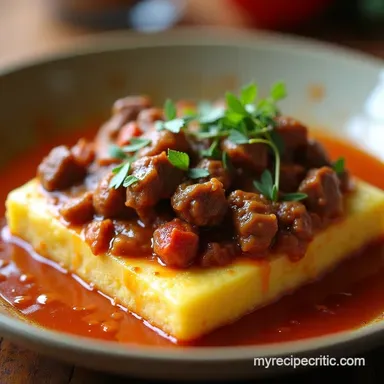
Slow-Braised Lamb Ragu with Lamb Shoulder

- Prep15 Mins
- Cook3 Hrs
- Servings8
- Time: 15 min active + 180 min cooking
- Skill level: Intermediate, requires patience for the braise
- Great for: Cozy Sunday dinners or impressive date nights
Slow-Braised Lamb Ragu
The smell of lamb shoulder searing in a heavy pot is enough to make anyone hungry. You get this deep, glossy amber crust that smells like a wood-fired oven, and once it's braised, the meat simply gives up and melts into the sauce.
This dish is all about patience. By letting the meat simmer low and slow, we turn a tough cut into something tender. This lamb ragu is a win because it doesn't rely on complex techniques, just time and heat.
Expect a thick, glossy sauce that clings to wide pasta. It's a hearty, comforting meal that feels like a warm hug in a bowl.
Recipe Specs
This recipe serves 8 people. It takes 15 minutes to get everything ready and 3 hours to cook. The final result is a deep, savory sauce with an internal richness that only comes from a long braise.
The Ingredient List
| Ingredient | Role | If You Don't Have It |
|---|---|---|
| Lamb Shoulder | Offers collagen and fat for a better texture | Beef chuck (approximate; add slightly more liquid) |
| Balsamic Vinegar | Brings a tangy acidity to offset the richness | Red wine vinegar (start with half, then taste) |
| Tomato Paste | Adds depth to the savory base and color | Double-concentrated tomato puree |
| Pappardelle | Wide noodles hold the heavy sauce well | Fettuccine or wide egg noodles |
Ingredients
- 3 lbs boneless lamb shoulder, cut into 2-inch chunks
- 3 tbsp olive oil
- 1 large onion, finely diced
- 2 medium carrots, finely diced
- 2 stalks celery, finely diced
- 4 cloves garlic, minced
- 3 tbsp tomato paste
- 2 cups lamb broth
- 1/4 cup balsamic vinegar
- 28 oz crushed tomatoes
- 2 sprigs fresh rosemary
- 2 bay leaves
- 1 tsp salt
- 1/2 tsp black pepper
- 1 lb pappardelle pasta
- 1 cup starchy pasta water
- 1/2 cup freshly grated Parmesan cheese
- 2 tbsp unsalted butter
| Original Ingredient | Substitute | Why It Works |
|---|---|---|
| Lamb Shoulder | Beef Chuck | Similar fat content. Note: Beef has a milder flavor than lamb |
| Pappardelle | Rigatoni | Large tubes catch the shredded meat well |
| Parmesan | Pecorino Romano | Both are hard cheeses. Note: Pecorino is saltier |
Essential Tools
You'll need a heavy-bottomed Dutch oven that can handle oven temperatures. A sharp chef's knife for the soffrito and two sturdy forks for shredding the meat are also necessary.
From Prep to Plate
Phase 1: The High-Heat Sear
Preheat the oven to 350°F (180°C). Using medium-high heat, warm 3 tbsp olive oil in a Dutch oven. Sear the lamb chunks in batches for 3–5 minutes on each side until a chestnut brown crust forms. Remove the meat and set aside.
Note: Searing in batches prevents the meat from steaming.

Phase 2: Building the Soffrito
Lower the heat to medium. Add the diced onion, carrots, and celery, cooking for 8–10 minutes until soft and translucent. Add the minced garlic and sauté for 60 seconds until fragrant.
Phase 3: Concentrating the Flavors
Spoon 3 tbsp tomato paste into the center of the pot and stir constantly for 2 minutes until the paste darkens slightly. This eliminates the metallic taste and enriches the color of the Italian lamb ragu.
Phase 4: The Precision Braise
Deglaze the pot by stirring in 1/4 cup balsamic vinegar and 2 cups lamb broth, scraping up the browned bits. Return the lamb to the pot with the crushed tomatoes, rosemary, bay leaves, 1 tsp salt, and 1/2 tsp black pepper. Cover the pot with a tight-fitting lid and transfer to the oven.
Braise for 2.5 hours until the lamb is fork-tender.
Phase 5: The Shred and Reduction
Take the pot out of the oven and discard the bay leaves and rosemary sprigs. Use two forks to shred the lamb directly in the sauce. Return the pot to the stove over medium-low heat and simmer uncovered for 30 minutes until the sauce is glossy and thickened.

Phase 6: The Emulsion
While the sauce reduces, boil a large pot of salted water and cook 1 lb pappardelle pasta for 2 minutes less than the packet instructions. Reserve 1 cup of starchy pasta water, then drain the pasta. Toss the pasta into the ragu along with 2 tbsp butter and 1/2 cup Parmesan cheese.
Stir in the reserved pasta water 2 tablespoons at a time, tossing vigorously over heat until the sauce emulsifies into a velvety glaze.

Why This Works
The Shoulder Cut: Lamb shoulder has high connective tissue that melts into gelatin, creating a naturally thick sauce.
Acid Balance: Using lamb broth with balsamic vinegar mimics the complexity of a reduction and cuts through the heavy fat.
| Cut | Texture | Flavor | Best For |
|---|---|---|---|
| Shoulder | Shreddy, rich | Strong, gamey | Slow braises |
| Leg | Leaner, firmer | Mild, clean | Roasting |
Avoiding Kitchen Disasters
Fixing Watery Sauce
If the sauce feels too thin after the final simmer, it usually comes from the moisture in the canned tomatoes. Simply simmer the sauce uncovered for another 15 minutes to let the excess water evaporate.
Handling Tough Meat
Meat that doesn't shred usually needs more time. Put the lid back on and braise for another 30 minutes, as connective tissue only breaks down at a steady temperature over time.
Recovering a Scorched Pot
If the bottom of the pot looks burnt during the sear, don't scrape the black bits into the sauce. Carefully pour the contents into a clean pot, leaving the burnt residue behind.
Finding Pasta Alternatives
If pappardelle is hard to find, use any wide noodle or even a tubular shape like rigatoni. The key is a pasta that can hold the weight of the shredded lamb.
Freezing and Reheating
Keep the sauce refrigerated in a closed container for up to 4 days. The flavors typically settle and improve by the second day.
This homemade lamb ragu freezes nicely. Store the sauce (excluding the pasta) in a freezer-safe container for up to 3 months. When reheating, thaw it in the fridge overnight and warm it in a saucepan over medium heat. Stir in a splash of water to thin the sauce and heat it to 165°F (74°C) as per USDA food safety guidelines before mixing with fresh pasta. When reheating cooked leftovers, check with a food thermometer that the center reaches 165°F (74°C); the appliance temperature and time alone do not confirm this.
Flavor Twists
If you want a different profile, try adding a pinch of cinnamon or ground cloves during the soffrito stage for a warmer, North African lean. For a bit of heat, stir in a teaspoon of crushed red pepper flakes when you add the garlic.
If you need a dairy-free version, omit the butter and Parmesan. Instead, stir in a tablespoon of nutritional yeast and a drizzle of extra virgin olive oil at the end to keep that rich mouthfeel.
Pairing Ideas

Because a rich lamb ragu is quite hearty, pair it with something refreshing. A zesty rocket salad dressed in lemon offers a sharp counterpoint to the savory meat. Garlic-charred broccolini also works wonderfully to balance the richness.
Your Questions, Answered
Can I use boneless leg, shank, or another cut if I can't find lamb shoulder?
Yes. Leg is leaner and might be tougher, while shank provides more collagen for a richer sauce.
Which pasta shape works if pappardelle is hard to find?
Use fettuccine or wide egg noodles. These wider shapes better support the heavy, chunky sauce.
Why did the lamb take longer than the recipe time, and how do I know when it is shreddable?
Differences in meat toughness or oven heat can impact the duration. The lamb is ready when it is fork-tender and pulls apart effortlessly.
How do I remove rosemary bits so they aren't left in the sauce?
Remove the whole rosemary sprigs before shredding the meat. This prevents woody stems from remaining in the final dish.
Is it possible to freeze the sauce and reheat it without it becoming dry?
Yes. Stir in a splash of water when reheating to restore the original velvety consistency.
Could the recipe be halved or doubled?
Yes. Adjust all ingredient quantities proportionally and select a pot size that fits the volume.
Where should I store the leftovers?
Keep the cooked ragu in the refrigerator. Use a sealed container to keep the sauce fresh.
Would a slow cooker work for this dish?
Yes, a slow cooker is a viable alternative. It replaces the oven braising step and typically takes longer to reach the desired tenderness.
Slow-Cooked Lamb Ragu