Corned Beef and Cabbage: Silky and Tender
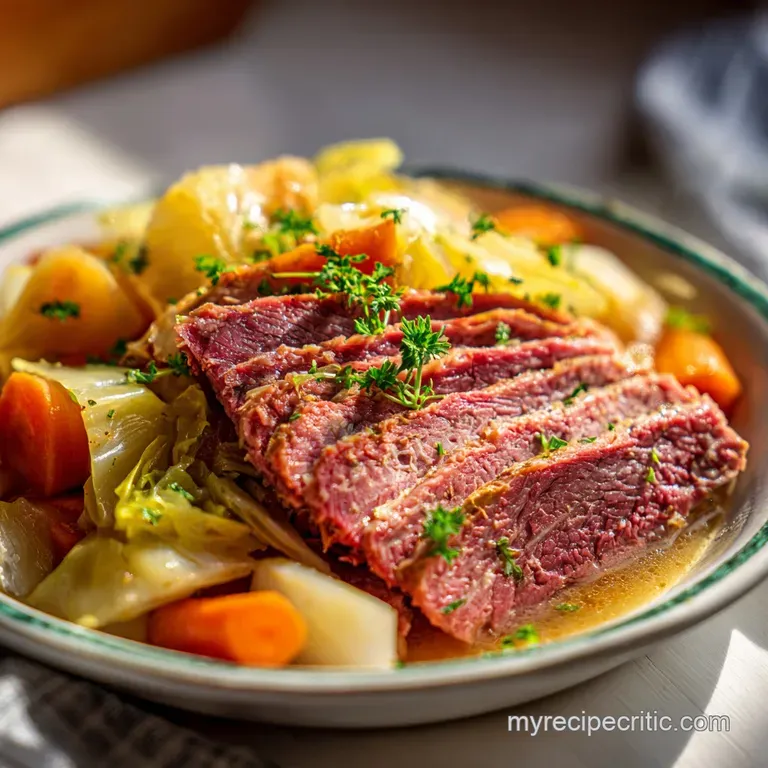
- Time: Active 20 minutes, Passive 210 minutes, Total 230 minutes
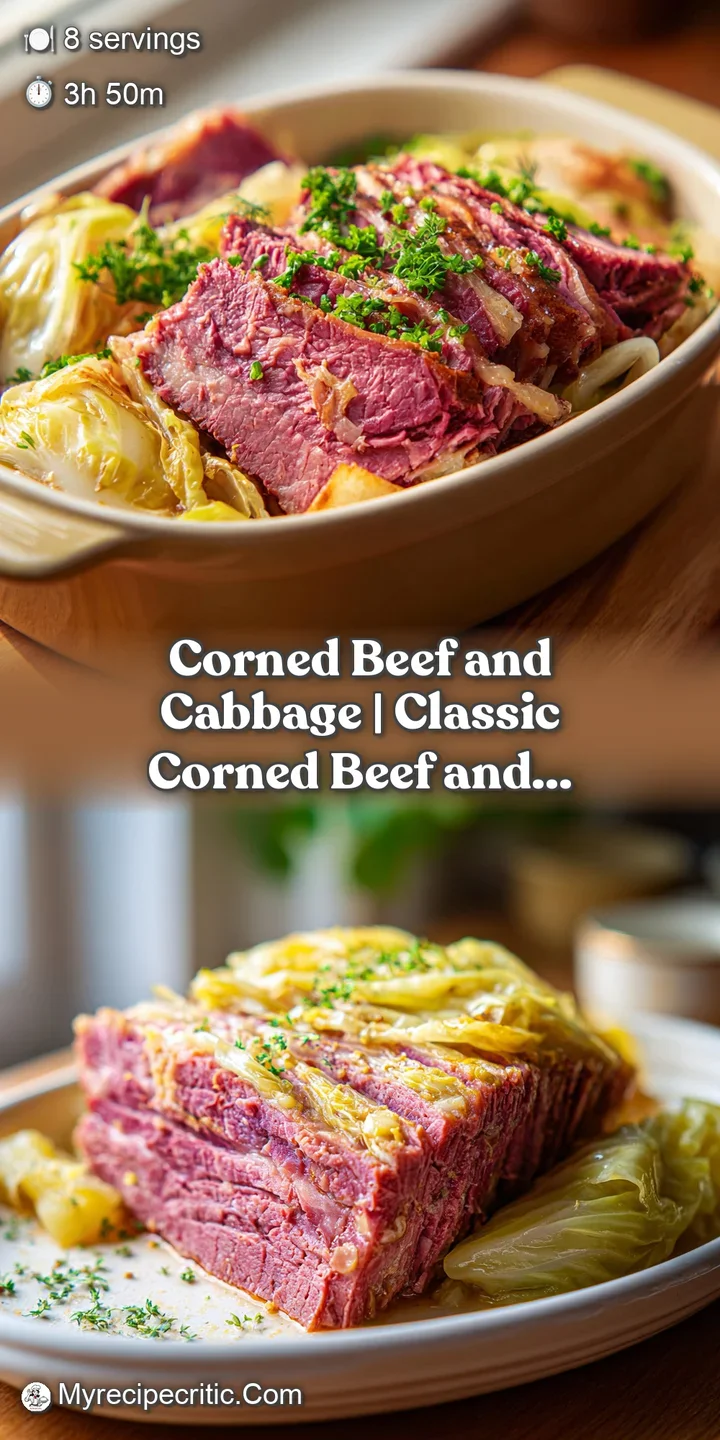
- Flavor/Texture Hook: Silky, melt in-your mouth brisket with buttery, tender harvest vegetables
- Perfect for: St. Patrick’s Day celebrations or a comforting, hands off Sunday supper
- Achieving Melt In Your Mouth Corned Beef and Cabbage
- Why This Works
- The Secret Components of the Braise
- Gathering Your Essentials
- Essential Kitchen Tools
- Step-by-Step Instructions
- Troubleshooting Guide
- Recipe Scaling Procedures
- Debunking Common Kitchen Myths
- Storage Guidelines and Zero Waste
- Perfect Complements for the Table
- Very High in Sodium
- Recipe FAQs
- 📝 Recipe Card
Achieving Melt In Your Mouth Corned Beef and Cabbage
Forget everything you have been told about boiling meat until it surrenders. If you have ever sat down to a plate of this classic and found the beef stringy or the cabbage tasting like a wet wool sweater, it is because of one massive myth: the idea that "boiling" is the goal.
In my kitchen, we do not boil; we simmer with intention. The aroma that fills the house when that dark stout hits the pickling spices is nothing short of intoxicating, a mix of toasted grain and warm, earthy cinnamon and clove.
I remember the first time I tried to make this for a group of friends. I cranked the heat, thinking faster was better, and ended up serving something that felt like chewing on a leather belt. It was a total disaster. But that failure led me to realize that the magic happens in the silence of a bare simmer.
When you see just one or two bubbles breaking the surface every few seconds, that is when the magic happens. You want the kitchen to smell like a cozy Irish pub, not a steam room.
We are going for a texture that is so tender it almost shatters under the weight of a fork, yet remains succulent and juicy. By rinsing away the harsh, excess surface brine and introducing a rich, malty stout, we create a braising liquid that seasons the meat from the inside out.
This is a dish of patience and sensory cues, from the first scent of garlic hitting the pot to the final, buttery shimmer on the carrots.
Why This Works
- Gentle Heat Regulation: Keeping the liquid at a low simmer prevents the muscle fibers from tightening into knots, ensuring the brisket becomes velvety rather than rubbery.
- Enzymatic Breakdown: The tannins and slight acidity in the dark stout help soften the tough connective tissues in the brisket during the long cook.
- Sequential Cooking: Adding vegetables in stages prevents the potatoes from dissolving into mush while ensuring the cabbage retains a slight, pleasant snap.
- Osmotic Balance: Rinsing the meat first removes the harsh surface salts, allowing the flavors of the pickling spice and garlic to actually penetrate the beef.
| Method | Total Time | Texture | Best For |
|---|---|---|---|
| Stovetop | 3 hours 30 mins | Traditional, very tender | Total control over simmer speed |
| Oven (300°F) | 3 hours 45 mins | Even heat, deep browning | Hands off, consistent temperature |
| Slow Cooker | 8-10 hours | Ultra soft, shreds easily | Busy workdays, set and forget |
Choosing the right cooking method depends entirely on how much you want to hover over the stove. While the stovetop is my favorite for monitoring the aroma and the bubble rate, the oven provides a very steady environment that is hard to mess up. If you are curious about other methods, you might find my slow cooker corned beef helpful for those days when you just cannot be in the kitchen.
The Secret Components of the Braise
To get that deep, complex flavor, we have to look at what each ingredient brings to the pot. This is not just a pile of food; it is a carefully balanced environment where salt, fat, and aromatics work in harmony to transform a cheap cut of meat.
| Ingredient | Science Role | Pro Secret |
|---|---|---|
| Dark Stout Beer | Acidic tenderizer | Choose a dry Irish stout like Guinness for the best malty depth without excess sweetness. |
| Pickling Spice | Aromatic infusion | Toast the spices in a dry pan for 60 seconds before adding them to unlock the oils. |
| Brisket (Flat/Point) | Primary protein | The point cut has more fat (flavor), while the flat cut provides beautiful, clean slices. |
| Green Cabbage | Hydro thermal texture | Cut into thick wedges with the core intact so they do not disintegrate during the final simmer. |
The interaction between the malty stout and the pickling spices is what creates that signature "Corned Beef and Cabbage" fragrance. The beer adds a layer of umami that water or plain broth simply cannot match.
It also provides a beautiful, dark hue to the cooking liquid that makes the final presentation look much more appetizing.
Gathering Your Essentials
When you are at the store, look for a 4 lbs corned beef brisket that has a nice, even fat cap. You will need 2 tbsp of pickling spice (most briskets come with a packet, but you can always add more for a punchier flavor). Grab 5 cloves of garlic and 1 large yellow onion for your base aromatics.
For the liquid, 12 oz of dark stout beer is non negotiable for that smoke kissed undertone, and you will need 6 cups of water or low sodium beef broth to keep everything submerged.
For the harvest side of the dish, pick up 1.5 lbs of red potatoes. These hold their shape much better than Russets. You will also need 5 large carrots and 1 large head of green cabbage. Do not forget the finishing touches: 4 tbsp of unsalted butter and 0.25 cup of fresh parsley.
The butter is the secret to making the vegetables feel luxurious rather than just "boiled."
Chef's Tip: If you have the time, let the brisket sit at room temperature for about 30 minutes before it hits the pot. It helps the meat cook more evenly from edge to center.
Essential Kitchen Tools
You really need a heavy bottomed vessel for this. A large Dutch oven (like a Le Creuset or Lodge) is the gold standard because it holds heat so steadily. This prevents those wild temperature swings that can turn a simmer into a boil when you aren't looking.
You will also need a sharp chef's knife for those thick cabbage wedges and a pair of sturdy tongs to handle the heavy brisket without tearing the meat.
- Large Dutch oven (at least 6-8 quarts)
- Sharp chef’s knife
- Sturdy tongs
- Cutting board with a juice groove (brisket is messy!)
- Small saucepan (for melting that finishing butter)
Using a cutting board with a groove is a small detail that saves a lot of cleanup. When you pull a 4 lbs brisket out of a pot, it is going to release a lot of steam and juices. You want those juices contained so you can pour them right back over the meat or into your serving bowl.
step-by-step Instructions
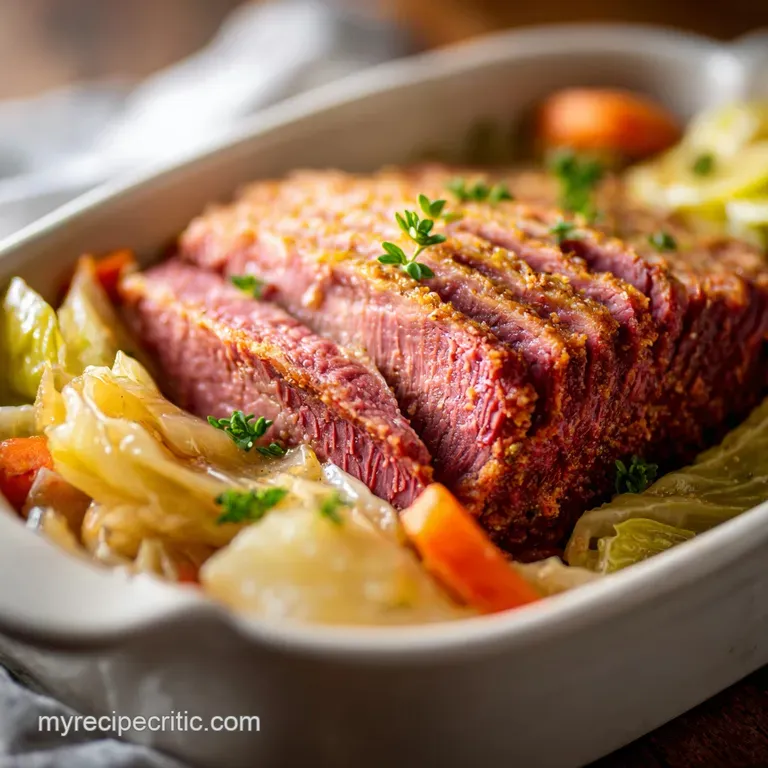
- Rinse the brisket. Remove the 4 lbs corned beef from its packaging. Rinse it thoroughly under cold running water. Note: This removes the excess salt from the brine so the final dish is seasoned, not salty.
- Prepare the pot. Place the brisket in your large Dutch oven. Add the 2 tbsp pickling spice, 5 smashed garlic cloves, and the quartered yellow onion.
- Add the liquids. Pour in the 12 oz of dark stout beer. Add the 6 cups of water or beef broth until the meat is covered by at least 2 inches.
- Start the simmer. Bring the liquid to a very gentle simmer over medium high heat. As soon as you see the first bubbles, drop the heat to low.
- The long braise. Cover the pot and cook for 3 hours. Check every 45 minutes until the meat feels tender when pierced with a fork.
- Add hearty vegetables. Carefully tuck the 1.5 lbs of halved red potatoes and 2 inch carrot chunks into the liquid around the meat.
- Brief simmer. Cover and continue to simmer for 15 minutes until the carrots are just starting to soften.
- The cabbage layer. Place the 8 cabbage wedges on top of the meat and vegetables. Cover and cook for 15 to 20 minutes until the cabbage is translucent and tender.
- The resting phase. Remove the meat to a cutting board. Let it rest for 10-15 minutes. Note: Resting allows the fibers to relax and reabsorb those delicious juices.
- Final assembly. Slice the meat against the grain. Serve with the vegetables, drizzled with 4 tbsp of melted butter and 0.25 cup of chopped parsley.
Troubleshooting Guide
The Beef Is Still Tough
If you have hit the 3 hour mark and the meat feels bouncy or resists the fork, it simply hasn't had enough time. Brisket is full of collagen that only melts after prolonged exposure to low heat. Do not turn up the temperature! Just give it another 30 minutes and check again.
Every piece of meat is a little different, and some just need a bit more patience to reach that velvety state.
The Broth Is Way Too Salty
If you taste the broth before adding the vegetables and it makes you pucker, you might have missed the rinsing step or used a very high sodium broth. You can fix this by removing two cups of the salty liquid and replacing it with plain hot water.
This dilutes the salinity without losing the aromatic base you have built.
The Cabbage Tastes Bitter
Cabbage can develop a sulfurous, bitter flavor if it is overcooked or boiled too hard. This is why we add it at the very end and let it mostly steam on top of the other ingredients. If yours is already a bit bitter, a healthy drizzle of that melted butter and a tiny pinch of sugar can help neutralize the harshness.
| Problem | Root Cause | Solution |
|---|---|---|
| Meat is dry/stringy | Liquid was boiling too hard | Keep the heat on the lowest setting possible for a bare simmer. |
| Vegetables are mushy | Added too early in the process | Follow the sequential timing: meat first, then root veg, then cabbage. |
| Gray, unappealing meat | No browning or stout used | Use the dark stout and ensure the meat stays fully submerged. |
Common Mistakes Checklist
- ✓ Always rinse the brisket under cold water to remove the "packing salt."
- ✓ Never let the liquid reach a rolling boil; keep it at a "lazy" simmer.
- ✓ Slice the beef against the grain to ensure every bite is tender.
- ✓ Keep the cabbage core attached so the wedges stay whole in the pot.
- ✓ Use red potatoes specifically, as they hold their shape during the long simmer.
Recipe Scaling Procedures
If you are cooking for a crowd and need to double this, use a very large stockpot. For the spices and aromatics, you only need to increase them by 1.5x rather than a full 2x, or the cloves in the pickling spice might become overwhelming.
Keep the liquid levels high enough to cover the meat by 2 inches, but reduce the total liquid by about 10% to prevent the pot from overflowing.
When scaling down for two people, you can use a 2 lbs brisket and halve the vegetables. Keep the 12 oz of stout (it is the perfect amount for flavor) but reduce the water/broth. The cooking time for the meat will likely drop to about 2 hours to 2 hours 15 mins, so start checking for doneness earlier. If you find yourself with extra meat, I highly recommend making a crispy corned beef hash for breakfast the next morning.
Debunking Common Kitchen Myths
Myth: You must boil the meat for safety. Actually, "boiling" is a term often used loosely in old recipes, but it is technically incorrect for braising. Cooking meat at 212°F (boiling) causes the proteins to seize and squeeze out all their moisture.
A simmer at roughly 180°F to 190°F is much more effective for breaking down collagen while keeping the meat juicy.
Myth: This is a traditional Irish dish. In Ireland, the tradition was actually "Bacon and Cabbage." Corned beef became the substitute for Irish immigrants in America because it was more affordable and available at Jewish delis.
So while it is an Irish American classic, it is a testament to cultural adaptation!
Storage Guidelines and Zero Waste
Store your leftovers in an airtight container in the fridge for up to 4 days. Keep the meat and vegetables in some of the cooking liquid to prevent them from drying out. If you want to freeze it, slice the beef first and freeze it in the broth for up to 3 months.
The vegetables do not freeze particularly well (they get a bit watery), so try to eat those fresh.
To reduce waste, save those onion skins and carrot peels for a future vegetable stock. The leftover braising liquid is also a flavor bomb! You can strain it and use it as a base for a hearty beef and cabbage soup later in the week.
If you have just a little bit of cabbage left, shred it and sauté it with some onions and a splash of vinegar for a quick side dish.
Perfect Complements for the Table
This dish is a complete meal on its own, but a few extras can really round out the experience. A thick slice of Irish Soda Bread is essential for mopping up that malty, salty broth. I also love serving a side of spicy stone ground mustard or a homemade horseradish cream to cut through the richness of the beef.
For a drink, a cold pint of the same stout you used in the pot is a natural choice. The roasted notes of the beer mirror the flavors in the beef perfectly. If you are looking for more ideas to fill out your menu, this dish pairs beautifully with a hearty vegetable soup as a starter. The combination of the warm soup and the tender beef makes for a truly soul warming meal.
The final touch should always be that garnish of fresh parsley. It adds a pop of bright green color and a fresh, herbal note that wakes up the deep, cooked flavors of the beef and cabbage. It turns a rustic pot of food into a centerpiece worthy of any holiday table.
Very High in Sodium
1680 mg 1680 mg of sodium per serving (73% 73% of daily value)
The American Heart Association recommends limiting sodium intake to less than 2,300 mg per day, with an ideal limit of less than 1,500 mg per day for most adults.
Tips to Reduce Sodium in Your Corned Beef Brisket Recipe:
-
Choose Low-Sodium or Unseasoned Corned Beef-25%
The corned beef brisket itself is the primary source of sodium. Look for 'low-sodium' or 'unseasoned' varieties. If unavailable, rinse the brisket thoroughly under cold water before cooking to remove surface salt.
-
Use Low-Sodium Broth or Water-30%
Replace the regular water or standard beef broth with low-sodium beef broth or plain water. This significantly reduces the overall sodium content without sacrificing flavor.
-
Boost Flavor with Herbs and Spices
While the pickling spice and garlic are already included, consider adding fresh or dried herbs like thyme, rosemary, or bay leaves. Use additional black pepper or mustard seeds for extra zest.
-
Use Unsalted Butter-1%
Ensure you are using unsalted butter when finishing the dish. If you've accidentally used salted butter, you'll need to adjust other sodium sources.
-
Control Added Salt-5%
Avoid adding any extra salt during the cooking process. The corned beef and pickling spice will provide plenty of flavor. Taste before considering any additional seasoning.
Recipe FAQs
What are the ingredients for corned beef and cabbage?
Gather 4 lbs of corned beef brisket, 2 tbsp pickling spice, 5 smashed garlic cloves, and 1 large quartered yellow onion. You will also need 12 oz of dark stout beer, 6 cups of water or beef broth, 1.5 lbs of red potatoes, 5 large carrots, 1 head of green cabbage, 4 tbsp unsalted butter, and 0.25 cup fresh parsley.
What is the best method to cook corned beef?
Simmer the brisket in a covered Dutch oven for 3 hours, ensuring the liquid stays at a bare simmer rather than a rolling boil to keep the meat tender. If you enjoyed mastering the low-and-slow braising process here, see how the same principle works in our slow cooker beef feast.
Can diabetics have corned beef and cabbage?
Consult your healthcare provider first. Corned beef is a processed meat that can be high in sodium, so it is important to monitor your portion sizes and overall intake when managing blood sugar levels.
Is corned beef ok for IBS?
This depends on your specific triggers. High fat meats and garlic or onion can sometimes aggravate digestive issues, so observe how your body responds to the specific ingredients in this traditional recipe.
How to avoid overly salty corned beef?
Rinse the brisket thoroughly under cold running water before cooking. This step is essential for removing excess surface brine so that your final dish is properly seasoned rather than unpleasantly salty.
How to tell when the meat is finished?
Check for tenderness after the three hour simmer. The meat should be tender enough to slice easily against the grain after resting for 10 to 15 minutes.
How to store leftovers?
Keep meat and vegetables in an airtight container with some cooking liquid. This prevents the ingredients from drying out in the fridge, where they will stay fresh for up to 4 days.
Homemade Corned Beef And Cabbage
Ingredients:
Instructions:
Nutrition Facts:
| Calories | 584 calories |
|---|---|
| Protein | 31g |
| Fat | 36g |
| Carbs | 29g |
| Fiber | 5g |
| Sugar | 6g |
| Sodium | 1680mg |
