Meringue Christmas Trees: Vanilla Bean Heart
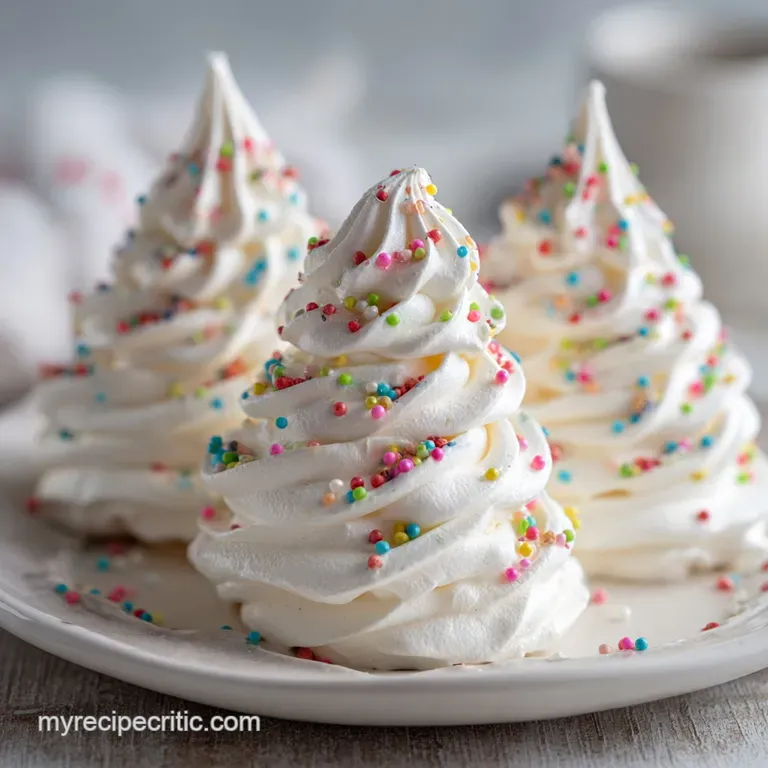
- Time: Active 20 minutes, Passive 1 hours 30 mins, Total 1 hours 50 mins
- Flavor/Texture Hook: Shatter crisp shell with a velvety vanilla bean heart
- Perfect for: Holiday cookie exchanges and edible centerpiece displays
- Master My Shatter Crisp Meringue Christmas Trees
- Science Behind the Stiff Peak Foundation
- Essential Specs for Festive Holiday Success
- Selecting Ingredients for This Snowy Forest
- Tools Required for Stable Piping Results
- Piping Your Forest One Tier at a Time
- Solving Texture Issues and Structural Failures
- Adaptations for Dietary Needs and Variations
- Scaling for Large Holiday Parties
- Preservation Secrets for Long Lasting Crispness
- Creative Ways to Present Your Forest
- Recipe FAQs
- 📝 Recipe Card
Master My Shatter Crisp Meringue Christmas Trees
There is nothing quite like the sound of a meringue shell cracking. It’s that distinct, sharp shatter that echoes through the kitchen when you take that first bite. I remember my first attempt at these Meringue Christmas Trees; I was so excited to show them off at a neighborhood swap, but I rushed the sugar.
I ended up with what looked like weeping green puddles rather than festive pines. It was a sticky, sad mess that taught me everything about patience and the chemistry of an egg white.
Since then, I’ve learned that the secret isn't just in the whisking it's in how the sugar behaves with the protein. When you get it right, the dough texture is glossy, thick, and holds its shape so well you could practically sculpt a statue with it.
These little trees are now my go to because they are incredibly light but pack a massive visual punch. They look like you spent hours at a professional patisserie, but really, we’re just playing with air and sugar.
We're going for a forest green hue that looks sophisticated, not neon. The addition of real vanilla bean paste makes these taste like high end marshmallows rather than just plain sugar. Trust me, once you see that glossy sheen in the bowl, you'll know you’ve nailed it.
Let's get into the details of why this specific method works every single time.
Science Behind the Stiff Peak Foundation
Protein Denaturation: Whisking unfolds egg proteins, which then bond together to trap air bubbles in a stable, web like structure. Sugar Dehydration: During the long, cool bake, moisture evaporates slowly, leaving behind a rigid sugar skeleton that provides the signature shatter.
Chef Tip
Before you even crack an egg, wipe your mixing bowl and whisk with a paper towel dipped in lemon juice or white vinegar. Even a microscopic speck of fat from a previous meal will cause your meringue to collapse and stay soupy.
The Physics of the Peak
When we talk about "stiff peaks," we are actually looking for the moment the protein network is strong enough to support its own weight against gravity. Adding the sugar too early prevents the proteins from stretching, while adding it too late means it won't dissolve properly.
The goal is a velvety, grit free foam that looks like wet paint.
Moisture and Humidity Control
Meringue is essentially a "sugar sponge." If it’s a rainy day, the sugar will pull moisture out of the air, making your trees sticky or soft. If you live in a humid climate, you might need to leave them in the oven for an extra hour after it's turned off to ensure they are fully cured.
| Baking Method | Drying Time | Texture Result | Best Use |
|---|---|---|---|
| Standard Oven | 90 minutes | Shatter crisp shell | Long term storage |
| Convection Oven | 75 minutes | Evenly dried | High volume batches |
| Dehydrator | 4 hours | Most consistent | Professional finish |
Choosing the right method depends on your equipment, but the standard oven is the most repeatable for home cooks. The low temperature is non negotiable; we aren't "cooking" these as much as we are drying them out to preserve that forest green color without any browning.
Essential Specs for Festive Holiday Success
To get these trees looking uniform, we have to be precise about the temperature and the weight of our ingredients. Using a scale for the egg whites is a total move it ensures the sugar to protein ratio is spot on every time.
- Weight Check: 120g of egg whites (from approx. 4 large eggs).
- Temperature Check:200°F (93°C) for a slow, gentle dry.
- Visual Cue: The trees should peel away from the parchment paper effortlessly when done.
If you find your trees are still tacky after 90 minutes, don't panic. Just keep the oven door closed and let them sit. This "carryover drying" is often where the magic happens. It’s similar to how we let a Soft Christmas Cookies recipe rest on the pan to finish setting its structure.
Selecting Ingredients for This Snowy Forest
The ingredient list for Meringue Christmas Trees is short, which means every component has to behave perfectly. I always opt for superfine caster sugar because it dissolves into the egg whites much faster than regular granulated sugar, preventing that dreaded grittiness.
- 4 Large Egg Whites (120g): Must be room temperature to achieve maximum volume. Why this? Room temp proteins stretch further than cold ones.
- 1 cup (225g) Caster Sugar: Provides the structure and sweetness. Why this? Fine crystals dissolve rapidly without over beating the eggs.
- 0.5 tsp Cream of Tartar: An acidic stabilizer. Why this? It prevents the egg proteins from bonding too tightly and collapsing.
- 1 tsp Vanilla Bean Paste: For flavor and those gorgeous little black specks. Why this? Adds depth without the thinning effect of watery extracts.
- 0.25 tsp Fine Sea Salt: To balance the intense sweetness.
- 2 drops Forest Green Gel Food Coloring: For a vibrant, deep color.
- Gold Star Sprinkles & Nonpareils: For the festive finish.
| Original Ingredient | Substitute | Why It Works |
|---|---|---|
| Caster Sugar | Granulated Sugar (Pulsed) | Pulse regular sugar in a blender for 30 seconds to make it fine. |
| Cream of Tartar | Lemon Juice (1 tsp) | Provides the same acidic stabilization for the protein web. |
| Vanilla Bean Paste | Vanilla Extract | Same flavor, though you lose the visual bean specks. |
The key here is the gel coloring. Never use liquid food coloring in meringue. The extra water can completely ruin the dough texture, turning your stiff peaks into a runny mess that won't hold the tree shape.
Tools Required for Stable Piping Results
You don't need a professional kitchen, but a stand mixer is your best friend here. Whisking meringue by hand is a workout I wouldn't wish on anyone. You’ll also need a large piping bag and a star tip I prefer the Wilton 1M or 2D for that classic evergreen look.
Make sure your baking sheets are lined with high-quality parchment paper or silicone mats. I’ve found that cheap parchment can sometimes stick to the sugar, causing the bottoms of your trees to tear when you try to lift them. If you’re planning a full holiday spread, these look beautiful next to a Christmas Fruit Wreath recipe to balance the sweetness with fresh acidity.
Piping Your Forest One Tier at a Time
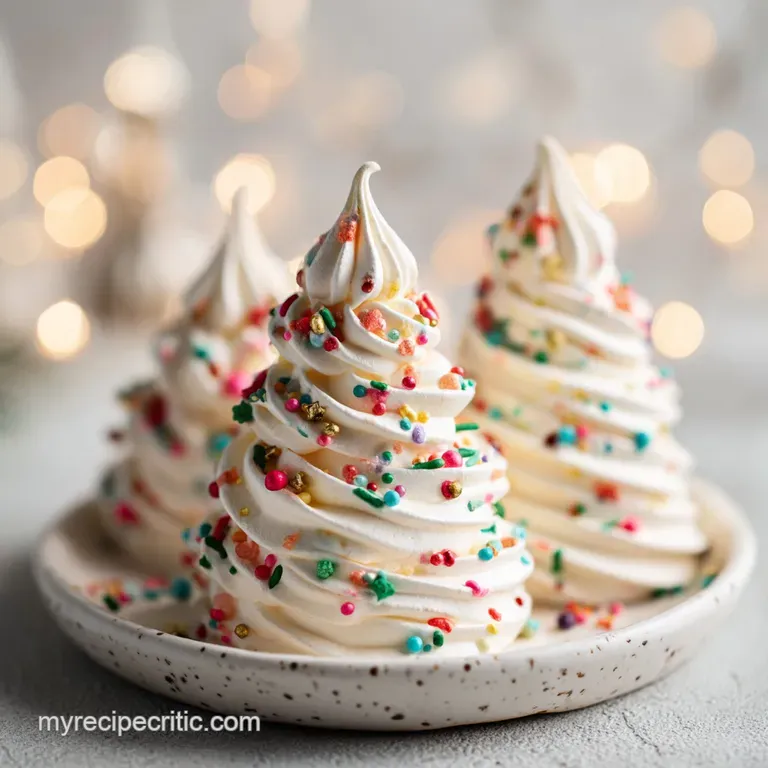
- Prep the bowl. Wipe your mixing bowl and whisk with lemon juice. Preheat your oven to 200°F.
- Whisk the whites. Place 120g egg whites and 0.5 tsp cream of tartar in the bowl. Whisk on medium low until foamy. Note: Starting slow builds smaller, more stable bubbles.
- Increase speed. Move to medium high until soft peaks form. This is when the whisk leaves a trail that gently slumps over.
- Slow add sugar. Add 225g caster sugar one tablespoon at a time while whisking. until the mixture is glossy and stiff.
- Test the grit. Rub a bit of the meringue between your fingers. It should feel velvety, not grainy.
- Flavor and color. Fold in 1 tsp vanilla paste, 0.25 tsp salt, and 2 drops green gel. until the color is streak free.
- Load the bag. Fit a star tip into your bag and fill it with the green meringue.
- Pipe the base. Hold the bag vertically. Squeeze to create a wide base, then stop pressure and pull up.
- Build the tiers. Pipe two smaller layers on top of the base to form a tapered tree shape.
- Decorate and dry. Top with a gold star and nonpareils. Bake for 90 minutes until firm and dry to the touch.
Chef Tip
If you're struggling with the piping bag sliding around, wrap a rubber band around the top. This keeps the pressure consistent and prevents the meringue from oozing out the back onto your hands.
Solving Texture Issues and Structural Failures
Meringue is temperamental, but most issues happen for very specific reasons. If your trees are turning tan or brown, your oven is simply too hot. Every oven is different, so if you suspect yours runs hot, prop the door open with a wooden spoon to let some heat escape.
Correcting Grainy Sugar Texture
If you can still feel sugar crystals when you rub the meringue between your fingers, you haven't whisked long enough. Sugar that isn't dissolved will caramelize and "weep" in the oven, creating little beads of syrup on the outside of your trees. To fix this, just keep whisking!
You can't really over beat meringue once the sugar is in; the sugar actually protects the proteins from breaking.
Solving the Sticky Surface Dilemma
Sticky meringue is almost always a humidity issue. If your trees come out of the oven and immediately feel tacky, they haven't dried enough. Put them back in a turned off oven for another hour. It’s a similar logic to how we manage the moisture in a Christmas Sangria Festive recipe — it’s all about the balance of liquid and solids.
| Problem | Root Cause | Solution |
|---|---|---|
| Weeping (Syrup) | Undissolved sugar | Whisk longer or use finer caster sugar next time. |
| Cracking | Cooling too fast | Leave the trees in the oven with the door ajar to cool. |
| Browning | Oven temp too high | Reduce heat to 175°F and extend drying time. |
Common Mistakes Checklist - ✓ Never get a drop of yolk in the whites (fat destroys the foam). - ✓ Use a metal or glass bowl (plastic hides grease). - ✓ Add sugar very slowly (one tablespoon at a time is key). - ✓ Don't open the oven door for the first hour of drying.
- ✓ Store in an airtight container immediately once cooled.
Adaptations for Dietary Needs and Variations
While the classic recipe is naturally gluten-free and fat free, you might want to switch things up. If you're looking for a vegan version, you can replace the 120g of egg whites with the same weight of aquafaba (the liquid from a can of chickpeas).
You'll need to whisk it longer, but it creates a remarkably similar "dough" texture.
Flavor Map for Variations
- Peppermint: Swap vanilla for 0.5 tsp peppermint extract and use red gel for "Candy Cane Trees."
- Chocolate: Fold in 2 tbsp of sifted cocoa powder at the very end for "Muddy Pines."
- Citrus: Add 1 tsp of lemon zest for a bright, tangy contrast to the sugar.
- Sweet
- Caster sugar and vanilla paste
- Salt
- Fine sea salt to cut the cloying edge
- Acid
- Cream of tartar for structural stability
- Aroma
- Pure vanilla bean bean specks
Scaling for Large Holiday Parties
If you need to make a massive forest, scaling Meringue Christmas Trees is relatively simple, but you have to be careful with the spices and liquids.
To Double the Batch (48 servings): - Use 240g egg whites and 450g sugar. - Keep the cream of tartar at 0.75 tsp (don't fully double). - Reduce vanilla to 1.5 tsp to avoid adding too much liquid.
- Baking Tip: If using two racks, rotate them halfway through to ensure even airflow, or the bottom tray may stay soft.
To Half the Batch (12 servings): - Use 60g egg whites and 112g sugar. - Reduce baking time by about 15 minutes, but still check for that "peel away" cue.
Preservation Secrets for Long Lasting Crispness
The biggest enemy of meringue is moisture. Once these are cool, get them into an airtight container immediately. If left on the counter, they will start to soften within a few hours, losing that iconic shatter.
- Storage
- Store in an airtight container at room temperature for up to 2 weeks. Do not refrigerate, as the humidity in the fridge will turn them into mush.
- Freezing
- Surprisingly, you can freeze these! Place them in a single layer in a rigid container. They will keep for 2 months. When thawing, do not open the container until it reaches room temperature to prevent condensation from forming on the trees.
- Zero Waste
- If you have broken trees or "fails," crush them up! They make an incredible topping for ice cream or can be folded into whipped cream with berries for a quick Eton Mess.
Creative Ways to Present Your Forest
I love using these as part of a larger dessert landscape. You can "glue" them to a cake board using a little extra wet meringue to create a Meringue Christmas tree tower. It makes for a stunning, edible centerpiece that guests can pick apart as the night goes on.
Another fun idea is to place a single tree on top of a chocolate cupcake. It looks like a snowy mountain peak and adds a much needed crunch to a soft cake. If you're hosting a party, serve these alongside a festive punch.
They look particularly striking next to the vibrant reds of a holiday drink or the fresh greens of a fruit display. Just remember: keep them dry, keep them cool, and wait for that glorious shatter!
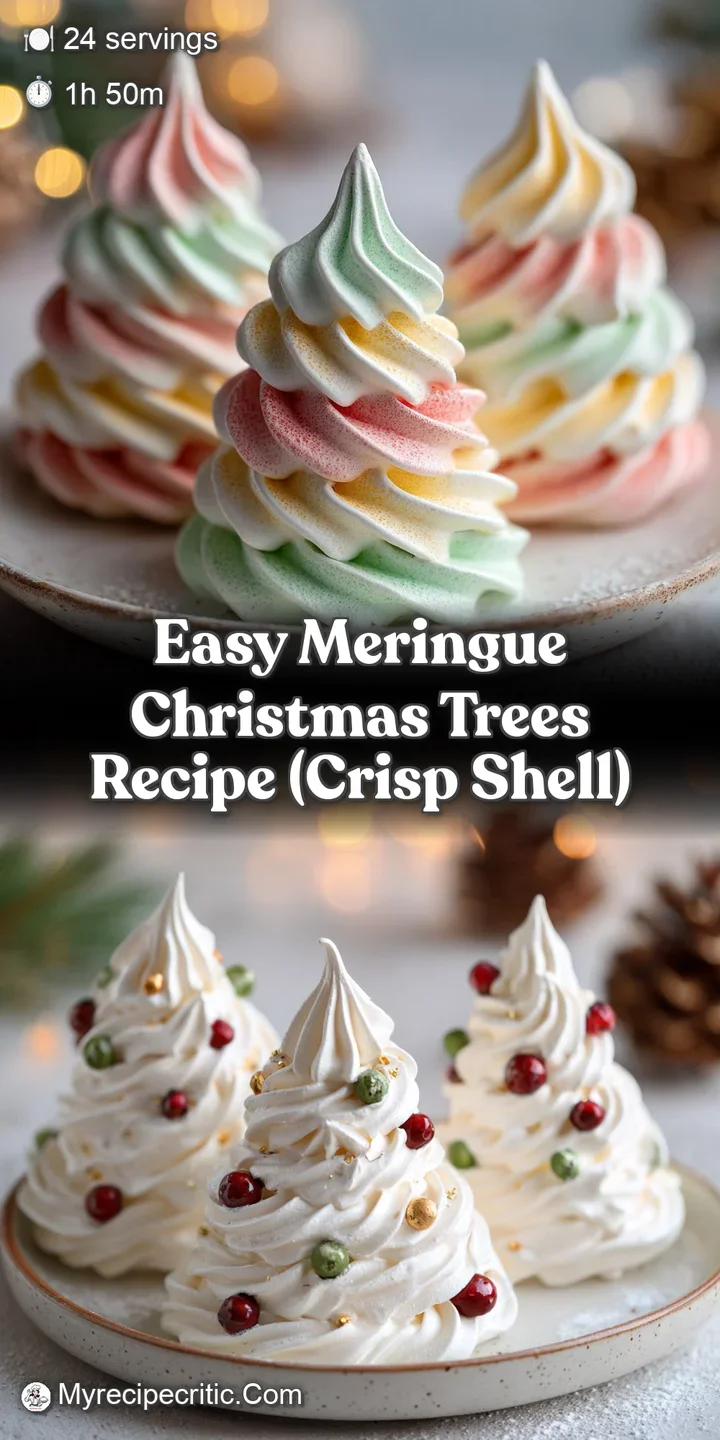
Recipe FAQs
Can I substitute granulated sugar for caster sugar in this recipe?
Yes, but process it first. Granulated sugar is too coarse and will leave a gritty texture unless you pulse it in a blender for about 30 seconds to achieve a fine consistency.
Why are my meringue trees turning sticky after cooling?
No, this indicates incomplete drying. Sticky meringue is nearly always caused by excess humidity in the air or insufficient baking time; put them back in the turned off oven to dry further.
How to ensure the egg whites whip to a stable stiff peak every time?
Wipe the bowl and whisk with vinegar or lemon juice first. Any trace of fat, even from your fingers, will prevent the proteins from unfolding correctly and trapping air effectively.
Is it true that liquid food coloring can ruin the meringue structure?
Yes, this is accurate. Liquid coloring introduces unnecessary water into the mixture, which destabilizes the foam; always use concentrated gel or paste food coloring for vibrant color without excess moisture.
How long should I bake Meringue Christmas Trees at 200°F?
Bake for 90 minutes, then leave them to cool in the oven. The goal is dehydration, not cooking, so a low temperature for a long period ensures the inside dries out completely while the exterior stays white.
What is the secret to getting the iconic shatter texture?
It relies on slow moisture evaporation under low heat. If you master the slow incorporation of sugar here, you build a robust sugar matrix that yields the signature crispness, much like the process used in our Classic Christmas Toffee recipe.
Can I make these trees ahead of time and store them for Christmas?
Yes, proper airtight storage is essential for longevity. Once completely cool, store them in a single layer in a rigid, airtight container at room temperature; avoid refrigeration due to high humidity.
Festive Meringue Christmas Trees
Ingredients:
Instructions:
Nutrition Facts:
| Calories | 51 kcal |
|---|---|
| Protein | 0.6 g |
| Fat | 0 g |
| Carbs | 12.5 g |
| Fiber | 0 g |
| Sugar | 12.4 g |
| Sodium | 25 mg |
