Silky Salmon Chowder in 30 Minutes
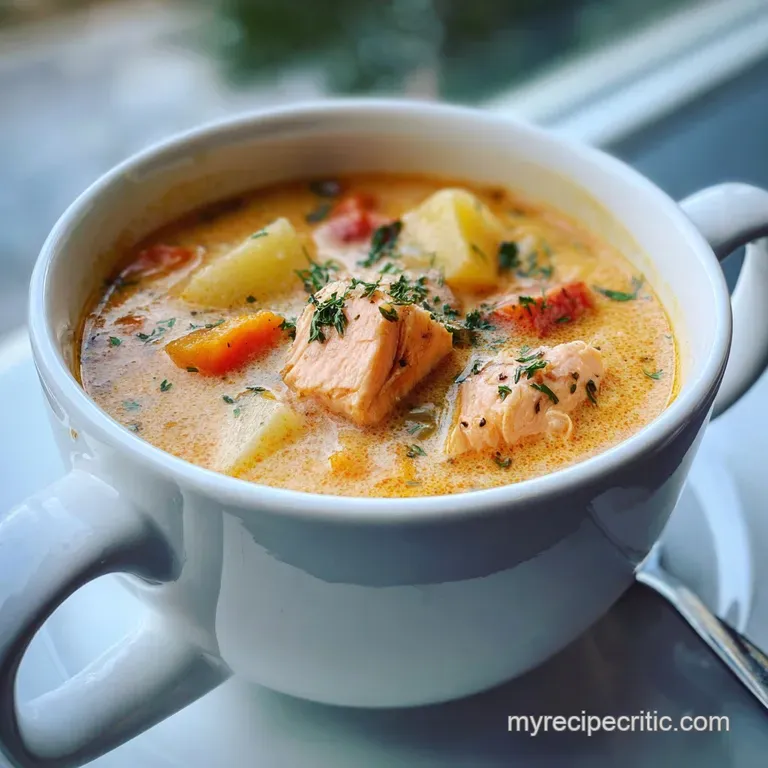
- Time: Active 10 minutes, Passive 20 minutes, Total 30 minutes
- Flavor/Texture Hook: Silky, buttery broth with shatter apart salmon flakes.
- Perfect for: A quick weeknight dinner that feels like a coastal getaway.
- Crafting the Most Velvety Salmon Chowder Possible
- The Science Behind Every Hearty Spoonful
- Component Analysis for the Best Results
- Pantry Staples and Smart Substitutions
- Essential Tools for a Smooth Soup
- Step by Step Toward Chowder Perfection
- Solving Common Soupy Setbacks
- Balancing Flavor Profiles to Your Taste
- Debunking Chowder Myths
- Safe Storage and Zero Waste Tips
- The Best Sides for This Bowl
- High in Sodium
- Recipe FAQs
- 📝 Recipe Card
Crafting the Most Velvety Salmon Chowder Possible
Have you ever noticed how some chowders feel like you're eating a bowl of heavy wallpaper paste, while others are so thin they might as well be tea? I spent a rainy Tuesday last October trying to find that "Goldilocks" middle ground.
The kitchen smelled like a seaside shack, and after three failed attempts that ended with curdled cream or overcooked fish, I finally hit the jackpot. The secret isn't just the cream; it's how you treat the potatoes.
This Salmon Chowder is designed to be a hug in a bowl, but a sophisticated one. We aren't going for that gloopy, flour heavy base you find in bread bowls at the wharf. Instead, we're using the natural starches from Yukon Gold potatoes to create a body that is velvety and lush without being heavy.
It's the kind of meal that makes you want to curl up on the sofa with a big spoon and forget that it’s actually cold outside.
We’ve all made the mistake of boiling the life out of salmon until it turns into grey, chewy nuggets. Trust me, I’ve been there. But by following this method, you’ll learn how to time the addition of the fish so it poaches in the residual heat of the broth.
You’ll get large, moist flakes that melt on your tongue. Let's get into the details so you can nail this on your first try.
The Science Behind Every Hearty Spoonful
Starch Gelatinization: As the 450g of Yukon Gold potatoes simmer in the 960ml of seafood stock, they release amylopectin starches that swell and thicken the liquid naturally.
Protein Denaturation Control: Adding the 680g of salmon at the very end prevents the muscle fibers from tightening and squeezing out moisture, keeping the fish flaky.
Aromatic Emulsification: Sautéing the leek and celery in 28g of unsalted butter creates a fat base that helps carry the fat soluble flavor compounds of the dried thyme throughout the entire pot.
| Method | Time | Texture | Best For |
|---|---|---|---|
| Stovetop | 30 minutes | Bright, flaky, vibrant | Quick weeknight meals |
| Slow Cooker | 4 hours (Low) | Deeply infused, soft | Set and forget prep |
| Pressure Cooker | 10 minutes | Very thick, integrated | Maximum time saving |
While the stovetop is my go to for preserving the delicate texture of the salmon, the slow cooker method is a lifesaver when you're busy. If you go the slow cooker route, just remember to stir in the heavy cream and salmon during the last 20 minutes to avoid a curdled mess.
It’s all about protecting those fats and proteins from excessive heat.
Component Analysis for the Best Results
| Ingredient | Science Role | Pro Secret |
|---|---|---|
| Yukon Gold Potatoes | Natural thickener | Don't peel them; the skins add a rustic, earthy flavor profile. |
| Leeks | Sulfur aromatics | Use only the white parts for a sweeter, less fibrous bite. |
| Seafood Stock | Liquid umami | Roast your salmon skins in the oven first, then simmer in water if you're out of stock. |
| Heavy Cream | Fat emulsion | Ensure the soup isn't at a rolling boil when adding to prevent splitting. |
A quick tip on the leeks: they are notoriously sandy. I like to slice mine first and then dunk the rings in a bowl of cold water. The sand sinks to the bottom, and you can just scoop the clean leeks off the top. It’s a small step that saves you from a gritty disaster later.
Pantry Staples and Smart Substitutions
This recipe relies on the high fat content of the salmon and cream to carry the flavors. If you find yourself missing an ingredient, don't panic. Much like the technique used in my PanSeared Salmon Recipe, the key is managing the heat, regardless of what's in the pot.
- 2 tbsp (28g) Unsalted Butter: You can swap this for olive oil, but you'll lose that classic "chowder" richness.
- 1 large Leek: A yellow onion works in a pinch, though it’s sharper and less floral.
- 2 stalks Celery: Fennel bulb is a brilliant substitute that adds a subtle anise note.
- 3 cloves Garlic: Use 1 tsp of garlic powder if you're out of fresh, but add it with the thyme.
- 1 tsp Dried Thyme: Fresh thyme is great, just use three times the amount (1 tbsp).
- 1.5 lbs (680g) Fresh Salmon Fillet: Frozen salmon works perfectly; just thaw it completely and pat it bone dry. Why this? Salmon provides the essential Omega-3 fats that create a rich, satisfying mouthfeel.
- 1 lb (450g) Yukon Gold Potatoes: Red potatoes stay firm, while Russets will fall apart. Yukon Golds are the perfect middle ground.
- 4 cups (960ml) Seafood Stock: Chicken stock is a fine substitute, but vegetable stock can be a bit too sweet.
- 1 cup (150g) Sweet Corn: Frozen, fresh, or canned (drained) all work here.
- 1 cup (240ml) Heavy Cream: Whole milk works but the chowder will be significantly thinner.
- 2 tbsp Fresh Dill: Don't use dried dill; it tastes like hay. Use parsley or chives instead.
- 1 tbsp Lemon Juice: A splash of white wine vinegar provides the same necessary acidity.
| Original Ingredient | Substitute | Why It Works |
|---|---|---|
| Heavy Cream (240ml) | Full fat Coconut Milk | Similar fat content. Note: Adds a distinct tropical flavor to the dish. |
| Seafood Stock (960ml) | Clam Juice + Water | Provides that briny, oceanic depth essential for a true chowder feel. |
| Yukon Gold Potatoes | Cauliflower Florets | Reduces carbs significantly. Note: Results in a much thinner consistency. |
If you decide to go the low carb route with cauliflower, I highly recommend blending a small portion of the cooked cauliflower with some of the broth before adding the cream. This mimics the thickness you lose by skipping the potatoes.
Essential Tools for a Smooth Soup
You don't need a professional kitchen, but a heavy bottomed pot is non negotiable. I use a 5 liter Dutch oven (like a Le Creuset or Lodge) because it holds heat evenly. This prevents the bottom of your chowder from scorching while the potatoes are simmering.
A sharp chef's knife is also your best friend here. Since we want 1 inch (2.5cm) salmon cubes and 1/2 inch (1.25cm) potato cubes, uniform cutting ensures everything cooks at the same rate. If your potatoes are all different sizes, some will be mush while others are still crunchy.
Nobody wants crunchy potatoes in their chowder.
step-by-step Toward Chowder Perfection
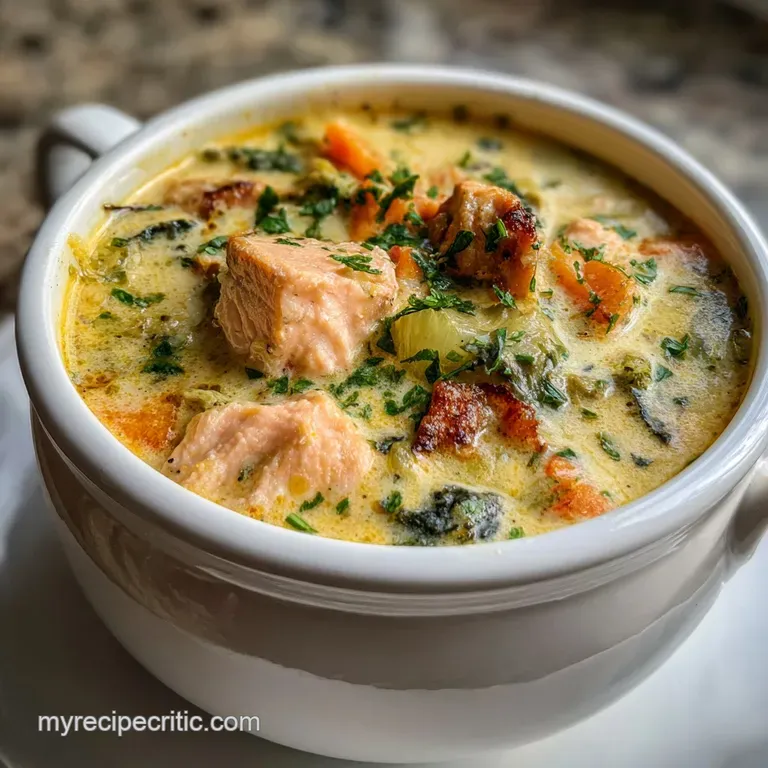
- Sauté the aromatics. Melt the 28g of unsalted butter in a large pot over medium heat. Add the sliced leek and diced celery. Note: Cook them for about 5 minutes until they are soft and translucent, but not browned.
- Infuse the base. Stir in the 3 cloves of minced garlic and 1 tsp of dried thyme. Cook for 1 minute until the kitchen smells like a herb garden.
- Simmer the potatoes. Pour in the 960ml of seafood stock and add the 450g of cubed Yukon Gold potatoes.
- Cook until tender. Bring the liquid to a gentle boil, then reduce heat to low. Simmer for 10-12 minutes until the potatoes are fork tender.
- Add the texture. Stir in the 150g of sweet corn, 1 tsp of sea salt, and 1/2 tsp of freshly cracked black pepper.
- Temper the cream. Pour the 240ml of heavy cream into the pot slowly while stirring. Note: This prevents the cold cream from shocking the hot broth and curdling.
- Poach the salmon. Gently fold in the 680g of cubed salmon.
- Finish with heat. Cook for 3-5 minutes until the salmon turns opaque and flakes easily.
- Brighten the bowl. Remove from heat and stir in the 1 tbsp of lemon juice and 2 tbsp of fresh dill.
- Rest and serve. Let the chowder sit for 2 minutes before ladling into bowls to allow the flavors to marry.
Chef's Tip: If you want a thicker base without using flour, take a potato masher and crush about 10% of the potatoes directly in the pot before adding the salmon. This releases extra starch for a "shatter proof" creaminess.
Solving Common Soupy Setbacks
Why Your Salmon Is Rubbery
If the salmon feels like a bouncy ball, it was boiled for too long. Salmon is a delicate protein that finishes cooking very quickly in hot liquid. Always add it at the very end and keep the heat low.
Why Your Broth Split
Dairy often curdles if it hits a boiling liquid or if the acid (lemon juice) is added too early. Always lower the heat before adding the cream and wait until the very end to stir in the lemon.
| Problem | Root Cause | Solution |
|---|---|---|
| Thin, watery broth | Not enough starch release | Mash a few potatoes against the side of the pot to thicken. |
| Overly salty taste | Stock reduction | Add a splash of water or more cream to balance the levels. |
| Fishy aftertaste | Low quality stock or old fish | Add an extra squeeze of lemon or a pinch of cayenne pepper. |
Common Mistakes Checklist
- ✓ Don't skip the leeks; they provide a subtle sweetness that onions can't match.
- ✓ Ensure the salmon is skinless; the skin will turn slimy and grey in the broth.
- ✓ Use a seafood stock you actually like the taste of; it's the foundation of the dish.
- ✓ Never let the soup reach a rolling boil once the heavy cream has been added.
- ✓ Cut your potatoes small (1/2 inch) so they cook through in the 10 minute window.
Balancing Flavor Profiles to Your Taste
If you are cooking for a crowd, you might need to scale this up. For doubling the recipe, use a larger 8 liter pot. You don't need to double the salt or spices exactly; start with 1.5x the amount and adjust at the end. The liquid can also be reduced by about 10% when doubling to ensure the flavor stays concentrated.
If you’re looking for a different vibe, you can easily adapt this base. For another take on seasoned fish, you might enjoy the flavors in this HonkyTonk HerbCrusted Salmon recipe.
- If you want it spicy: Add 1/2 tsp of smoked paprika or a dash of hot sauce.
- If you want it smoky: Sauté two strips of chopped bacon with the leeks.
- If you want it lighter: Replace half the heavy cream with whole milk or half and half.
Debunking Chowder Myths
One common myth is that you must use a flour based roux to make a "real" chowder. While New England style often uses flour, a traditional coastal salmon chowder relies on the cream and potatoes for body. Using flour can actually mask the delicate flavor of the fresh salmon.
Another misconception is that you should cook the salmon separately and add it to the bowl. This is a missed opportunity! Poaching the salmon in the broth allows the juices from the fish to infuse the liquid, creating a much deeper flavor profile that you just can't get by adding pre cooked fish.
Safe Storage and Zero Waste Tips
This chowder stays fresh in the fridge for up to 3 days. Store it in an airtight container as soon as it reaches room temperature. When reheating, do it gently on the stovetop over low heat. Do not let it boil, or the cream will separate and the salmon will toughen up.
I don't recommend freezing this dish, as the potatoes often turn grainy and the cream can split upon thawing.
For a zero waste approach, save your leek tops! The dark green parts are too tough for the chowder, but they are incredible for making homemade vegetable stock. Also, if you have leftover salmon scraps that weren't quite big enough for cubes, toss them in anyway they'll melt into the broth and add even more richness.
The Best Sides for This Bowl
A heavy chowder needs something to cut through the richness. I almost always serve this with a big hunk of crusty sourdough or a batch of warm oyster crackers. The acidity of the sourdough is the perfect foil for the heavy cream.
If you want something green on the side, a simple arugula salad with a sharp vinaigrette works wonders. The peppery bite of the greens wakes up your palate between spoonfuls of the velvety soup.
It transforms a simple bowl of soup into a full, balanced meal that feels like you've put in way more effort than 30 minutes.
High in Sodium
845 mg mg of sodium per serving (37% of daily value)
The American Heart Association recommends limiting sodium intake to about 2,300mg per day for overall cardiovascular health.
Tips to Reduce Sodium in Your Salmon Chowder
-
Low-Sodium Broth-30%
Replace the regular seafood stock with a low-sodium or no-salt added seafood broth. This single swap can significantly reduce the overall sodium content.
-
Reduce Sea Salt-25%
Cut back on the amount of sea salt added to the chowder. Start with half a teaspoon and adjust to taste, keeping in mind the other flavors present.
-
Enhance with Lemon-10%
Increase the lemon juice from 1 tbsp to 2 tbsp. The acidity brightens the flavor and can help compensate for the reduced salt.
-
No-Salt Potatoes-10%
Ensure that the Yukon Gold potatoes are cooked in unsalted water before adding to the chowder. This prevents them from absorbing extra sodium.
-
Flavor with Herbs
Experiment with other fresh herbs like parsley, chives, or tarragon, in addition to the dill and thyme. These herbs enhance flavor without adding any sodium.
Recipe FAQs
Can I substitute milk for heavy cream in this chowder?
No, you should use heavy cream. Whole milk will result in a significantly thinner chowder because it lacks the necessary fat content to create a rich, velvety mouthfeel.
What is the best way to prevent the salmon from turning rubbery?
Add the cubed salmon last and keep the heat low. The fish should gently poach in the residual heat of the broth for only 3-5 minutes until just opaque; boiling it aggressively will cause the proteins to seize up.
How do I achieve a thick chowder base without using flour or a roux?
Mash some of the cooked potatoes against the side of the pot. The natural starch released from the Yukon Golds will gelatinize, thickening the broth beautifully without masking the fish flavor.
Is it true that I must use only fresh salmon for the best results?
No, frozen salmon works perfectly fine. Just ensure you thaw it completely and pat the cubes bone dry before adding them to the simmering broth for proper cooking.
How long can I safely store leftovers of this salmon chowder?
Up to 3 days in an airtight container in the refrigerator. When reheating, use low heat; avoid bringing it to a boil, as the cream may split and the salmon will toughen.
What technique should I use if I want a deeper flavor profile from my broth?
Poaching the salmon directly in the broth is key. This allows the natural juices from the fish to infuse the liquid as it cooks, which is a flavor management principle also critical for getting perfectly tender fish in our 30Minute Seared Salmon recipe.
What is the best way to clean leeks before sautéing them for the aromatics?
Slice the leeks and submerge the rings in a bowl of cold water. The sand and grit will sink to the bottom, allowing you to simply scoop the clean leek pieces off the surface.
Creamy Salmon Chowder Recipe
Ingredients:
Instructions:
Nutrition Facts:
| Calories | 615 kcal |
|---|---|
| Protein | 31.8 g |
| Fat | 40.2 g |
| Carbs | 26.4 g |
| Fiber | 3.2 g |
| Sugar | 5.1 g |
| Sodium | 845 mg |
