Birthday Cake: Bakery-Quality Crumb
- Time: Active 45 minutes, Passive 35 minutes, Total 80 minutes
- Flavor/Texture Hook: Silky vanilla bean crumb with a melt in-your mouth Swiss Meringue finish
- Perfect for: Milestone celebrations, weekend projects, and beginner bakers seeking bakery results
- Why This Velvety Sponge Is The Best Birthday Cake
- The Science of Why it Works
- Comprehensive Ingredient Analysis And Pro Insights
- Selecting Premium Components For Your Elements
- The Essential Gear For Flawless Layers
- Step-By-Step Guide To Vanilla Base
- Pro Fixes For Flawless Foundations
- Creative Variations For Unique Ideas
- Storage And Make-Ahead Strategies
- Curating The Ultimate Celebration Menu
- Birthday Cake FAQs
- 📝 Recipe Card
Why This Velvety Sponge Is The Best Birthday Cake
Have you ever spent hours in the kitchen only to pull a dry, crumbly mess out of the oven? We've all been there, and honestly, it's heartbreaking when it’s for someone’s special day. I remember making a cake for my sister once that was so dense we practically needed a saw to get through it.
That’s exactly why I moved away from the standard creaming method and fell in love with this specific approach. It’s all about the texture that tight, soft crumb that feels like a cloud but still has enough structure to hold up under layers of silky frosting.
The secret to this Birthday Cake lies in the way we handle the flour. Most recipes have you whip butter and sugar together until fluffy, but we're going to do things a bit differently. We’re going for a velvety feel that mimics those expensive boutique bakeries.
When you pull these layers out of the oven, the aroma of vanilla bean paste and toasted sugar will fill your entire home. It’s a scent that promises a celebration even before the first candle is lit.
We’re not just making food; we’re making a core memory. This recipe is designed to be repeatable and reliable, so you don't have to stress about the "behave" of your batter.
Whether you're looking for unique birthday cake ideas or just want a classic that actually tastes as good as it looks, this is your new gold standard. Let’s get into the details of why this method is a total win for your kitchen.
The Science of Why it Works
Fat Coated Proteins: By mixing the butter directly into the dry ingredients (reverse creaming), we coat the flour in fat before any liquid is added. This physical barrier prevents the development of long gluten chains, resulting in a tender, velvety crumb rather than a bread like texture.
Acidic Tenderization: The inclusion of full fat sour cream introduces lactic acid, which breaks down tough gluten strands. This chemical interaction ensures the cake remains moisture rich even after it has cooled completely.
| Cook Method | Time | Texture | Best For |
|---|---|---|---|
| Reverse Cream (Classic) | 35 minutes | Velvety, tight crumb, professional | Layer cakes, carving, tiered displays |
| One Bowl (Fast) | 28 minutes | Coarser crumb, slightly springy | Sheet cakes, casual family snacks |
| All in-One (Cold Start) | 40 minutes | Dense, pound cake like | Bundt pans, heavy fruit additions |
Choosing the classic reverse creaming method is the difference between a "good" home bake and a "wow" celebration cake. While the fast method works in a pinch, it often leads to uneven rising and a crumb that falls apart when sliced.
The classic method takes a few extra minutes of patience but yields a sponge that behaves perfectly under the weight of a thick Swiss Meringue buttercream.
Comprehensive Ingredient Analysis And Pro Insights
When you start gathering your elements, pay close attention to the temperatures. I always tell people that temperature is an ingredient in itself. If your butter is too cold, it won't coat the flour properly; if your egg whites are chilly, they’ll break your emulsion.
We want everything to be in that "goldilocks" zone of room temperature to ensure the batter becomes a smooth, pale ivory silk.
| Ingredient | Science Role | Pro Secret |
|---|---|---|
| Cake Flour (420g) | Low protein structure | Sift twice to introduce air and prevent clumps |
| Unsalted Butter (225g) | Fat based moisture | Ensure it's 65°F pliant but not greasy or melting |
| Sour Cream (120g) | Fat and acidity | Use full fat only; the fat stabilizes the crumb |
| Egg Whites (6 large) | Structural lift | Fresh whites provide a cleaner vanilla flavor than yolks |
Using cake flour is non negotiable here if you want that aesthetic birthday cake look with a stark white interior. All purpose flour has too much protein, which leads to a darker, tougher sponge. Much like the base of The Purest White recipe, the goal is a delicate balance between lightness and strength.
Selecting Premium Components For Your Elements
To get the best results, we need to be specific about what goes into the bowl. This isn't the time for "low-fat" substitutes or imitation extracts. We want the real deal.
- 420g cake flour: This has a lower protein content (usually 7-9%) which is the key to a tender bite.
- 400g granulated sugar: This provides sweetness and helps with browning through the Maillard reaction.
- 1.5 tbsp baking powder: Our primary leavening agent for that necessary lift.
- 1 tsp fine sea salt: This cuts through the sugar and intensifies the vanilla notes.
- 225g unsalted butter: It must be softened to about 65°F. It should hold a fingerprint but not look shiny.
- 6 large egg whites: Room temperature is vital for a smooth emulsion.
- 180ml whole milk: The liquid base for our hydration.
- 120g full fat sour cream: Provides the moisture and tang that keeps the cake fresh for days.
- 2 tsp vanilla bean paste: Using paste instead of extract gives you those beautiful little black flecks.
- 5 large egg whites (buttercream): For the Swiss Meringue base.
- 300g granulated sugar (buttercream): To stabilize the meringue.
- 450g unsalted butter (buttercream): Cubed and cool (around 60°F).
- 1 tbsp vanilla extract: For the final flavor punch.
| Original Ingredient | Substitute | Why It Works |
|---|---|---|
| Cake Flour (1 cup) | AP Flour (3/4 cup) + Cornstarch (2 tbsp) | Cornstarch lowers the protein level. Note: Crumb will be slightly heartier than true cake flour. |
| Sour Cream | Full fat Greek Yogurt | Similar acidity and fat content. Note: Yogurt is thicker; don't overmix. |
| Vanilla Bean Paste | Vanilla Extract (1:1) | Same flavor profile. Note: You lose the visual aesthetic of the bean flecks. |
If you find yourself out of sour cream, don't panic. The Greek yogurt swap is an old trick I've used dozens of times. However, if you're looking for that deep, rich chocolate alternative for another occasion, the Big Ol Texas recipe is a fantastic comparison for how different fats behave in different sponges.
The Essential Gear For Flawless Layers
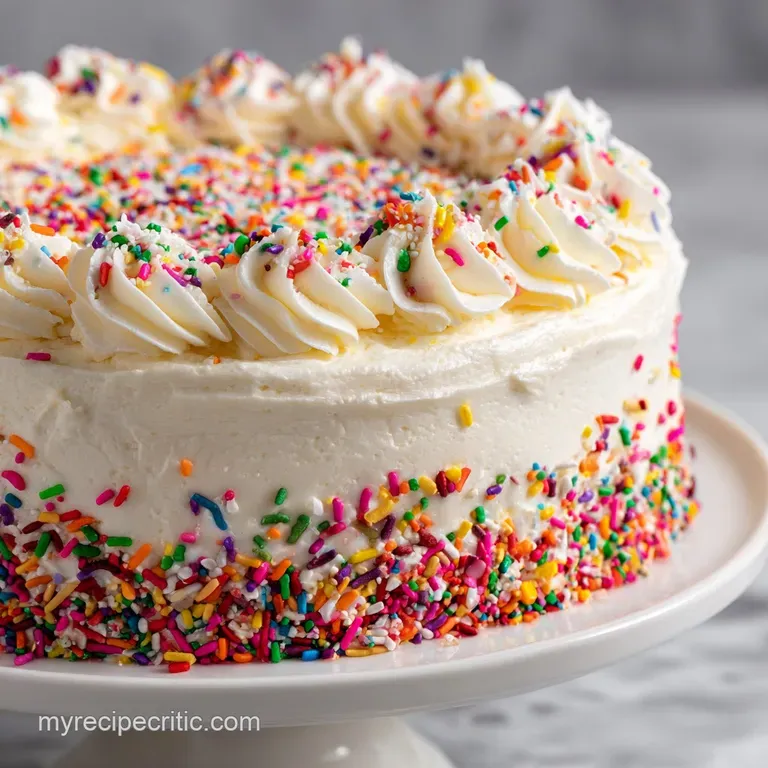
To execute this properly, you’ll need a few specific tools. I highly recommend a digital kitchen scale. Measuring flour by the cup is a gamble you can end up with 20% more flour than intended just by how tightly you pack the scoop.
Weight is the only way to ensure the Birthday Cake turns out exactly the same every single time.
You’ll also want three 8 inch round cake pans. I prefer light colored aluminum pans because they conduct heat evenly. Dark pans tend to brown the edges too quickly, leaving you with a "crust" that ruins the aesthetic.
A stand mixer, such as a KitchenAid, is also a massive help, especially when it comes to the Swiss Meringue buttercream which requires about 10-15 minutes of continuous whisking.
step-by-step Guide To Vanilla Base
Phase 1: Prepping for Success
Preheat your oven to 350°F. Grease three 8 inch cake pans and line the bottoms with parchment paper. Note: Parchment is the only way to guarantee the cake won't stick. Ensure your butter, egg whites, and milk have been sitting out for at least 60 minutes.
Phase 2: The Reverse Creaming Method
In the bowl of your stand mixer, whisk together the 420g cake flour, 400g sugar, baking powder, and salt. Add the 225g softened butter one cube at a time while the mixer is on low. Mix until the texture looks like coarse, damp sand. This should take about 2-3 minutes.
Phase 3: Incorporating the Liquids
In a separate jug, whisk together the 180ml milk, 120g sour cream, 6 egg whites, and 2 tsp vanilla bean paste. With the mixer on low, slowly pour half of this mixture into the dry ingredients. Increase speed to medium and beat for 90 seconds until the batter looks pale and aerated.
Scrape the bowl, then add the remaining liquid in two batches, mixing just until combined.
Phase 4: The Golden Bake
Divide the batter evenly between the three pans (about 450g per pan if using a scale). Bake for 30-35 minutes until the tops spring back when touched and a toothpick comes out clean. You should smell the sweet, floral scent of toasted vanilla radiating from the oven.
Let them cool in the pans for 10 minutes before flipping onto a wire rack.
Phase 5: The Swiss Meringue Frosting
Whisk the 5 egg whites and 300g sugar in a heatproof bowl over a pot of simmering water. Whisk constantly until the sugar granules have completely melted and the mixture is hot (160°F).
Transfer to a stand mixer and whisk on high until a stiff, glossy meringue forms and the bowl feels cool to the touch.
Phase 6: Emulsifying the Butter
Switch to the paddle attachment. Add the 450g cool, cubed butter one piece at a time on medium speed. Note: It might look curdled halfway through; just keep beating. Once smooth, add the vanilla extract and salt.
Beat on low for 2 minutes until the frosting is silky and air bubble free.
Phase 7: Assembly and Styling
Level your cooled cakes with a serrated knife. Place the first layer on a stand, top with a generous cup of buttercream, and repeat. Apply a thin "crumb coat" of frosting to the outside and chill for 20 minutes. This creates the perfect canvas for your final "aesthetic birthday cake" finish.
Pro Fixes For Flawless Foundations
Even with the best instructions, baking can be fickle. The most common issue I see is people rushing the cooling process. If you frost a cake that is even slightly warm, that beautiful Swiss Meringue will turn into a puddle of melted butter instantly. Patience is your most important tool in this section.
Fixing Sunk Cake Centers
If your cake dips in the middle, it’s usually because the oven door was opened too early or the leavening agent was expired. The rush of cold air collapses the delicate air pockets before the structure has set.
Repairing Soupy Frosting Textures
If your buttercream looks like soup after adding the butter, your meringue was likely still too warm. Don't throw it out! Put the whole bowl in the fridge for 15 minutes, then beat it again. It will come together, I promise.
| Problem | Root Cause | Solution |
|---|---|---|
| Dense, heavy crumb | Overmixing after adding liquids | Mix only until just combined; stop once streaks disappear. |
| Cake sticking to pan | No parchment or greased poorly | Always use parchment rounds; run a knife around the edge while warm. |
| Buttercream curdled | Butter was too cold | Continue beating on medium high; the friction will warm it up. |
Common Mistakes Checklist
- ✓ Using "cold" eggs (they will seize the butter and ruin the emulsion)
- ✓ Measuring flour by volume instead of weight (leads to dry, tough cake)
- ✓ Opening the oven door before the 25 minute mark (causes sinking)
- ✓ Using expired baking powder (results in a flat, dense sponge)
- ✓ Not sifting the cake flour (creates small flour clumps in the finished crumb)
Creative Variations For Unique Ideas
Once you've mastered the base, you can start looking for unique birthday cake ideas to make it your own. For a "kawaii birthday cake," use gel food coloring to dye the layers pastel pink or mint green.
For "birthday cakes for adults," try brushing the layers with a simple syrup infused with elderflower or bourbon for a sophisticated flavor profile.
If you're craving something different, like a nut forward profile, you might enjoy the Pistachio Dream Pound recipe; it uses a similar fat to flour ratio but with a distinct flavor twist.
Chef's Tip: To get a perfectly white cake, add a tiny drop of purple gel coloring to your yellow toned buttercream. The purple neutralizes the yellow of the butter, leaving you with a bright, crisp white.
Designing Aesthetic Celebration Cakes
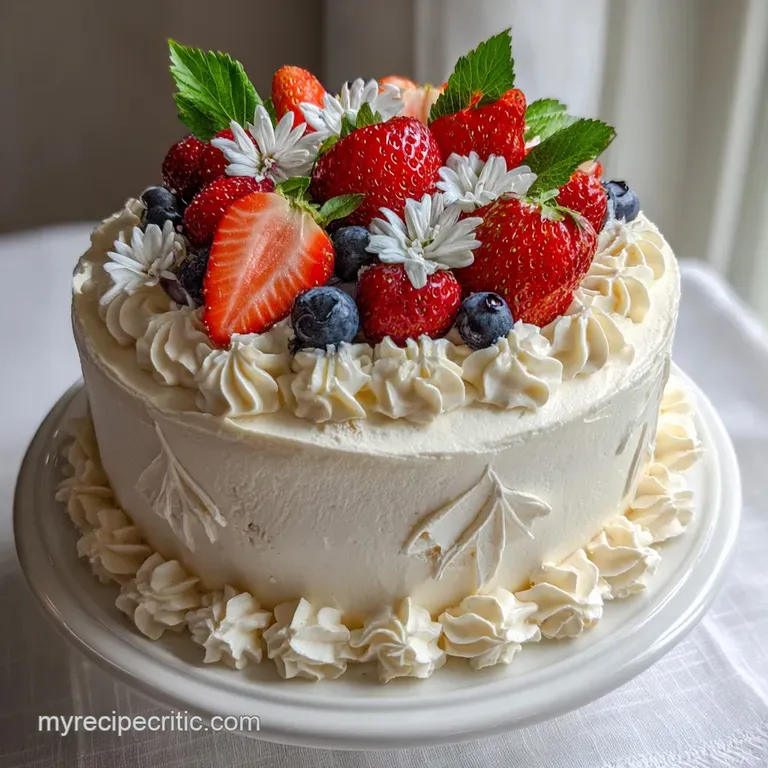
The current trend is all about "minimalist" or "vintage" piping. Use a small star tip to create dainty borders and top with fresh edible flowers or high-quality sprinkles. This approach works perfectly for those looking for "aesthetic birthday cake" inspiration without needing professional level sculpting skills.
Storage And make-ahead Strategies
This Birthday Cake is remarkably sturdy, but you need to store it correctly to maintain that velvety texture. Because of the butter content, the cake will firm up in the fridge. Always bring a refrigerated cake back to room temperature for at least 2 hours before serving so the frosting softens and the sponge regains its fluffiness.
- Fridge: Store the frosted cake in an airtight container for up to 5 days.
- Freezer: You can freeze the unfrosted layers for up to 3 months. Wrap them twice in plastic wrap and then a layer of foil.
- Zero Waste: If you have cake scraps from leveling the tops, don't toss them! Crumble them up, mix with a little leftover frosting, and roll them into cake pops. You can also toast the crumbs and use them as a "soil" for a dessert garnish or a topping for yogurt.
Curating The Ultimate Celebration Menu
When serving this Birthday Cake, think about balance. Since the cake is rich and buttery, a tart champagne or a strong pour over coffee works beautifully to cleanse the palate. If you're hosting a full dinner, keep the sides light.
A fresh berry salad or a simple lemon sorbet can provide a nice contrast to the sweet vanilla bean notes.
- If you want more fruit: Add a layer of fresh raspberry jam between the sponges.
- If you want more crunch: Fold 1/2 cup of toasted almond slivers into the frosting.
- If you want a chocolate twist: Swap the vanilla extract in the buttercream for 100g of melted, cooled dark chocolate.
The beauty of this recipe is its versatility. It's a canvas for your creativity, and now that you have the science and the technique down, you can bake with total confidence. Trust the weights, watch your temperatures, and get ready for the best Birthday Cake you've ever tasted!

Birthday Cake FAQs
What is the best cake for a birthday?
Generally, a classic vanilla or chocolate cake is the safest bet for most birthdays. However, the "best" cake depends on personal preference; consider flavors like red velvet, carrot cake, or even a rich mud cake for something more decadent.
What is Kamala Harris' favorite cake?
Information on Vice President Kamala Harris' specific favorite cake is not publicly available. Many public figures tend to enjoy classic flavors like chocolate or vanilla, but personal preferences vary widely.
What is the 4 day cake rule?
The "4 day cake rule" refers to a guideline for how long certain cakes remain fresh and safe to eat. Typically, most cakes, especially those with frosting, are best consumed within 3-4 days when stored properly at room temperature or in the refrigerator.
What are the 10 most popular birthday cakes?
The most popular birthday cakes often include Vanilla, Chocolate, Red Velvet, Carrot Cake, Chocolate Chip Cookie Cake, Funfetti, Lemon, Strawberry, German Chocolate, and Black Forest. These classics offer a range of flavors and textures that appeal to a wide audience.
Can I use all-purpose flour instead of cake flour for my birthday cake?
Yes, you can substitute all-purpose flour, but it will result in a slightly heartier crumb. To approximate cake flour, use 3/4 cup of all-purpose flour plus 2 tablespoons of cornstarch per cup of cake flour. If you enjoyed the technique of controlling crumb texture here, see how fat ratios affect it in our The Ultimate Decadent Mississippi Mud Cake Recipe Gooey Layers.
How do I prevent my birthday cake from sinking in the middle?
Ensure your oven temperature is accurate and avoid opening the oven door too early during baking. Sinking is often caused by insufficient structure setting before the cake cools, which can happen with premature door opening or if the leavening agents are expired.
What is the best way to frost a birthday cake for a smooth finish?
Apply a thin "crumb coat" of frosting first and chill the cake for about 20 minutes before applying the final layer. This traps loose crumbs, creating a clean, smooth canvas for your aesthetic birthday cake design.
Birthday Cake
Ingredients:
Instructions:
Nutrition Facts:
| Calories | 689 kcal |
|---|---|
| Protein | 6.1 g |
| Fat | 41.4 g |
| Carbs | 74.9 g |
| Fiber | 0.7 g |
| Sugar | 50.5 g |
| Sodium | 293 mg |
