Vegetarian Pasta Soup: Velvety Broth
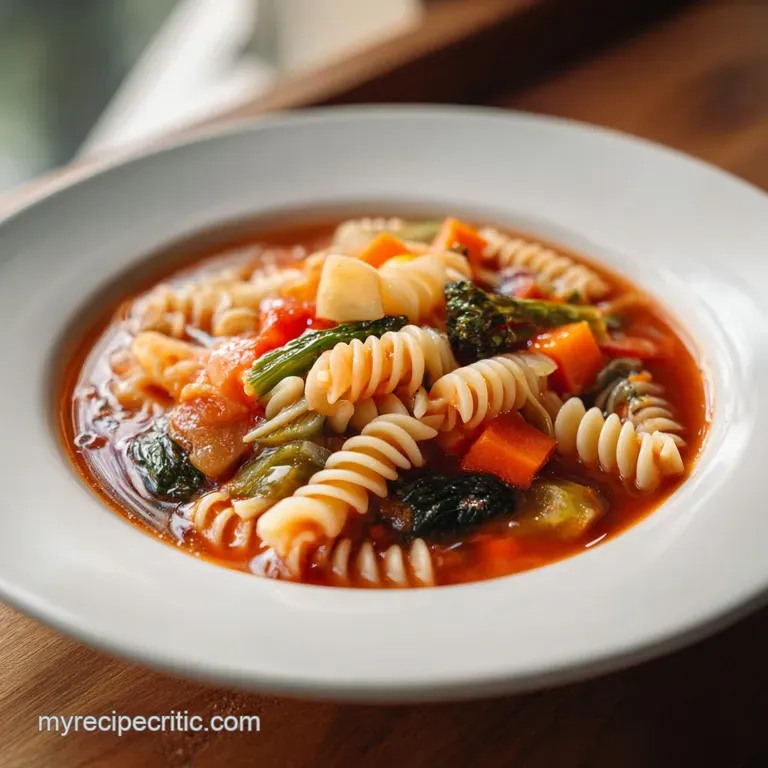
- Time: Active 10 minutes, Passive 20 minutes, Total 30 minutes
- Flavor/Texture Hook: Velvety broth with tender zucchini bites
- Perfect for: Stress free weeknight dinners or healthy meal prep
- Master the Best Vegetarian Pasta Soup
- The Starch Bonded Broth Secret
- Component Analysis and Pro Secrets
- Essential Ingredients and Smart Substitutions
- Necessary Kitchen Tools and Vessels
- Proven Stages for Maximum Flavor
- Avoiding Common Culinary Mistakes
- Adjusting Portions for Larger Crowds
- Dispelling Common Kitchen Broth Misconceptions
- Freshness Maintenance and Reheating Steps
- Finishing Touches and Plating Ideas
- High in Sodium
- Recipe FAQs
- 📝 Recipe Card
Master the Best Vegetarian Pasta Soup
The aromatic sizzle of 150g of diced yellow onion hitting hot extra virgin olive oil is my kitchen's siren song. There's something inherently grounding about the way those onions soften, turning from sharp and translucent to sweet and golden.
I remember a particularly rainy Tuesday when I was so exhausted I nearly ordered takeout, but I forced myself to chop just one carrot. Before I knew it, the house smelled like a cozy Italian trattoria, and my mood shifted completely.
I've learned the hard way that throwing everything into a pot at once results in a muddy, lackluster broth. My first attempt at this Vegetarian Pasta Soup was basically a watery mistake because I skipped the sautéing stage. Now, I never rush the base.
We're going to build layers of flavor here, from the concentrated tomato paste to the bright pop of lemon at the end. You'll end up with a bowl that feels far more expensive and complex than the ingredients suggest.
Right then, let's get into why this specific method works so well. We aren't just boiling vegetables; we're using basic kitchen physics to transform humble pantry staples into a meal that rivals any restaurant minestrone.
Trust me on this, once you see how the starch from 150g of ditalini changes the liquid, you'll never go back to cooking your pasta in a separate pot.
The Starch Bonded Broth Secret
Starch Emulsification: Cooking 150g of pasta directly in the broth releases starches that bind the liquid, creating a velvety mouthfeel rather than a thin, watery texture.
Maillard Concentration: Searing the 2 tbsp of tomato paste until it darkens to a brick red color creates a deep umami base that replaces the need for meat based stocks.
| Method | Time | Texture | Best For |
|---|---|---|---|
| Stovetop | 30 minutes | Bright and fresh | Quick weeknight meals |
| Slow Cooker | 4 hours | Deeply melded | Hands off weekend prep |
| Pressure Cooker | 15 minutes | Extra tender | Last minute hunger |
Cooking the pasta in the broth is a technique I also rely on for my High Protein Pasta recipe when I want that cohesive, restaurant style finish. It saves on washing up, and the flavor absorption is night and day compared to plain boiled noodles.
Component Analysis and Pro Secrets
| Ingredient | Science Role | Pro Secret |
|---|---|---|
| Tomato Paste | Umami Foundation | Bloom in oil for 2 minutes to remove metallic taste. |
| Cannellini Beans | Protein & Creaminess | Mash a few against the pot side to thicken the soup. |
| Vegetable Broth | Liquid Medium | Use low sodium to control the final seasoning precisely. |
Essential Ingredients and Smart Substitutions
- Extra Virgin Olive Oil (2 tbsp): Provides the fat needed to carry the fat soluble flavors of the spices. Why this? It has a higher polyphenol count for better flavor than neutral oils.
- Substitute: Avocado oil or unsalted butter for a richer, more French style finish.
- Yellow Onion (150g): The aromatic backbone of the entire dish. Why this? Yellow onions have a balanced sugar to sulfur ratio perfect for long simmering.
- Substitute: Sliced leeks or shallots provide a more delicate, floral onion flavor.
- Carrots & Celery (120g & 100g): Part of the essential mirepoix for foundational sweetness and earthiness.
- Substitute: Parsnips can replace carrots for a spicier, woodier undertone.
- Tomato Paste (2 tbsp): Adds body, color, and intense savory notes.
- Substitute: Sun dried tomato pesto for an even more concentrated flavor punch.
- Dried Oregano & Smoked Paprika (1 tsp & 1/2 tsp): Provides an herbaceous lift and a hint of charred depth.
- Substitute: Dried thyme or a pinch of cumin if you want a more Mediterranean vibe.
- Cannellini Beans (15 oz can): Adds bulk and plant based protein.
- Substitute: Chickpeas or Great Northern beans work equally well for texture.
- Zucchini (150g): Provides a fresh, green crunch and absorbs the broth.
- Substitute: Diced chayote squash or yellow summer squash.
- Small Pasta Shapes (150g): Ditalini or Orzo are best for spoonability.
- Substitute: Broken spaghetti pieces or even pearl couscous.
- Baby Spinach (60g): Adds iron and a vibrant color contrast.
- Substitute: Chopped kale or Swiss chard (simmer kale for 5 minutes longer).
- Fresh Lemon Juice (1 tbsp): The acid that cuts through the starch. Why this? Acid awakens dormant flavors and balances the saltiness of the broth.
- Substitute: A teaspoon of apple cider vinegar or white wine vinegar.
This focus on building a deep, aromatic base is something I learned while perfecting my German Chicken Noodle Soup recipe, where the quality of the mirepoix dictates the entire outcome of the dish.
Necessary Kitchen Tools and Vessels
You really don't need much for this, which is why it's such a staple in my house. A 6 quart Dutch oven or a heavy bottomed stockpot is essential. The heavy base ensures the 150g of diced onion and 120g of carrots don't scorch while you're busy prepping the rest.
A sharp chef's knife makes quick work of the celery and zucchini, while a sturdy wooden spoon is your best friend for scraping up those flavorful browned bits the fond after you add the tomato paste.
Honestly, don't even bother with a flimsy aluminum pot; they heat too unevenly and you'll end up with burnt garlic.
Proven Stages for Maximum Flavor
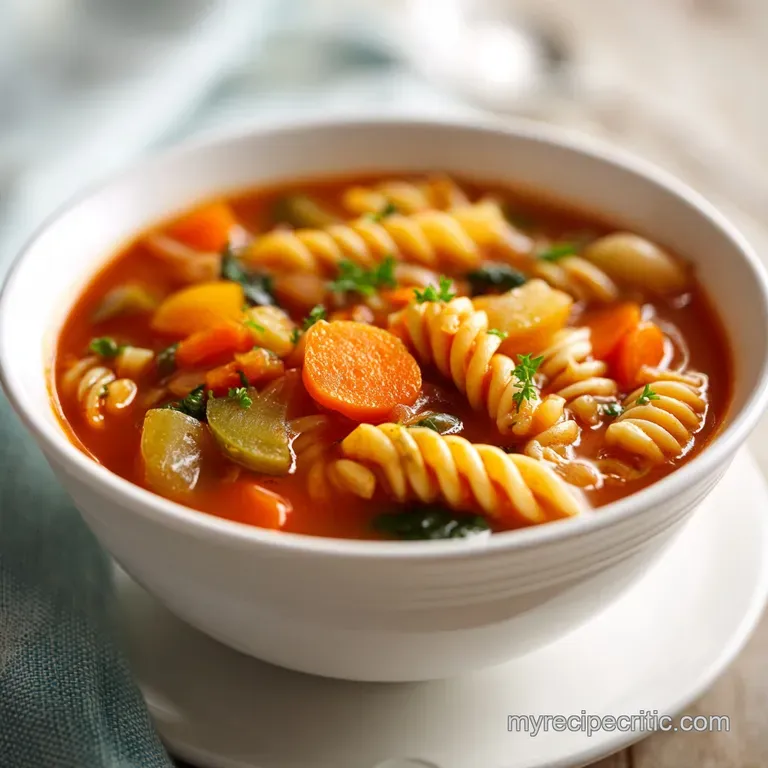
- Heat the oil. Add 2 tbsp extra virgin olive oil to a large pot over medium heat until it shimmers and flows like water.
- Sauté aromatics. Toss in 150g diced onion, 120g carrots, and 100g celery with 1 tsp sea salt. Note: Salt draws out moisture to prevent burning.
- Cook until soft. Sweat the vegetables for 6 minutes until the onions are translucent and the carrots look vibrant.
- Add flavor anchors. Stir in 3 cloves minced garlic, 2 tbsp tomato paste, 1 tsp oregano, and 1/2 tsp smoked paprika.
- Bloom the paste. Cook for 2 minutes, stirring constantly, until the paste darkens to a deep rust color and smells toasted.
- Incorporate bulk. Stir in 15 oz rinsed cannellini beans and 150g diced zucchini until every piece is coated in the red paste.
- Deglaze and simmer. Pour in 6 cups vegetable broth and 1/2 tsp black pepper. Increase heat to high until the liquid reaches a rolling boil.
- Cook the pasta. Add 150g small pasta shapes and reduce heat to medium. Simmer for 8 to 10 minutes until the pasta is tender but still has a slight bite.
- Wilting greens. Turn off the heat and stir in 60g baby spinach and 1/4 cup chopped parsley.
- Brighten the finish. Add 1 tbsp lemon juice and stir until the spinach has completely wilted into a silky texture.
Avoiding Common Culinary Mistakes
Why Your Soup Looks Muddy
If your broth looks gray or dull, it’s often because the vegetables were boiled from the start without being sautéed in fat. The oil helps extract carotenoids from the carrots and chlorophyll from the herbs, keeping the colors bright.
Also, adding too much smoked paprika can darken the broth more than intended, so stick to the 1/2 tsp measurement.
| Problem | Root Cause | Solution |
|---|---|---|
| Mushy pasta | Cooked too long | Reduce simmer time by 2 minutes; pasta carries over cook. |
| Bland taste | Lack of salt or acid | Add a pinch of salt and an extra squeeze of lemon. |
| Scored bottom | Heat was too high | Add a splash of broth immediately and scrape with a spoon. |
Adding the pasta directly to the pot is a clever move, but if you're planning on leftovers, keep in mind the pasta will continue to drink up the liquid. But what about the sogginess? We'll get to that in the storage section.
Common Mistakes Checklist
- ✓ Sauté the mirepoix until soft (don't rush the 6 minute window)
- ✓ Bloom the tomato paste until it smells nutty, not metallic
- ✓ Use a timer for the pasta to ensure it stays al dente
- ✓ Add the lemon juice only after the heat is turned off
- ✓ Pat the zucchini dry before dicing to prevent excess water release
Adjusting Portions for Larger Crowds
If you need to feed a huge group, doubling this recipe is straightforward. Use a larger 8 quart pot and increase the salt and spices to only 1.5x the original amount initially you can always add more, but you can't take it out.
When scaling down for a solo meal, use a small saucepan and beat one egg to stir in at the end for extra protein, much like a vegetarian stracciatella. For baking style adjustments, if you were to turn this into a pasta bake, you'd want to reduce the liquid by half and bake at 180°C for 20 minutes.
| Premium | Budget | Flavor Impact | Savings |
|---|---|---|---|
| Fresh Leeks | Yellow Onion | Sharper, less sweet | Save $2.50 |
| Saffron Threads | Smoked Paprika | Earthier, less floral | Save $18.00 |
| Parmigiano Reggiano | Nutritional Yeast | Cheesy but vegan | Save $6.00 |
Dispelling Common Kitchen Broth Misconceptions
Searing vegetables does not "seal in flavor." Instead, it creates new flavor molecules through the Maillard reaction that wouldn't exist if you just boiled them. Another myth is that you must use expensive store-bought stock.
Honestly, water with a bit more salt and an extra tablespoon of tomato paste often tastes cleaner and more vibrant than cheap, shelf stable broths. Finally,, "al dente" isn't just a preference; pasta that still has a firm core will hold its shape much better as it sits in the hot liquid on your dining table.
Freshness Maintenance and Reheating Steps
Storage: This soup stays fresh in the fridge for up to 4 days. Keep in mind that the 150g of pasta will continue to absorb the broth as it sits. If it looks too thick the next day, simply stir in a splash of water or extra broth before heating.
Freezing: I don't recommend freezing the soup with the pasta already in it, as it becomes quite mushy upon thawing. If you want to freeze this, make the base (everything up to step 7), freeze for up to 3 months, and then add fresh pasta when you're ready to eat.
Reheating: Use the stovetop over medium heat rather than the microwave. This allows you to monitor the texture and stop the second the liquid starts to simmer, preventing the zucchini from turning into mush.
Zero Waste: Don't throw away your parsley stems! Finely mince them and add them into the pot along with the celery; they hold even more flavor than the leaves. If you have a leftover parmesan rind in the fridge, toss it into the broth while the pasta cooks it adds a savory, salty depth that is absolutely brilliant.
Finishing Touches and Plating Ideas
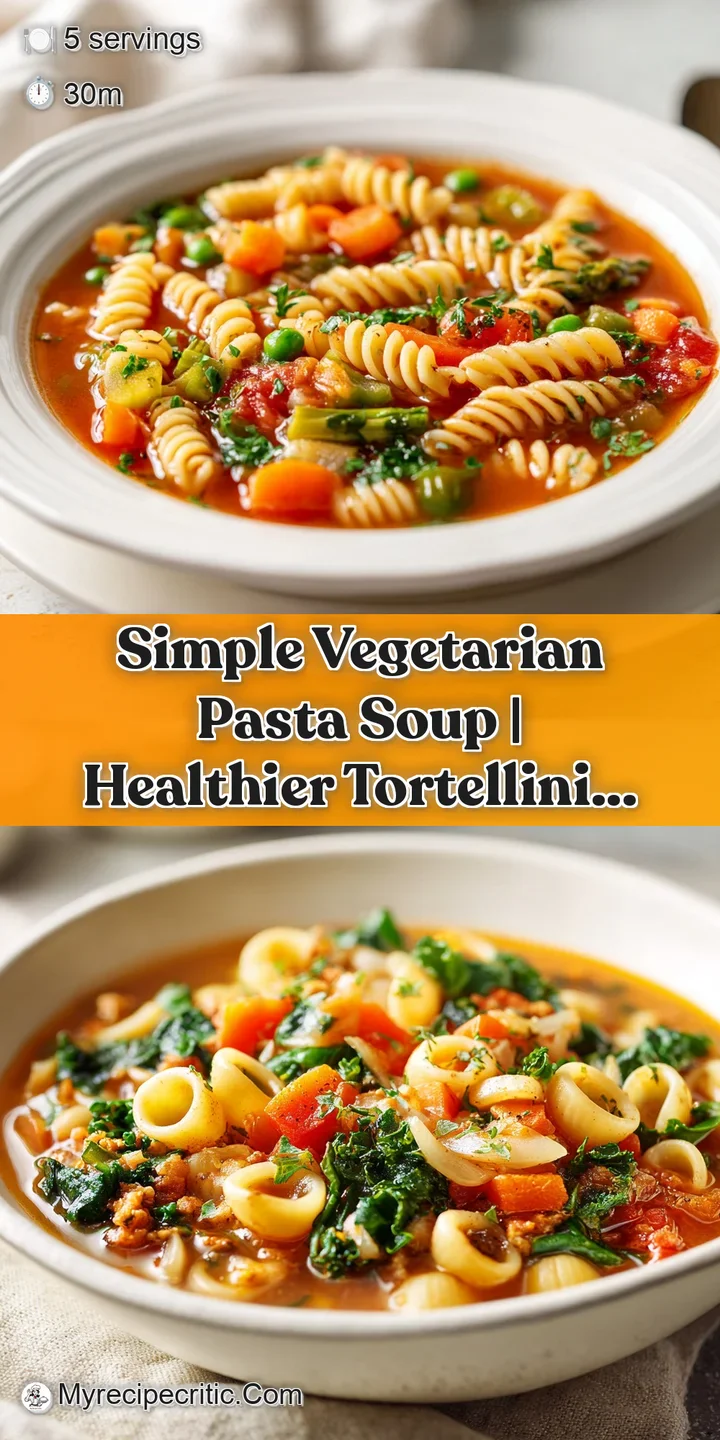
Presentation is everything, even for a humble bowl of Vegetarian Pasta Soup. I like to serve this in wide, shallow bowls to show off the different colors of the zucchini and carrots. A final drizzle of high-quality olive oil right before serving creates beautiful golden "eyes" on the surface of the broth.
If you want to go the extra mile, toast some crusty sourdough rubbed with a raw garlic clove for dipping. A heavy dusting of freshly cracked black pepper and a few extra parsley leaves makes the dish look like it came straight from a professional kitchen.
It’s a simple, honest meal that proves you don’t need meat to create something deeply satisfying.
For another comforting option that fills the house with a similar aroma, you should definitely check out my The Homemade Chicken recipe. It uses many of the same aromatic principles but with a different protein focus. Right then, let's crack on and get that pot on the stove!
High in Sodium
980 mg mg of sodium per serving (43% % of daily value)
The American Heart Association recommends limiting sodium intake to no more than 2,300mg per day for optimal health.
Tips to Reduce Sodium in This Soup
-
Low Sodium Broth-30%
Swap regular vegetable broth for a low-sodium or no-salt added version. This can significantly reduce the overall sodium content of the soup.
-
Reduce Added Salt-25%
Halve the amount of sea salt from 1 tsp to 1/2 tsp. Taste the soup before adding any additional salt at the end.
-
Rinse Beans Thoroughly-20%
Even though you already rinse them, rinse the canned cannellini beans very thoroughly under running water for at least 1-2 minutes. This helps remove excess sodium from the canning liquid.
-
Spice It Up!
Enhance flavor with more herbs and spices. Consider adding garlic powder, onion powder, dried basil, or a pinch of red pepper flakes for a more complex taste without adding sodium.
Recipe FAQs
Can I cook the pasta separately to avoid a cloudy broth?
No, cook it directly in the broth. Cooking the pasta in the liquid releases starches that bind the soup, creating a velvety texture instead of a watery one.
How to thicken the soup if it still seems too thin after the pasta is done?
Mash a quarter cup of the cannellini beans against the side of the pot. This releases their natural starches and proteins, which acts as a natural emulsifier.
Is it true that boiling vegetables yields a better flavor than sautéing them first?
False. Sautéing the onion, carrot, and celery first (the mirepoix) in oil creates deep, complex flavor molecules through the Maillard reaction.
What is the best way to maximize the savory flavor without using meat stock?
Bloom the tomato paste until it turns a deep rust color. Cooking the paste in fat for two minutes removes its raw metallic taste, concentrating the umami base.
How to prevent the spinach from turning an unappetizing olive color?
Add the spinach only after turning the heat completely off. The residual heat is enough to wilt the greens, preserving their bright green color and nutrients.
Can I make this vegetarian soup ahead of time and freeze it?
Yes, but omit the pasta before freezing. Store the finished broth base up to three months, then cook fresh pasta when reheating to prevent it from turning mushy.
How do I ensure the soup isn't flat tasting once it's all cooked?
Finish with fresh lemon juice right at the end. This essential acid brightens all the savory notes you built during the sautéing stage; you'll see the same principle apply when balancing flavors in dishes like the Creamy Lemon Chicken recipe.
Vegetarian Pasta Soup In 30 Min
Ingredients:
Instructions:
Nutrition Facts:
| Calories | 285 kcal |
|---|---|
| Protein | 9.5 g |
| Fat | 5.8 g |
| Carbs | 42 g |
| Fiber | 7.5 g |
| Sugar | 6.2 g |
| Sodium | 980 mg |
