Sheet Pan Gnocchi with Brussels Sprouts and Sausage
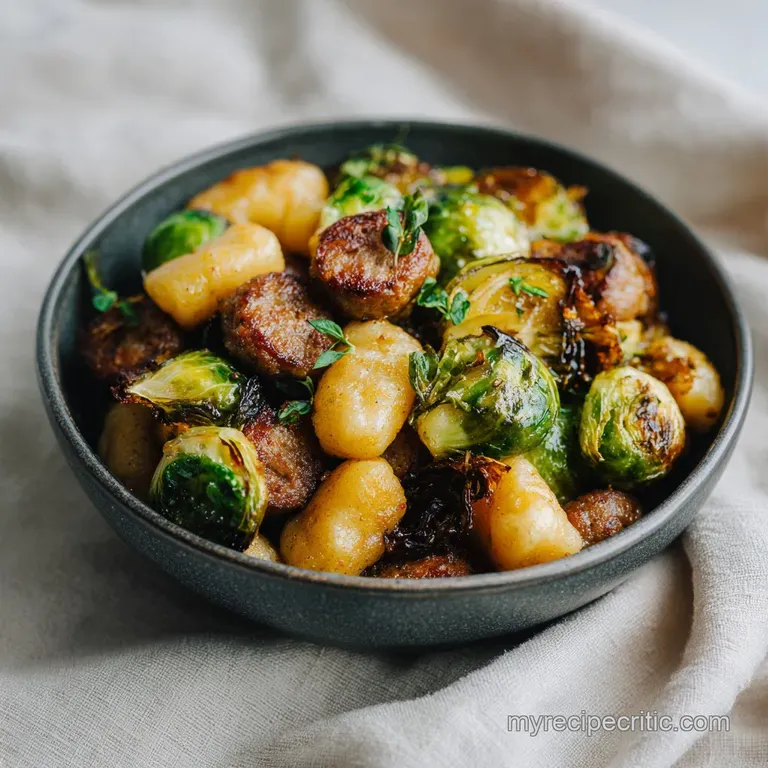
- Time: Active 10 minutes, Passive 20 minutes, Total 30 minutes
- Flavor/Texture Hook: Shatter crisp gnocchi shells with tender, caramelized centers and charred, nutty sprouts.
- Perfect for: Stress free weeknight dinners when you want maximum flavor with zero pots to scrub.
- Master the Crispy Sheet Pan Gnocchi with Brussels Sprouts
- How Intense Heat Transforms the Gnocchi Texture
- Essential Timing and Measurement Specs for Dinner
- Choosing Quality Components for the Best Result
- Selecting the Right Sheet Pan and Knife
- Executing the Roast for Maximum Crispy Edges
- Solving Texture Issues and Preventing Burnt Bits
- Adapting for Gluten Free and Vegetarian Diets
- Safe Storage and Creative Leftover Repurposing
- Flavor Pairings and Final Garnishing Touches
- Debunking Roasting Lore and Potato Pasta Myths
- Very High in Sodium
- Recipe FAQs
- 📝 Recipe Card
Master the Crispy Sheet Pan Gnocchi with Brussels Sprouts
There is a specific sound that happens when you pull a roasting pan out of a 425°F oven, and if you listen closely, it's the sound of a successful dinner. It’s that tiny, high pitched crackle of hot olive oil settling into the nooks and crannies of a halved Brussels sprout.
The first time I tried roasting gnocchi, I was honestly skeptical. I grew up thinking those little potato pillows had to be boiled in a massive pot of salted water until they floated like tiny buoys.
But one night, being far too tired to wait for water to boil, I tossed a bag of shelf stable gnocchi onto a sheet pan with some leftover sausage.
That "accident" turned into a revelation. Instead of the sometimes mushy texture of boiled gnocchi, the oven transformed them into something resembling a cross between a roasted potato and a soft pretzel.
The outside gets this incredible, parchment thin crust that shatters when you bite into it, while the inside stays pillowy and soft. This article features one irresistible recipe for Sheet Pan Gnocchi with Brussels Sprouts and Sausage with Garlic and Parmesan that will genuinely change your Tuesday nights.
We're not just throwing things on a tray and hoping for the best, though. To get that specific "shatter crisp" texture, we have to understand how the fat from the Italian sausage interacts with the starch in the gnocchi.
It’s a low effort, high reward situation where the oven does all the heavy lifting, leaving you with nothing but a single pan to wipe down. If you've ever struggled with soggy vegetables or gummy pasta, this method is your new best friend.
How Intense Heat Transforms the Gnocchi Texture
The magic of this dish lies in the way we bypass traditional hydration. When you boil gnocchi, the starch granules swell with water, which is fine, but it limits how much browning you can achieve later. By roasting them dry, we are focusing on a few key mechanisms that make the texture so addictive.
- Surface Dehydration: The 425°F air immediately begins evaporating surface moisture from the gnocchi, allowing the starch to harden into a thin, crispy shell.
- Fat Conducted Browning: Olive oil and rendered fat from the sausage coins act as a heat transfer medium, "frying" the bottom of the gnocchi against the hot metal pan.
- Vegetable Steam Release: As the cherry tomatoes and onions roast, they release just enough steam to keep the interior of the gnocchi soft and velvety without making the outside soggy.
- Maillard Interaction: The natural sugars in the red onion and the protein in the sausage undergo a browning process that creates complex, savory flavors that boiling simply cannot replicate.
| Cooking Method | Total Time | Resulting Texture | Cleanup Effort |
|---|---|---|---|
| Oven Roasting | 30 minutes | Crispy exterior, chewy soft center | Minimal (one pan) |
| Stovetop Searing | 25 minutes | Soft but browned on two sides | Moderate (skillet + prep bowl) |
| Boiling (Traditional) | 15 minutes | Uniformly soft and pillowy | High (large pot + colander) |
This comparison highlights why the oven is the superior choice for this specific combination of ingredients. While stovetop searing is great for gnocchi alone, it’s a nightmare to try and get 1 lb of Brussels sprouts and 12 oz of sausage perfectly charred in a skillet without everything becoming a crowded, steaming mess.
The oven provides the consistent, surrounding heat needed to crisp every surface simultaneously.
Essential Timing and Measurement Specs for Dinner
When you're aiming for that specific charred but-not burnt finish, precision matters. I've found that three specific checkpoints make the difference between a "good" dinner and the kind of meal you think about the next day. First, your oven must be a true 425°F (220°C).
Don't trust the little beep on the stove; give it an extra five minutes to ensure the walls of the oven are radiating heat. Second, the 1/2 inch thickness of the sausage coins is vital any thinner and they'll turn into jerky; any thicker and they won't brown enough.
Finally, the 20 minute roast time is the sweet spot. At 15 minutes, the sprouts are tender but lack those dark, nutty edges. At 25 minutes, the garlic slices might start to taste bitter.
Stick to the 20 minute window, with a quick toss halfway through, to ensure every piece of gnocchi finds a new spot on the hot metal.
| Component | Science Role | Pro Secret |
|---|---|---|
| Potato Gnocchi | Starch base for crisping | Use shelf stable or vacuum packed, not fresh/frozen. |
| Brussels Sprouts | Sulfur rich crunch and fiber | Place cut side down for maximum caramelization. |
| Italian Sausage | Fat source and savory protein | The fat renders out and seasons the vegetables. |
| Lemon Juice | Acid to break through fat | Add only after cooking to keep the colors bright. |
Roasting the sprouts cut side down is a trick I learned after years of just tossing them on the pan haphazardly. The flat surface area makes direct contact with the pan, creating a deep brown crust that tastes almost like popcorn. If you're a fan of that nutty flavor, you'll also love how it works in my Brussels Sprouts recipe where we lean even harder into the cheese crust.
Choosing Quality Components for the Best Result
For this recipe, your ingredients are doing most of the work, so picking the right ones is half the battle. We’re using shelf stable gnocchi here the kind you find in the pasta aisle, not the freezer.
This is one of the few times where the "fancy" fresh version actually performs worse because it has too much moisture and can fall apart in the high heat of the oven.
- 1 lb Brussels sprouts: Look for small, tight heads; they are sweeter and roast faster. Trim the woody ends and halve them vertically through the core.
- 3 cloves fresh garlic: Slice these into thin "chips." They’ll toast in the oil and become little savory flavor bombs.
- 1 small red onion: Cut into 1/2 inch wedges so they soften but don't vanish into the pan.
- 1 cup cherry tomatoes: These act as a built in sauce, bursting under the heat to provide a tiny bit of acidity.
- 1 tsp fresh rosemary: Fresh is non negotiable here; the oils in fresh rosemary can withstand the high heat without tasting like dusty needles.
- 16 oz potato gnocchi: Standard shelf stable variety. Why this? It has a lower moisture content, which is essential for achieving a crispy outer crust.
- 12 oz pre cooked Italian sausage: Sliced into 1/2 inch coins. Why this? Pre cooked links hold their shape better and render just enough fat to coat the gnocchi.
- 3 tbsp extra virgin olive oil: This is the glue that holds the spices to the food.
- 1/2 tsp kosher salt: Use kosher for better coverage and a less "sharp" saltiness.
- 1/2 tsp cracked black pepper: Freshly cracked provides a much needed aromatic kick.
- 1/2 tsp red pepper flakes: Adds a subtle back of-the throat warmth.
- 1/4 cup freshly grated Parmesan: Use a microplane for light, snow like cheese that melts instantly.
- 1 tbsp fresh lemon juice: The "acid" that brightens all the heavy, roasted flavors.
| Original Ingredient | Substitute | Why It Works |
|---|---|---|
| Italian Sausage | Kielbasa or Chorizo | Similar fat content and firm texture; changes the flavor profile significantly. |
| Brussels Sprouts | Broccoli Florets | Roasts in the same time frame. Note: Will be crispier and less "meaty" than sprouts. |
| Cherry Tomatoes | Red Bell Pepper | Adds sweetness and moisture without the "burst" sauce effect. |
If you decide to swap the sausage for something like chicken sausage, keep in mind that it's often much leaner. You might need to add an extra tablespoon of olive oil to compensate for the lack of rendered pork fat. For another take on simple, crispy proteins, you should definitely check out my Chicken Parmesan which uses a similar philosophy of over high heat browning.
Selecting the Right Sheet Pan and Knife
You don't need a kitchen full of gadgets for this, which is why I love it. However, the size of your pan is the most important "tool" decision you'll make. If your pan is too small, the ingredients will be piled on top of each other.
Instead of roasting, they will steam in their own moisture, and you'll end up with soft, sad gnocchi instead of the crispy ones we're after.
A standard 13x18 inch rimmed baking sheet (often called a "half sheet pan") is the perfect size for this quantity. If you only have smaller pans, use two. It is better to have extra space than not enough.
I also recommend a sharp chef's knife for those Brussels sprouts a dull knife will just slide off the waxy leaves and make the trimming process dangerous.
Finally,, a large mixing bowl is better than tossing everything directly on the pan. It feels like an extra dish to wash, but it's the only way to ensure that every single gnocchi and sprout is glistening with oil and salt.
If you toss on the pan, the spices usually end up stuck to the parchment paper rather than the food.
Executing the Roast for Maximum Crispy Edges
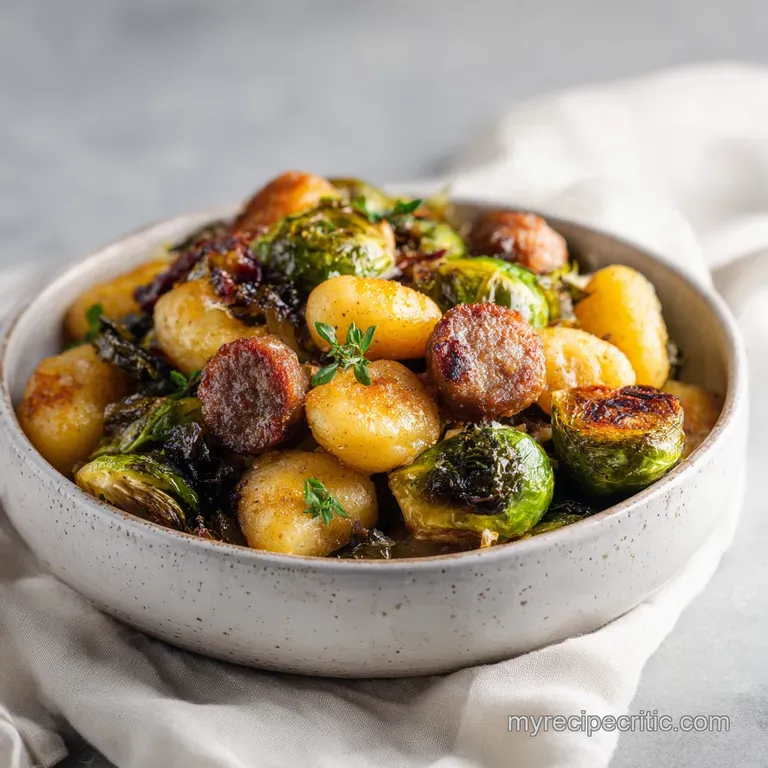
- Heat the environment. Preheat your oven to 425°F (220°C). Take the time to let it get truly hot. If you're using parchment paper, lay it down now. Note: Parchment makes cleanup easy, but roasting directly on the metal gives a slightly better crust.
- Prepare the produce. Halve your 1 lb of Brussels sprouts, wedge the red onion, and slice the 3 cloves of garlic. Keep the garlic slices uniform so they roast evenly.
- Slice the protein. Cut the 12 oz of Italian sausage into 1/2 inch coins. If they are too thin, they’ll curl up and dry out before the gnocchi are done.
- Combine and coat. In a large mixing bowl, toss the gnocchi, sprouts, sausage, onion, cherry tomatoes, and garlic with 3 tbsp of olive oil. Ensure the gnocchi aren't sticking together.
- Season thoroughly. Sprinkle in the salt, black pepper, and rosemary. Give it one final vigorous toss. You want to see the rosemary needles clinging to everything.
- Arrange the layer. Spread the mixture onto the baking sheet. Spread them out until no two pieces of gnocchi are touching. This is the secret to the crunch.
- Roast and flip. Slide the pan onto the middle rack. Bake for 10 minutes, then use a wide spatula to flip and toss everything. This ensures the "underside" of the gnocchi gets its turn against the hot pan.
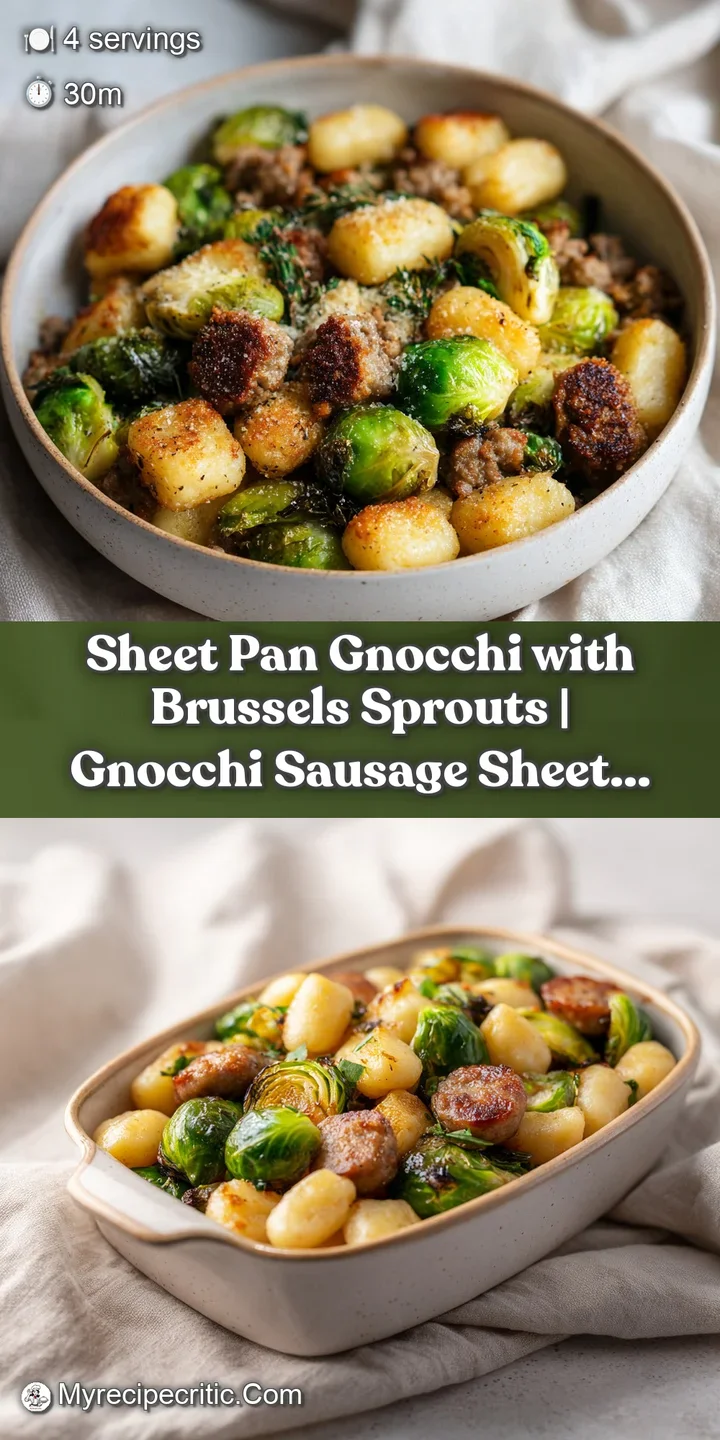
- The final crisp. Roast for another 10 minutes until the gnocchi are golden brown and the sprout leaves are dark and crackling.
- The bright finish. Remove from the oven and immediately drizzle with the 1 tbsp of lemon juice while the pan is still sizzling.
- Garnish and serve. Finish with red pepper flakes and the grated Parmesan. The residual heat will melt the cheese into the crannies of the gnocchi.
Solving Texture Issues and Preventing Burnt Bits
One of the most common issues people have with sheet pan meals is uneven cooking. You might find that your garlic is turning black while your sprouts are still tough. This usually comes down to how you sliced the vegetables or where the pan was in the oven.
If your oven has a "hot spot" in the back, make sure to rotate the pan 180 degrees when you do your halfway toss.
Why Your Gnocchi Stayed Soft
If your gnocchi didn't get that "shatter crisp" shell, it's almost always due to overcrowding. When the ingredients are too close together, the water evaporating from the tomatoes and onions gets trapped under the gnocchi. This creates a mini steam sauna on your baking sheet.
Next time, use a larger pan or reduce the amount of tomatoes. Also, check that you didn't use "fresh" gnocchi from the refrigerated section, as those have a much higher moisture content and struggle to crisp up in 20 minutes.
Why Your Garlic Tastes Bitter
Garlic is delicate. If you slice it into tiny minced bits, it will burn to a crisp within five minutes. By slicing the cloves into thin "chips," you give them more mass, allowing them to brown slowly and become sweet and nutty.
If you find your oven runs particularly hot, you can even wait to add the garlic chips until the halfway toss.
| Problem | Root Cause | Solution |
|---|---|---|
| Soggy Gnocchi | Overcrowded pan or too much oil | Use two pans; ensure a single, spaced out layer. |
| Burnt Sprout Leaves | Pieces are too small or too high in oven | Move pan to middle rack; keep sprout halves uniform. |
| Dry Sausage | Sliced too thin | Stick to 1/2 inch coins to retain internal moisture. |
Common Mistakes Checklist
- ✓ Never boil the gnocchi first it ruins the roasting texture.
- ✓ Don't skip the lemon juice; it's the key to balancing the fatty sausage.
- ✓ Use a rimmed baking sheet to prevent oil from dripping onto the oven floor.
- ✓ Ensure the oven is fully preheated before the pan goes in.
- ✓ Avoid frozen sprouts, as they release too much water and will never crisp.
Adapting for gluten-free and Vegetarian Diets
The beauty of this sheet pan gnocchi with Brussels sprouts is its flexibility. If you're cooking for someone with dietary restrictions, you don't have to start from scratch. For a gluten-free version, look for cauliflower gnocchi (like the ones from Trader Joe's) or specialized gluten-free potato gnocchi.
Just be aware that cauliflower gnocchi often need an extra 5-10 minutes of roasting time to lose their gummy texture.
For a vegetarian version, the sausage is the only hurdle. You can easily swap it for a plant based Italian sausage, but since those usually have less fat, you must increase the olive oil to 4 tablespoons. Alternatively, you can replace the sausage entirely with 15 oz of rinsed and dried chickpeas.
The chickpeas will get wonderfully crunchy alongside the gnocchi, providing that protein hit without the meat.
If you want a "lighter" version, you can swap the pork sausage for a spicy turkey or chicken sausage. Because these are leaner, you'll get less of that savory rendered fat, but the dish will still be incredibly flavorful thanks to the rosemary and garlic.
Safe Storage and Creative Leftover Repurposing
If you happen to have leftovers, which is rare in my house, they store surprisingly well. Keep them in an airtight container in the fridge for up to 3 days. However, do not use the microwave to reheat them! The microwave will turn those beautiful crispy gnocchi into rubbery little pucks.
Instead, throw them back onto a sheet pan or into a dry skillet for 5 minutes until they regain their crunch.
For zero waste cooking, don't throw away the loose leaves that fall off the Brussels sprouts while you're halving them. Toss them right onto the pan! They turn into "sprout chips" that are arguably the best part of the whole meal.
If you have leftover red onion, slice it thinly and quick pickle it in some vinegar and sugar for a bright topping on your next taco night.
Freezing this dish isn't recommended once it's cooked, as the texture of the roasted potato gnocchi changes quite a bit after thawing. It's much better to freeze the components separately the sausage and gnocchi both freeze beautifully in their original packaging.
Flavor Pairings and Final Garnishing Touches
While this is a complete meal on its own, it plays very well with others. If you’re serving a crowd, a simple arugula salad with a balsamic vinaigrette provides a peppery contrast to the earthy Brussels sprouts. The bitterness of the greens cuts through the richness of the Parmesan and sausage.
If you want to get a little fancy with the garnish, try a drizzle of balsamic glaze right before serving. The sweetness of the glaze highlights the charred onions and the caramelization on the gnocchi. You could also swap the rosemary for fresh sage if you want a more autumnal, cozy vibe.
- If you want more crunch: Add 1/4 cup of toasted walnuts or pine nuts in the last 2 minutes of roasting.
- If you want it creamier: Dollop small spoonfuls of fresh ricotta over the hot pan right before serving.
- If you want it spicy: Double the red pepper flakes and use "Hot" Italian sausage instead of sweet or mild.
Debunking Roasting Lore and Potato Pasta Myths
One of the biggest myths in the cooking world is that gnocchi must be hydrated in water to be "activated." This is simply not true for the shelf stable varieties. These products are already partially cooked and stabilized; the oven heat is more than enough to soften the starch while simultaneously browning the exterior.
You aren't "missing out" on anything by skipping the pot of water.
Another myth is that you can't get a good sear on a sheet pan compared to a cast iron skillet. While cast iron provides incredible heat retention, a sheet pan has more surface area, which is what we need for a "one pan" meal.
As long as your oven is hot enough (425°F is the magic number), the metal of the sheet pan will act as a searing surface that rivals any skillet, provided you don't overcrowd the ingredients.
Finally, some people think that Brussels sprouts are inherently bitter. The bitterness actually comes from over boiling or under seasoning. When you roast them at high heat, the natural sugars in the vegetable caramelize, turning that bitterness into a deep, savory sweetness that even the pickiest eaters usually enjoy.
Trust the heat it's your best tool for flavor development.
Very High in Sodium
965 mg 965 mg (42% 42%)
The American Heart Association recommends limiting sodium intake to less than 2,300mg per day, with an ideal limit of 1,500mg for most adults.
Tips to Reduce Sodium
-
Choose Lower Sodium Sausage-25%
Pre-cooked Italian sausage links are a significant sodium contributor. Look for 'low sodium' or 'reduced sodium' Italian sausage varieties, or opt for fresh, uncured sausage made without added salt.
-
Reduce Parmesan Cheese-15%
Parmesan cheese, while flavorful, is high in sodium. Halve the amount of Parmesan cheese used or opt for a lower sodium version if available.
-
Omit or Reduce Added Salt-25%
The recipe calls for 1/2 tsp of kosher salt. Start by omitting the added kosher salt entirely, as the sausage and cheese will already contribute sodium. Taste and add a tiny pinch only if absolutely necessary.
-
Boost Flavor with Herbs and Spices
Instead of relying on salt for flavor, enhance your dish with aromatics. Continue using fresh rosemary, garlic, and red pepper flakes. Consider adding freshly ground black pepper, lemon zest, or a pinch of dried oregano.
-
Opt for Fresh Gnocchi-10%
Shelf stable gnocchi can sometimes contain added sodium for preservation. If possible, choose fresh gnocchi found in the refrigerated section of your grocery store, as they often have less sodium.
Recipe FAQs
Do I need to boil the gnocchi before roasting?
No, use them straight from the package. Adding them to the pan dry is the secret to achieving that signature crispy exterior while keeping the center soft and pillowy.
How to ensure the gnocchi get perfectly crispy?
Spread the ingredients in a single, even layer without overcrowding. If the pan is too packed, the moisture from the vegetables will cause the gnocchi to steam instead of roast; if you enjoyed this method of achieving texture, you can apply the same principle to our pan-seared beans for uniform browning.
Is it true I should defrost the gnocchi first?
No, this is a common misconception. You must use shelf stable gnocchi for this recipe, which are designed to go directly from the package to the oven at 425°F.
How to prevent the garlic from burning?
Toss the garlic with olive oil thoroughly before roasting. Coating the slices in oil protects them from direct heat, allowing them to turn fragrant and golden rather than acrid during the 20-minute cook time.
Can I prep the ingredients in advance?
Yes, prepare up to 24 hours ahead. Keep your sliced sausage, onion wedges, and halved Brussels sprouts in airtight containers in the refrigerator, then toss everything with oil and seasonings right before you preheat the oven.
How to tell when the sheet pan is done?
Check for golden gnocchi and charred Brussels sprouts after 20 minutes of roasting. The gnocchi should feel firm and crisp on the outside, and the sprouts should be tender with dark, caramelized edges.
How to serve this to get the best flavor?
Finish with fresh lemon juice, red pepper flakes, and Parmesan immediately after removing from the oven. The heat of the roasted vegetables helps melt the cheese and brightens the heavy, savory notes of the sausage and gnocchi.
Sheet Pan Gnocchi Brussels Sprouts
Ingredients:
Instructions:
Nutrition Facts:
| Calories | 538 kcal |
|---|---|
| Protein | 23.5 g |
| Fat | 24.2 g |
| Carbs | 56.4 g |
| Fiber | 6.8 g |
| Sugar | 5.2 g |
| Sodium | 965 mg |
