Proper Creamy Chicken Alfredo with Panseared Perfection
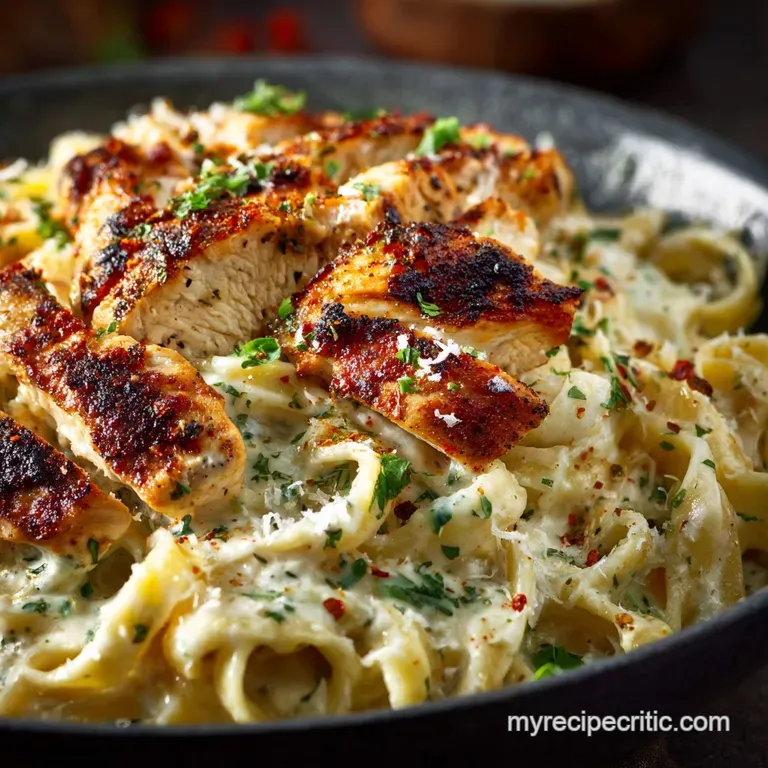
- Why Your Alfredo Sauce Breaks: The Science of Creaminess
- Mastering the Ultimate Chicken Alfredo Experience
- The Essential Pantry Lineup for Rich Chicken Alfredo
- Prepping Ingredients and Required Kitchen Tools
- Step-by-Step: The Seamless Process for Flawless Chicken Alfredo
- Emulsification Secrets: Guaranteeing a Stable and Smooth Sauce
- Troubleshooting and Expert Tips for Your Next Chicken Alfredo Dish
- Expanding the Menu: Easy Variations and Nutritional Analysis
- Recipe FAQs
- 📝 Recipe Card
Why Your Alfredo Sauce Breaks: The Science of Creaminess
Achieving a truly luscious, restaurant quality Creamy Parmesan Sauce relies less on magic and more on basic kitchen chemistry. The most common pitfall when attempting a homemade Chicken Alfredo recipe is a grainy or split sauce.
This failure usually stems from two main issues: overheating the cheese and the presence of anti caking agents. Parmesan is primarily protein and fat, not starch. When the delicate proteins in the cheese are exposed to high, sustained heat especially when dry they seize, clump together, and ultimately curdle, separating from the rich liquid base.
To ensure a velvety finish, we must strictly control the temperature, ensuring the cheese melts slowly into the emulsion rather than cooking rapidly. This critical step guarantees that the final Chicken Alfredo dish is smooth, glossy, and indulgent.
Mastering the Ultimate Chicken Alfredo Experience
This specific Chicken Alfredo recipe provides a comprehensive blueprint for perfection, combining perfectly executed protein, high-quality ingredients, and expert sauce technique.
While the overall process clocks in at a manageable 45 minutes, treating the sauce preparation with respect elevates this Simple Chicken Alfredo Recipe from a basic dinner to a culinary highlight.
We are aiming for a medium level of difficulty that rewards attention to detail with unparalleled richness and flavor.
Debunking the Myths of Authentic Roman Chicken Alfredo
It is a common misconception that this heavy, creamy dish is a centuries old Italian classic. The reality is far more specific and recent. The true, original Alfredo was popularized in Rome in 1914 by Alfredo di Lelio.
His original creation, Fettuccine al Burro (Fettuccine with Butter), contained only fresh Fettuccine Pasta , high-quality butter, and Parmigiano Reggiano.
The modern interpretation, which generously incorporates heavy cream for stability and robustness, is an Americanized evolution, but one that undeniably delivers maximum comfort. Our approach honors the spirit of richness while ensuring the creamy finish beloved today.
Achieving That Silky Finish: Skip the Grainy Grate
The quality and preparation of the cheese are non-negotiable for a silky sauce. To achieve that signature texture in your Chicken Alfredo pasta recipe , you must use high-quality, aged Parmigiano Reggiano and, critically, grate it fresh just before use.
We need approximately 1.5 cups (150g) of finely grated cheese. Pre-grated cheeses contain cellulose or other anti caking agents designed to keep the shreds from clumping in the package. Unfortunately, these additives prevent the cheese from melting smoothly into the sauce, guaranteeing a gritty texture.
Using a microplane ensures the cheese is fine enough to melt almost instantly when introduced off-heat.
From Dry Breast to Tender Bite: The Perfect Pan-Sear Method
The protein component of the dish must stand up to the richness of the sauce without becoming dry or tough. We start with two large chicken breasts (about 550g), sliced lengthwise into cutlets to maximize surface area for searing.
After seasoning generously with salt, pepper, and paprika, the cutlets are seared in olive oil over medium high heat for about 4– 5 minutes per side. This aggressive sear achieves a beautiful golden brown crust while ensuring the interior reaches 165°F (74°C) without drying out.
Crucially, allowing the Seared Chicken Breast to rest for five minutes after cooking and before slicing locks in the moisture, guaranteeing a tender bite when mixed back into the final dish.
Understanding the Role of Pasta Water Starch
The starchy water used to boil the Fettuccine Pasta is often called "liquid gold" by professional chefs for a reason. As the pasta cooks, it releases starch into the water, turning it slightly cloudy.
This starchy liquid is essential; it acts as an emulsifier, helping to bind the fat (butter and heavy cream) with the water in the sauce base. Before draining the pasta, it is vital to reserve about 1.5 cups (350ml) of this starchy cooking water.
Adding it gradually during the final emulsification stage guarantees that your Creamy Parmesan Sauce maintains a stable, homogenous, and velvety consistency, preventing separation.
The Essential Pantry Lineup for Rich Chicken Alfredo
The beauty of a fantastic Chicken Alfredo recipe lies in its simplicity, making quality ingredients paramount. For the foundation of the sauce, you will need two cups (475ml) of heavy cream and a full stick (8 Tbsp or 115g) of unsalted butter, divided for the two main cooking phases.
The backbone of the flavor comes from four cloves of freshly minced garlic and, as noted, 1.5 cups of freshly grated Parmigiano Reggiano. For the carbohydrate, 12 ounces (340g) of Fettuccine Pasta is traditional, absorbing the creamy sauce perfectly.
Finally, the two large chicken cutlets provide the savory element, enhanced by a simple seasoning of salt, pepper, and a touch of paprika.
Prepping Ingredients and Required Kitchen Tools
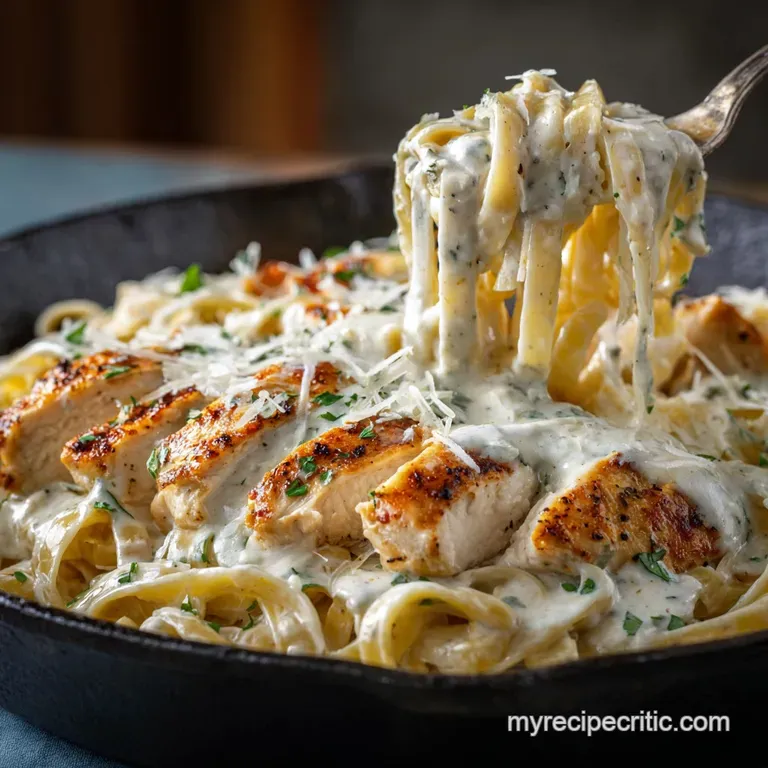
Effective preparation minimizes cooking chaos, contributing significantly to the smooth execution of this 45-minute meal. The 20 minutes allocated for prep must be utilized to grate the cheese, mince the garlic, slice the chicken, and bring all the dairy elements closer to room temperature for seamless melting later.
Heavy Cream vs. Milk: Selecting Your Dairy Foundation
For the best results in this Chicken Alfredo pasta recipe , heavy cream (or double cream) is the superior choice over lighter dairy alternatives like milk or half and-half.
Heavy cream boasts a high fat content typically 36% or more which provides the necessary stability and luxurious mouthfeel. Lower fat dairy products are more prone to curdling when cooked down and lack the richness required to properly coat the Fettuccine Pasta .
Parmesan Matters: Choosing Aged Parmigiano Reggiano
The cheese selection drastically affects the final texture and taste. True Parmigiano Reggiano, typically aged 18 to 24 months, offers a complex, nutty, salty flavor profile unmatched by generic grated Parmesan.
Invest in a wedge and use a microplane or fine box grater to create airy piles of cheese; this fine texture is key to instant, smooth melting when introduced to the warm base.
Sharpening Your Knife: How to Cube Chicken Uniformly
After the 550g of Seared Chicken Breast has rested, uniform slicing is important both for presentation and for ensuring even distribution of the protein throughout the pasta. Aim for bite sized strips or small cubes.
Using a sharp knife prevents tearing the cooked chicken fibers, keeping the pieces tender.
The Only Pot You Need: Selecting the Right Skillet Size
While you'll need a large stock pot for boiling the heavily salted water for the Fettuccine Pasta , the entire process of cooking the protein and building the sauce should occur in one large, heavy bottomed skillet.
A cast iron or quality stainless steel pan is ideal, as its high heat retention ensures an even sear for the chicken and maintains stable, moderate heat necessary for the initial cream reduction.
Related Recipes Worth Trying
- Proper Flaky Mini Chicken Pot Pies Muffin Tin Method — These individual Mini Chicken Pot Pies are the ultimate comfort foodrich filling golden flaky crust and perfectly portioned Great Chicken Pot Pie For One
- Proper Mini Chicken Pot Pies Recipe No Soggy Bottoms Made in a Muffin Tin — Make perfect individual Mini Chicken Pot Pies in your muffin tin Flaky shortcrust pastry prevents the dreaded soggy bottom giving way to a rich thymeinfused...
- Flawless Chicken Noodle Soup with Egg Noodles A Rich Broth Recipe — The ultimate Chicken Noodle Soup with Egg Noodles recipe for cozy meals Learn the trick for a deep savory broth and perfectly tender never mushy noodles A...
step-by-step: The Seamless Process for Flawless Chicken Alfredo
The path to a flawless Chicken Alfredo involves a logical sequence of steps designed to maximize flavor and maintain sauce stability. We start by securing the perfectly cooked protein, then move on to the pasta, reserving the critical starchy liquid, and finally, dedicate full attention to the creation of the Creamy Parmesan Sauce .
Although the process demands focus on heat control, by following the proper stages, this Simple Chicken Alfredo Recipe results in a profoundly satisfying meal.
Emulsification Secrets: Guaranteeing a Stable and Smooth Sauce
The success of your Alfredo sauce hinges on achieving a stable emulsion where fat and water molecules bind seamlessly. We accomplish this by introducing high fat dairy slowly and removing the cheese from the direct heat source.
Phase One: Achieving the Perfect Sear and Setting Aside the Protein
Begin by heating 2 tablespoons of olive oil in the large skillet over medium high heat. Sear the seasoned chicken cutlets for 4– 5 minutes per side until fully cooked and golden. Once done, remove the chicken and place it on a cutting board to rest.
Briefly deglaze the pan with a splash of water, scraping up the flavorful browned bits (fond) from the base. This fond is essential to adding depth to the subsequent sauce.
Phase Two: Building the Butter and Garlic Base (The Flavor Launchpad)
Reduce the heat to medium low. Add 4 tablespoons (half a stick) of the unsalted butter to the skillet, letting it melt into the fond. Once shimmering, add the finely minced garlic and sauté gently for no more than 60 seconds. The goal is fragrance, not browning.
Pour in the 2 cups of heavy cream and bring the liquid to a gentle simmer. Allow it to reduce and thicken slightly for 3– 4 minutes before seasoning lightly.
Phase Three: Slow Melting the Parmesan Without Scrambling the Sauce
This is the most critical juncture. Remove the skillet completely from the heat source. Gradual incorporation is key; add the 1.5 cups of freshly grated Parmigiano Reggiano incrementally, whisking constantly until the cheese fully melts and the sauce is perfectly smooth and glossy.
For a final flourish of richness and sheen, incorporate the remaining 4 tablespoons of cold butter. Use the reserved starchy pasta water, adding it tablespoon by tablespoon, to adjust the consistency to your ideal velvety texture.
Phase Four: Tossing and Plating the Finished Dish (The Final Toss)
Once the sauce consistency is perfect, gently return the cooked Fettuccine Pasta and the sliced Seared Chicken Breast to the skillet. Toss the components quickly but thoroughly until every strand of the Chicken Alfredo pasta recipe is coated in the thick, beautiful sauce.
Plate immediately, garnishing with fresh chopped parsley and a final, celebratory dusting of fresh Parmesan.
Troubleshooting and Expert Tips for Your Next Chicken Alfredo Dish
To ensure every batch of Alfredo is a success, remember that temperature management is everything. Always ensure the grated Parmesan is brought to room temperature before use, as cold cheese meeting hot liquid is a primary cause of graininess.
The non-negotiable step remains removing the pan from the heat before adding the cheese to prevent the dairy proteins from seizing. Finally, do not underestimate the power of that starchy cooking water; it’s the secret ingredient that binds the high fat sauce components into a perfect, uniform emulsion.
Grate your own cheese pre-shredded products contain anti caking agents that make a smooth sauce virtually impossible.
Expanding the Menu: Easy Variations and Nutritional Analysis
This classic Chicken Alfredo serves as a magnificent foundation, but the recipe is highly versatile, allowing for exciting variations and accommodations for different dietary needs.
Fixing a Broken Sauce: Emergency Emulsification Techniques
If, despite your best efforts, the sauce breaks and the fat separates (appearing oily or curdled), there is a chance for recovery. Immediately remove the pan from the heat. Whisk in a tablespoon of cold, reserved starchy pasta water.
If separation persists, whisk in half a teaspoon of Dijon mustard or a squeeze of lemon juice (the acidity helps re-bind the proteins), followed by another splash of cold liquid while whisking vigorously. This sharp temperature change and agitation often successfully re-emulsify the sauce.
Storage and Reheating: Keeping Leftovers Creamy, Not Oily
Leftover Chicken Alfredo can be tricky to reheat, often turning into an oily, dry block. To maintain the creamy texture, store leftovers in an airtight container for up to three days. When reheating, do so gently in a skillet over low heat, rather than microwaving.
Add a small splash (1 2 tablespoons) of heavy cream or milk to introduce extra moisture, stirring constantly until the pasta is warm throughout.
Quick Swaps: Making This Recipe gluten-free or Low-Carb
This indulgent Chicken Alfredo recipe can be easily adapted. For a gluten-free meal, simply substitute the Fettuccine Pasta with a high-quality gluten-free linguine or fettuccine.
For those following a low-carb diet, spaghetti squash, zucchini noodles (zoodles), or shirataki noodles make excellent, lighter alternatives to absorb the Creamy Parmesan Sauce . You can also substitute the chicken with large prawns for a Prawn Alfredo variation.
Calorie Counts and Serving Size Breakdown
This recipe yields four generous servings. Due to the rich content of butter, heavy cream, and Parmesan, the resulting Chicken Alfredo is calorie dense. Each serving is estimated to contain between 850 and 950 kcal, with approximately 55g of protein and 65g of total fat.
This is a celebratory dish, best enjoyed alongside a simple, crisp side salad dressed with a light, acidic vinaigrette to provide a counterpoint to the richness.
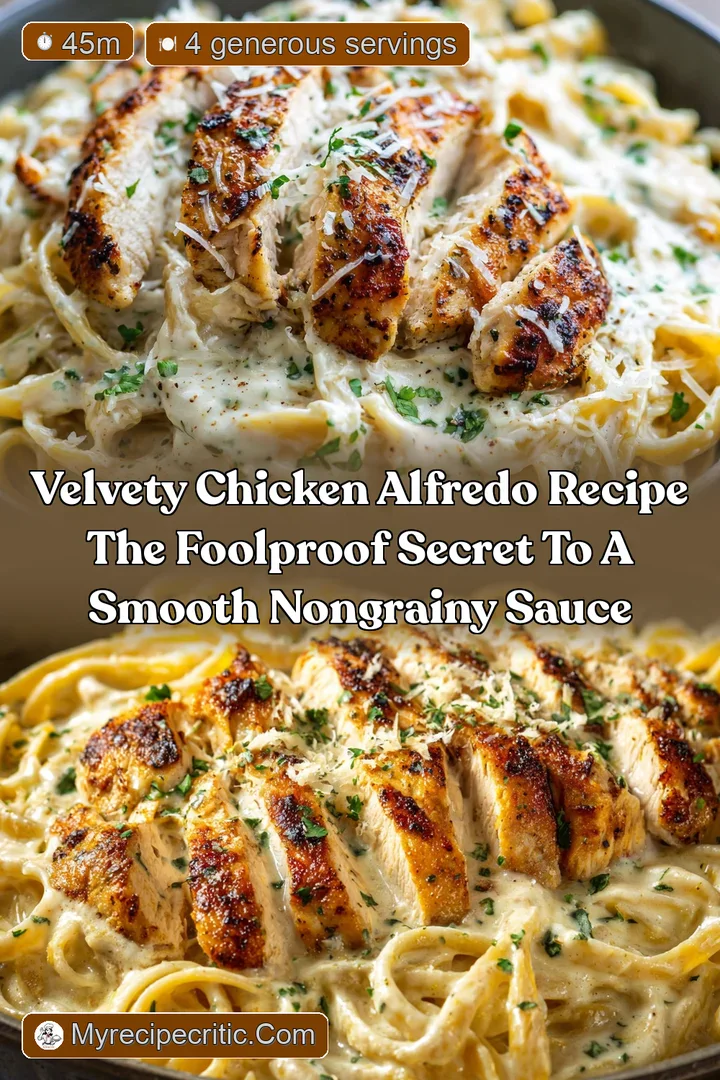
Recipe FAQs
Blimey, my sauce split! How do I stop my Alfredo from turning out grainy or greasy?
It's all about temperature control, mate. High heat will cause the delicate Parmesan proteins to seize, resulting in that dreaded grainy texture. The golden rule is to always remove the pan entirely off the heat source before you start whisking in the cheese.
Also, ensure your cheese is freshly grated; pre-grated stuff contains cellulose which actively resists melting smoothly it's just asking for a disappointment!
I've got loads left over. What's the best way to store and reheat creamy Chicken Alfredo without ruining the texture?
Freezing creamy sauces is generally a no-go, as the dairy tends to separate upon thawing, leaving a watery mess. For the fridge, store leftovers in an airtight container for up to 3 days. When reheating, do it gently on the hob (stovetop) over low heat with a splash of extra cream or milk added.
Stir continuously to loosen the sauce and bring it back to life.
My chicken always seems a bit dry what’s the secret to getting that perfect juicy sear for the chicken?
Juicy chicken relies on two crucial steps: patting it very dry before seasoning and ensuring your pan is ripping hot when the chicken goes in. This creates a good crust quickly and keeps the inside tender.
Once cooked, let the chicken rest for five minutes under foil like a proper Sunday roast to keep those lovely juices locked in before you slice it up.
I fancy making this a bit lighter. Can I swap the heavy cream for milk or use Parmesan from a bag?
While you can substitute some heavy cream for half and-half (single cream), substituting it entirely with regular milk results in a thin sauce that won't emulsify properly it just lacks the necessary fat content.
As for the cheese, please, for the love of all that is Italian, use freshly grated Parmigiano Reggiano. Bagged cheese guarantees a gritty texture, making all your hard work a bit of a damp squib.
I want to jazz up this classic recipe a bit are there any easy ways to add more flavour or veg?
Absolutely! Alfredo is quite versatile for subtle tweaks. For a classic Italian flavour punch, try stirring in a pinch of freshly grated nutmeg when you add the heavy cream it enhances the dairy taste beautifully.
You can also easily sneak in some greens, like chopped sun-dried tomatoes or a handful of fresh spinach, right before tossing the pasta, which helps cut through the richness.
Proper Creamy Chicken Alfredo
Ingredients:
Instructions:
Nutrition Facts:
| Calories | 1298 kcal |
|---|---|
| Protein | 27.3 g |
| Fat | 63.6 g |
| Carbs | 62.1 g |
| Fiber | 25.8 g |
| Sodium | 8066 mg |
