Savory Pretzel Pizza Crust Recipe

- Time: Active 20 minutes, Passive 1 hour 12 mins, Total 1 hour 32 mins
- Flavor/Texture Hook: Deeply savory, dark brown crust with a shattering exterior and pillowy, chewy center
- Perfect for: Upgrading a standard Friday pizza night or impressive party snacks
- Chemical Reactions Creating the Deep Mahogany Color
- Essential Metrics for This Pizza Crust Variation
- Component Analysis for the Best Dough Foundation
- Tools Required for Minimal Mess Kitchen Prep
- Step by Step Guide for Perfect Pizza Assembly
- Fixing Common Issues During the Baking Process
- Customizing the Flavors and Diet Friendly Swaps
- Expert Truths Behind Successful Homemade Dough Baking
- Preserving Quality and Using Every Single Scrap
- Serving Suggestions for Your Savory Pizza Creation
- Common Questions
- 📝 Recipe Card
Have you ever walked past one of those mall pretzel stands and felt like the aroma was physically pulling you toward the counter? That specific scent - yeasty, salty, and slightly metallic - is exactly what we are hunting for here.
For the longest time, I thought that deep, dark crust was some kind of bakery secret I couldn't replicate at home. I tried brushing dough with butter, I tried extra salt, but it never had that authentic "snap" when you bite into it.
The breakthrough happened when I realized we could treat pizza dough exactly like a soft pretzel. We aren't just making a thick pizza; we are creating a hybrid that holds up to heavy toppings while providing that unmistakable alkaline tang.
It’s a total crowd pleaser that makes people ask, "Wait, how did you get the crust that color?"
Honestly, once you try this method, a regular flour and water crust feels a bit plain. We are going to use some simple pantry staples like Arm & Hammer baking soda and King Arthur Bread Flour to transform a basic dough into something spectacular.
Let's get into the mechanics of why this works and how you can nail it on your first try.
Chemical Reactions Creating the Deep Mahogany Color
The secret to a successful pretzel pizza crust lies in the chemistry of the surface. We aren't just baking bread; we are inducing a specific reaction that changes the flavor profile entirely.
- Maillard Reaction Acceleration: The baking soda bath increases the pH level on the surface of the dough, which allows the Maillard reaction (the browning of sugars and proteins) to happen much faster and more intensely at lower temperatures.
- Starch Gelatinization: Dipping the dough into boiling alkaline water "sets" the outside of the crust, creating that classic chewy skin that prevents the pizza from becoming too airy or cracker like.
- Gluten Development: By using bread flour instead of all-purpose, we ensure a high protein content that creates a strong network, allowing the dough to hold its shape even after being boiled.
Essential Metrics for This Pizza Crust Variation
Before we start mixing, let’s look at the hard numbers. Precision is what separates a floppy crust from a professional grade pretzel pizza crust. If your water is too hot, you kill the yeast; too cold, and it won't wake up. Use a digital thermometer like a Taylor Instant Read to be certain.
| Metric | Target Value | Why It Matters |
|---|---|---|
| Water Temperature | 110°F | Optimal range for activating active dry yeast without scalding it. |
| Proofing Time | 60 minutes | Allows the gluten to relax and the yeast to produce carbon dioxide. |
| Baking Temperature | 425°F | High heat is required to crisp the exterior after the water bath. |
Component Analysis for the Best Dough Foundation
Selecting the right ingredients is the first step toward success. You can't just swap everything out and expect the same "snap" in the crust. This pretzel pizza crust relies on the specific protein structure of the flour to stay chewy under the weight of cheese and sauce.
- 1.5 cups warm water (110°F): Provides the hydration for the yeast. Why this? Consistent temp ensures the yeast ferments at a predictable rate.
- 1 tbsp Domino Brown Sugar: Adds a hint of sweetness and food for the yeast. Why this? Molasses in brown sugar aids in the deep browning process.
- 2.25 tsp Fleischmann’s Active Dry Yeast: The engine of the dough. Why this? Provides a reliable, steady rise for a classic chewy texture.
- 2 tbsp Unsalted Butter (melted/cooled): Adds fat for a tender crumb. Why this? Softens the interior so it isn't as tough as a bagel.
- 4.25 cups King Arthur Bread Flour: The structural backbone. Why this? Higher protein than AP flour creates the necessary "chew" factor.
- 2 tsp Fine Sea Salt: Seasons the dough from within. Why this? Fine grains dissolve evenly without leaving salty pockets in the bread.
- 0.5 cup Arm & Hammer Baking Soda: The alkaline agent for the bath. Why this? Essential for the chemical browning and distinct pretzel flavor.
- 1.5 tbsp Coarse Pretzel Salt: The finishing touch. Why this? These large grains won't melt in the oven, providing a salty crunch.
Tools Required for Minimal Mess Kitchen Prep
You don't need a professional bakery to make a high-quality pretzel pizza crust. I prefer a "less is more" approach, using a few reliable pieces of equipment that most home cooks already have in their cabinets.
- Lodge 12 inch Cast Iron Skillet: This is my favorite way to bake this pizza. The heavy metal holds heat, ensuring the bottom of the crust gets as crispy as the edges.
- KitchenAid Stand Mixer: While you can knead by hand, a mixer with a dough hook saves your arms and ensures the gluten is fully developed.
- Large Stockpot: You need something that can hold 8 cups of water comfortably for the alkaline bath without bubbling over.
- Large Slotted Spatula: Crucial for moving the delicate dough in and out of the boiling water.
If you are a fan of traditional bread making techniques, you might notice some similarities between this process and my Artisan Baguette Recipe, specifically in how we handle the hydration of the flour to get that perfect stretch.
step-by-step Guide for Perfect Pizza Assembly
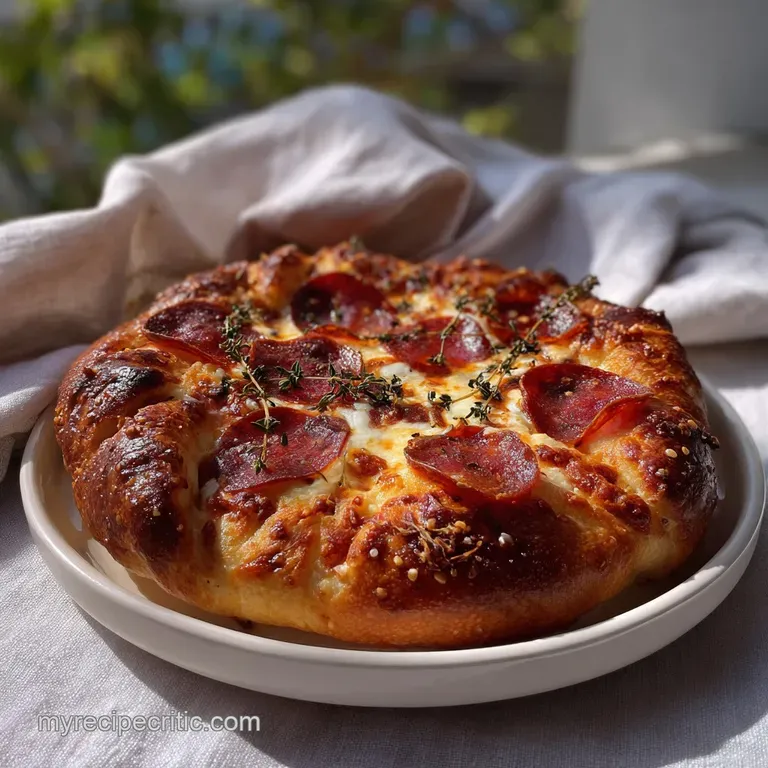
The process of making a pretzel pizza crust is slightly different from a standard pie because of the boiling step. Don't be intimidated; it's just one extra step that makes all the difference.
- Bloom the yeast. Combine 1.5 cups warm water (110°F), 1 tbsp brown sugar, and 2.25 tsp active dry yeast in your mixer bowl. Wait 5 10 minutes until the top is foamy and smells like bread.
- Mix the dough. Add 2 tbsp melted butter, 4.25 cups bread flour, and 2 tsp sea salt. Use the dough hook on low speed until the flour is fully incorporated and no dry streaks remain.
- Knead for strength. Increase the speed to medium and knead for about 5 minutes. You are looking for the dough to clear the sides of the bowl and feel slightly tacky but not sticky.
- First rise. Lightly grease a bowl, toss the dough inside, and cover with plastic wrap. Let it sit in a warm spot for 60 minutes until it has doubled in size.
- Prepare the bath. Bring 8 cups of water to a boil in a large pot. Slowly add 0.5 cup baking soda. Note: Adding it all at once causes a massive foam over, so go slow.
- Shape the crust. Punch down the dough and divide it if making smaller pizzas, or keep it whole. Stretch it into a 12 14 inch circle on a piece of parchment paper.
- The alkaline dip. Carefully slide the dough into the boiling water for 30 seconds. Use your slotted spatula to splash water over the top. The dough will puff up slightly and look pale yellow.
- Transfer and egg wash. Move the boiled dough to your greased baking sheet or cast iron pan. Whisk 1 egg with 1 tbsp water and brush it liberally over the edges.
- Season and bake. Sprinkle 1.5 tbsp coarse pretzel salt onto the wet egg wash. Add your toppings now. Bake at 425°F for 12 minutes until the crust is deep mahogany and the cheese is bubbling.
- Rest before slicing. Let the pizza sit for 5 minutes. This allows the internal steam to settle so the crust stays crispy rather than getting soggy from the toppings.
Fixing Common Issues During the Baking Process
Even experienced cooks can run into trouble when working with alkaline baths and high hydration doughs. If your pretzel pizza crust isn't turning out exactly how you envisioned, one of these common culprits is likely to blame.
The Crust Is Too Dark or Tastes Bitter
This usually happens if the baking soda concentration is too high or the dough stayed in the water for too long. If you leave the dough in the bath for more than 45 seconds, it starts to pick up a soapy, metallic flavor that can ruin the pizza.
The Dough Is Hard to Stretch
If the dough keeps snapping back like a rubber band when you try to shape it, the gluten is simply too tight. This often happens if the room is too cold or you didn't let it rise long enough. Cover it back up and give it another 15 minutes to relax.
| Problem | Cause | Fix | Pro Tip |
|---|---|---|---|
| Soggy Bottom | Toppings were too wet | Pre-cook veggies or use less sauce | Use a preheated pizza stone or cast iron pan. |
| No Browning | Bath wasn't alkaline enough | Check baking soda measurements | Ensure water is at a rolling boil before dipping. |
| Salt Melted | Used table salt | Table salt dissolves in the oven | Only use coarse pretzel salt or Maldon flakes. |
Customizing the Flavors and Diet Friendly Swaps
While the classic pretzel pizza crust is hard to beat, sometimes you need to work with what you have in the pantry. This recipe is surprisingly adaptable as long as you keep the ratios of fat and flour consistent.
If you are looking for a more traditional pizza experience without the pretzel twist, you might enjoy the technique used in this Pretzel Crust Pizza recipe, which focuses heavily on the dough's chewiness.
| Original Ingredient | Substitute | Why It Works |
|---|---|---|
| Bread Flour (4.25 cups) | All-Purpose Flour | Results in a softer, less chewy crust. Note: Reduce water by 2 tbsp. |
| Unsalted Butter (2 tbsp) | Extra Virgin Olive Oil | Adds a peppery note and keeps it dairy-free. |
| Brown Sugar (1 tbsp) | Honey or Maple Syrup | Provides the glucose needed for the yeast to bloom. |
Variations to Try
- Garlic Butter Upgrade: After baking, brush the crust with a mixture of melted butter, garlic powder, and parsley.
- Everything Bagel Twist: Instead of just pretzel salt, use an "everything" seasoning mix for extra texture and onion garlic flavor.
- Cheese Stuffed: Roll the edges of the dough around string cheese before the boiling step for a stuffed crust experience.
Expert Truths Behind Successful Homemade Dough Baking
There are a lot of old wives' tales in the world of bread making. Let's clear up a few things about making a pretzel pizza crust at home so you don't waste time on unnecessary steps.
Myth: You must use lye to get a real pretzel crust. Truth: While professional bakeries use food grade lye, a concentrated baking soda bath (0.5 cup per 8 cups water) provides 90% of the same result with significantly less risk of chemical burns in a home kitchen.
Myth: The dough will cook completely in the boiling water. Truth: The 30 second bath only gelatinizes the surface starch. The interior of the dough remains raw and requires the full 12 minute bake time to reach an internal temp of 190°F.
Myth: You can't use cold water for the dough. Truth: You can, but the rise will take 3 4 hours instead of 60 minutes. Warm water (110°F) is purely a time saving measure for the busy home cook.
Preserving Quality and Using Every Single Scrap
One of the best things about this pretzel pizza crust is how well it holds up. However, because of the salt on the crust, it can attract moisture if left out on the counter.
- Fridge: Store leftovers in an airtight container for up to 4 days. To reheat, avoid the microwave as it makes the crust gummy. Use a toaster oven or air-fryer at 350°F for 4 minutes to restore the "shatter" to the crust.
- Freezer: You can freeze the baked pizza for up to 2 months. Wrap individual slices in foil and place them in a heavy duty freezer bag.
- Zero Waste Tip: If you have leftover dough scraps after trimming your pizza, don't toss them! Roll them into small balls, give them the same 30 second soda bath, and bake them alongside the pizza for "pretzel bites." They are perfect for dipping in leftover pizza sauce or spicy mustard.
Serving Suggestions for Your Savory Pizza Creation
The intense flavor of a pretzel pizza crust requires toppings that can stand up to that salty, malty base. A thin, wimpy cheese won't cut it here. I recommend using a high moisture mozzarella or even a sharp cheddar blend.
Chef's Note: For a truly "pro" finish, serve this pizza with a side of warm beer cheese dip. The bitterness of the beer cuts through the salt of the crust perfectly.
If you are hosting a brunch and want something with a similar doughy satisfaction but a different flavor profile, consider trying a Breakfast Quiche recipe. It offers that same "homemade dough" comfort but with a lighter, egg-based filling.
The "If You Want X, Do Y" Decision List
- If you want a crispier bottom: Pre-heat your baking sheet in the oven for 10 minutes before sliding the boiled dough onto it.
- If you want a softer, bun-like crust: Skip the egg wash and brush the crust with melted butter immediately after it comes out of the oven.
- If you want a deeper color: Increase the baking soda to 2/3 cup, but be careful not to exceed 30 seconds in the bath or it will taste like soap.
Making a pretzel pizza crust is all about confidence in the kitchen. Once you see that dough transform in the boiling water, you'll realize it's a simple technique that yields massive rewards. It's thick, it's chewy, and it's exactly what your Friday night has been missing.
Grab your bread flour and let's get baking!

Common Questions
What is the essential chemical step for achieving the dark pretzel color?
The baking soda bath increases the pH on the surface, accelerating the Maillard reaction for intense, fast browning. This alkaline environment transforms the crust profile completely.
Can I substitute Bread Flour with All-Purpose Flour?
All-Purpose Flour. It will yield a softer, less structurally chewy crust compared to the high protein bread flour required here.
Why is my pretzel pizza crust dough snapping back when I try to shape it?
The gluten network is too tight, usually due to cold temperatures or insufficient resting time. The dough needs time for the gluten strands to relax.
- Cover the dough and let it rest 15 more minutes
- Ensure the proofing area is slightly warm
- Avoid over kneading initially
Is it necessary to boil the dough before baking?
Yes, boiling is necessary. Dipping sets the exterior crust, creating the classic chewy texture and preventing excessive puffiness during baking.
Can I use regular table salt instead of coarse pretzel salt?
Coarse pretzel salt. Table salt dissolves quickly in the oven heat, whereas coarse salt stays intact for the required salty crunch on the exterior.
Should I wash chicken before cooking?
Myth: Washing removes bacteria. Reality: Spreads Salmonella. Cook to 165°F.
What is the difference between using Bread Flour versus All-Purpose Flour for this recipe?
Bread Flour. Its higher protein content is essential for developing the strong gluten matrix needed to support heavy toppings without collapsing.
Pretzel Pizza Crust Recipe
Ingredients:
Instructions:
Nutrition Facts:
| Calories | 279 kcal |
|---|---|
| Protein | 9.2 g |
| Fat | 3.8 g |
| Carbs | 51.4 g |
| Fiber | 1.9 g |
| Sugar | 1.7 g |
| Sodium | 1180 mg |
