Seared Ahi Tuna: Sesame-Ginger Crust with Quick Ponzu
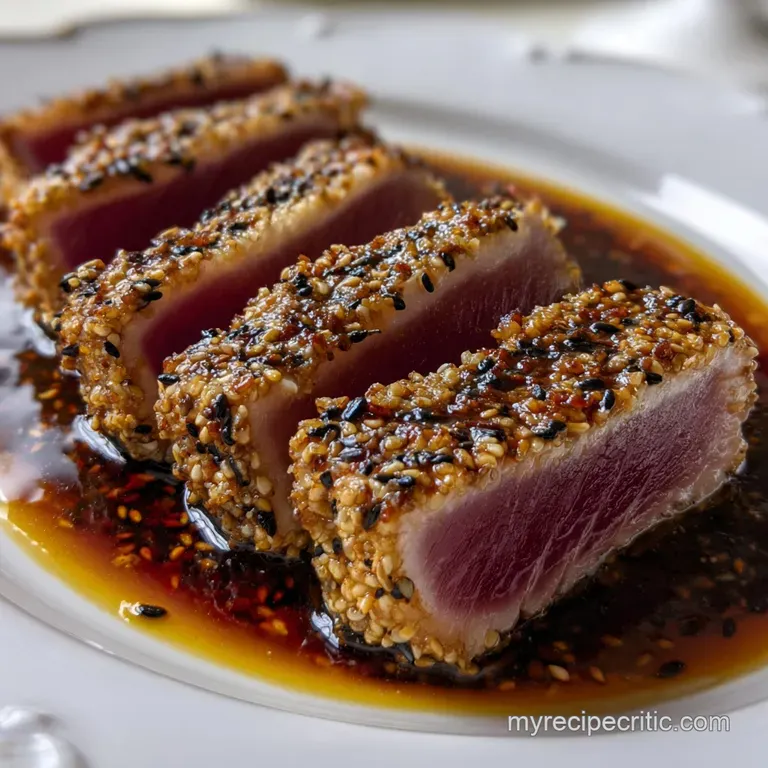
- Mastering the Art of the Four-Minute Ahi Tuna Sear
- Sourcing Quality: Selecting and Preparing Your Tuna Steaks
- Step-by-Step: Executing the Perfect Ahi Sear
- Safety, Slicing, and Troubleshooting: Expert Ahi Tuna Pointers
- Elevated Pairings for Your Sesame-Crusted Tuna
- Storing Leftovers: Keeping Seared Tuna Fresh (If There Are Any)
- Recipe FAQs
- 📝 Recipe Card
This is the secret weapon for every home cook who wants to impress with zero stress. That beautiful, crisp, nutty crust, that satisfying shatter sound as your knife slices through it and then, the cool, buttery smooth red interior.
We are talking about the perfect Seared Ahi Tuna . It's a culinary sprint, not a marathon, and when you nail the timing, the results are genuinely breathtaking.
Honestly, this Seared Ahi Tuna looks like you spent hours preparing a sophisticated meal, but it takes less than 20 minutes from fridge to plate. Forget expensive takeout; this is the ultimate fast dinner recipe that delivers maximum flavour payoff for minimal effort.
Plus, it’s a high protein dinner that doesn't leave you feeling heavy. I used to absolutely ruin my tuna, turning it a dismal grey shade, until I finally figured out the crucial mistake (it involves heat, obviously).
I'm sharing all the hard won secrets, the exact temperatures, and the specific resting time that ensures your Seared Ahi Tuna Recipe is a resounding success every single time. Let’s crack on and master this incredible dish.
Mastering the Art of the Four Minute Ahi Tuna Sear
This entire process hinges on one thing: thermal contrast. You need the outside to achieve a deep, flavourful crust while the inside remains practically raw and cool. The difference between good tuna and great tuna is about thirty seconds and a lot of heat.
Why Ahi Tuna is the Ideal Quick Sear Fish
Ahi tuna (also known as Yellowfin) is the perfect candidate for this rapid fire technique. Unlike flaky fish like cod or snapper, Ahi tuna is dense, lean, and holds its shape beautifully under high heat. This structural integrity allows us to create an intense outer crust without cooking through the centre.
If you are looking for a showstopper Seared Ahi Tuna Steak , the inherent quality of the fish does most of the work.
Decoding the Sesame Ginger and Ponzu Flavor Blend
The sesame crust provides crucial texture and nutty warmth, but it’s the sauce that truly transforms the dish. The homemade quick Ponzu is bright, acidic, and slightly savory. The sharpness of the lime and vinegar cuts through the richness of the buttery Ahi Tuna, making every bite feel fresh and balanced.
If you’ve ever had boring Seared Ahi Tuna , it was probably missing this essential acidic counterpoint.
Understanding the "Rare But-Perfectly Crusted" Goal
We are not aiming for medium rare. We are aiming for rare . If you cook the tuna until the pink centre is warm, you’ve gone too far. The goal is to see about an eighth inch crust of fully cooked fish, transitioning abruptly to a cool, deep red interior.
This requires ruthless discipline regarding your cook time.
The Maillard Reaction: Achieving the Ultimate Sesame Crust
The Maillard Reaction that beautiful chemical process that browns food requires dry heat and very little time when dealing with thin protein. For this Seared Ahi Tuna , we ensure the seeds stick firmly and that the fish is bone dry before it hits the pan.
The instant contact with scorching oil caramelizes the crust ingredients, locking in the flavour and giving you that addictive crunch.
Thermal Contrast: Keeping the Core Buttery Cool
The secret to keeping the centre cool is the sheer intensity of the heat and the speed of the cook. A cast iron skillet is crucial here because it retains and transfers heat exceptionally well.
If you cook your Seared Ahi Tuna on low heat, the heat will slowly penetrate the entire steak before the crust can form, resulting in that dreaded grey, dry texture.
Balancing Act: Acidic Ponzu vs. Rich Ahi Tuna
The richness of the fish is balanced not just by the Ponzu, but also by the salt content in the sesame crust. Always salt your fish before you coat it. Salt helps draw out surface moisture and acts as a barrier, preventing the delicious Seared Ahi Tuna from tasting dull.
Sourcing Quality: Selecting and Preparing Your Tuna Steaks
You cannot cheat the system here. Since you are eating the fish mostly raw, quality is paramount. This isn't the time to grab the cheap stuff.
Sushi Grade vs. Saku Block: What to Look For
Always ask your fishmonger for "sashimi grade" or "sushi grade" Yellowfin tuna. This designation means the fish has been handled and frozen specifically to make it safe for raw consumption. Look for steaks that are vibrant, deep red, with no brown spots or dullness.
A thickness of about 1 to 1.5 inches is absolutely ideal for preparing a flawless Seared Ahi Tuna Steak .
Prepping the Ahi: The Optimal Thickness and Shape
If your tuna steaks are too thin (less than 3/4 inch), they will cook all the way through before you develop a crust. If they are too thick (over 1.5 inches), you might end up with a cool crust and a frozen centre. The ideal steak is roughly a square or rectangular block, about 1 inch thick.
Pat the fish aggressively dry with paper towels this is the single most important step before searing.
Crafting the Zesty Quick Ponzu Components
This quick Ponzu is a fantastic sauce that you can whip up in minutes, adding enormous depth to your Seared Ahi Tuna .
| Component | Standard Ingredient | Substitution for Ponzu |
|---|---|---|
| Soy Base | Low Sodium Soy Sauce | Tamari (gluten-free) or Coconut Aminos (Soy-Free) |
| Acid | Rice Vinegar | White Wine Vinegar (use half the amount) |
| Sweetener | Honey or Maple Syrup | A pinch of white sugar dissolved in the lime juice |
| Zest | Fresh Lime Juice | Lemon Juice or even a squeeze of Orange Juice |
Essential Substitutions for the Sesame Crust Ingredients
If you don't have a mix of black and white sesame seeds, simply use all white. No ground ginger? Use a tiny, tiny amount of freshly grated ginger and mix it into the seeds, but be careful not to make the crust too wet.
You can also pivot the flavour completely; sometimes I skip the sesame entirely and do a blackened crust, which reminds me a lot of my technique for [PanSeared Steak: Restaurant Style Crust in 20 Minutes Fast].
step-by-step: Executing the Perfect Ahi Sear
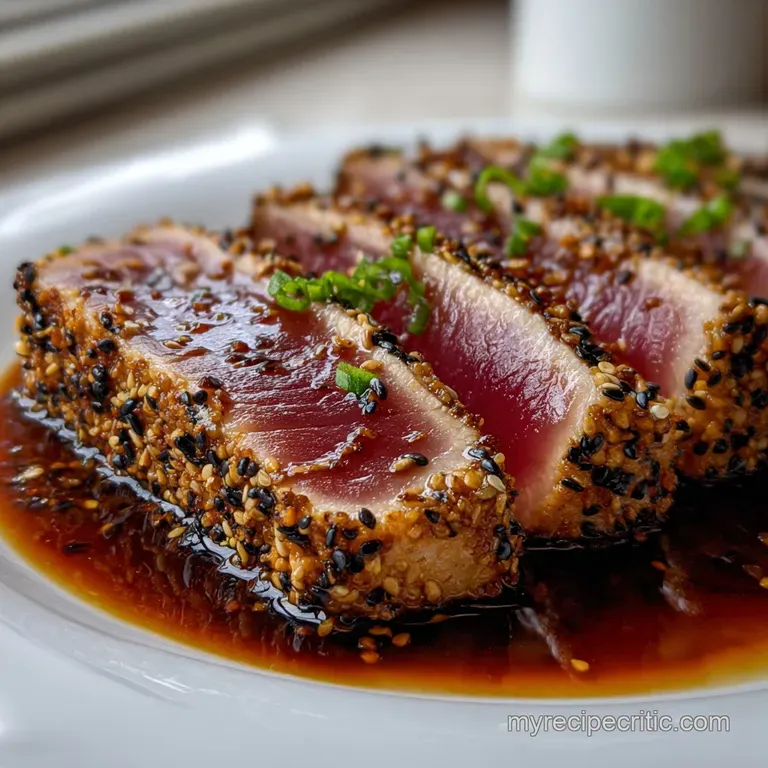
I cannot overstate this: read the instructions once, set up your ingredients (mise en place), and then move with confidence and speed.
Preparing the Tuna with the Sesame Ginger Coating
Start by seasoning your dry tuna steaks with salt and pepper first. This ensures the seasoning adheres directly to the meat. Next, combine all your sesame seeds and ginger in a shallow dish. Press the tuna steaks firmly into the seed mixture, rotating to coat all four sides and the top and bottom.
You want a thick, uniform coating on the outside of your Seared Ahi Tuna .
Crucial: Achieving Maximum Pan Heat and Smoke Point
Place your cast iron pan over high heat . Do not add the oil yet. Let the pan heat for a good 3 minutes until you can see wisps of heat radiating off it. When the pan is screaming hot, add the high smoke point oil (like peanut or avocado).
The oil should shimmer immediately and start to smoke lightly. If the oil smokes too aggressively, turn the heat down slightly, but the pan must be hot enough to form a crust in seconds.
The 60 Second Rule: Precision Cooking Times per Side
Carefully place the coated tuna in the hot oil. You should hear an immediate, loud, satisfying sizzle. This is the Seared Ahi Tuna Crunch starting to form. Sear for 60 to 90 seconds per side, depending on how dark you want the crust.
Use tongs to gently sear the thin edges for about 15 seconds each, rotating the steak quickly. If you have thicker steaks, lean toward 90 seconds. If they are exactly one inch, 60 seconds is usually the sweet spot for that perfect rare centre.
Why Resting is Non-Negotiable Before Slicing
Just like any other piece of protein that has undergone intense heat, your Seared Ahi Tuna needs time to rest. Immediately transfer the steaks to a clean cutting board. Give it 5 minutes.
This allows the heat energy to redistribute from the outside layers into the cooler centre, resulting in a buttery, even texture when you slice it. If you cut it too soon, all the beautiful juices will run out, leaving the fish drier.
Chef’s Note: Use the 5 minute resting period to clean up your searing pan and plate your side dishes. Efficiency is key!
Safety, Slicing, and Troubleshooting: Expert Ahi Tuna Pointers
Food Safety Check: Is Your Tuna Truly Safe to Eat Rare?
Always, always ensure you purchased sushi grade Ahi tuna. If you are unsure about the source or its quality, it is safer to increase the cook time to medium rare (around 2 minutes per side) to ensure any parasites or bacteria are killed.
However, for the truly intended flavor profile of Seared Ahi Tuna , stick with verified high-quality fish.
Common Mistake: Overcrowding the Pan
If you try to sear all four steaks at once in a medium sized pan, the pan temperature will drop dramatically. This prevents the Maillard reaction and your fish will steam, giving you a tough, pale crust. Cook your Seared Ahi Tuna in batches. Only place two steaks in a 10 inch pan at a time.
Let the pan reheat for 30 seconds between batches.
Mastering the Diagonal Slice: Presentation Matters
To serve your beautiful Seared Ahi Tuna , slice it thinly against the grain. This means cutting perpendicular to the direction of the muscle fibres. Use a very sharp knife and slice at a slight diagonal (about a 45 degree angle) into medallions that are roughly 1/4 inch thick.
This technique elongates the slices and makes the presentation stunning. Arrange the slices fanned out on the plate and serve with the Quick Ponzu.
Elevated Pairings for Your Sesame Crusted Tuna
This Seared Ahi Tuna is robust enough to stand up to bold sides but delicate enough to pair with light vegetables. It is such a versatile protein dinner.
The Best Starch Companions (Rice and Noodles)
For a filling meal, nothing beats a classic Seared Ahi Tuna Bowl . Serve the sliced tuna over fluffy steamed rice (Jasmine or Sushi rice works perfectly). If you prefer noodles, chilled sesame noodles or a quick lo mein tossed with a light soy and ginger dressing makes a wonderful accompaniment.
Fresh Salad and Vegetable Accents
If you want a lighter meal, turn your creation into a beautiful Seared Ahi Tuna Salad . Crisp, peppery arugula or mixed greens tossed in a light vinaigrette with avocado slices and julienned carrots provide that beautiful crunch.
I often serve this with a quick slaw made of thinly sliced cabbage, cilantro, and rice vinegar.
Selecting the Perfect Wine or Beverage Pairing
Since we have bold, savory notes from the sear and bright acidity from the Ponzu, a highly acidic and crisp wine is best. A dry New Zealand Sauvignon Blanc, or a light bodied, chilled Rosé complements the flavors beautifully.
Storing Leftovers: Keeping Seared Tuna Fresh (If There Are Any)
If you made extra Seared Ahi Tuna (a rare event, I know), storing it properly is essential because it is mostly raw.
Store any leftover slices in an airtight container in the coldest part of your fridge (usually the back of the bottom shelf) for no more than 2 days. Because the core is still raw, it degrades much faster than fully cooked protein. Do not attempt to freeze Seared Ahi Tuna.
The delicate texture will be completely ruined upon thawing.
If you have leftovers the next day, slice them thinly and incorporate them into a dish where they remain cold. Leftover slices of Seared Ahi Tuna make an incredible high protein lunch when added to a bowl of mixed greens, or a fantastic addition to homemade poke.
If you want a more cooked tuna recipe for future planning, check out my recipe for a [Tuna Sandwich: The Best Clean Tuna Salad Recipe Yet], which is perfect for meal prepping.
This Seared Ahi Tuna is proof that restaurant quality dining is completely achievable in your own kitchen with minimal effort. Go forth, sear boldly, and enjoy the spoils of your perfectly timed four minute masterpiece.
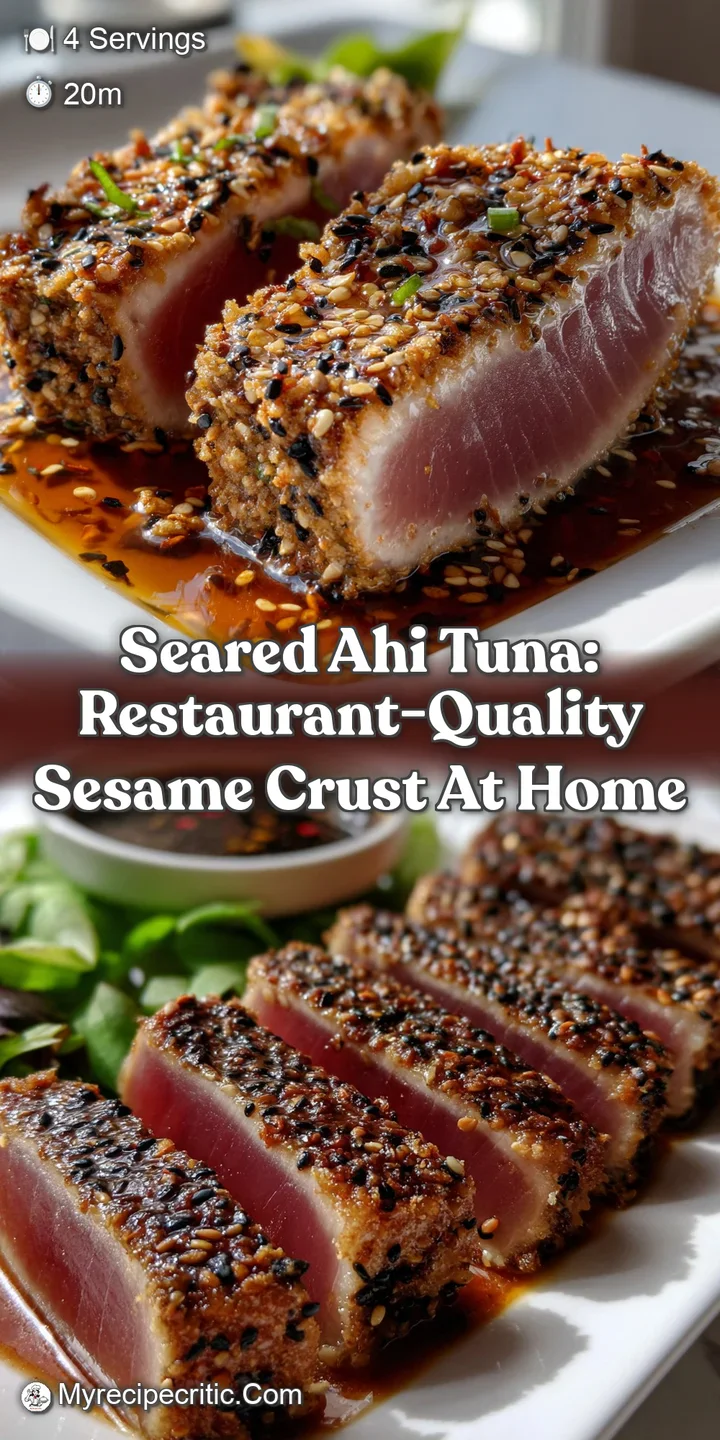
Recipe FAQs
What should I look for when buying Ahi tuna for searing?
Always purchase "sushi grade" or "sashimi grade" quality from a reputable fishmonger, as you will be eating the interior raw. The flesh should be uniformly vibrant red, wet, and firm, with no milky residue or brown discoloration.
Confirm that it has been properly handled and flash frozen to ensure maximum safety and freshness.
My crust isn't getting crispy, or the sesame seeds are falling off. What went wrong?
High heat is absolutely essential for a successful crust; ensure your pan is smoking hot before adding the fish. Additionally, pat the tuna steak extremely dry before applying the oil and the sesame ginger crust. Any residual moisture will cause the surface to steam rather than achieve a crisp, deep sear.
How rare should the tuna be for safe consumption?
The interior should remain cool, bright pink, or red only the outer millimeter should show a change in color from the searing heat. Safety relies entirely on using quality, sushi grade tuna that has been properly processed.
If you are unsure about the quality of the fish, cook it slightly longer, though this compromises the classic ahi texture.
Can I use a different crust besides sesame and ginger?
Absolutely. A simple cracked black pepper crust or a fine coating of chili powder and coriander works wonderfully as a substitute. Ensure your coating ingredients are finely ground so they adhere smoothly and evenly, creating a consistent seal during the high heat sear.
My tuna turned gray and dry, without that beautiful rare center. How do I fix this?
This happens when the searing time is too long or the heat is too low, allowing heat to penetrate the center of the steak. The goal is 30 to 90 seconds per side maximum when using screaming hot heat. Ensure your pan temperature doesn't drop when you place the fish in, and remove it promptly to rest.
What is the best type of pan to use for achieving a perfect high heat sear?
A heavy bottomed cast iron skillet or a high-quality stainless steel pan is ideal because they retain heat consistently even after adding the cold fish. Avoid using non-stick pans if possible, as they rarely reach the necessary searing temperatures required to cook the crust rapidly without overcooking the interior.
How should I store leftover seared tuna?
Seared Ahi tuna is best consumed immediately upon slicing for optimal texture and flavour. If you have leftovers, wrap the slices tightly and store them in the refrigerator for up to two days. Note that the slices will continue to "cook" slightly as they rest, losing some of the rare, buttery texture.
Perfect Seared Ahi Tuna Recipe 2
Ingredients:
Instructions:
Nutrition Facts:
| Calories | 269 kcal |
|---|---|
| Protein | 35.0 g |
| Fat | 7.9 g |
| Carbs | 11.8 g |
