Black Eyed Peas: Velvety & Smoke-Infused Southern Style
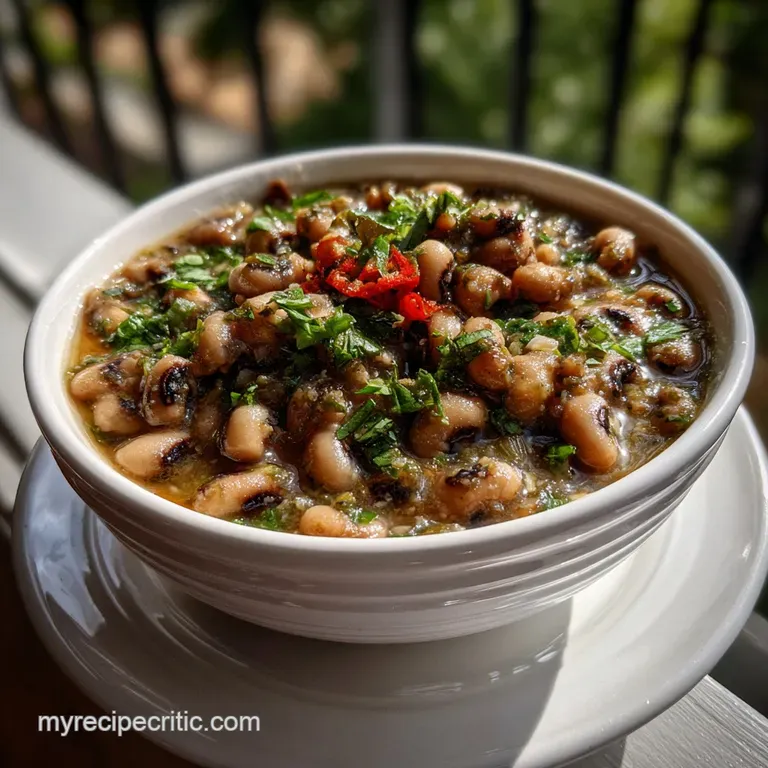
- Effort/Time: Low-intensity simmer / 1 hour 45 mins total.
- Flavor Hook: Deeply savory pot likker with a creeping heat from cayenne.
- Perfect for: New Year’s Day traditions or soul-warming Sunday dinners.
- The Soul of the South: Mastering Traditional Black Eyed Peas
- The Molecular Magic Behind This Smoky Pot Likker
- Precision Timing and Thermal Goals for Legume Success
- The Alchemy of Umami: Selecting Your Elements
- Technical Tools for Optimal Heat Distribution
- The Action Protocol: Building Layers of Depth
- Resolving Structural Failures and Flavor Imbalance
- Adapting the Profile for Diverse Palates
- ⚗️ The Scaling Lab
- Debunking Common Legume Myths
- Preserving Texture and Preventing Retrogradation
- Harmonizing Your Table with Southern Classics
- Recipe FAQs
- 📝 Recipe Card
The Soul of the South: Mastering Traditional Black Eyed Peas
There is nothing more disheartening than spending two hours hovering over a stove only to ladle out a bowl of gritty, flavorless pellets swimming in a thin, watery gray liquid. It’s a waste of a good smoked ham hock and an even bigger waste of your afternoon.
I’ve been there biting into a pea that looks tender but has a stubborn, chalky core that ruins the entire sensory experience.
I once ruined a New Year's Day meal for twelve by cranking the heat to a rolling boil, thinking I could "speed up" the physics of hydration. Instead of creamy black eyed peas, I ended up with a pot of exploded skins and mushy starch while the centers remained unpleasantly firm.
It was a humble lesson in the relationship between thermal energy and legume cell walls that I’ll never forget.
The secret to success isn't a "miracle" ingredient; it’s the scientific patience of a low and slow braise. By allowing the connective tissue in the ham hock to break down into gelatin, we create a viscous, mahogany colored "pot likker" that coats every bite.
When you pair this with the gentle softening of the pea's hemicellulose, the result is a shattering of the "bland bean" stereotype, replaced by a complex, velvet textured staple.
The Molecular Magic Behind This Smoky Pot Likker
- Collagen Hydrolysis: Long term simmering of the smoked ham hock converts tough collagen into gelatin, providing the "body" and mouth coating richness to the broth.
- Hemicellulose Softening: Low, steady heat allows the cell walls of the black eyed peas to soften without the starch granules expanding so rapidly that the skins rupture.
- Lipid Emulsification: Dicing and rendering the salt pork creates a fat base that, when whisked by the gentle convection of simmering stock, forms a stable emulsion with the vegetable aromatics.
- Aromatic Layering: The "Holy Trinity" (onion, celery, bell pepper) undergoes the Maillard reaction during the sauté phase, creating sulfurous and sweet compounds that anchor the smoky notes.
Precision Timing and Thermal Goals for Legume Success
To achieve the desired texture, we must adhere to specific temporal and thermal constraints. The black eyed peas require a total of 1 hour 45 mins to transition from hard seeds to tender legumes.
- Preparation Time: 15 minutes
- Active Cooking Time: 1 hour 30 mins
- Yield: 8 servings
- Target Texture: Velvety, creamy, and structural integrity maintained.
The Alchemy of Umami: Selecting Your Elements
Selecting the right components for your black eyed peas is about more than just checking a list; it is about understanding the chemical contribution of each player.
For instance, using Diamond Crystal Kosher Salt allows for better control over salinity levels compared to fine table salt, which can easily over season a reducing broth.
Ingredient Chemistry Breakdown
| Ingredient | Chemical/Physical Role (Science) | The Pro Secret (Why This Matters) |
|---|---|---|
| Smoked Ham Hock | Collagen hydrolysis | Provides the gelatinous "lip-smacking" texture to the pot likker. |
| Dried Black Eyed Peas | Starch gelatinization | Absorbs savory liquid while pectin in the skins keeps them intact. |
| Salt Pork | Lipid rendering | High fat-to-meat ratio provides the essential oil-based flavor carrier. |
| Chicken Stock | Umami fortification | Contains glutamates that amplify the natural savory profile of the peas. |
- 1 lb dry black eyed peas: Sorted and rinsed. Why this? Dried legumes allow for better flavor absorption than canned versions.
- 1 large smoked ham hock: The primary source of smoke and gelatin.
- 4 oz salt pork, diced: Provides the initial fat for sautéing.
- 1 large yellow onion: Finely diced for even distribution.
- 2 stalks celery: Adds a structural, vegetal base.
- 1 green bell pepper: Completes the aromatic trinity.
- 4 cloves garlic: Minced to release allicin.
- 6 cups Swanson Chicken Stock: The liquid medium for the braise.
- 2 dried bay leaves: Adds a subtle floral, herbal backbone.
- 1 tsp dried thyme: Earthy notes that pair with the smoky pork.
- 1/2 tsp cayenne pepper: Provides a controlled capsicum "back heat."
- 1 tsp Diamond Crystal Kosher Salt: For precise seasoning control.
- 1/2 tsp black pepper: Freshly cracked for aromatic pungency.
Technical Tools for Optimal Heat Distribution
The vessel you choose significantly impacts the evaporation rate and heat retention. I highly recommend using a Lodge Enameled Cast Iron Dutch Oven. The heavy walls provide superior thermal mass, ensuring that once your black eyed peas reach a simmer, they stay there with minimal flame adjustment.
You will also need a heavy duty wooden spoon for scraping the "fond" (the browned bits) off the bottom of the pot. This is where the concentrated flavor lives. A stainless steel colander is essential for the initial sorting and rinsing of the peas to remove any debris or field stones that could lead to a dental emergency.
The Action Protocol: Building Layers of Depth
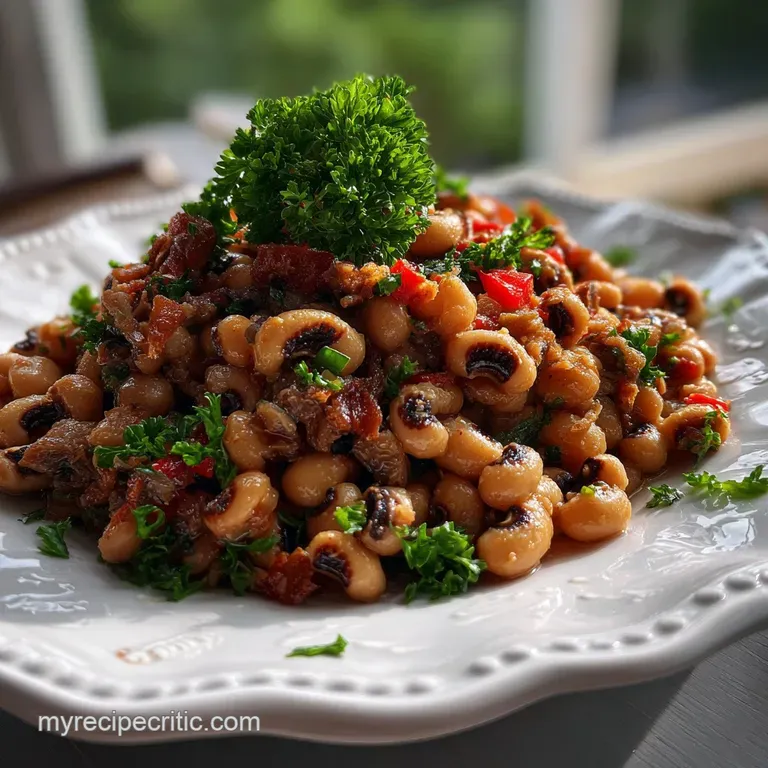
- Sort the 1 lb dry black eyed peas. Note: Remove any stones or shriveled peas to ensure uniform texture.
- Rinse peas under cold water in a colander for 2 minutes until the water runs clear and foam subsides.
- Render 4 oz diced salt pork in a Dutch oven over medium heat for 8 minutes until fat liquefies and bits are crispy/golden.
- Sauté diced onion, celery, and bell pepper in the rendered fat for 6 minutes until edges are translucent and the aroma shifts from pungent to sweet.
- Stir in 4 cloves minced garlic for 60 seconds until fragrant but not browned or bitter.
- Deglaze the pot with 6 cups Swanson Chicken Stock, scraping the bottom until all browned bits are integrated into the liquid.
- Add the 1 lb rinsed peas, ham hock, 2 bay leaves, 1 tsp thyme, 1/2 tsp cayenne, 1 tsp salt, and 1/2 tsp pepper.
- Simmer the mixture by bringing to a boil, then immediately dropping to low heat for 1 hour 15 mins until peas are tender when pressed against the roof of your mouth.
- Remove the ham hock to a cutting board for 10 minutes until cool enough to handle.
- Shred meat from the hock, discard bones/fat, and return meat to the pot for 5 minutes until everything is heated through and the broth thickened slightly.
Chef's Tip: To achieve an ultra creamy pot likker without adding cream, take one cup of the cooked peas, mash them into a paste with a fork, and stir them back into the pot. This releases internal starches that act as a natural thickener.
Resolving Structural Failures and Flavor Imbalance
Understanding the physics of legumes helps you fix problems before they ruin the meal. If you've ever mastered a Proper Southern Comfort recipe, you know that heat control is everything.
Why Your Peas Stay Tough
If your black eyed peas are still hard after 90 minutes, it’s likely due to "hard water" or old beans. Calcium and magnesium in tap water can bind to the pectin in the pea skins, preventing them from softening.
| Problem | Root Cause | The Fix | Pro Protocol |
|---|---|---|---|
| Crunchy centers | Old beans or acidic environment | Add 1/8 tsp baking soda | Soda raises pH, weakening the pectin bonds for faster softening. |
| Bursting skins | Vigorous boiling | Reduce heat immediately | Keep at a "lazy bubble" (approx 190°F) to prevent mechanical damage. |
| Thin, watery broth | Insufficient starch release | Mash a portion of the peas | Creates a natural emulsion with the pork fats. |
Why Your Broth is Bitter
Burnt garlic is the most common culprit. If you notice a bitter aftertaste, ensure you are adding the garlic only after the other vegetables have released their moisture, which acts as a heat buffer.
Adapting the Profile for Diverse Palates
This Black Eyed Peas Recipe is a foundation that can be modified. However, remember that every swap changes the chemical outcome.
| Original Ingredient | Substitute | Why It Works |
|---|---|---|
| Salt Pork | Thick cut Bacon | Similar fat content; adds a more pronounced smoky/sweet profile. |
| Chicken Stock | Vegetable Broth | Lighter flavor. Note: Lacks the gelatin found in animal based stocks. |
| Smoked Ham Hock | Smoked Turkey Wing | Lower fat but high smoke concentration. Drier meat texture. |
| Yellow Onion | Leeks | Sweeter, more delicate sulfur compounds. Best for a refined version. |
⚗️ The Scaling Lab
When doubling this black eyed peas recipe for a large gathering, physics dictates you cannot simply double everything.
- The Evaporation Paradox: If you double the volume in the same diameter pot, the surface area remains the same. Reduce the chicken stock to 10 cups (instead of 12) to avoid a diluted, watery result.
- Flavor Saturation: Spices like cayenne and thyme accumulate non-linearly. Scale these to 1.5x (3/4 tsp cayenne) and taste before adding more.
- Thermal Mass: A double batch has significant thermal mass. It will take longer to reach a simmer, and the carry over heat will be higher. Turn off the heat when the peas are just shy of your desired tenderness; they will continue to soften for 15 minutes as the pot cools.
Debunking Common Legume Myths
- Myth: You must soak black eyed peas overnight.
Truth: Unlike kidney beans, these peas have thinner skins. Soaking is optional and often results in a loss of flavor and "pot likker" richness.
Myth: Adding salt at the beginning makes beans tough.
- Truth: This is a persistent culinary myth. Salt actually helps the skins soften more evenly by displacing magnesium/calcium ions in the pectin.
Preserving Texture and Preventing Retrogradation
Storage
Store leftover black eyed peas in an airtight container in the fridge for up to 4 days. As they cool, the starches will undergo retrogradation, causing the broth to thicken into a gel-like consistency. This is normal and a sign of a high gelatin stock.
Freezing
These freeze beautifully for up to 6 months. Leave 1 inch of headspace in your freezer bag to allow for liquid expansion.
Reheating
Reheat over low heat on the stove, adding a splash of water or stock to loosen the starch network. Avoid the microwave if possible, as it can cause "hot spots" that explode the delicate peas.
💡 ZERO WASTE PHILOSOPHY
Don't discard the ham hock bone! Transform: Simmer it a second time with just water and veggie scraps to make a "remouillage" (second stock). Science: Even after the first boil, the deep marrow and bone structure contain residual collagen and smoky phenols that make a perfect base for a Black Bottom Cupcakes recipe — just kidding, use it for a smoky soup base instead!
Harmonizing Your Table with Southern Classics
Serving black eyed peas is about texture and acid balance. The richness of the pork and the creaminess of the peas cry out for a sharp contrast.
- Cornbread: A must have for soaking up every drop of the pot likker. The grainy texture provides a mechanical contrast to the soft legumes.
- Collard Greens: The acidity of vinegar braised greens cuts through the heavy lipids of the salt pork.
- Rice: Serve the peas over long grain white rice (Hopping John style) to stretch the servings and add a neutral starch base.
- Hot Sauce: A vinegar based hot sauce provides both the acetic acid and the heat needed to "wake up" the deep, earthy flavors of the black eyed peas.
By focusing on the science of the simmer and the quality of your smoky base, you’ve moved beyond a simple side dish. You’ve mastered a technical braise that honors tradition while respecting the physics of the ingredients. Let's crack on and get that pot simmering.

Recipe FAQs
how to make black eyed peas?
Simmer smoked meat low and slow with aromatics for 1 hour 45 minutes. Achieve creaminess by using smoked ham hock for gelatin and maintaining a consistent, low temperature simmer after the initial boil. This gentle heat ensures cell wall breakdown without rupturing the skins.
- Sort and rinse peas thoroughly first
- Sauté the Holy Trinity (onion, celery, pepper)
- Use high-quality chicken stock for the braise liquid
how to make black eyed peas in crock pot?
Use low setting for 6-8 hours or high for 3-4 hours. The principle remains the same: adequate time allows collagen in the ham hock to hydrolyze into mouth coating gelatin. If you master the technique of layering aromatics in a Dutch oven, see how the same principle of thermal patience applies when mastering the searing phase in our Green Pepper Casserole Proper Comfort Food Easy Peasy.
how to make black eyed peas taste good?
Build deep flavor using rendered salt pork and a smoked ham hock. Flavor relies on creating a stable emulsion between rendered pork fat and the vegetable aromatics during the sauté phase. A final addition of acid (like vinegar based hot sauce) balances the richness of the smoky broth.
how to make black eyed peas in instant pot?
Pressure cook on High for 25-30 minutes followed by a Natural Release. High pressure drastically reduces the hydration time required by thermal conduction alone. If you are interested in fast cooking methods, applying the concept of pressure to quick veggie meals is similar to how we balance ingredients in the Groovy Avocado black bean quesadilla Quick Veggie Fiesta.
how to make black eyed peas and rice?
Serve the finished peas over cooked long grain white rice. The rice acts as a neutral starch to absorb the flavorful, gelatinous broth, known as pot likker. To ensure your rice is perfectly fluffy, avoid aggressive stirring during its cooking phase to prevent starch rupture.
Do black eyed peas need to be soaked?
Myth: Soaking is mandatory for edible results. For black eyed peas, which have thinner skins than most beans, soaking is optional and often unnecessary for texture. Skipping the soak retains more flavor compounds within the legume for a richer pot likker.
Why are my black eyed peas still hard after an hour?
Cold cheese added to hot liquid causes protein clumping. If your peas are firm, it is often calcium deposits from hard water binding the pectin in the skins, or the heat was too high, causing cell walls to seize.
- Add 1/8 tsp baking soda to raise pH
- Reduce temperature to a lazy bubble (approx. 190°F)
- Ensure peas are not overly old (old legumes hydrate poorly)
Easy Southern Black Eyed Peas
Ingredients:
Instructions:
Nutrition Facts:
| Calories | 338 kcal |
|---|---|
| Protein | 18.6 g |
| Fat | 12.4 g |
| Carbs | 37.8 g |
| Fiber | 6.2 g |
| Sugar | 3.8 g |
| Sodium | 945 mg |
