Easy Lemon Meringue Pie Recipe: No-Weep Meringue

- Time: Active 15 minutes, Passive 25 minutes, Total 40 minutes
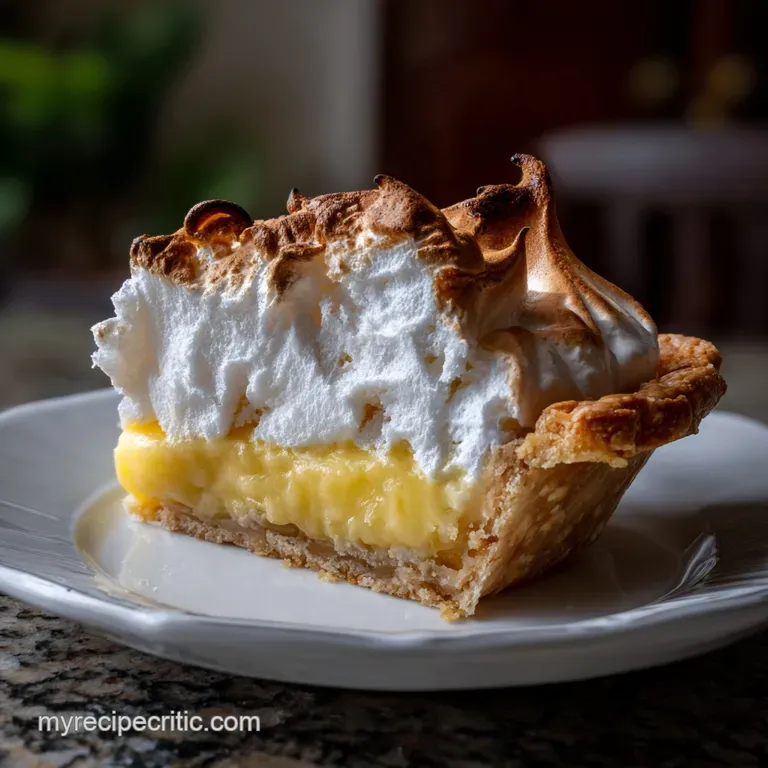
- Flavor/Texture Hook: Velvety citrus curd topped with a cloud like, toasted meringue that offers a delicate shatter with every bite.
- Perfect for: Sunday family dinners, spring celebrations, or those needing a foolproof dessert for guests.
- A Sunny Lemon Meringue Pie Recipe Easy
- Mastering the Essential Key Techniques
- Detailed Recipe Specifications and Stats
- Selecting the Best Fresh Ingredients
- Essential Tools for Success
- Step By Step Method Guidelines
- Solving Common Texture Issues
- Adjusting Quantities and Scaling
- Truths Behind Common Baking Myths
- Storage Tips and Zero Waste
- Serving and Presentation Ideas
- Answers for Better Baking
- Recipe FAQs
- 📝 Recipe Card
A Sunny Lemon Meringue Pie Recipe Easy
The first time I attempted a citrus pie, I ended up with a literal puddle of yellow soup. It was frustrating because I followed the old-fashioned starch thickened method to the letter, but the humidity in my kitchen had other plans. That is when I discovered this version.
By using sweetened condensed milk, we skip the temperamental stovetop boiling and head straight to a filling that behaves exactly how you want it to.
When you grate that 1 tablespoon of lemon zest, the aroma is going to fill your kitchen with a sharp, bright spray of oils. It is that specific smell the one that makes the back of your jaw tingle that tells you this pie is going to be special.
This recipe is for those of us who want the repeatable sweetness of a bakery classic without spending three hours hovering over a double boiler.
We are going to focus on getting that meringue to stand tall and proud. No more sliding off the top or leaving a sugary pool on the plate. Trust me on this, once you see how the egg whites transform from clear liquid into stiff, glossy peaks, you will feel like a professional pastry chef.
Let's crack on and get the oven preheated to 350 degrees Fahrenheit.
Mastering the Essential Key Techniques
The science of why it works: The citric acid in the lemon juice reacts with the proteins in the sweetened condensed milk, causing them to thicken and set without the need for additional starch or prolonged cooking. This acid induced coagulation creates a dense, velvety texture that holds its shape even when sliced.
- Protein Denaturation: Whisking egg whites introduces air and stretches protein strands, creating a stable foam that expands during the baking process.
- Emulsification: The fat in the 3 large egg yolks bonds with the milk solids, ensuring a silky mouthfeel that coats the palate evenly.
- Acid Interaction: The 1/2 cup of freshly squeezed lemon juice lowers the pH of the mixture, allowing the filling to firm up at a lower temperature.
- Sugar Stabilization: Adding the 6 tablespoons of granulated sugar slowly to the whites prevents the foam from collapsing by strengthening the protein walls.
Detailed Recipe Specifications and Stats
| Feature | Classic Method | This Easy Version |
|---|---|---|
| Thickener | Cornstarch/Flour | Condensed Milk |
| Active Effort | High (Constant Stirring) | Low (Whisk and Pour) |
| Texture | Gel like / Translucent | Creamy / Opaque |
| Setting Time | 4-6 hours | 1-2 hours |
- 1. Zest Weight
- Aim for about 6 grams of zest for the most vibrant flavor.
- 2. Internal Temperature
- The meringue is done when the peaks reach a light golden brown at 350 degrees Fahrenheit.
- 3. Egg Temperature
- Whites must be exactly room temperature (around 70 degrees Fahrenheit) to achieve maximum volume.
Selecting the Best Fresh Ingredients
Using high-quality components makes all the difference when you only have a few items to work with. I always grab the [Eagle Brand] Sweetened Condensed Milk because its consistency is incredibly reliable. For the crust, a deep dish pastry shell provides the structural integrity needed to hold the heavy filling.
- 1 pre baked 9 inch deep dish pastry shell: Choose a sturdy crust that won't crumble under the weight. Why this? It provides a crisp contrast to the soft, velvety filling.
- 1 can (14 oz) Sweetened Condensed Milk: The backbone of the pie. Why this? It provides fat and sugar in a perfectly balanced, shelf stable form.
- 1/2 cup Freshly squeezed lemon juice: Avoid the bottled stuff at all costs. Why this? The fresh acidity is necessary for the filling to set properly.
- 1 tbsp Lemon zest, finely grated: Use a microplane for the best results. Why this? Essential oils in the zest provide the primary aromatic punch.
- 3 Large egg yolks: Save the whites for the topping. Why this? Provides the golden color and rich, fatty emulsion.
- 1/2 tsp Vanilla extract: I prefer [Nielsen Massey] for its floral notes. Why this? It rounds out the sharp citrus with a mellow finish.
- 3 Large egg whites: Ensure no yolk pieces are present. Why this? These are the structural foundation of your meringue cloud.
- 1/4 tsp Cream of tartar: A baker's best friend. Why this? It stabilizes the egg whites and prevents them from over beating.
- 6 tbsp Granulated white sugar: Standard fine sugar works best. Why this? It sweetens the meringue and helps create that signature crackle.
Essential Tools for Success
You don't need a kitchen full of gadgets, but a [KitchenAid] Stand Mixer makes whipping the meringue much easier on your arms. If you are using a hand mixer, be prepared for a bit of a workout. A glass mixing bowl is better than plastic, as any lingering grease in plastic can prevent your egg whites from fluffing up. Much like the technique used for a stable Caesar Salad Sauce Recipe, cleanliness of your tools is paramount here.
A sturdy rubber spatula is essential for folding and spreading. You will also want a citrus juicer to get every last drop out of those lemons. I also recommend a [Pyrex] glass pie plate if you are baking your own crust from scratch, as it allows you to see the color of the bottom. Proper preparation of your station is just as important as it is when following a Wheat Bread recipe.
step-by-step Method Guidelines
Phase 1: Prepping the Foundation
Preheat your oven to 350 degrees Fahrenheit. Place your pre baked pastry shell on a baking sheet. This makes it easier to move the pie in and out of the oven without disturbing the meringue.
Phase 2: Whisking the Filling
In a medium bowl, combine the 14 oz can of Sweetened Condensed Milk, 1/2 cup of lemon juice, 1 tbsp of zest, 3 egg yolks, and 1/2 tsp vanilla. Whisk until the mixture thickens slightly and turns a pale, creamy yellow. You will notice the aroma change from purely sweet to a bright, zingy fragrance.
Phase 3: Creating the Base
Pour the filling into the pre baked shell. Use a spatula to level the top. Note: The filling will seem a bit thin at first, but it will firm up significantly during the bake.
Phase 4: Whipping the Peaks
In a clean glass bowl, beat the 3 egg whites and 1/4 tsp cream of tartar. Continue beating until soft peaks form. This is the stage where the foam curls over when you lift the beaters.
Phase 5: Adding the Sugar
Gradually add the 6 tbsp of granulated sugar, one tablespoon at a time. Beat on high speed until the whites are stiff and glossy. If you pull the beater out, the peak should stand straight up like a mountain top.
Phase 6: Top the Pie
Spread the meringue over the filling. Spread it all the way to the edges of the crust. This "anchors" the meringue and prevents it from shrinking or sliding.
Phase 7: Decorative Touches
Use the back of a spoon to create swirls and peaks in the meringue. Note: These peaks will catch the heat and turn a beautiful toasted brown.
Phase 8: The Final Bake
Bake for 12-15 minutes until the meringue is golden brown and the filling is set. You should smell a scent similar to toasted marshmallows.
Phase 9: The Cool Down
Remove the pie from the oven and place it on a wire rack. Let it cool completely at room temperature for at least 1 hour. This prevents the bottom from getting soggy.
Phase 10: Final Chilling
Refrigerate the pie for at least 2 hours before slicing. Note: This final chill ensures the curd is firm enough to produce clean, sharp slices.
Solving Common Texture Issues
Why Your Meringue Shrank
It is incredibly disappointing to pull a pie out and see a gap between the crust and the topping. This usually happens because the meringue wasn't "anchored" to the edges of the pastry.
| Problem | Cause | Fix | Pro Tip |
|---|---|---|---|
| Weeping | Sugar not dissolved | Add sugar slowly | Use superfine sugar for faster dissolving |
| Runny Filling | Not enough acid | Measure juice carefully | Ensure lemons are room temp for more juice |
| Beads of Syrup | Overbaking | Check at 12 minutes | Use a kitchen timer to avoid dry meringue |
Why Your Filling is Runny
If the pie collapses when you cut it, the filling didn't reach the right temperature or didn't have enough lemon juice. The acid is the "cook" here, so don't skimp on those measurements.
Why Your Meringue is Tough
Over beating the egg whites after the sugar is added can lead to a rubbery texture. You want stiff peaks, but they should still look moist and shiny, not dry or chunky.
Adjusting Quantities and Scaling
If you want to feed a larger crowd, you can double this recipe, but I recommend using two separate 9 inch pie tins rather than one giant one. The center of a larger pie often fails to set properly, leading to a "soup" situation. For a smaller household, you can cut the ingredients in half and use a 6 inch tart pan.
Chef's Note: When scaling down, beat one whole egg in a small bowl, then measure out exactly half of it by weight or volume to ensure the chemistry of the filling remains intact.
Truths Behind Common Baking Myths
- Myth: You must use a copper bowl for meringue. Truth: While copper helps stabilize whites, a clean glass or stainless steel bowl with a pinch of cream of tartar works just as well.
- Myth: Lemon meringue pie must be eaten the same day. Truth: While best on day one, the condensed milk version holds up much better in the fridge for 48 hours than the cornstarch version.
- Myth: You can't make meringue on a rainy day. Truth: High humidity does make it harder, but adding an extra 1/8 tsp of cream of tartar helps the proteins behave in damp weather.
Storage Tips and Zero Waste
Store any leftovers in the fridge, but do not cover the pie with plastic wrap. The wrap will stick to the meringue and ruin that beautiful toasted surface. Instead, use a deep cake carrier or just leave it uncovered in a cold part of the refrigerator. It will stay fresh for about 3 days.
I don't recommend freezing this pie, as the meringue becomes spongy and the filling can separate.
Zero Waste Tip: Don't throw away those lemon peels! After zesting and juicing, toss the spent husks into a jar of white vinegar. After two weeks, you will have a citrus scented natural cleaner that cuts through kitchen grease like magic.
Serving and Presentation Ideas
For the cleanest slices, dip a long, thin knife into hot water and wipe it dry between every single cut. This prevents the meringue from sticking to the blade and dragging through the lemon layer.
- For a Summer Party
- Serve with a dollop of fresh whipped cream on the side to balance the tartness.
- For a Formal Dinner
- Garnish with candied lemon peel and a sprig of mint.
- For a Rustic Look
- Don't use a piping bag; use a spatula to create messy, wild peaks that look homemade and cozy.
Answers for Better Baking
Can I use lime instead of lemon?
Yes, lime works perfectly in the same 1/2 cup measurement. This creates a "Key Lime" style pie with a meringue twist. The acidity levels are similar enough that the filling will set the same way.
What if I don't have cream of tartar?
You can substitute 1/2 teaspoon of lemon juice or white vinegar for the 1/4 teaspoon of cream of tartar. It provides the necessary acidity to keep the egg white proteins from bonding too tightly.
Why does my pie have "beads" on top?
Those little golden droplets are caused by over baking. The heat forces the sugar out of the meringue. To avoid this, watch the pie closely and remove it as soon as the very tips of the peaks are brown.
Can I make this a no bake pie?
While the filling will technically set in the fridge without heat, the meringue MUST be baked to be safe to eat and to hold its structure. If you want a truly no bake version, skip the meringue and use a whipped cream topping instead.

Recipe FAQs
Can I substitute canned lemon juice for the fresh juice required for the filling to set?
No, you must use fresh. Bottled juice often lacks the necessary acidity or has added stabilizers that prevent the sweetened condensed milk from coagulating properly.
What is the secret to preventing the meringue from weeping or forming sugary beads?
Bake it until the internal proteins are fully set. Weeping occurs when the sugar hasn't completely dissolved or the pie is underbaked, forcing moisture out as it cools.
Can I use this condensed milk method to make a lime pie topping instead?
Yes, the technique transfers seamlessly. Lime juice has comparable acidity to lemon, meaning you can swap it in for a Key Lime style pie with the same easy thickening. If you enjoy sharp, balancing flavors, you might also appreciate the careful acid balance in our Lemon Curd: The Bright Buttery Classic Recipe.
What temperature should the egg whites be before whipping the meringue?
They must be exactly room temperature, around 70°F. Cold egg whites cannot trap enough air, resulting in a weak foam that won't achieve maximum volume and height.
How far in advance can I prepare the lemon filling component?
You can safely prepare the filling up to 24 hours ahead. Once the base has cooled, cover it tightly and refrigerate; just wait until you are ready to bake before adding and swirling the meringue.
Is it safe to skip baking the crust and just use a store-bought, unbaked shell?
No, you must use a pre-baked crust. This filling relies on low, gentle heat to set, which isn't enough time to cook raw pastry dough thoroughly, resulting in a soggy bottom.
What is a good substitute for cream of tartar when stabilizing the egg whites?
Use a splash of acid like vinegar or lemon juice. If you are out of cream of tartar, add about 1/2 teaspoon of distilled white vinegar when you start whipping the whites to achieve similar stabilization.
Easy Lemon Meringue Pie
Ingredients:
Instructions:
Nutrition Facts:
| Calories | 364 kcal |
|---|---|
| Protein | 8.2 g |
| Fat | 14.9 g |
| Carbs | 49.8 g |
| Fiber | 0.6 g |
| Sugar | 36.3 g |
| Sodium | 142 mg |
