Easy Cinnamon Butter Recipe | 10-Minute Steakhouse Copycat

- Effort/Time: 10 minute active whisking.
- Flavor Hook: Deeply aromatic honey-cinnamon bloom with a salty finish.
- Perfect for: Warm yeast rolls, morning toast, or roasted sweet potatoes.
- Achieving the Velvety Texture of This Signature Whipped Spread
- The Culinary Physics Behind a Stable Honey-Butter Emulsion
- Precision Checkpoints for a Perfectly Aerated Finish
- The Alchemy of Sweetness: Selecting high-quality Lipid Bases
- Technical Tools for Efficient Ingredient Integration
- Chronological Roadmap for Developing Flavor and Structure
- Why Your Spread Breaks: Diagnostic Fixes for Common Pitfalls
- ⚗️ The Scaling Lab: The Physics of Quantity
- Flavor Architecture: Creative Modifications and Dairy Alternatives
- Preserving Freshness: Protocols for Stabilization and Shelf-Life
- Dynamic Pairings: Maximizing the Sensory Impact of Spiced Butter
- Recipe FAQs
- 📝 Recipe Card
Gritty, cold butter tearing through a fresh yeast roll is a culinary heartbreak. It is a waste of high-quality ingredients when the texture remains waxy and the spices sit in grainy clumps instead of melting into a cloud like emulsion.
There is nothing more frustrating than serving a "luxury" spread that has the mouthfeel of candle wax and the uneven sweetness of an unmixed batter. This is why mastering the fundamental cinnamon butter recipe is essential.
I destroyed at least half a dozen batches of various spreads trying to rush the temperature process before I realized the rigid physics of lipid structures. I once tried to force soften a block of butter in the microwave, only to have the honey slide right off the melted fat, creating a broken, greasy puddle that looked like a science experiment gone wrong.
That failure taught me that patience and precision are the only ways to ensure the butter will behave, yielding the perfect result from this cinnamon butter recipe.
The secret to this cinnamon butter recipe isn't just the sugar; it’s the specific aeration of the fat matrix known as "creaming." When you hit the 65°F (18°C) sweet spot, the butter becomes a pliable canvas that can trap air bubbles and hold the heavy weight of the honey.
The result is a mahogany flecked, velvety finish that delivers a shattering burst of aroma the moment it hits a hot surface, showcasing the quality of this cinnamon butter recipe.
Achieving the Velvety Texture of This Signature Whipped Spread
This cinnamon butter recipe relies on the mechanical integration of air into solid fat. By whisking at high speeds, you are physically stretching the butter's plastic fat network to encompass tiny air pockets.
This process, often called "aeration," increases the volume of the spread while simultaneously lightening the color from a dense yellow to a pale, sophisticated ivory. This whipping process is what elevates the standard cinnamon butter recipe.
The addition of 85g of liquid honey introduces a challenge to the emulsion stability. Because honey is hygroscopic (attracts water), it wants to separate from the hydrophobic butterfat. Using 60g of powdered sugar which contains a small percentage of cornstarch acts as a secondary stabilizer.
The starch absorbs the minimal moisture in the honey, ensuring your easy cinnamon butter recipe stays fluffy and unified even at room temperature.
The Culinary Physics Behind a Stable Honey Butter Emulsion
- Lipid Plasticity: Butter at 65°F (18°C) is in a "plastic" state, meaning it can be deformed without breaking or melting, allowing for maximum air entrapment.
- Aromatic Bloom: Cinnamon contains cinnamaldehyde, a fat-soluble compound that "blooms" and intensifies when suspended in butter, heightening the olfactory experience, a key feature of this cinnamon butter recipe.
- Crystal Stabilization: The fine particles of powdered sugar provide a structural "scaffold" that prevents the whipped air bubbles from collapsing under the weight of the honey.
Precision Checkpoints for a Perfectly Aerated Finish
| Checkpoint | Measurement | Target Outcome |
|---|---|---|
| Butter Temperature | 65°F (18°C) | Pliable texture that holds a thumbprint but isn't oily. |
| Whisking Duration | 3 5 minutes | Color shift from yellow to pale ivory with 1.5x volume. |
| Final Weight | ~385g total | Total yield including air incorporation and all additives. |
The Alchemy of Sweetness: Selecting high-quality Lipid Bases
Choosing your elements carefully is the difference between a generic spread and a masterclass cinnamon butter recipe. Start with a high fat European style butter if possible, as the lower water content leads to a richer mouthfeel.
When selecting your spices, look for Vietnamese cinnamon for a higher oil content and a sharper, "red hot" aromatic profile that stands up against the heavy lipids.
- 1 cup (226g) Land O'Lakes Unsalted Butter: Softened to exactly 65°F (18°C). Why this? Unsalted allows total control over the sodium-to-sweetness ratio.
- 1/2 cup (60g) C&H Powdered Sugar: Sifted to remove lumps. Why this? Powdered sugar dissolves instantly into fat unlike granulated crystals.
- 1/4 cup (85g) Nature Nate’s Raw Honey: Room temperature for easier flow. Why this? High viscosity provides the "sticky" foundation for the emulsion.
- 1 1/2 tablespoons (12g) McCormick Ground Cinnamon: Freshly opened for maximum volatile oils.
- 1/4 teaspoon (1.5g) Diamond Crystal Fine Sea Salt: To balance the glycemic load.
| Original Ingredient | Substitute | Why It Works |
|---|---|---|
| Unsalted Butter | Salted Butter | Omit the 1.5g of extra salt; provides a similar fat profile. |
| Raw Honey | Maple Syrup (Grade A) | Thinner consistency reduce to 60g to prevent a broken emulsion. |
| Powdered Sugar | Brown Sugar (Fine) | Adds molasses notes but creates a slightly grittier, "crunchy" texture. |
Technical Tools for Efficient Ingredient Integration
To achieve a Texas Roadhouse Butter Recipe Copycat result, you need a high shear environment. A KitchenAid Stand Mixer equipped with the whisk attachment is the gold standard for this task.
The planetary mixing motion ensures that the butter at the bottom of the bowl is incorporated, preventing "dead zones" of unwhipped fat.
If you are making a smaller batch, a Lodge Cast Iron skillet isn't needed here, but a stainless steel bowl and a heavy duty Balloon Whisk will suffice. Just be prepared for a significant arm workout to reach the same level of aeration.
Always use a Rubber Spatula to scrape the sides of the bowl every 60 seconds to ensure the flavor butter recipes are consistent from top to bottom. Achieving the required texture for this cinnamon butter recipe demands careful scraping.
Chronological Roadmap for Developing Flavor and Structure
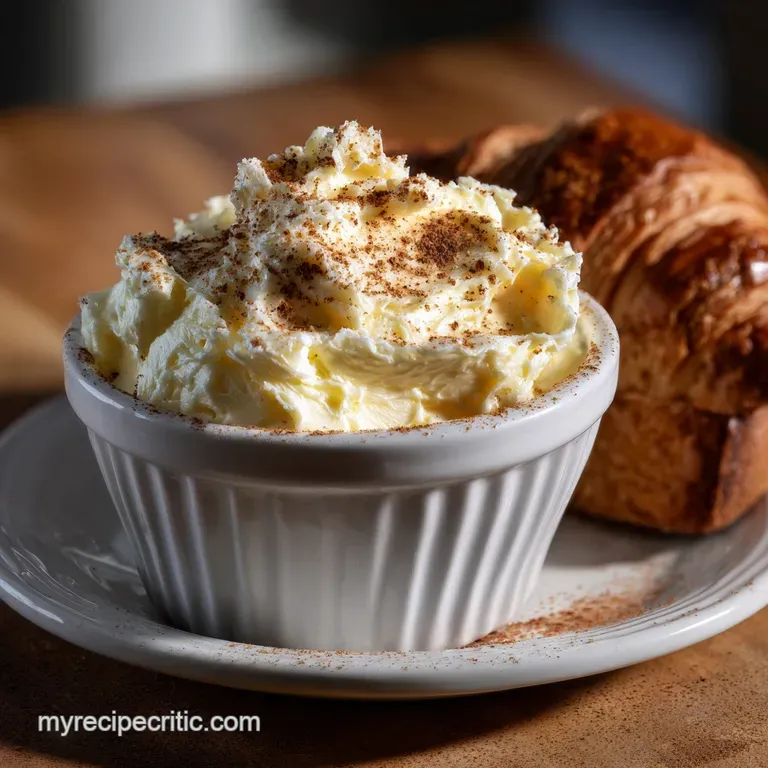
- Place 226g of unsalted butter in the bowl of a KitchenAid Stand Mixer. Note: Ensures the butter is at the correct 65°F starting point.
- Whisk on medium high speed for 3 minutes until the color shifts from deep yellow to a pale, aerated ivory.
- Sift 60g of powdered sugar directly into the bowl. Note: Prevents lumps that create a "gritty" mouthfeel.
- Beat for 1 minute until the sugar is fully absorbed and the mixture looks like soft peak frosting.
- Pour 85g of honey in a slow, steady stream while the mixer is running. Watch for the aroma to shift from plain cream to a sweet, floral note.
- Add 12g of ground cinnamon and 1.5g of fine sea salt. Note: Salt acts as a flavor magnifier for the spice.
- Whip on high for 2 minutes until the texture is velvety and the scent of cinnamon is pungent and woody.
- Scrape the bottom of the bowl with a spatula to ensure no pockets of plain butter remain.
- Transfer to a glass ramekin. The surface should look matte and hold its shape without slumping.
- Rest at room temperature for 15 minutes until the flavors bloom and the spices fully hydrate.
Chef's Note: If the mixture starts to look curdled after adding the honey, your butter was likely too warm. Place the bowl in the fridge for 5 minutes, then re-whip to tighten the emulsion. This is a common failure point when making a large batch of cinnamon butter recipe.
Why Your Spread Breaks: Diagnostic Fixes for Common Pitfalls
The Science of a "Broken" Butter
When the fat in your cinnamon butter recipe for rolls becomes too warm, the solid crystalline structure collapses into a liquid. Once liquid, it can no longer hold the air or the honey in suspension. This results in a "broken" sauce where oil sits on top of a sticky sugar sludge.
Understanding this protein and fat interaction is key to maintaining a repeatable sweetness when executing this cinnamon butter recipe.
| Problem | Root Cause | The Fix | Pro Protocol |
|---|---|---|---|
| Grainy Texture | Un-sifted sugar or cold honey | Sift sugar; warm honey slightly | Whisk the sugar and butter FIRST before adding any liquids. |
| Separation/Oily | Butter exceeded 70°F | Chill bowl for 5 mins | Use a thermometer; 65°F is the "hard stop" for stability. |
| Muted Flavor | Old cinnamon | Add 1/8 tsp espresso powder | Replace spices every 6 months to maintain volatile oils. |
⚗️ The Scaling Lab: The Physics of Quantity
When doubling this homemade butter spreads for bread recipe, the thermal mass of the butter increases, which changes how it responds to the friction of the whisk. Mastering this scaling is part of truly owning the cinnamon butter recipe.
- Frictional Heat: Doubling the batch means the whisk must move through twice the resistance. This generates internal heat. Decrease your mixing speed by one notch to prevent the butter from melting during the process.
- The Aeration Delay: A larger mass takes longer to incorporate the same ratio of air. Expect a double batch to take 1.5x longer to reach the "ivory" stage.
- The Salt Saturation: Spices and salt do not scale linearly. For a double batch, start with 1.5x the salt and cinnamon, then taste. You can always add more, but the "flavor bloom" is more intense in larger volumes.
Flavor Architecture: Creative Modifications and Dairy Alternatives
If you are looking for a cinnamon butter recipe no powdered sugar, you can substitute an equal weight of maple sugar or very fine coconut sugar. However, be aware that the lack of cornstarch will result in a less stable emulsion that may weep honey over time.
This is a trade off between "clean label" ingredients and technical performance.
Variations for Every Palette
- The Fall Harvest: Add a pinch of ground cloves and nutmeg to the cinnamon for a "pumpkin spice" profile.
- The Mocha Kick: Incorporate 1 teaspoon of instant espresso powder to deepen the mahogany color and add a bitter counterpoint to the honey.
- The Vegan Pivot: Use a high-quality plant based butter (like Miyoko's) but ensure it is cold, as vegan fats have lower melting points and will "shatter" rather than cream if too warm.
For those who love a rustic touch, pairing this with a homemade Wheat Bread recipe creates a sensory experience that rivals any high end bakery. The nutty bran of the bread highlights the floral notes in the honey.
Preserving Freshness: Protocols for Stabilization and Shelf Life
Because this is a quick cinnamon butter recipe made with fresh dairy, storage is about preventing lipid oxidation and odor absorption. Butter is a "scent sponge" if you leave it uncovered in the fridge next to an onion, your cinnamon butter will taste like an onion.
- Fridge: Store in an airtight glass container for up to 30 days. The cold will firm the butter, so you must let it sit at room temperature for 20 minutes before serving to restore the velvety texture.
- Freezer: This spread freezes beautifully for up to 6 months. Wrap tightly in parchment paper, then place in a heavy duty freezer bag.
- Reheating: Never microwave this butter. The radiation will melt the fat instantly, destroying the aeration you worked so hard to create. Instead, use "ambient tempering" simply leave it on the counter.
💡 ZERO WASTE: Don't discard the butter wrappers! Transform: Fold them and store them in a bag in the fridge. Use the buttery residue to grease pans for muffins or your next loaf of bread.
Science: The residual fat provides a thin, even coating that prevents sticking better than a thick layer of cold butter.
Dynamic Pairings: Maximizing the Sensory Impact of Spiced Butter
While we often think of this cinnamon butter recipe for rolls, its utility extends to savory applications. A dollop on a seared pork chop provides a sweet and salty glaze that cuts through the richness of the meat.
Alternatively, use it as a finishing fat for roasted carrots; the sugars will caramelize under a broiler, creating a mahogany crust that smells like a holiday feast.
- If you want a lighter "cloud" texture, whisk in 2 tablespoons of heavy cream at the very end.
- If you want a deeper flavor, brown the butter first (beurre noisette), chill it back to a solid state, and then follow the recipe.
- If you want a copycat experience, serve it alongside warm, salted dinner rolls immediately after whipping.
Fresh vs. Shortcut Comparison
| Feature | From Scratch (This Recipe) | store-bought Shortcut |
|---|---|---|
| Aroma | Intense, woody cinnamon | Muted, often artificial vanilla notes |
| Texture | Velvety and aerated | Dense and waxy |
| Control | Adjustable salt/sweetness | High preservative and sugar content |
This cinnamon butter recipe is about more than just mixing ingredients; it is about mastering the physics of fat to create something that feels expensive and intentional. Whether you are spreading it on a Wheat Bread recipe or using it to finish a stack of pancakes, the result is always a repeatable sweetness that defines a "Masterclass" kitchen. Trust the weights, watch the temperatures, and let the butter behave.
Recipe FAQs
how to make cinnamon butter?
Whip room temperature butter until light, then slowly incorporate powdered sugar, honey, cinnamon, and salt until fully aerated. Ensure the butter reaches 65°F (18°C) for optimal volume and texture before mixing. If you enjoyed mastering the aeration technique here, see how the same principle applies to achieving the structure in our Peanut Butter Cookies: Chef Julians Classic Chewy Crisscross Recipe.
how to make cinnamon butter without powdered sugar?
Myth: Powdered sugar is mandatory for texture.Reality: Substitute fine coconut sugar or maple sugar by weight, but expect a slightly grittier mouthfeel due to the lack of cornstarch stabilizer. The texture will be less stable at room temperature.
how to make cinnamon butter from texas roadhouse?
Use softened butter, honey, powdered sugar, cinnamon, and a touch of salt. The key is high shear whipping to incorporate maximum air, mimicking the restaurant's aerated, light texture. Rapid incorporation of the liquids prevents the emulsion from breaking.
how to make cinnamon butter for sweet potatoes?
Add a pinch of nutmeg and increase the salt slightly for savory balance. Brown the butter first to 240°F, then chill it back to 65°F before whipping with spices. Browning enhances the nutty depth, a flavor principle similar to acid balancing in our Alabama White Sauce Recipe: Tangy Easy BBQ Dip.
how to make cinnamon butter for cinnamon rolls?
Use unsalted butter for precise flavor control. Salted brands vary significantly in sodium content, which complicates achieving the perfect sweet salty ratio against the dough. Unsalted butter ensures you control every milligram of seasoning in your final application.
Can I use brown sugar instead of white powdered sugar?
Using brown sugar yields a slightly gritty texture. The molasses in brown sugar adds moisture and density, hindering the airy foam structure you aim for in whipped butter. It also results in a darker, less visually appealing final color.
Why is my whipped butter separating or weeping?
Butter temperature exceeded 70°F during the creaming stage. When fat overheats, the crystalline structure breaks down, releasing oil and collapsing the air pockets. Temperature shock denatures casein proteins, creating grainy texture instead of smooth emulsion.
- Chill the bowl for 5 minutes
- Use medium low speed initially
- Add all dry ingredients before liquids
Easy Cinnamon Butter Recipe
Ingredients:
Instructions:
Nutrition Facts:
| Calories | 134 kcal |
|---|---|
| Protein | 0.1 g |
| Fat | 11.4 g |
| Carbs | 8.7 g |
| Fiber | 0.4 g |
| Sugar | 8.0 g |
| Sodium | 38.1 mg |
