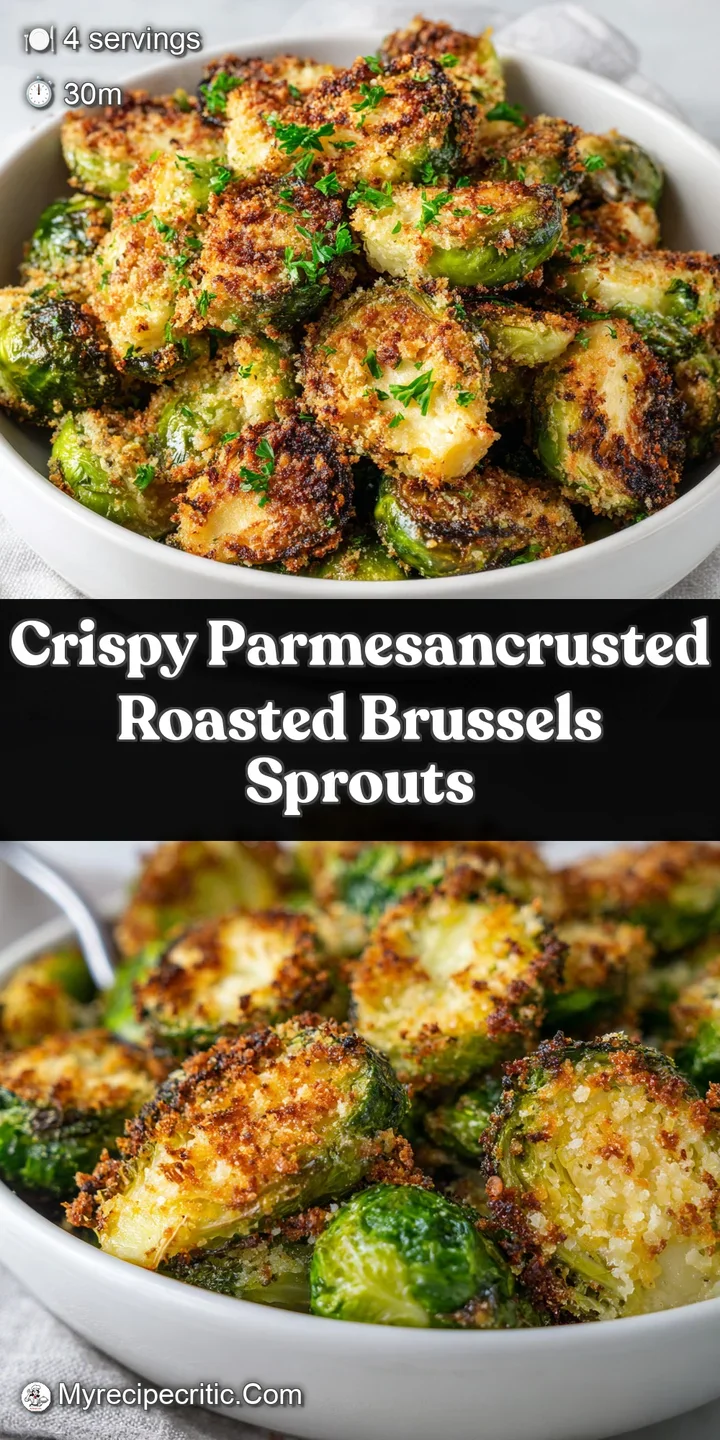
Crispy Parmesancrusted Roasted Brussels Sprouts
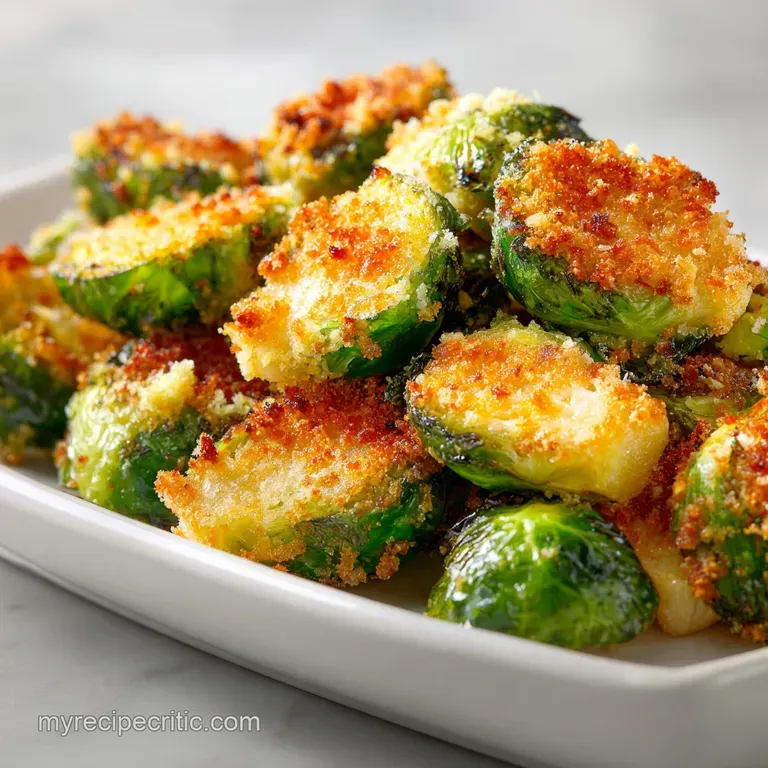
- Time: Active 10 minutes, Passive 20 minutes, Total 30 minutes
- Flavor/Texture Hook: Shatter crisp parmesan edges
- Perfect for: Quick weeknight side dish
- Making Crispy ParmesanCrusted Roasted Brussels Sprouts
- The Physics of the Shatter
- Recipe Yield and Time Specs
- Selecting the Best Components
- Necessary Tools for Crunch
- Cooking Your Sprouts Step-by-Step
- Solving Common Sogginess Problems
- Flavor Variations and Swaps
- Keeping Leftovers Fresh
- Best Serving Suggestions
- Recipe FAQs
- 📝 Recipe Card
Making Crispy ParmesanCrusted Roasted Brussels Sprouts
The air in my kitchen is currently thick with the smell of nutty, toasted cheese and that specific earthy sweetness only roasted brassicas can pull off. It’s a far cry from the gray, sulfurous mush I remember from childhood holidays.
This isn't just a side dish; it’s basically a snack masquerading as a vegetable.
We’ve all been there tossing sprouts in oil only to have them come out limp or burnt on the outside and raw in the middle. I spent years messing this up before I realized the cheese shouldn't just be a topping; it should be the structural foundation.
You'll never go back to plain roasting once you see how this crust forms.
Trust me, the secret isn't just the heat; it's the contact. We’re going to create a literal "cheese floor" on the pan that fuses with the flat side of the sprouts. It creates a texture that is half vegetable, half parmesan crisp, and entirely addictive.
The Physics of the Shatter
The Cheese Crust Secret
Protein Lattice: When the 0.5 cup freshly grated Parmesan Reggiano cheese hits the hot oil, its proteins denature and reform into a solid, brittle structure. This creates a "shatter" effect rather than a gooey melt.
Heat and Caramelization
Maillard Reaction: High heat (425°F) triggers a chemical reaction between the amino acids and sugars in the sprouts. This results in the deep browning that provides that characteristic nutty flavor.
| Method | Time | Texture | Best For |
|---|---|---|---|
| Sheet Pan | 20 minutes | Maximum even crust | Large batches |
| Air Fryer | 12 minutes | Extra char/crunch | Quick portions |
| Cast Iron | 18 minutes | Deep caramelization | One pan meals |
Choosing the right cooking method depends on how many you're feeding. While the sheet pan is standard, an air fryer is a brilliant shortcut for smaller quantities.
Recipe Yield and Time Specs
Before we start prep, let’s look at the numbers. You’re working with 1 lb fresh Brussels sprouts, which is the perfect amount for 4 servings. If you try to double this on one pan, you’ll end up with steamed vegetables instead of roasted ones.
If you are looking for a potato based side that uses similar heat principles, my Garlic Roasted Potatoes recipe is a natural partner. Both benefit from high heat and plenty of surface contact.
Selecting the Best Components
The quality of your cheese matters more than you think. Honestly, don't even bother with the stuff in the green shaker bottle; it has anti clumping agents that prevent it from fusing into a proper crust.
- 1 lb fresh Brussels sprouts: Look for medium sized ones for the best ratio of tender interior to crispy exterior.
- 2 tbsp extra virgin olive oil: This is our heat conductor. Why this? It carries heat into the nooks of the sprout leaves.
- 0.5 cup freshly grated Parmesan Reggiano cheese: Use the real deal for the best melt. Why this? Lower moisture content creates a crispier crust.
- 1 tsp garlic powder: Provides a savory base without the risk of burning fresh garlic.
- 0.5 tsp smoked paprika: Adds a subtle depth and warmth.
- 0.5 tsp sea salt: Enhances the natural sweetness of the roasted veg.
- 0.25 tsp freshly cracked black pepper: For a sharp, biting finish.
| Original Ingredient | Substitute | Why It Works |
|---|---|---|
| Parmesan Cheese | Pecorino Romano | Saltier and sharper flavor profile. |
| Extra Virgin Olive Oil | Avocado Oil | Higher smoke point, very neutral flavor. |
| Smoked Paprika | Chili Powder | Adds heat instead of smokiness. |
If you swap the cheese for Pecorino, go easy on the added salt. Pecorino is much saltier by nature, and you don't want to overwhelm the palate.
Necessary Tools for Crunch
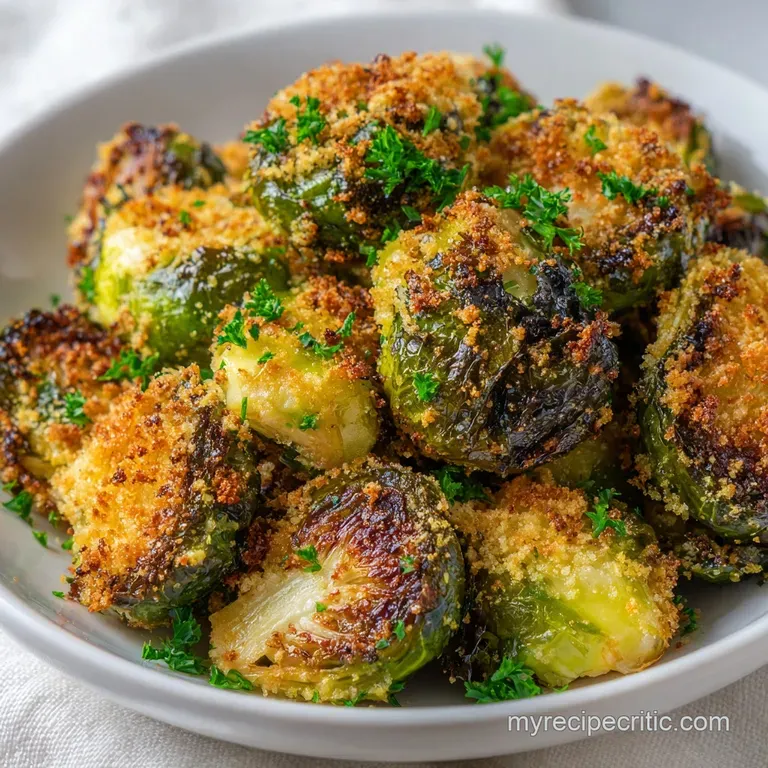
You don't need fancy gadgets, but a heavy duty rimmed baking sheet is non negotiable. Thin pans warp under high heat, which leads to uneven oil pooling and patchy crusts. A good parchment paper or a silicone mat can help with cleanup, but for the absolute best sear, I prefer the oil directly on the metal.
Chef Tip: Freeze your wedge of Parmesan for 10 minutes before grating. It makes the cheese firmer and easier to grate into a fine snow that melts more evenly.
Cooking Your Sprouts step-by-step
- Preheat oven. Set your oven to 425°F and place your baking sheet inside while it heats. Note: A hot pan starts the searing process the second the sprouts touch the metal.
- Prep sprouts. Wash and thoroughly dry the 1 lb fresh Brussels sprouts, then trim the ends and cut them in half lengthwise.
- Mix seasoning. In a small bowl, combine the 1 tsp garlic powder, 0.5 tsp smoked paprika, 0.5 tsp sea salt, and 0.25 tsp freshly cracked black pepper.
- Coat vegetables. Toss the halved sprouts in a large bowl with the 2 tbsp extra virgin olive oil and the spice mix until every crevice is coated.
- Add cheese. Sprinkle the 0.5 cup freshly grated Parmesan Reggiano over the oily sprouts and toss gently.
- Arrange pan. Place the sprouts on the hot baking sheet, cut side down. They must be cut side down to form the crust.
- Roast sprouts. Bake for 20 minutes until the cheese is deep golden and the leaves are charred.
- Rest briefly. Let them sit on the pan for 2 minutes. Note: This allows the cheese to "set" so it stays attached to the sprout when you lift it.
- Scrape and serve. Use a thin metal spatula to lift the sprouts, ensuring you get every bit of that lacy cheese crust.
Solving Common Sogginess Problems
Fixing Soggy Roasted Sprouts
Sogginess is usually caused by moisture or overcrowding. If the sprouts are too close together, the water they release turns into steam. This effectively "boils" the vegetable from the outside in, destroying any chance of a crunch.
Preventing Burnt Cheese
If your oven has hotspots, the cheese might burn before the sprout is tender. This usually happens if the cheese is too thick in one spot. Ensure the Parmesan is finely grated so it creates a thin, even layer.
| Problem | Root Cause | Solution |
|---|---|---|
| Soft texture | Too much moisture | Dry sprouts completely after washing. |
| Bitter taste | Burnt leaves | Reduce oven temp by 15°F next time. |
| No crust | Low heat | Ensure oven is fully preheated to 425°F. |
Common Mistakes Checklist
- ✓ Pat the sprouts completely dry with a kitchen towel before adding oil.
- ✓ Avoid crowding give each sprout at least half an inch of "personal space."
- ✓ Always place the cut side down to maximize the searing surface.
- ✓ Don't skip the rest time; the cheese needs a moment to solidify into a crisp.
Flavor Variations and Swaps
If you want to take this in a different direction, try adding a drizzle of balsamic glaze right before serving. The acidity cuts through the heavy fat of the cheese and oil. If you love veggies, try this Foolproof Crispy Roasted recipe for a similar take on cauliflower.
Spicy and Vegan Options
To make these spicy, add 0.5 tsp of red pepper flakes to your seasoning mix. For a vegan version, you can use nutritional yeast mixed with a bit of almond flour and extra salt, though it won't "fuse" quite as well as dairy cheese does.
| Premium | Budget | Flavor Impact | Savings |
|---|---|---|---|
| Aged Parmigiano | Domestic Parmesan | Slightly less nutty | Save $4.00 |
| Smoked Paprika | Plain Paprika | Less depth/smokiness | Save $1.50 |
| EV Olive Oil | Vegetable Oil | Less peppery finish | Save $2.00 |
You can save quite a bit by using domestic Parmesan, and for a roasted dish like this, the difference is minimal once it's browned and crispy.
Keeping Leftovers Fresh
Storage Guidelines
Store any leftovers in an airtight container in the fridge for up to 3 days. Be warned: they will lose their signature "shatter" in the fridge as the cheese absorbs moisture from the vegetable.
Reheating and Zero Waste
Never use a microwave to reheat these! You'll end up with a sad, rubbery mess. Instead, pop them back into a 400°F oven or an air fryer for 4 minutes to revive the crunch.
If you have tiny loose leaves that fell off during prep, toss them in oil and salt to make "sprout chips" they bake in half the time.
Best Serving Suggestions
These are best served straight off the pan while the cheese is still crisp. They make an incredible side for a heavy protein, like a pan seared steak or a roasted chicken.
Perfect Pairings
The salty, savory profile of the sprouts balances beautifully with something slightly sweet. A honey mustard dipping sauce or a side of mashed sweet potatoes works wonders. If you're doing a full roasted spread, these look beautiful next to brightly colored carrots or beets.
Recipe FAQs
What is the primary key to achieving the crispy Parmesan crust?
Place the sprouts cut-side down directly onto the hot pan. This maximizes surface contact between the cheese and the hot metal, allowing the cheese proteins to fuse and crisp rather than steam or melt unevenly.
Do I need freshly grated Parmesan, or can I use pre-shredded?
Yes, you must use freshly grated cheese. Pre-shredded varieties contain anti caking agents like cellulose which prevent them from melting smoothly and forming a proper, unified crust.
How to prevent the Brussels sprouts from steaming instead of roasting?
Dry the sprouts thoroughly after washing before tossing them with oil. Excess moisture creates steam when heated, which prevents surface evaporation needed for crisping; this same principle of managing initial moisture is vital when preparing components for our Crock Pot Turkey recipe.
Is it true that using a lower oven temperature results in a crispier crust?
False. A high oven temperature, ideally 425°F, is necessary to rapidly achieve the Maillard reaction on the cheese and the sprout flesh before the internal moisture escapes too much.
What should I do if my cheese burns before the center of the sprouts is tender?
Reduce the oven temperature by 15-25 degrees Fahrenheit for the remaining cook time. This indicates your oven hotspots are too aggressive or your cheese was grated too finely; you want the flavor of browning, not bitterness.
How can I ensure the crust sticks to the sprout after cooking?
Allow the sprouts to rest on the hot baking sheet for two minutes immediately after removing them from the oven. This brief cooling period lets the melted Parmesan set and solidify into a brittle lattice structure.
What is the best way to reheat leftovers to restore the crunch?
Reheat them in a 400°F oven or an air fryer for about four minutes. Never use the microwave, as it traps steam, turning the once crispy crust soft and chewy; mastering high heat reheating applies equally well when crisping up coatings on sides like in our Grandmas Green Bean recipe.
Crispy Parmesan Brussels Sprouts
Ingredients:
Instructions:
Nutrition Facts:
| Calories | 161 calories |
|---|---|
| Protein | 8.5 g |
| Fat | 10.3 g |
| Carbs | 11.4 g |
| Fiber | 4.3 g |
| Sugar | 2.5 g |
| Sodium | 440 mg |
