Best Coconut Macaroons Recipe
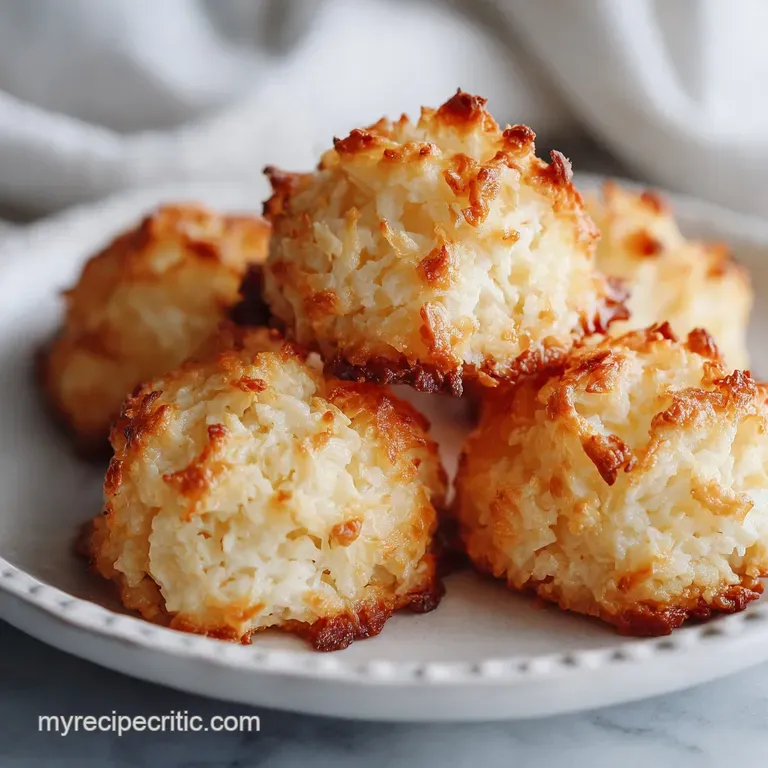
- Time: Active 15 minutes, Passive 25 minutes, Total 40 minutes
- Flavor/Texture Hook: Chewy coconut centers with a chocolate dipped shatter
- Perfect for: Holiday cookie platters and gluten-free dessert needs
- Achieving the Best Texture with This Macaroons Recipe
- The Molecular Magic Behind Toasty Coconut and Creamy Centers
- Understanding Timing and Yield for Success Every Time
- Gathering the Essential Components for Your Sweet Coconut Treats
- Tools Required for Shaping and Baking Your Mounds
- Step-by-Step Guide to Baking Golden Brown Coconut Clusters
- Solving Sticky Situations and Avoiding Soggy Macaroon Bottoms
- Modifying the Recipe for Specific Needs and Cravings
- Best Practices for Storing and Freezing Your Creations
- Creative Pairing Ideas for Your Festive Coconut Cookies
- Kitchen Myths and Misconceptions
- Macaroons Recipe FAQs
- 📝 Recipe Card
Achieving the Best Texture with This Macaroons Recipe
You know that scent when you open a bag of coconut? It's tropical, sweet, and promising, but it doesn't compare to the aroma of shredded coconut hitting the heat of the oven. I used to struggle with macaroons that turned into sticky puddles on the baking sheet or, even worse, ones that were so dry they felt like eating sweetened sawdust.
After a few batches that behaved poorly, I realized the secret isn't just in the coconut but in how we handle the moisture and the air.
This specific method creates a contrast that I absolutely love. We are talking about a velvety, custard like center protected by a sun kissed, toasted shell. It’s the kind of treat that feels fancy enough for a party but is simple enough to whip up on a Tuesday night when the craving for something sweet and chewy hits hard.
We aren't just mixing things in a bowl here, we are building a structure that holds up even after the chocolate dip.
Most people get confused between this and a French macaron. While those are beautiful, delicate almond sandwiches, these are rustic, hearty coconut mounds. If you have been looking for a macaron recipe without almond flour, this coconut version is actually a much more approachable cousin.
It's forgiving, deeply flavorful, and doesn't require a degree in pastry arts to get right.
The Molecular Magic Behind Toasty Coconut and Creamy Centers
The Science of Why it Works: This recipe relies on protein denaturation and the Maillard reaction to create structure and flavor. When we whip egg whites, we unfold the proteins to trap air, while the heat of the oven browns the coconut sugars for that toasted profile.
- Protein Denaturation: Whipping egg whites creates a physical mesh that holds the heavy coconut in place, preventing the cookies from flattening.
- Hygroscopic Balancing: The sweetened condensed milk acts as a humectant, pulling in moisture so the interior stays fudgy even as the outside crisps.
- Emulsification Stability: Using a touch of coconut oil in the chocolate dip ensures a silky finish that doesn't bloom or streak as it cools.
- Capillary Action: The shredded coconut fibers absorb the liquid milk, swelling slightly to create a cohesive dough texture.
| Preparation Method | Total Time | Texture Outcome | Best For |
|---|---|---|---|
| Standard Oven | 25 minutes | Uniform gold edges | High volume batches |
| Stovetop Toasting | 10 minutes | Deeply nutty/dark | Pre toasting coconut only |
| Air Fryer | 12 minutes | Shatter crisp shell | Small 6 piece batches |
If you are planning a full Italian dinner night, these make a light finish after a heavy main dish. You might find they are the perfect sweet follow up to my Foolproof Chicken Alfredo recipe because they don't require any more heavy cream or pasta style richness to feel satisfying.
Understanding Timing and Yield for Success Every Time
Getting the timing right is the difference between a golden treat and a burnt mess. I always set my timer for five minutes less than the recipe suggests just to check the color. For this batch, we are looking for a weight and feel that is sturdy but not rock hard.
| Ingredient Component | Science Role | Pro Secret |
|---|---|---|
| Large Egg Whites | Structural Binder | Use room temperature for 20% more volume |
| Condensed Milk | Moisture/Sweetness | Freeze leftover milk in ice trays for coffee |
| Fine Sea Salt | Flavor Enhancer | Never skip this; it balances the cloying sugar |
When you are measuring your ingredients, try to use a kitchen scale for the coconut and milk. Volumes for shredded coconut can vary wildly depending on how tightly you pack the measuring cup. A weight based approach ensures your dough texture is repeatable every single time you bake.
Gathering the Essential Components for Your Sweet Coconut Treats
- 14 oz sweetened shredded coconut: Use the moist, bagged variety, not the dried desiccated kind. Why this? Shredded coconut provides the classic chewy "mound" texture we want.
- 7 oz sweetened condensed milk: This provides the fat and sugar needed for a fudgy interior. Why this? It acts as a thick syrup that binds the flakes together.
- 1 tsp pure vanilla extract: Look for the real stuff, not imitation.
- 0.5 tsp almond extract: This is the secret ingredient that makes people ask for the recipe.
- 0.25 tsp fine sea salt: Essential for cutting through the richness.
- 2 large egg whites: These must be completely free of any yolk bits.
- 0.25 tsp cream of tartar: Helps stabilize the tiny air bubbles in the whites.
- 4 oz semi sweet chocolate, chopped: Use a bar you'd actually enjoy eating.
- 1 tsp coconut oil: Helps the chocolate melt smoothly and stay shiny.
| Original Ingredient | Substitute | Why It Works |
|---|---|---|
| Sweetened Coconut | Unsweetened + 2 tbsp honey | Reduces sugar but keeps the moisture high |
| Condensed Milk | Coconut Condensed Milk | Perfect for dairy-free needs; adds tropical notes |
| Cream of Tartar | 0.5 tsp Lemon Juice | The acid provides the same protein stabilization |
Tools Required for Shaping and Baking Your Mounds
You don't need a high end kitchen for this, but a few specific items make the job much cleaner. I highly recommend using a spring loaded cookie scoop. It keeps the macaroons uniform, which means they all finish baking at the exact same time. Without it, the small ones burn while the big ones stay raw in the middle.
A stand mixer is great for the egg whites, but a hand mixer works just as well. Just make sure your bowl is "squeaky clean." I usually rub a slice of lemon around the inside of my metal bowl before starting.
This removes any invisible traces of fat that might prevent your egg whites from reaching those beautiful stiff peaks.
step-by-step Guide to Baking Golden Brown Coconut Clusters
- Preheat the oven. Set your temperature to 325°F and line two baking sheets with parchment paper or silicone mats. Note: This prevents the sugar in the milk from sticking and tearing the bottoms.
- Combine the base. In a large bowl, stir together the 14 oz shredded coconut, 7 oz condensed milk, vanilla, almond extract, and salt. Mix until the coconut is fully coated and glistening.
- Prep the whites. In a separate clean bowl, beat the 2 egg whites and 0.25 tsp cream of tartar. Whip until stiff peaks form and the foam doesn't slide when the bowl is tilted.
- Fold gently. Add about a third of the egg whites to the coconut mixture to lighten it. Then, fold in the remaining whites using a spatula. Work slowly to avoid popping the air bubbles.
- Scoop the dough. Use a small cookie scoop to drop rounded tablespoons onto the prepared sheets. Space them about an inch apart. Ensure no stray coconut strands are sticking out too far, as they will burn.
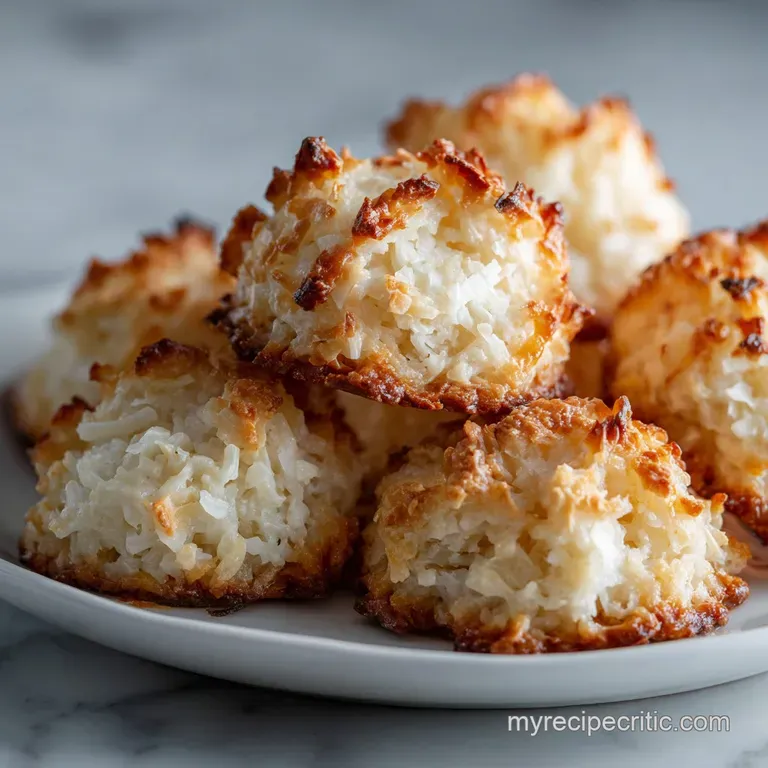
- Bake the clusters. Place in the oven for 25 minutes. Bake until the bottoms are deep brown and the tops show golden highlights.
- Cool completely. Let them sit on the baking sheet for at least 10 minutes. The residual heat finishes setting the center.
- Melt the chocolate. Combine 4 oz chopped chocolate and 1 tsp coconut oil in a microwave safe bowl. Heat in 30 second bursts, stirring until velvety and smooth.
- Dip and set. Dip the bottom of each cooled macaroon into the chocolate. Place them on clean parchment. Let them sit until the chocolate is firm to the touch.
Chef's Note: If your kitchen is warm, pop the dipped cookies into the fridge for 5 minutes. This ensures the chocolate shell has a clean snap when you bite into it.
If you enjoy the process of whipping egg whites, you'll find the technique very similar to what's required for a Homemade Pasta recipe. Both require a bit of patience with protein structures to get that "just right" bite.
Solving Sticky Situations and Avoiding Soggy Macaroon Bottoms
One of the biggest heartbreaks is pulling a tray out and seeing a ring of brown liquid around every cookie. This is usually "weeping." It happens when the egg whites weren't whipped enough or the coconut wasn't mixed thoroughly. If you see this, don't panic.
You can often trim the excess "lace" off with a knife once they cool.
Why Your Macaroons Are Leaking
If you see a pool of syrup under your cookies, the ratio of milk to coconut was likely too high. This often happens if you use a "14 oz bag" that actually contains less due to settling. Always weigh your coconut.
The egg whites should be stiff enough to hold a shape; if they are runny, the structure will collapse in the heat.
To Fix Crumbling Macaroons
If the cookies fall apart when you pick them up, they are likely underbaked. The condensed milk needs to reach a certain temperature to "candy" and hold the flakes together. You can put them back in the oven for 5 minutes at a slightly higher heat (350°F) to try and set the sugars, though the tops might get a bit darker.
| Problem | Root Cause | Solution |
|---|---|---|
| Burnt Bottoms | Oven rack too low | Move rack to the upper third of the oven |
| Flat Cookies | Over mixing egg whites | Fold gently; don't stir vigorously |
| Sticky Center | Underbaked | Bake until the peaks are clearly golden brown |
Common Mistakes Checklist:
- ✓ Never use a plastic bowl for egg whites (plastic retains grease that kills foam).
- ✓ Don't skip the parchment paper; these will cement themselves to a bare pan.
- ✓ Avoid using "Lite" condensed milk - the lower fat content causes a watery dough texture.
- ✓ Let the egg whites reach room temperature before whipping for maximum volume.
- ✓ Ensure the chocolate is finely chopped so it melts evenly without scorching.
Modifying the Recipe for Specific Needs and Cravings
If you are looking for a macaron recipe without almond flour because of an allergy, you’ve found the gold standard. Since these use coconut as the bulk, they are naturally gluten-free.
Just double check your chocolate brand to ensure it wasn't processed in a facility with wheat if you are baking for someone with Celiac disease.
For a vegan version, you can swap the condensed milk for a sweetened condensed coconut milk (available at most health food stores). The egg whites are trickier, but 3 tablespoons of aquafaba (the liquid from a can of chickpeas) whipped with cream of tartar acts as a near perfect substitute.
The bake time remains the same, though the color might stay a bit paler.
- For the chocolate lover
- Fold 0.5 cup of mini chocolate chips directly into the dough before baking.
- For the citrus fan
- Add 1 tablespoon of fresh orange zest to the coconut mixture.
- For a tropical twist
- Replace the almond extract with rum extract and add 0.25 cup of finely diced dried pineapple.
Best Practices for Storing and Freezing Your Creations
These cookies actually improve after a day in a sealed container. The moisture redistributes, making the center even fudgier. Keep them in an airtight container at room temperature for up to 3 days. If you want them to last longer, the fridge is your friend for up to a week.
Just be aware that the chocolate might lose some of its shine in the cold.
Freezing is a fantastic option for holiday prep. Flash freeze them on a tray first so they don't stick together, then toss them into a freezer bag. They stay fresh for up to 2 months. When you are ready to eat, let them thaw on the counter for 20 minutes.
Don't microwave them, or you'll end up with a melted chocolate mess!
Zero Waste Tip: Don't throw away those two egg yolks! You can use them to make a quick carbonara or add them to your morning scrambled eggs for extra richness. You can also use the leftover chocolate dip to drizzle over fruit or stir it into a warm mug of Homemade Hot Cocoa Mix recipe for an extra decadent afternoon treat.
Creative Pairing Ideas for Your Festive Coconut Cookies
Since these are quite sweet, they pair beautifully with bitter or acidic flavors. A dark roast coffee or a double shot of espresso is the classic choice. The bitterness of the coffee cuts right through the sugary condensed milk.
If you are serving these at a party, a dry sparkling wine like a Prosecco also works surprisingly well because the bubbles cleanse the palate between bites.
- Sweet
- Sweetened condensed milk and coconut flakes.
- Savory
- A deliberate pinch of fine sea salt.
- Crisp
- Toasted exterior coconut shreds.
- Rich
- Semi sweet chocolate base dip.
If you want to go all out for a dessert platter, serve these alongside some fresh raspberries or tart Granny Smith apple slices. The acidity of the fruit balances the tropical fat of the coconut.
You could even set out a small bowl of extra sea salt for people to sprinkle over the chocolate dip if they like that salted caramel vibe.
Kitchen Myths and Misconceptions
One common myth is that you must use unsweetened coconut to control the sugar. In reality, sweetened shredded coconut is processed differently; it's much more moist. If you use unsweetened, you'll often end up with a dry, crumbly macaroon that doesn't have that signature chew.
If you want it less sweet, just use dark chocolate for the dip instead.
Another misconception is that the "feet" or "peaks" on a macaroon are a bad thing. Unlike the French macaron, where a smooth top is the goal, these are meant to be craggy. Those little peaks are what catch the heat and turn golden brown, providing the toasted flavor that makes this recipe so iconic.
Embrace the rustic look!
Finally, many believe you need a piping bag to shape these. Honestly, don't even bother. A cookie scoop or even two spoons creates a much better texture. Using a piping bag compresses the egg whites too much, leading to a denser, heavier cookie.
The airier the dough texture is when it hits the pan, the better the final result will be.
Right then, you are all set to conquer this macaroons recipe. Just remember to watch that oven like a hawk during the last five minutes. Once you see those golden edges and smell that toasted coconut, you'll know you've nailed it. Trust me on this, your kitchen is about to smell like a tropical paradise!

Macaroons Recipe FAQs
What are the ingredients in macaroons?
Sweetened shredded coconut is the primary base. You'll also need sweetened condensed milk for moisture and sweetness, vanilla and almond extracts for flavor, salt to balance the sweetness, and egg whites with cream of tartar to bind it all together.
A chocolate coating is optional but recommended for dipping.
What's the difference between a macaroon and a macaron?
They are completely different cookies. Macaroons are dense, chewy mounds made primarily from shredded coconut, while macarons are delicate French meringue cookies with a crisp shell and chewy interior, sandwiched together with a filling, and typically made with almond flour.
What is the trick to making macaroons?
The trick is to achieve the right dough consistency and bake them properly. Ensure your egg whites are whipped to stiff peaks and gently folded into the coconut mixture to retain air. Bake until the bottoms are deeply browned for that signature chewy texture inside and crisp exterior.
How long do macaroons have to sit before baking?
They do not need to sit before baking. Unlike French macarons, macaroons can be scooped and baked immediately after forming. This makes them a much quicker and more forgiving treat to whip up, perfect for those last minute cravings.
Can I use unsweetened coconut in this recipe?
No, stick with sweetened. Unsweetened coconut lacks the moisture and sugar content of sweetened varieties, which is crucial for creating the chewy texture and preventing dry, crumbly macaroons. If you find them too sweet, consider using dark chocolate for dipping to counterbalance.
Why are my macaroons leaking liquid?
This usually means the egg whites weren't whipped enough or the dough was too wet. Ensure your egg whites are whipped to stiff, glossy peaks and that you fold them in gently to avoid deflating them. If the dough seems unusually liquidy, weigh your coconut to ensure accuracy.
How do I store homemade macaroons?
Store in an airtight container at room temperature. They will keep well for up to 3 days, and the texture often improves as they sit, becoming even fudgier. For longer storage, refrigerate them for up to a week, or freeze them for up to two months.
Coconut Macaroons
Ingredients:
Instructions:
Nutrition Facts:
| Calories | 146 calories |
|---|---|
| Protein | 1.9g |
| Fat | 8.4g |
| Carbs | 16.9g |
| Fiber | 1.3g |
| Sugar | 14.3g |
| Sodium | 36mg |
