How to Turn Brisket into Corned: a Flavorful Cure
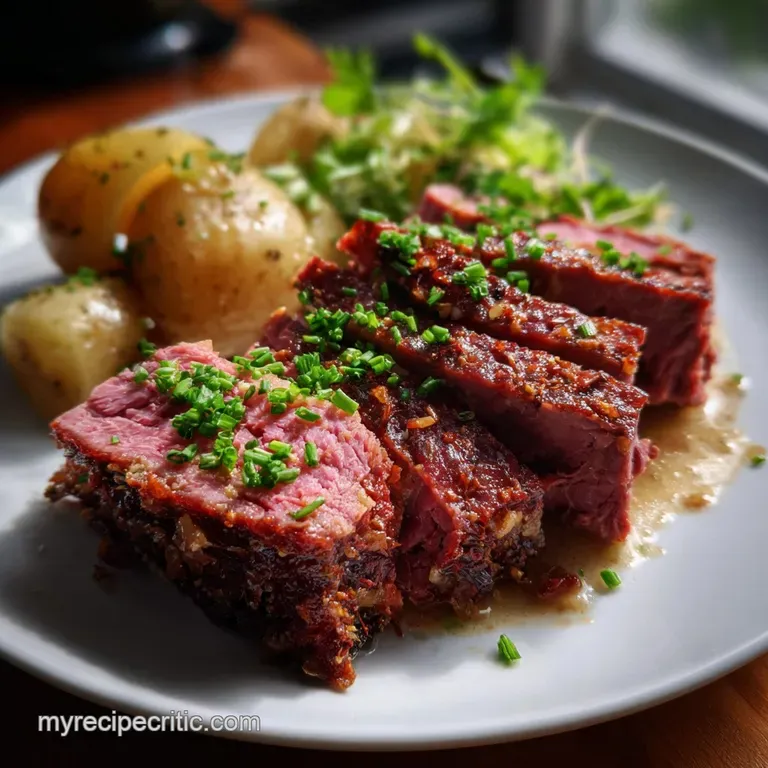
- Effort/Time:20 minutes active prep / 7 day cure / 3.5 hour cook.
- Flavor Hook: Pungent aromatics meet a deep, savory salt-cure with a velvety finish.
- Perfect for: High-stakes holiday dinners or the ultimate make-ahead Reuben foundation.
- Masterclass: How to Turn Brisket into Corned Beef
- Intro and Overview: How to Turn Brisket into Corned
- Why This Works: The Science of the Cure
- Ingredient Science
- Ingredients & Substitutions
- Step-by-Step Instructions: How to Turn Brisket into Corned Beef
- Tips & Mistakes to Avoid
- Storage/Freezing
- Serving Suggestions
- Recipe FAQs
- 📝 Recipe Card
Masterclass: How to Turn Brisket into Corned Beef
Intro and Overview: How to Turn Brisket into Corned
Stop settling for those pre-packaged, vacuum sealed "salt bombs" from the grocery store meat case. We’ve all been there you boil the mystery meat for hours only to end up with a gray, stringy mess that tastes more like a salt lick than a brisket.
Learning how to turn brisket into corned beef at home is about taking back control of the texture and the spice profile.
I remember my first attempt at this; I used the wrong salt and ended up with a piece of meat that looked more like a slate rock than a festive meal. But once I understood the chemistry of the cure, everything changed.
The scent of toasted coriander and cloves filling the kitchen is a sensory trigger that signals the start of a serious culinary project.
By following this guide on how to turn brisket into corned beef, you’re engaging in a slow motion culinary transformation. We are going to use a specific pink curing salt and a 5 lbs beef brisket, flat cut, to achieve that "shatter-on-the-fork" tenderness.
Let's look at the science of why this method actually works.
Why This Works: The Science of the Cure
Understanding how to turn brisket into corned beef requires a look at molecular physics and microbiology.
- Osmotic Pressure: High concentrations of Diamond Crystal Kosher Salt draw moisture out of the meat, creating a concentrated brine that then re-enters the cells, seasoning the brisket to its very core.
- Protein Denaturation: The salt ions penetrate the muscle fibers, causing them to unwind and swell, which allows the meat to hold more moisture during the long simmer.
- Myoglobin Stabilization: Prague Powder #1 (sodium nitrite) binds to the iron atom in the myoglobin protein, preventing it from turning gray or brown when heated.
- Connective Tissue Breakdown: The 3 hour 30 mins simmer at a sub-boil temperature allows collagen to melt into gelatin without tightening the muscle fibers into rubber.
The Culinary Transformation Explained
When you decide to turn brisket into corned beef, you are essentially performing a long form pickling process on a muscle. The beef brisket flat is dense with connective tissue. This makes it the ideal candidate for a 7 day brine because it can withstand the salt concentration without becoming mushy.
Why Homemade Beats store-bought
Most commercial versions are injected with a brine solution to speed up the process, which dilutes the flavor. When you turn brisket into corned beef yourself, the aromatics like McCormick Culinary Whole Black Peppercorns and Mustard Seeds have a full week to permeate the meat.
This results in a much more complex, spicy profile that commercial brands simply cannot replicate.
Understanding Nitrates and Pink Curing Salt
The use of 5 teaspoons pink curing salt #1 is non-negotiable for the classic result. It is what provides the signature pink hue and that specific "ham-like" flavor.
More importantly, it acts as an antimicrobial agent, preventing the growth of Clostridium botulinum during the long, cold curing period in your refrigerator.
How Salt Concentrations Affect Tenderness
The ratio of 2 cups kosher salt to 1 gallon water creates an environment where the meat cannot help but become tender. The salt works on the actin and myosin filaments, softening the structure before the heat ever touches it.
This is the secret step in how to turn brisket into corned beef that produces a velvety mouthfeel.
Ingredient Science
The Science Behind 5 lbs Beef Brisket, Flat Cut
- What It Does
- Provides the structural foundation and protein base for the cure.
- The Chemistry
- High collagen content in the pectoral muscle requires protein denaturation to convert tough connective tissue into silky gelatin.
- Why This Matters
- Using a flat cut ensures even brine penetration and uniform slicing against the grain for a tender, non-chewy result.
The Science Behind 5 teaspoons Pink Curing Salt #1
- What It Does
- Acts as a preservative and color fixative.
- The Chemistry
- Sodium nitrite prevents myoglobin oxidation, maintaining the vibrant red color even after the meat is fully cooked.
- Why This Matters
- It creates the distinct "corned" flavor profile and ensures the meat remains safe during the 7 day cold soak.
The Science Behind 2 cups Diamond Crystal Kosher Salt
- What It Does
- Facilitates the osmotic exchange between the brine and the meat.
- The Chemistry
- Chloride ions disrupt the protein structure, allowing the meat to absorb water and aromatics.
- Why This Matters
- It seasons the brisket deeply while inhibiting spoilage bacteria through water activity reduction.
Ingredients & Substitutions
| Original Ingredient | Substitute | Why It Works |
|---|---|---|
| 2 cups Kosher Salt | 1.25 cups Fine Sea Salt | Similar chemical purity, but finer grains are denser; use less to avoid over salting. |
| 0.5 cup Brown Sugar | 0.5 cup Maple Syrup | Provides the same sweetness for balance but adds a distinct woody, autumnal note. |
| 2 tbsp Honey | 2 tbsp Agave Nectar | Both are humectants; Agave has a neutral flavor that lets the spices shine. |
| 5 cloves Garlic | 1.5 tsp Garlic Powder | Provides the sulfurous aromatic base, though lacks the fresh pungency of smashed cloves. |
Selecting the Best Beef Brisket Cut
When you're learning how to turn brisket into corned beef, the cut matters. I always reach for the flat cut. It has a consistent thickness which is crucial for even curing.
If you use a point cut, the thicker sections might not get fully cured in the center, leading to a gray "eye" in the middle of your slices.
Curing Salt #1 vs. Natural Alternatives
Some folks try to use celery juice powder as a "natural" alternative. While it contains naturally occurring nitrates, it is much harder to measure accurately. Stick to Hoosier Hill Farm Prague Powder #1 for consistent safety and results.
Never use Pink Himalayan salt; it does not contain the nitrites needed for this specific transformation.
Customizing Your Pickling Spice Blend
The 2 tablespoons pickling spice in the schema is a baseline. To level up your brisket into corned beef, I recommend toastng your 1 tablespoon coriander seeds and 1 tablespoon mustard seeds in a Lodge Cast Iron Skillet before adding them to the brine.
This releases essential oils and deepens the aromatic impact of the spice blend.
step-by-step Instructions: How to Turn Brisket into Corned Beef
- Simmer the 1 gallon water with 2 cups kosher salt, 5 teaspoons pink curing salt #1, 0.5 cup brown sugar, and 2 tablespoons honey. Note: Heating ensures the solutes fully dissolve, creating a homogenous brine solution.
- Infuse the brine with 5 cloves garlic, 2 tablespoons pickling spice, 2 tablespoons black peppercorns, 2 tablespoons mustard seeds, 1 tablespoon coriander seeds, 1 tablespoon red pepper flakes, 1 tablespoon allspice berries, 1 teaspoon ground ginger, 2 bay leaves, and 1 broken cinnamon stick. Note: The heat extracts the essential oils from the aromatics through a process called infusion.
- Cool the brine completely to 40°F before adding the meat. Note: Adding meat to a warm brine can lead to premature protein denaturation and bacterial growth.
- Submerge the 5 lbs beef brisket in the cold brine within a non-reactive container. Note: Total immersion is required to ensure even osmotic pressure across the entire surface of the meat.
- Cure the brisket in the refrigerator for exactly 7 days. Note: This duration allows the nitrite and salt ions to migrate to the center of the 5 lb cut via diffusion.
- Rinse the brisket under cold running water after the 7 day period. Note: This removes excess surface salt and spice debris to prevent an overly saline final product.
- Simmer the brisket in a Lodge 6 Quart Enameled Cast Iron Dutch Oven covered with fresh water for 3 hours 30 mins. Note: A low simmer (approx. 190°F) slowly melts the collagen without making the muscle fibers tough.
Tips & Mistakes to Avoid
Preventing Rubbery Texture and Excess Saltiness
| Problem | Root Cause | The Fix | Pro Protocol |
|---|---|---|---|
| Rubbery Meat | Boiling too hard | Keep the water at a gentle simmer, never a rolling boil. | Use a ThermoPro Digital Thermometer to keep liquid between 185°F-200°F. |
| Overly Salty | Incomplete rinsing | Rinse the meat for at least 2 minutes post cure. | Soak the cured meat in fresh water for 30 minutes before cooking if you are salt sensitive. |
| Gray Center | Cure time too short | 7 days is the minimum for a 5 lb flat cut. | If the brisket is thicker than 3 inches, add 1 extra day to the curing process. |
Common Myths
Myth: You can skip the pink curing salt and just use extra table salt. Truth: Without nitrites, the meat will turn a dull gray color and lack the characteristic "corned" flavor profile. It also poses a higher risk of spoilage.
Myth: The "corn" in corned beef refers to actual corn. Truth: "Corn" refers to the large "corns" (grains) of salt historically used to preserve the meat.
Myth: You should cook the brisket in the brine liquid. Truth: Never do this. The brine is extremely salty and contains impurities. Always discard the brine, rinse the meat, and cook in fresh water or stock. Speaking of fresh water, this brisket pairs perfectly with a side of Artisan Baguette Recipe How to Bake Crusty French Bread at Home for a complete meal.
Storage/Freezing
Refrigerator and Long Term Freezer Safety
- Fridge
- Store in an airtight container for up to 5 days.
- Freezer
- Wrap tightly in plastic wrap, then aluminum foil, and store in a freezer bag for up to 3 months.
- Safety
- If the meat develops a slimy film or an "off" sulfur smell, discard it immediately.
The Best Way to Reheat Without Drying Out
To maintain the velvety texture, reheat slices in a pan with a splash of beef broth or water. Cover the pan to create steam. Avoid the microwave, as it tends to make the fat "pop" and turns the muscle fibers rubbery. If you find yourself with leftovers, they make an incredible base for a hash, much like the comforting vibes found in The Ultimate how to make homemade chicken Salad Nans Secret.
Serving Suggestions
Classic St. Patrick’s Day Pairings
When you turn brisket into corned beef, the traditional accompaniments are cabbage, carrots, and red potatoes. Add these to the pot during the last 30 minutes of the 3 hour 30 mins cook time.
This allows the vegetables to absorb the seasoned cooking liquid without becoming mushy.
Creative Ideas for Leftover Corned Beef Hash
If you have leftovers after learning how to turn brisket into corned beef, dice the meat and fry it with parboiled potatoes and onions in a Lodge Cast Iron Skillet. The high fat content (27.8 g per serving) ensures the potatoes get incredibly crispy.
Top with a poached egg for a breakfast that features the perfect "sizzle" and "crack."
Knowing how to turn brisket into corned beef is a foundational skill for any home cook looking to impress. The 7 day wait is long, but the result is a tender, flavor dense masterpiece that no store-bought version can touch.
Trust the science, monitor your temperatures, and enjoy the best Reuben of your life. Follow this guide, and you'll successfully turn brisket into corned beef every single time.

Recipe FAQs
What chemical creates the pink/red color in corned beef?
Sodium nitrite reacting with myoglobin. This curing salt fixes the meat's color by preventing oxymyoglobin from turning gray during heating.
- Prevents microbial spoilage
- Requires precise measurement
- Contributes savory curing flavor
Must I use curing salt (Prague Powder #1)?
Yes. It contains the essential sodium nitrite required for safe curing and color setting. Failure to use it results in uncolored, unsafe cured meat.
Can I shorten the 7-day brine period to 24 hours?
No. Full flavor requires time. The extended period ensures full salt and nitrite equilibrium penetrates the dense brisket muscle fibers. A shorter period yields only surface cure and poor texture.
Is using pickling spice the same as curing?
Myth: Using pickling spice alone results in corned beef. Reality: Spice adds aroma, but sodium nitrite (curing salt) is the essential agent for preservation and color fixation. You can use pickling spice with the cure, similar to flavor profiles found in St Patricks Day Appetizers: Crispy Corned Beef Egg Rolls Crème.
Is boiled brisket better than slow roasted brisket?
Boiling yields traditional tenderness. Simmering in liquid ensures constant moisture and breaks down collagen consistently, though roasting can offer better crust development if basted frequently.
Should I rinse the brisket before cooking?
Yes, thoroughly rinse the surface. Excessive surface salt and nitrite must be washed off to prevent an overly salty exterior layer after the long cook. This prevents the final product from tasting harsh.
Is pre-brined grocery store corned beef safer than homemade?
Homemade provides superior ingredient control. Commercially cured meats often rely on higher concentrations of additives and may contain nitrates beyond Prague Powder #1 formulations.
Home curing allows precise management of sodium levels, unlike the large batch variability found in supermarket offerings.
Brisket To Corned The Cure
Ingredients:
Instructions:
Nutrition Facts:
| Calories | 368 kcal |
|---|---|
| Protein | 26.3 g |
| Fat | 27.8 g |
| Carbs | 2.1 g |
| Fiber | 0.4 g |
| Sugar | 1.6 g |
| Sodium | 1140 mg |
