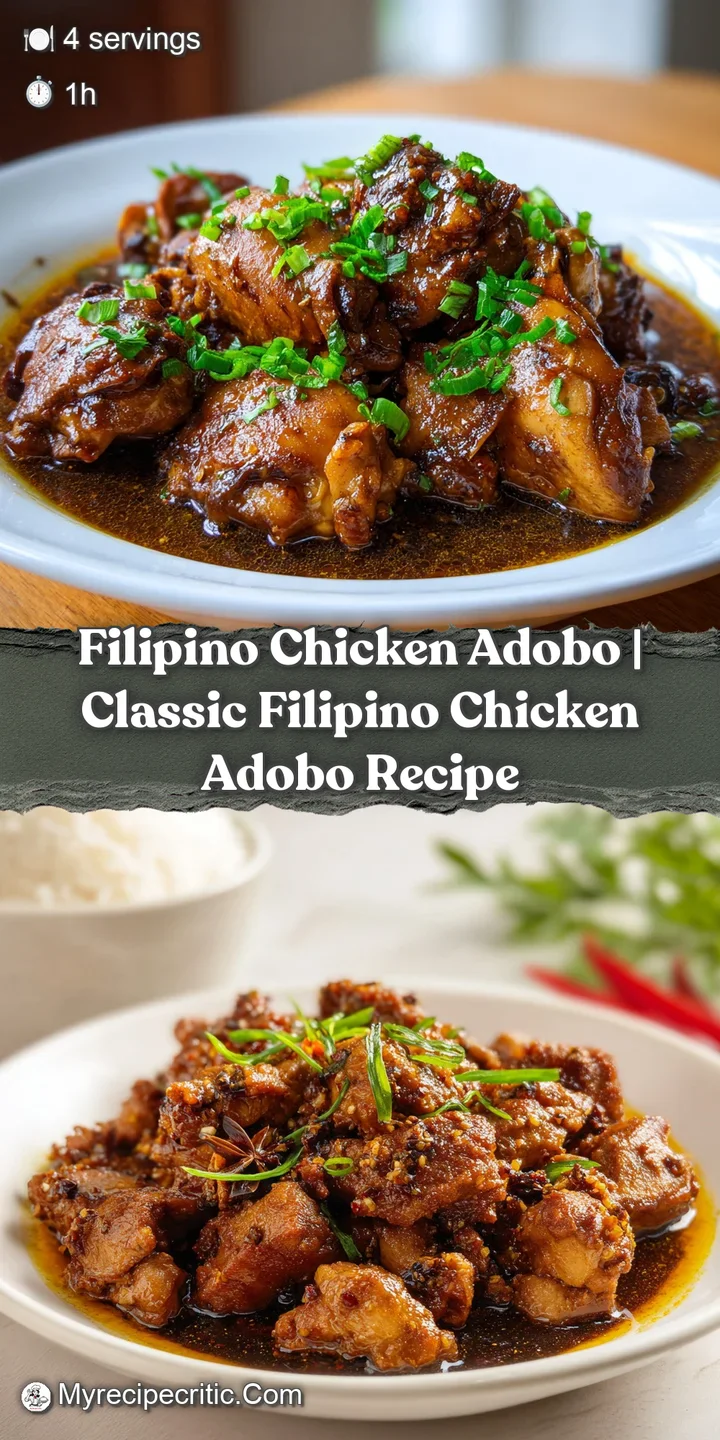
Filipino Chicken Adobo: Rich and Glazed
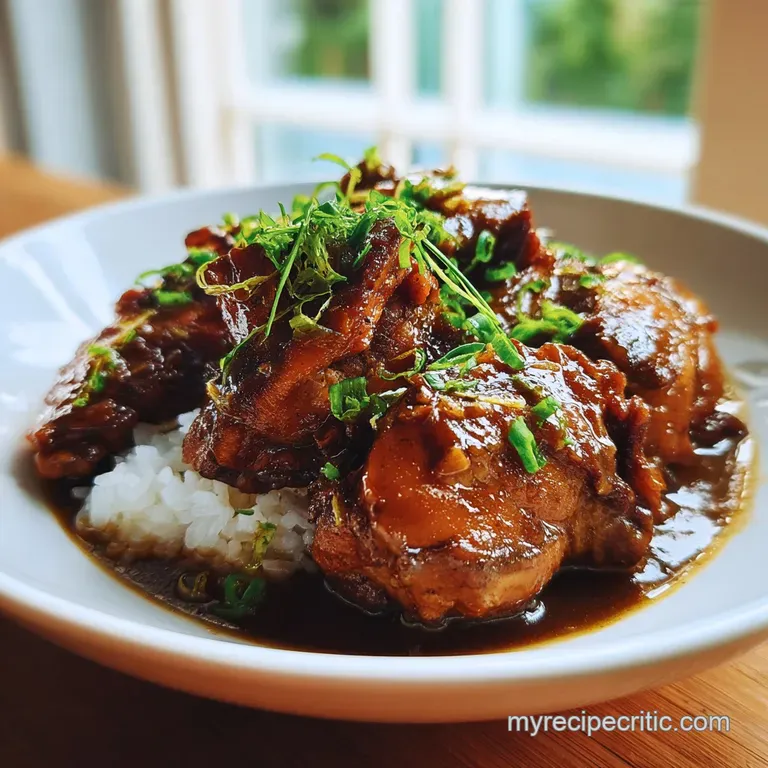
- Time: Active 15 minutes, Passive 45 minutes, Total 60 minutes
- Flavor/Texture Hook: Mahogany glazed skin with a tangy, umami rich finish
- Perfect for: Beginner friendly Sunday meal prep or a cozy weeknight dinner
- Quick Decision Guide for Optimal Chicken Texture
- Why the Vinegar Stays Quiet
- The Pantry Essentials for a Balanced Umami Sauce
- Essential Heavy Bottomed Tools for Even Heat
- Step by Step Technique for Mahogany Glazed Poultry
- Fixing Common Flavor Balances and Texture Issues
- Troubleshooting Common Issues
- Scaling the Recipe for Large Crowds
- Regional Variations and Modern Twists on the Classic
- Adobo Myths and Truths
- Freezing and Storage Wisdom for Large Batches
- Perfect Pairings and Traditional Presentation Methods
- CRITICAL: Very High in Sodium
- Recipe FAQs
- 📝 Recipe Card
Quick Decision Guide for Optimal Chicken Texture
Understanding when the chicken has reached that "fall apart" stage without becoming stringy is the hallmark of a great cook. Because we are using bone in, skin on thighs, the window for perfection is much wider than with breasts, but you still need to watch for specific visual cues during the reduction.
| Thickness | Internal Temp | Rest Time | Visual Cue |
|---|---|---|---|
| 1 inch (Standard) | 175°F | 5 minutes | Sauce clings to the skin like syrup |
| 1.5 inches (Thick) | 175°F | 8 minutes | Meat pulls away easily from the bone |
| 0.5 inches (Thin/Small) | 170°F | 3 minutes | Skin is deeply bronzed and tight |
The higher internal temperature for thighs (175°F rather than the standard 165°F) is intentional. Thighs contain connective tissue that only begins to melt into a velvety texture once it hits those higher numbers.
If you pull them too early, they’ll be safe to eat but unpleasantly chewy.
Why the Vinegar Stays Quiet
Success in this dish comes down to how you handle the acidity. Most people treat vinegar like water, but in a braise, it’s a volatile ingredient that needs to be tamed.
- Evaporation Peak: Simmering the vinegar uncovered for 10 minutes allows the harshest "nose stinging" molecules to escape into the air.
- The No Stir Rule: Leaving the vinegar alone prevents it from emulsifying too quickly with the oil, which can lead to a cloudy, muddy flavor profile.
- Fat Acid Balance: The rendered fat from the skin acts as a buffer, coating the tongue so the vinegar tastes bright rather than sharp.
- Collagen Breakdown: The acidity in the vinegar helps break down the tough fibers in the chicken thighs, ensuring they become meltingly tender.
If you’re interested in how long simmered liquids transform, you might enjoy learning about how Chicken Glace relies on similar reduction principles to concentrate flavor.
| Component | Science Role | Pro Secret |
|---|---|---|
| Cane Vinegar | Meat Tenderizer | Never stir it during the first 10 minutes of the simmer. |
| Filipino Soy Sauce | Umami & Pigment | Use a traditional brand like Silver Swan for the correct salt to color ratio. |
| Smashed Garlic | Aromatic Base | Smashed cloves release more oils than minced ones, preventing burning. |
The Pantry Essentials for a Balanced Umami Sauce
Selecting the right ingredients for Filipino Chicken Adobo is more important than in many other stews because there are so few of them. Every element has to pull its weight.
- 2 lbs bone in, skin on chicken thighs: Why this? The bone adds depth to the sauce, while the skin provides the necessary fat.
- 0.5 cup cane vinegar: Why this? Milder and fruitier than white vinegar; essential for the authentic "sour" profile.
- 0.5 cup Filipino soy sauce: Why this? It's saltier and darker than Japanese soy sauce, providing that iconic mahogany color.
- 10 cloves garlic, smashed: Why this? Provides a mellow, nutty backbone without the bitterness of burnt minced garlic.
- 2 tsp whole black peppercorns: Why this? They soften during cooking, offering floral heat rather than just spice.
- 3 dried bay leaves: Why this? They add an herbal, earthy tea like note that cuts through the salt.
- 1 cup water: Why this? Provides the volume needed for a long braise without over salting the meat.
- 1 tbsp brown sugar: Why this? Balances the acidity and helps the sauce achieve a glossy, syrupy consistency.
- 2 tbsp neutral oil: Why this? Needed for the initial over high heat sear to prevent sticking and start fat rendering.
| Original Ingredient | Substitute | Why It Works |
|---|---|---|
| Cane Vinegar | Apple Cider Vinegar | Similar acidity levels. Note: Adds a slight fruity/apple note to the finish. |
| Filipino Soy Sauce | Tamari + Pinch of Salt | gluten-free and very dark. Note: Lacks the specific fermented punch of Filipino brands. |
| Brown Sugar | Coconut Sugar | Deep caramel notes. Note: Less sweet, so you may need an extra teaspoon. |
Essential Heavy Bottomed Tools for Even Heat
You don't need a kitchen full of gadgets for this, but the pot you choose makes a massive difference in the final reduction. A thin bottomed pot will create "hot spots," meaning your garlic will burn before the chicken skin even gets a chance to sear.
I always reach for a heavy Dutch oven or a cast iron pot. The thick walls hold onto heat, which is vital when you’re searing 2 lbs of cold meat. It prevents the temperature from plummeting, which would cause the chicken to steam rather than sizzle.
Chef's Tip: If you only have a stainless steel pan, make sure it’s a heavy bottomed skillet. To get that "shatter" on the skin, you need a surface that stays hot enough to render the fat immediately upon contact.
step-by-step Technique for Mahogany Glazed Poultry
- Heat 2 tbsp neutral oil in a large Dutch oven over medium high heat.
- Add the chicken thighs skin side down and sear for 5-7 minutes until the fat renders and the skin is a deep golden brown.
- Remove the chicken from the pot and set it aside on a plate; do not wipe out the rendered fat.
- Add the 10 smashed garlic cloves to the pot and sauté until fragrant and glowing gold.
- Stir in the 2 tsp peppercorns and 3 bay leaves, allowing them to bloom in the hot fat for 60 seconds.
- Deglaze the pot with 0.5 cup cane vinegar and simmer uncovered for 10 minutes until the sharp acidic aroma mellows. Note: Resist the urge to stir the vinegar; just let it bubble.
- Pour in 0.5 cup soy sauce, 1 cup water, and 1 tbsp brown sugar, then return the chicken and any juices to the pot.
- Bring the liquid to a boil, then immediately reduce the heat to low.
- Simmer partially covered for 20 minutes until the meat is tender but not falling apart.
- Remove the lid and increase the heat slightly, simmering for another 10-15 minutes until the sauce reduces into a thick, glossy mahogany glaze.
Fixing Common Flavor Balances and Texture Issues
Adobo is a forgiving dish, but the balance of salt, acid, and fat can sometimes tip in the wrong direction. If the sauce feels too "thin" or "watery," it usually means the lid was on too tight or you didn't simmer long enough after the initial braise.
Troubleshooting Common Issues
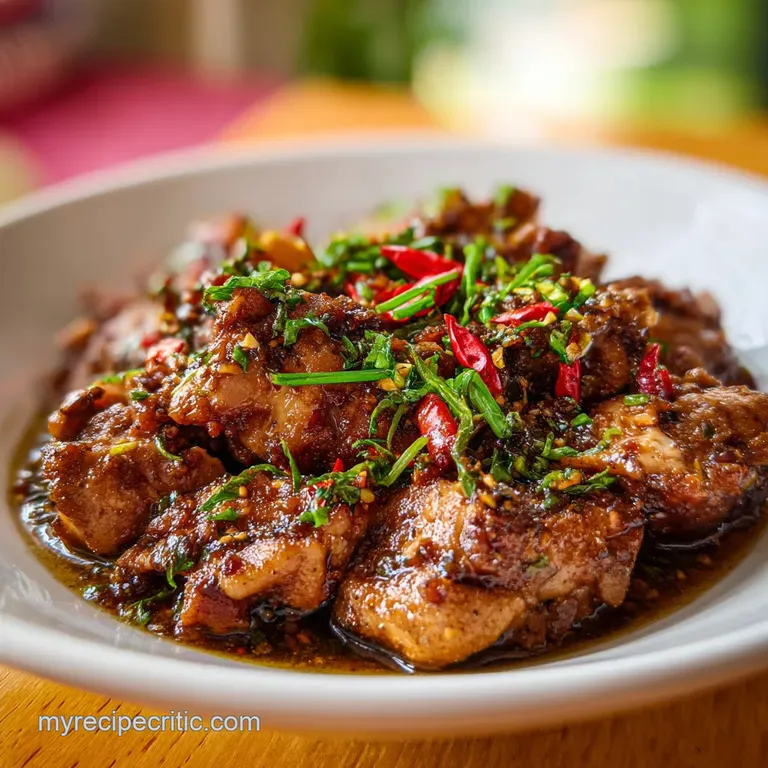
| Issue | Solution |
|---|---|
| Why Your Sauce is Too Salty | This usually happens if you use a high sodium soy sauce or if the sauce reduces too far. Soy sauce concentrations vary wildly between brands. If the reduction has become a salt bomb, don't throw it ou |
| Why Your Sauce Is Too Sour | If the vinegar bite is overwhelming even after the reduction, it means the "breathing" phase wasn't long enough. You can fix this by adding a bit more water and sugar to re balance the ratio. |
| Why the Skin is Soggy | If you skip the initial sear, the skin will never become crispy or hold that beautiful glaze. It will just be flabby. To fix this at the end, you can actually put the chicken under the broiler for 2-3 |
Common Mistakes Checklist
- ✓ Pat the chicken completely dry with paper towels before searing (prevents steaming).
- ✓ Do not stir the vinegar for the first 10 minutes (prevents the "raw" acid taste).
- ✓ Use bone in thighs only (breasts will dry out during the reduction).
- ✓ Let the garlic turn golden but never dark brown (dark garlic equals bitter sauce).
- ✓ Simmer the final stage uncovered to allow the sauce to thicken properly.
Scaling the Recipe for Large Crowds
Adobo is one of those rare dishes that actually scales perfectly because it's essentially a braise. If you are doubling the recipe to 4 lbs of chicken, you need to be careful with the pot size.
Downscaling (1 lb chicken): If you are cooking for two, use a smaller pan to ensure the liquid level is high enough to cover the bottom of the chicken. Reduce the water by 20% but keep the vinegar and soy ratios similar to maintain the flavor profile.
Upscaling (4 lbs+ chicken): When doubling the recipe, work in batches for the initial sear. If you crowd the pan, the chicken will release its juices and steam rather than sear, leaving you with grey skin.
For spices like peppercorns and bay leaves, only increase them by 1.5x rather than doubling them, as their flavors can become too dominant in large volumes.
If you find yourself with extra chicken, this pairs beautifully with a Broccoli Casserole recipe for a meal that hits both the salty and cheesy comfort notes.
Regional Variations and Modern Twists on the Classic
While the soy vinegar base is the "classic" version most people know, the Philippines has hundreds of regional variations that play with different fats and liquids.
Filipino Chicken Adobo with Coconut Milk
Also known as Adobo sa Gata, this version adds a cup of full fat coconut milk during the final 10 minutes of simmering. The coconut milk creates a velvety, creamy sauce that tempers the vinegar’s sharpness.
It’s particularly popular in the Bicol region, where they also add spicy siling labuyo (bird's eye chilies) for a heat kick.
The Instant Pot Filipino Chicken Adobo
For a faster version, you can sear the chicken using the "Sauté" function, then add all ingredients (reducing water to 0.5 cup) and cook under high pressure for 15 minutes. You must still use the "Sauté" function at the end to reduce the sauce, or it will be too thin.
Slow Cooker Filipino Chicken Adobo
Place all ingredients in the slow cooker and cook on low for 6 hours. The main drawback here is the skin won't be crispy, so I highly recommend searing the chicken in a separate pan before adding it to the slow cooker to develop that "smoke kissed" flavor.
Adobo Myths and Truths
Myth: You must marinate the chicken overnight for the best flavor. Truth: While marinating doesn't hurt, the long simmering and reduction process in this recipe forces the flavor into the meat just as effectively.
The "No Stir" vinegar technique is actually more important for the final taste than the length of the marinade.
Myth: White vinegar is a perfect substitute for cane vinegar. Truth: White vinegar is much more aggressive and clinical in its acidity. If you must use it, cut the amount by 25% and add an extra pinch of sugar to mimic the roundness of cane vinegar.
Freezing and Storage Wisdom for Large Batches
Storage: Adobo is famously better the next day. The acidity acts as a natural preservative, and the flavors have time to marry. Store it in an airtight container in the fridge for up to 4 days.
The sauce will likely turn into a jelly like consistency due to the natural gelatin in the chicken bones this is a sign of a perfect braise!
Freezing: This dish freezes beautifully for up to 3 months. When reheating, do so slowly on the stovetop with a splash of water to loosen the glaze.
Zero Waste: Don't you dare throw away the leftover sauce (the "adobo oil"). Save the rendered fat and bits of garlic to make Adobo Fried Rice the next morning. Simply toss cold white rice into a pan with the leftover sauce and stir fry until every grain is coated and slightly crispy.
Perfect Pairings and Traditional Presentation Methods
Traditionally, this dish is served over a mound of fluffy jasmine rice. The rice is the perfect neutral canvas for the intense, salty sour glaze. If you want to get fancy, garnish with a few more cloves of crispy fried garlic or some sliced green onions for a fresh crunch.
I also like to serve this alongside something bright and crunchy to cut through the richness. A simple tomato and onion salad or even some quick pickled cucumbers works wonders. The contrast between the warm, mahogany chicken and the cold, crisp vegetables is exactly what makes Filipino cuisine so vibrant.
Whether you're serving this for a weeknight meal or a festive gathering, the key is having enough rice to soak up every single drop of that sauce. Trust me, you won't want to leave a single bit in the pot.
CRITICAL: Very High in Sodium
1580 mg 1580 mg (69% 69%)
The American Heart Association recommends a limit of about 2,300mg of sodium per day, ideally striving for 1,500mg for most adults.
Tips to Reduce Sodium
-
Reduce Soy Sauce-25%
Soy sauce is a major sodium contributor. Try using a low-sodium soy sauce, or even reducing the amount by half and supplementing flavor with other ingredients. For this recipe, you could use 0.25 cup of low-sodium soy sauce.
-
Boost Aromatics-5%
Increase the quantity of aromatic ingredients like garlic and peppercorns. You can also add fresh ingredients like ginger or onions to build flavor without added sodium.
-
Use Fresh Herbs and Spices
Incorporate fresh herbs like cilantro or parsley, or ground spices like paprika or cumin, to add complexity and depth of flavor without any sodium.
-
Dilute with Water-5%
When simmering, you can increase the amount of water slightly to help dilute the overall sodium concentration of the sauce.
Recipe FAQs
What is Filipino chicken adobo?
It is a savory, braised dish defined by its signature tang and saltiness. The chicken is simmered in a reduction of cane vinegar, Filipino soy sauce, garlic, and aromatics until the sauce turns into a rich, glossy glaze.
What is the secret to good adobo?
The secret is the "no-stir" vinegar reduction. Letting the cane vinegar simmer uncovered for 10 minutes allows the sharp, harsh acidic bite to evaporate, leaving behind a smooth, complex depth of flavor.
How to make chicken adobo step-by-step?
Sear the chicken thighs skin side down for 5-7 minutes until golden brown, then set aside. Sauté the smashed garlic, peppercorns, and bay leaves in the rendered fat, deglaze with vinegar, simmer for 45 minutes, add the remaining liquids and sugar, then return the chicken to the pot to simmer for
45 minutes before reducing the sauce to a thick glaze.
What gives adobo chicken flavor?
The combination of cane vinegar and Filipino soy sauce creates the base. Searing the chicken first renders fat that carries the flavors of the garlic and peppercorns, building a foundation similar to how we develop umami in our savory peanut sauce.
Is it true I should stir the vinegar immediately after adding it to the pan?
No, this is a common misconception. You must leave the vinegar undisturbed for 10 minutes to ensure the harsh acidic notes evaporate properly before adding the other ingredients.
How to fix an overly sour adobo sauce?
Add a small amount of water and an extra touch of brown sugar. This rebalances the acidity and smooths out the sauce profile if the vinegar reduction was insufficient.
Why is my chicken skin soggy?
You likely skipped the initial searing step. Searing the chicken skin side down for 5-7 minutes in hot oil is mandatory to render the fat and create a texture that can withstand the later braising process.
Authentic Filipino Chicken Adobo
Ingredients:
Instructions:
Nutrition Facts:
| Calories | 466 kcal |
|---|---|
| Protein | 31.2 g |
| Fat | 32.4 g |
| Carbs | 8.2 g |
| Fiber | 0.6 g |
| Sugar | 4.1 g |
| Sodium | 1580 mg |
